MIL- STD-883F 2004 TEST METHOD STANDARD MICROCIRCUITS.pdf - 第28页
MIL-STD-883F METHOD 1002 1 May 1968 2 Test condit ion Number of cycles Durati on of each immer sion (minut es) Immers ion bath (col d) Temperatur e of col d bath °C A 2 15 Fresh ( tap) wat er 25 +10 -5 B 2 15 Saturat ed …
MIL-STD-883F
METHOD 1002
1 May 1968
1
METHOD 1002
IMMERSION
1. PURPOSE
. This test is performed to determine the effectiveness of the seal of microelectronic devices. The
immersion of the part under evaluation into liquid at widely different temperatures subjects it to thermal and mechanical
stresses which will readily detect a defective terminal assembly, or a partially closed seam or molded enclosure. Defects of
these types can result from faulty construction or from mechanical damage such as might be produced during physical or
environmental tests. The immersion test is generally performed immediately following such tests because it will tend to
aggravate any incipient defects in seals, seams, and bushings which might otherwise escape notice. This test is essentially
a laboratory test condition, and the procedure is intended only as a measurement of the effectiveness of the seal following
this test. The choice of fresh or salt water as a test liquid is dependent on the nature of the component part under test.
When electrical measurements are made after immersion cycling to obtain evidence of leakage through seals, the use of a
salt solution instead of fresh water will facilitate detection of moisture penetration. This test provides a simple and ready
means of detection of the migration of liquids. Effects noted can include lowered insulation resistance, corrosion of internal
parts, and appearance of salt crystals. The test described is not intended as a thermal- shock or corrosion test, although it
may incidentally reveal inadequacies in these respects. This is a destructive test and shall not be used as a 100 percent
test or screen.
2. APPARATUS
. The apparatus used for the immersion test shall consist of controlled temperature baths capable of
maintaining the temperatures indicated for the hot bath and the cold bath test condition selected. A suitable temperature
indicator shall be used to measure bath temperature.
3. PROCEDURE
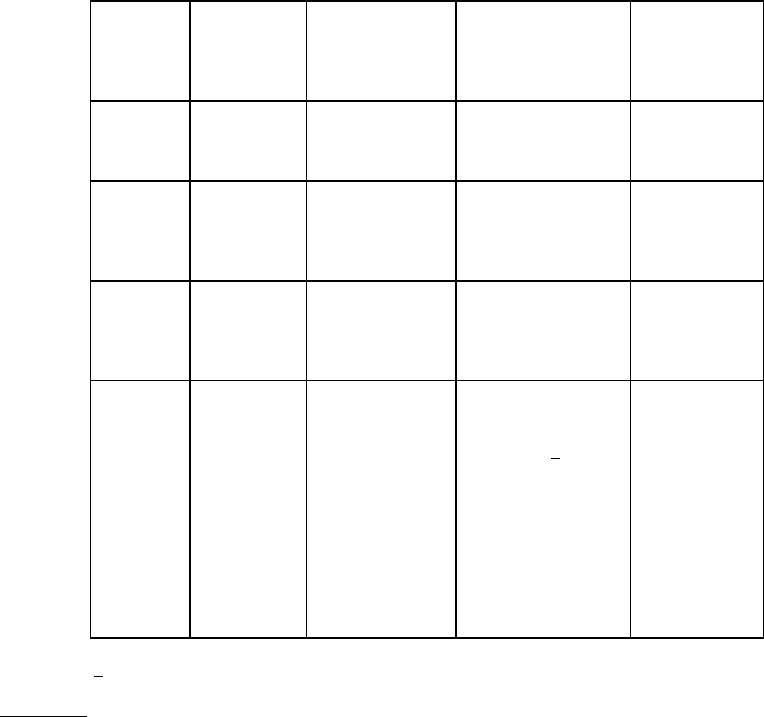
. This test consists of successive cycles of immersions, each cycle consisting of immersion in a hot
bath of fresh (tap) water at a temperature of 65°C +5°C, -0°C followed by immersion in a cold bath. The number of cycles,
duration of each immersion, and the nature and temperature of the cold bath shall be as indicated in the applicable test
condition listed below, as specified. The transfer of specimens from one bath to another shall be accomplished as rapidly as
practicable and in no case shall transfer time exceed 15 seconds. After completion of the final cycle, specimens shall be
thoroughly and quickly washed in fresh (tap) water or distilled water and all surfaces wiped or air-blasted clean and dry.
Unless otherwise specified, measurements shall be made at least 4 hours, but not more than 48 hours, after completion of
the final cycle. When specified in the applicable acquisition document, upon completion of the electrical measurements and
external visual examination, the device shall be delidded or dissected and examined in accordance with method 2013 for
evidence of corrosion of internal elements or the appearance of salt crystals. Where this test is performed as part of a
group or subgroup of tests, the post-test measurements or inspections need not be performed specifically at the conclusion
of this test, but may be performed once at the conclusion of the group or subgroup.
MIL-STD-883F
METHOD 1002
1 May 1968
2
Test
condition
Number of
cycles
Duration of
each immersion
(minutes)
Immersion bath
(cold)
Temperature
of cold bath
°C
A
2
15
Fresh (tap) water
25 +10
-5
B
2
15
Saturated solution
of sodium chloride
and water
25 +10
-5
C
5
60
Saturated solution
of sodium chloride
and water
0 ±3
D
5
60
(Parts by volume)
Water -48 parts
Methanol 1
/ -50
parts
Morpholine -1
part
3.5-dimethyl-1-
hexyn-3-o1-1 part
Stannous
chloride -
5 grams
0 ±3
1
/ Synonyms are tetrahydro-1, 4-oxazine and diethylenimide oxide.
4. SUMMARY
. The following details must be specified in the applicable acquisition document:
a. Test condition letter (see 3). Unless otherwise specified, condition C shall be used.
b. Time after final cycle allowed for measurements, if other than that specified (see 3).
c. Measurements after final cycle (see 3). Unless otherwise specified, measurements shall include pin-to-pin
resistance, pin-to-case resistance and full electrical test of all device characteristics or parameters listed in the
applicable acquisition document. Final evaluation shall include external visual examination for legibility of device
markings and for evidence of discoloration or corrosion of package and leads.
d. Dissection and internal examination, where applicable (see 3).

MIL-STD-883F
METHOD 1003
1 May 1968
1
METHOD 1003
INSULATION RESISTANCE
1. PURPOSE
. This test is to measure the resistance offered by the insulating members of a component part to an
impressed direct voltage tending to produce a leakage of current through or on the surface of these members. Insulation-
resistance measurements should not be considered the equivalent of dielectric withstanding voltage or electric breakdown
tests. A clean, dry insulation may have a high insulation resistance, and yet possess a mechanical fault that would cause
failure in the dielectric withstanding voltage test. Since insulating members composed of different materials or combinations
of materials may have inherently different insulation resistances, the numerical value of measured insulation resistance
cannot properly be taken as a direct measure of the degree of cleanliness or absence of deterioration.
1.1 Factors affecting use
. Factors affecting insulation-resistance measurements include temperature, humidity, residual
charges, charging currents or time constant of instrument and measured circuit, test voltage, previous conditioning, and
duration of uninterrupted test voltage application (electrification time). In connection with this last-named factor, it is
characteristic of certain components (for example, capacitors and cables) for the current to usually fall from an
instantaneous high value to a steady lower value at a rate of decay which depends on such factors as test voltage,
temperature, insulating materials, capacitance, and external circuit resistance. Consequently, the measured insulation
resistance will increase for an appreciable time as test voltage is applied uninterruptedly. Because of this phenomenon, it
may take many minutes to approach maximum insulation-resistance readings, but specifications usually require that
readings be made after a specified time. This shortens the testing time considerably while still permitting significant test
results, provided the insulation resistance is reasonably close to steady-state value, the current versus time curve is known,
or suitable correction factors are applied to these measurements. For certain components, a steady instrument reading may
be obtained in a matter of seconds. When insulation-resistance measurements are made before and after a test, both
measurements should be made under the same conditions.
2. APPARATUS
. Insulation-resistance measurements shall be made on an apparatus suitable for the characteristics of
the component to be measured such as a megohm bridge, megohmmeter, insulation-resistance test set, or other suitable
apparatus.
3. PROCEDURE. When special preparations or conditions such as special test fixtures, reconnections, grounding,
isolation, low atmospheric pressure, humidity, or immersion in water are required, they shall be specified. Insulation-
resistance measurements shall be made between the mutually insulated points or between insulated points and
ground, as specified. When electrification time is a factor, the insulation-resistance measurements shall be made
immediately after the specified time (see 4) of uninterrupted test voltage application, unless otherwise specified.
However, if the instrument-reading indicates that an insulation resistance meets the specified limit, and is steady or
increasing, the test may be terminated before the end of the specified period. When more than one measurement is
specified, subsequent measurements of insulation resistance shall be made using the same polarity as the initial
measurements. Unless otherwise specified, the direct potential applied to the specimen shall be that indicated by
one of the test condition letters, as specified below, and insulation resistance measurements shall be made with both
polarities of the applied voltage:
Test condition
Test potential
A 10 volts ±10%
B 25 volts ±10%
C 50 volts ±10%
D 100 volts ±10%
E 500 volts ±10%
F 1,000 volts ±10%
For inplant quality conformance testing, any voltage may be used provided it is equal to or greater than the minimum
potential allowed by the applicable test condition. Unless otherwise specified, the measurement error at the
insulation-resistance value shall not exceed 10 percent. Proper guarding techniques shall be used to prevent erroneous
readings due to leakage along undesired paths.