MIL- STD-883F 2004 TEST METHOD STANDARD MICROCIRCUITS.pdf - 第318页
MIL-STD-883F METHOD 2018.4 18 June 2004 6 3.5.1. 2 Barri er/adhes ion layer s. The examinati on of barr ier/ adhesion l ayers des igned to c onduct l ess t han 10% of the total curr ent is not requi red as t his i s cons…

MIL-STD-883F
METHOD 2018.4
18 June 2004
5
3.1.2 Sampling Destructive Physical Analysis (DPA) evaluation. Finished product, wafers, or die may be subjected to the
test conditions and criteria defined within this test method for the purpose of a DPA evaluation.
3.2 Lot control during SEM examination
. After dice selection for SEM examination, the manufacturer may elect either of
two options:
3.2.1 Option 1
. The manufacturer may continue normal processing of the lot with the risk of later recall and rejection of
product if SEM inspection, when performed, shows defective metallization. If this option is elected, positive control and
recall of processed material shall be demonstrated by the manufacturer by having adequate traceability documentation.
3.2.2 Option 2
. Prior to any further processing, the manufacturer may store the dice or wafers in a suitable environment
until SEM examination has been completed and approval for further processing has been granted.
3.3 Specimen preparation
. When applicable, glassivation shall be removed from the dice using an etching process that
does not damage the underlying metallization to be inspected (e.g., chemical or plasma etch). Specimens shall be mounted
for examination in a manner appropriate to the apparatus used for examination. Suitable caution shall be exercised so as
not to obscure features to be examined.
Specimens may be examined without any surface coating if adequate resolution and signal-to-noise levels are obtained. If
the specimens need to be coated, they shall be coated with no more than 100Å of a thin vapor-deposited or sputtered film of
a suitable conductive material (e.g., Au). The coating deposition process shall be controlled such that no artifacts are
introduced by the coating.
3.4 Specimen examination, general requirements
. The general requirements for SEM examination of general
metallization and passivation step coverage are specified below in terms of directional edge, magnification, viewing angle,
and viewing direction.
3.4.1 Directional edge
. All four directional edges of every type of passivation step (contact window or other type of
passivation step) shall be examined on each specimen (see table II).
3.4.2 Magnification
. The magnification used for examination of general metallization and passivation steps shall be within
the range defined by table II.
3.4.3 Viewing angle
. Specimens shall be viewed at whatever angle is appropriate to accurately assess the quality of the
metallization. Contact windows, metal thickness, lack of adhesion, and etching defects are typically viewed at the angles of
0° to 85° (see figure 2018-3).
3.4.4 Viewing direction
. Specimens shall be viewed in an appropriate direction to accurately assess the quality of the
metallization. This inspection shall include examination of metallization at the edges of contact windows and other types of
passivation steps (see 3.4) in any direction that provides clear views of each edge and that best displays any defects at the
passivation step. This may mean that the viewing angle is perpendicular to an edge, or in parallel with an edge, or at some
oblique angle to an edge, whichever best resolves any question of defects at the passivation step (see figure 2018-5).
3.5 Specimen examination detail requirements
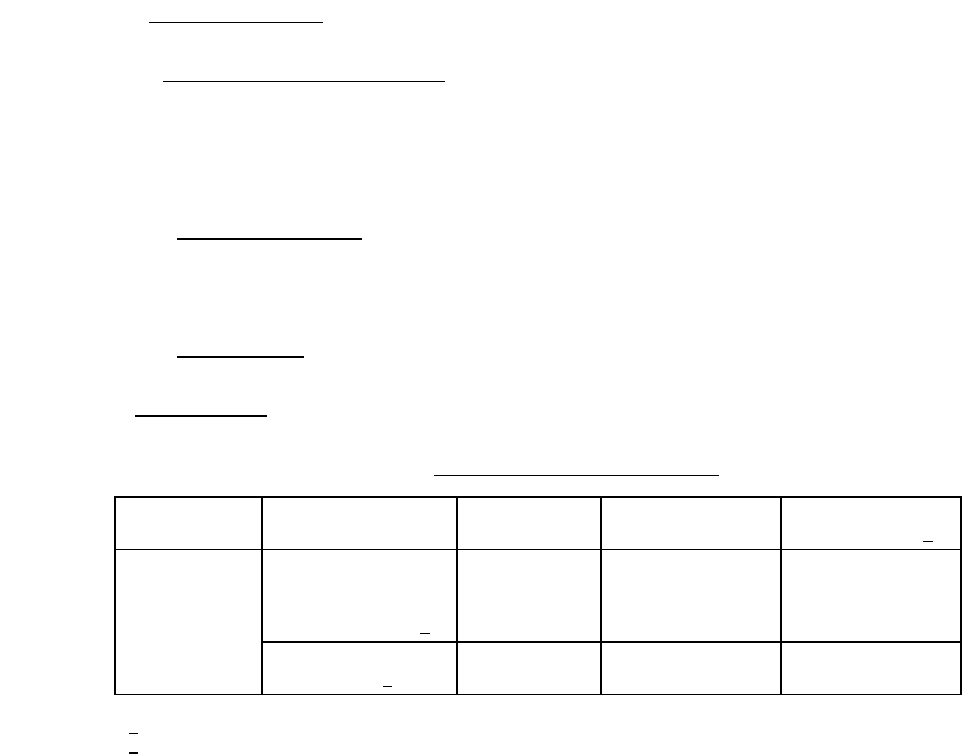
. Examination shall be as specified herein and summarized in table II. The
specimen examination shall be documented in accordance with 3.8.
3.5.1 General metallization
. At low magnification, inspect at least 25 percent or 10,000 square mils, whichever is less, of
the general metallization on each die for defects such as lifting, peeling, blistering, and voiding. Inspection shall be
performed for each layer of each level of metallization.
3.5.1.1 Multi-layer and multi-level metal interconnection systems
. Each layer of each metallization level that is deposited
shall be examined. The current- carrying layer(s) shall be examined with the SEM after removal of the glassivation layer (if
applicable) with a suitable etchant (see 3.3).
MIL-STD-883F
METHOD 2018.4
18 June 2004
6
3.5.1.2 Barrier/adhesion layers. The examination of barrier/adhesion layers designed to conduct less than 10% of the
total current is not required as this is considered a non-conduction layer.
3.5.1.2.1 Barrier/adhesion layer as a conductor
. The barrier/adhesion layer shall be considered as a conductor
(considering the layer thickness and relative conductivity) provided that the following conditions are satisfied: At least ten
percent of the current is designed to be carried by this layer; and this layer is used in the current density calculations. When
this occurs the barrier/ adhesion layer and/or the principal conducting layer shall satisfy all of the step coverage
requirements collectively as baselined by the manufacturer. Specimen examination shall be in accordance with 3.5 and the
accept/reject criteria as defined in 3.7.1. The barrier/adhesion layer(s) shall be examined using either the SEM or optical
microscope. The following methods may be used to examine these barrier/adhesion layers:
3.5.1.2.1.1 The Etchback procedure
. This involves the stripping of each successive unique layer of metal by selective
etching, with suitable etchants, layer by layer, to enable the examination of each layer. Typically, each successive layer of
metal will be stripped in sequence to expose the next underlying layer for examination. Successive layer removal on a
single die area may be impractical. In this case the wafer area or additional die (dice) immediately adjacent on the slice to
the original die area shall be stripped to meet the requirement that all unique layers shall be exposed and examined.
3.5.1.2.1.2 In-line procedure
. The wafer(s) shall be inspected for the defined accept/reject criteria immediately after
being processed through each unique deposition and corresponding etching operation.
3.5.2 Passivation steps
. Inspect the metallization at all types of passivation steps in accordance with the requirements of
3.5.1.1 and table II.
TABLE II. Examination procedure for specimens
.
Device type
Area of
examination
Examination Minimum-maximum
magnification
Photographic
documentation 1
/
Integrated
circuit devices
Passivation steps
(contact windows and
other types of
passivation steps) 2
/
At least one of
each type of
passivation
step present
5,000X to 50,000X Two of the worst
case passivation
steps
General
metallization 2
/
25 percent 1,000X to 6,000X Worst case general
metallization
1
/ See 3.8 (an additional photograph may be required).
2
/ See 3.7 for accept/reject criteria.
*
*
*
*
*

MIL-STD-883F
METHOD 2018.4
18 June 2004
7
3.6 Acceptance requirements.
3.6.1 Single wafer acceptance basis
. The metallization on a single wafer shall be judged acceptable only if all the
sampled areas or dice from that wafer are acceptable.
3.6.2 Wafer lot acceptance basis
. An entire wafer lot shall be judged acceptable only when all the sampled areas or dice
from all sample wafers are acceptable. If a wafer lot is rejected in accordance with this paragraph each wafer from that
wafer lot may be individually examined; acceptance shall then be in accordance with 3.6.1.
3.7 Accept/reject criteria
. Rejection of dice shall be based on batch process defects and not random defects such as
scratches, smeared metallization, tooling marks, etc. In the event that the presence of such random defects obscures the
detailed features being examined, an additional adjacent sample shall be inspected. Illustrations of typical defects are
shown in figures 2018-6 through 2018-22.
3.7.1 General metallization
. Any evidence of poor metallization adhesion shall be unacceptable. Any defects (see figure
2018-18 and 2018-20), such as voids, cracks, separations, depressions, notches, or tunnels, which singly or in combination
reduce the cross-sectional area of the general metallization stripe by more than 50 percent shall be unacceptable. Two
specific cases of general metallization are specified below:
3.7.1.1 Conductor stripes
. In the examination of the other metal layers for the specific case of conductor stripes
(exclusive of the contact window area), a defect consuming 100 percent of the thickness of the barrier/adhesion stripe shall
be acceptable provided that the defect does not extend more than 50 percent across the width of the metallization stripe
(see figure 2018-22).
3.7.1.2 Barrier layers in contact window areas
. No defects of any kind in a barrier layer which would bring the overlying
metal layer in contact with the semiconductor material surface shall be permitted.
3.7.1.3 Overlying adhesion layers
. For the metal layer(s) above the principal conducting layer, a defect consuming 100
percent of the thickness of the adhesion stripe shall be acceptable provided that the defect does not extend more than 50
percent across the width of the metallization stripe.
3.7.2 Passivation steps
. Metallization over a passivation step shall be unacceptable if any combination of defects (see
figure 2018-23) or thinning of the metal reduces the cross-sectional area of the metallization stripe along any cross-sectional
plane in a major current-carrying direction to less than 50 percent of the cross-sectional area of the stripe. A minimum of 20
percent total metallization coverage (barrier metal inclusive, see figure 2018-24) in the primary current carrying direction will
be allowed for metallization over a passivation step when the structure involved is a circular or multisided via or contact
structure and there is sufficient wrap-around metal (>10 percent of incoming metal line width) to allow for current flow to all
sides of the via or contact. The metallization must meet the current density requirements of MIL-PRF-38535. In cases
where an absence of visible edge or a smooth transition or taper clearly reveals effective coverage, a cross-section will be
performed to verify metal coverage.
3.7.2.1 Nonrejectable cross-sectional area
. In the event that the metallization cross-sectional area at a particular directional
edge profile is less than as allowed in 3.7.2. This shall not be cause for rejection if the following two conditions occur:
*
*