MIL- STD-883F 2004 TEST METHOD STANDARD MICROCIRCUITS.pdf - 第387页
MIL-STD-883F METHOD 2025.4 19 August 1994 1 METHOD 2025.4 ADHESION OF LEAD FINISH 1. PURPOSE . This destr ucti ve test is i ntended to det ermine t he integri ty of al l pri mary and underc oat lead f inis hes. 2. APPARA…
MIL-STD-883F
METHOD 2024.2
15 January 1982
4
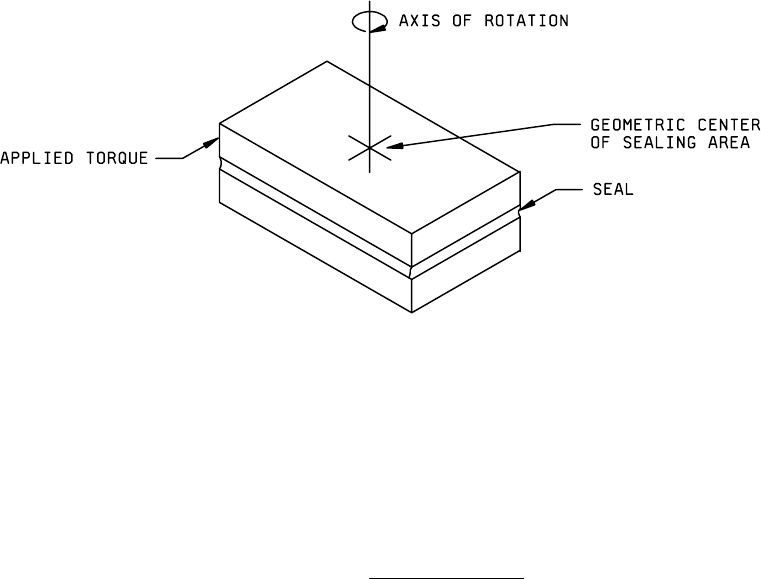
FIGURE 2024-2. Application of torque
.

MIL-STD-883F
METHOD 2025.4
19 August 1994
1
METHOD 2025.4
ADHESION OF LEAD FINISH
1. PURPOSE
. This destructive test is intended to determine the integrity of all primary and undercoat lead finishes.
2. APPARATUS
. This test requires suitable clamps and hardware necessary to apply the bending stress through the
specified bend angle. Optical equipment capable of magnification of 10X to 20X.
3. PROCEDURE
. Unless otherwise specified, the bend stress shall be applied to randomly selected leads from each
device selected for test and shall be performed after application of the primary finish and after sealing. Unless otherwise
specified, the sampling shall be sample size number = 15, C = 0 based on the number of leads tested chosen from a
minimum of three devices. The leads shall be bent in the least rigid direction. If there is no least rigid direction, they may be
bent in any direction. The coated lead shall be bent repeatedly in the same direction (or plane) through an angle of at least
90° at a radius of less than four times the lead thickness or diameter at approximately the mid point of the lead lengths until
fracture (i.e., lead breaks off) of the base metal occurs.
3.1 Failure criteria
. No cracking, flaking, peeling, blistering, loosening, or detachment of the coating(s) at the interface(s)
shall result from probing the bend/break area with a sharp instrument. Cracks in the base metal shall not be considered a
failure unless accompanied by cracking, flaking, peeling, blistering, loosening, or detachment of the primary coating(s) or
undercoating(s).
NOTE: In tin lead or heavy tin coatings, the failure criteria listed should not be confused with shearing and tearing
associated with fatigue fractures and slip-planes which develop into cracks and result in rupture.
4. SUMMARY
. The following details shall be specified in the applicable acquisition document:
a. Sampling criteria, if other than specified (see 3).
b. Failure criteria, if other than specified (see 3.1).
MIL-STD-883F
METHOD 2025.4
19 August 1994
2
This page intentionally left blank