MIL- STD-883F 2004 TEST METHOD STANDARD MICROCIRCUITS.pdf - 第418页
MIL-STD-883F METHOD 2032.2 18 June 2004 12 Cla ss H Class K 3.1.1. 6 b. A contact window that has les s than a 3. 1.1.6 b. 50 per cent of its perimet er conti nuous 40 perc ent of i ts per imet er (see f igure 2032- 7k).…
MIL-STD-883F
METHOD 2032.2
18 June 2004
11
Class H Class K
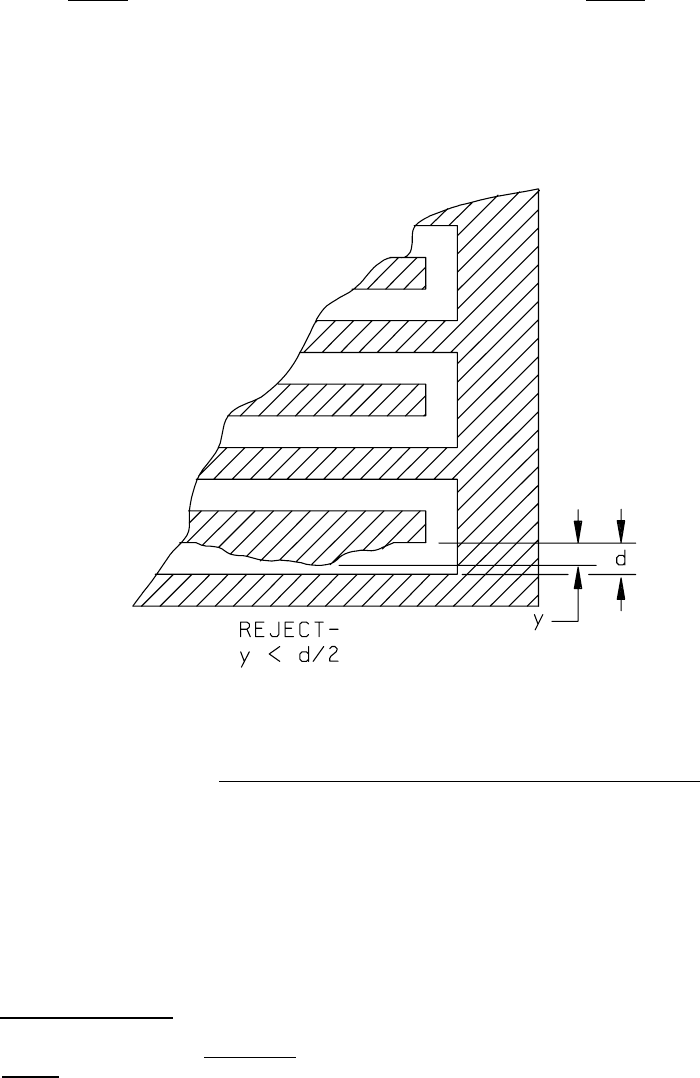
3.1.1.5 b. For interdigitated capacitors only, 3.1.1.5 b. Same as class H.
protrusion of metallization that reduces
the original separation by greater than
50 percent (see figure 2032-6h).
FIGURE 2032-6h. Class H interdigitated capacitor metallization protrusion criterion
.
3.1.1.6 Metallization alignment
.
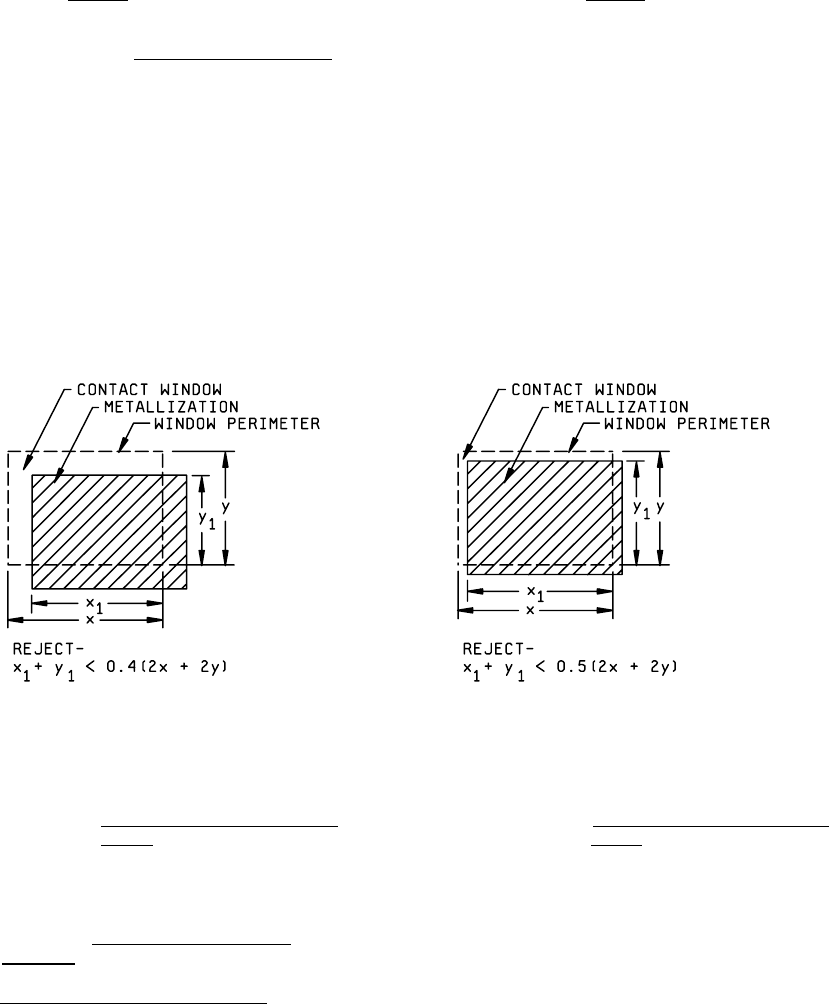
a. A contact window that has less than 50
a. Less than 75 percent.
percent
of its area covered by metallization.
MIL-STD-883F
METHOD 2032.2
18 June 2004
12
Class H Class K
3.1.1.6 b. A contact window that has less than a 3.1.1.6 b. 50 percent of its perimeter
continuous 40 percent of its perimeter
(see figure 2032-7k).
covered by metallization (see figure
2032-7h).
NOTE: When, by design, metallization
is completely contained in a contact
window, or does not cover the entire
contact perimeter, 3.1.1.6a, area
coverage, or 3.1.1.6b, perimeter
coverage, can be deleted as applicable
provided that the design criteria are
satisfied.
FIGURE 2032-7h. Class H metallization alignment
FIGURE 2032-7k. Class K metallization alignment
criteria
. criteria.
c. A metallization path not intended to cover c. Same as Class H.
a contact window that is separated from
the window by less than 0.1 mil unless
by design
.
3.1.1.7 Metallization bumps or indentations
.
a. For capacitors only, a bump or indentation a. Same as class H.
in the overlaying metallization.
MIL-STD-883F
METHOD 2032.2
18 June 2004
13
Class H Class K
3.1.1.8 Metallized through-hole defects,
"high magnification"
. No element shall be
acceptable that exhibits:
a. Through-hole metallization that is not a. Same as class H.
vertically continuous or that does not
cover at least a continuous 50 percent
of the inside, circumferential surface
area unless by design.
3.1.1.9 Wrap-around connection defects,
"high magnification"
. No element shall be
acceptable that exhibits:
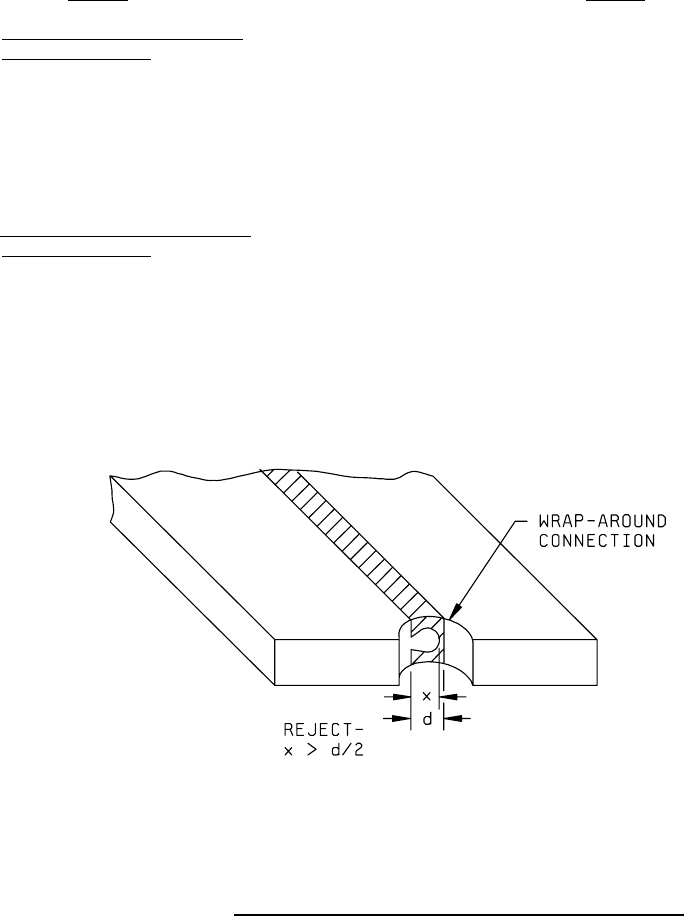
a. Unmetallized area in the edges of a. Same as class H.
wrap-around connections greater than 50
percent of the largest dimension of the edge
metallization (see figure 2032-8h).
FIGURE 2032-8h. Class H wrap-around connection unmetallized area criterion
.