MIL- STD-883F 2004 TEST METHOD STANDARD MICROCIRCUITS.pdf - 第421页
MIL-STD-883F METHOD 2032.2 18 June 2004 15 Class H Class K 3.1.2 Pas sivat ion defec ts "hi gh magnific ation" . No element s hall be ac ceptabl e that ex hibits: a. Ei ther mult iple l ines ( color fringi ng) …
MIL-STD-883F
METHOD 2032.2
18 June 2004
14
3.1.1.10 Substrate plug via defects, “low magnification”. When inspected from each side of the substrate, no element
shall be acceptable that exhibits:
a. A complete void through the via.
b. Any lifting, peeling, or blistering of the via metallization.
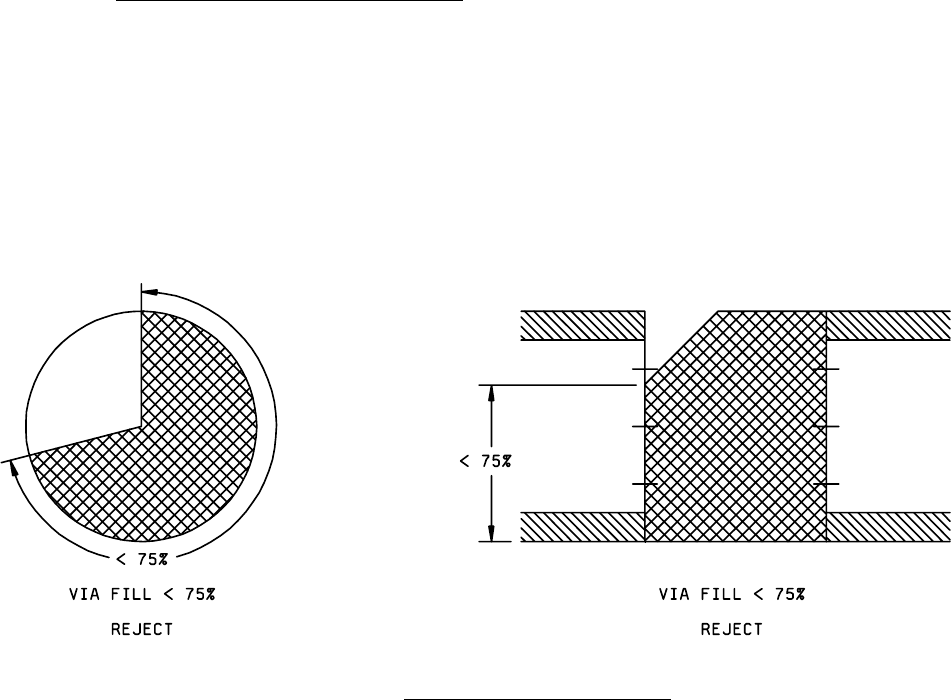
c. Via fill less than 75% of the total surface area of the via plug and less than 75% of the substrate thickness.
NOTE: These are minimum requirements. Via flatness and other requirements shall be in accordance with the
applicable detail drawings. The via fill may consist of thick film metallization.
FIGURE 2032-8Bh. Classes H and K via plug fill criteria
MIL-STD-883F
METHOD 2032.2
18 June 2004
15
Class H Class K
3.1.2 Passivation defects "high magnification"
.
No element shall be acceptable that
exhibits:
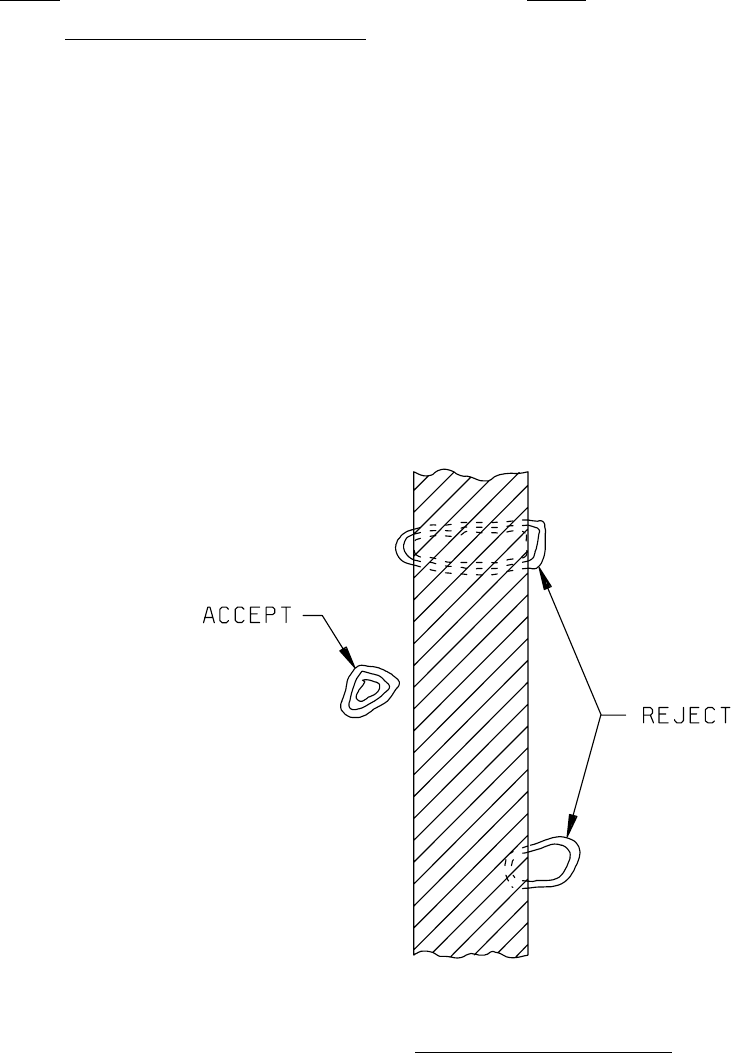
a. Either multiple lines (color fringing) or a a. Same as class H.
complete absence of passivation visible at
the edge and continuing under the
metallization (see figure 2032-8Ah).
A passivation defect that exhibits a line
of separation from the metallization is
acceptable.
NOTE: These criteria apply to conductive
substrate elements only.
NOTE: Double or triple lines at the edge
of the passivation defect indicate it can
have sufficient depth to penetrate down to
the bare substrate.
FIGURE 2032-8Ah. Class H passivation defect criteria
.
MIL-STD-883F
METHOD 2032.2
18 June 2004
16
Class H Class K
3.1.3 Glassivation defects, "high magnification"
.
No device shall be acceptable that exhibits:
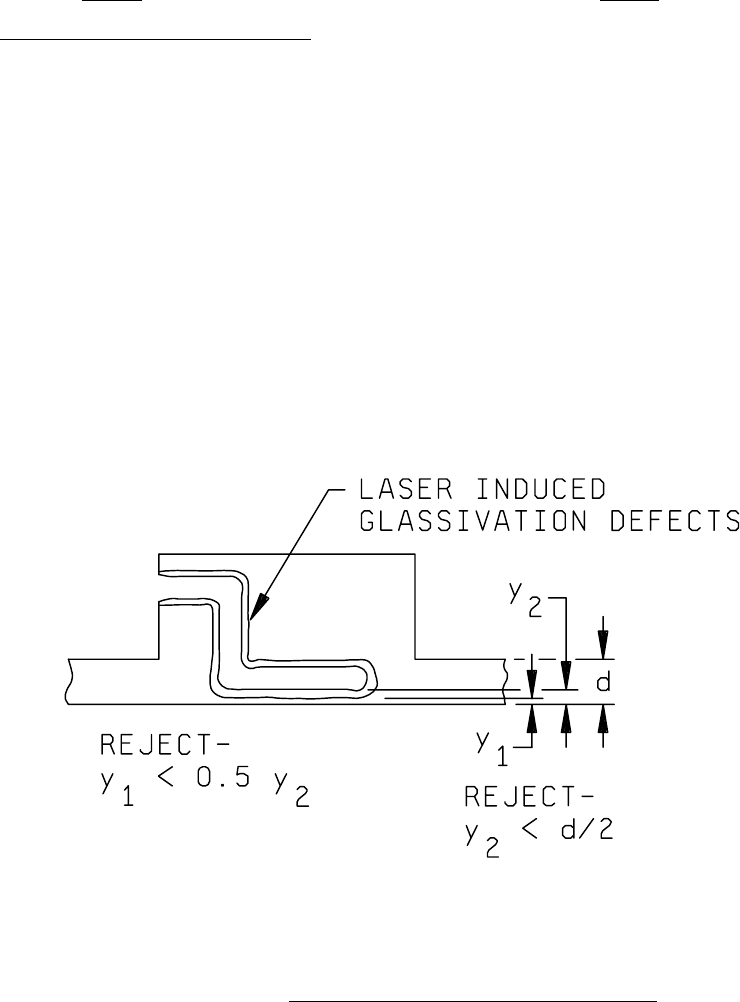
NOTE: Criteria of 3.1.3 can be excluded when the
defects are due to laser trimming. In this case,
the defects outside the kerf due to laser
trimming shall not be more than one half the
remaining resistor width and shall leave a
primary resistor path free of glassivation
defects, equal to or greater than 50 percent
of the narrowest resistor width,
(see figure 2032-9h).
FIGURE 2032-9h. Class H laser trimmed glassivation defect criteria
.
a. Glass crazing or damage that prohibits the a. Same as class H.
detection of visual criteria contained herein.