MIL- STD-883F 2004 TEST METHOD STANDARD MICROCIRCUITS.pdf - 第438页
MIL-STD-883F METHOD 2032.2 18 June 2004 32 C lass H Cla ss K 3.1.7 d. (Conti nued.) NOTE: This cri teri a does not appl y to the second r ung of a res is tor l oop sinc e the second r ung is i nacti ve. This cr iteri a d…
MIL-STD-883F
METHOD 2032.2
18 June 2004
31
Class H Class K
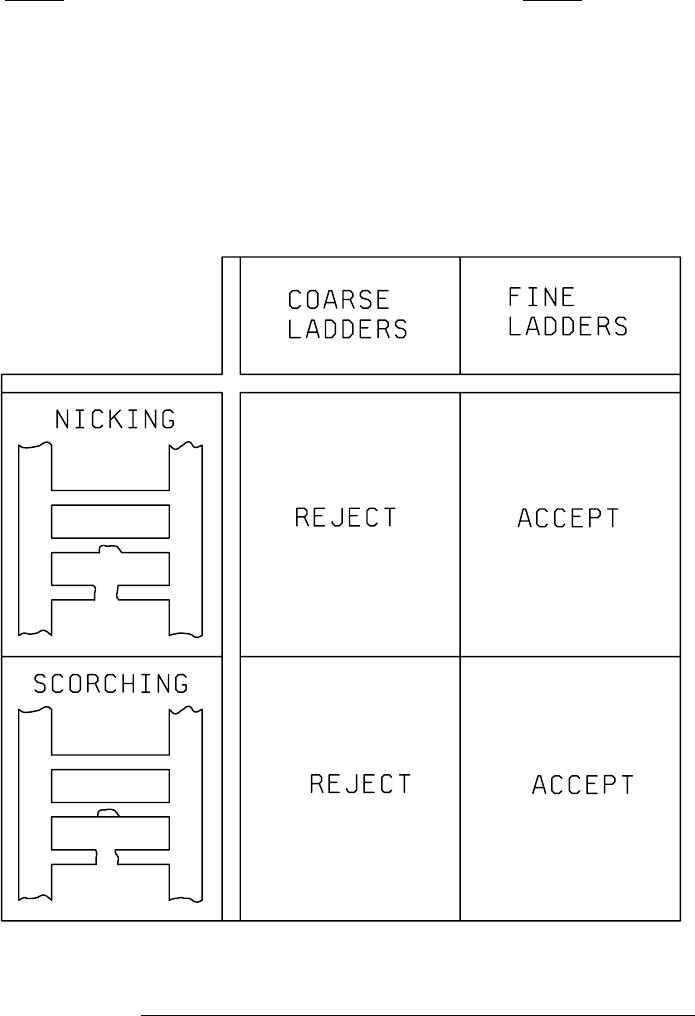
3.1.7 d. No nicking or scorching is allowed except as 3.1.7 d. Same as class H.
permitted below.
NOTE: This does not apply to rungs in a
fine resistor ladder structure (see figure
2032-27h).
NOTE: See 3.i.(33) for a definition of
coarse and fine resistor ladder structures.
The element drawing must be referenced to
determine if a given resistor ladder
structure is coarse or fine.
FIGURE 2032-27h. Class H resistor ladder structure nicking and scorching criteria exceptions
.
MIL-STD-883F
METHOD 2032.2
18 June 2004
32
Class H Class K
3.1.7 d. (Continued.)
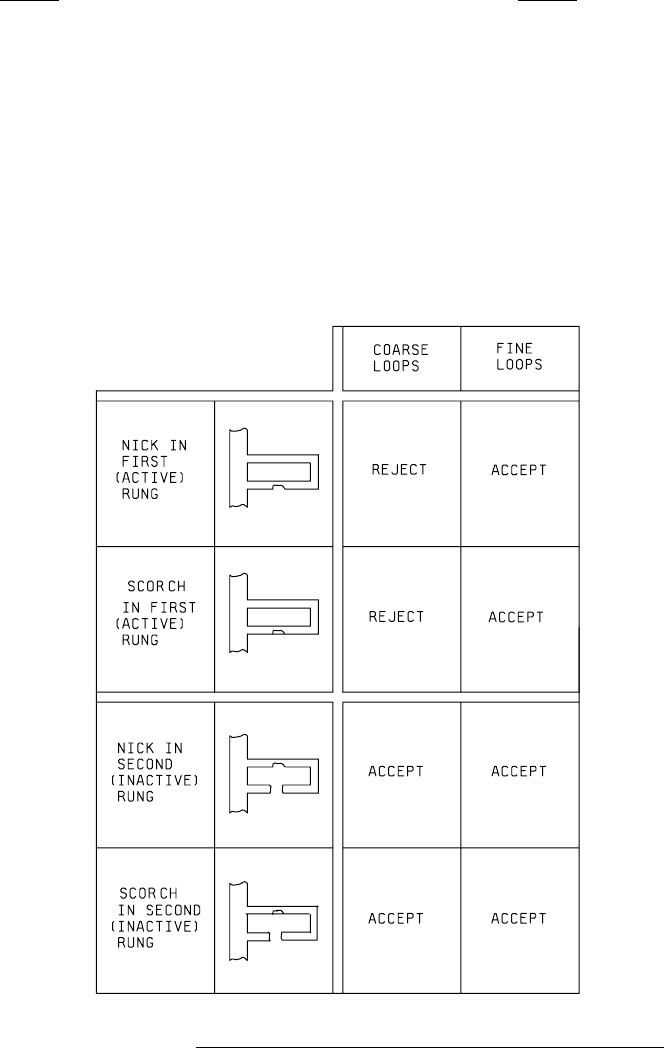
NOTE: This criteria does not apply to the
second rung of a resistor loop since the
second rung is inactive. This criteria
does not apply to a fine loop or to a
resistor structure that is comprised of fine
loops (see figure 2032-28h).
NOTE: See 3.i.(35) for a definition of
coarse and fine resistor loop structures.
The element drawing must be referenced
to determine if a given resistor loop
structure is coarse or fine.
FIGURE 2032-28h. Class H resistor loop nicking and scorching criteria exceptions
.
MIL-STD-883F
METHOD 2032.2
18 June 2004
33
Class H Class K
3.1.7 d. (Continued.)
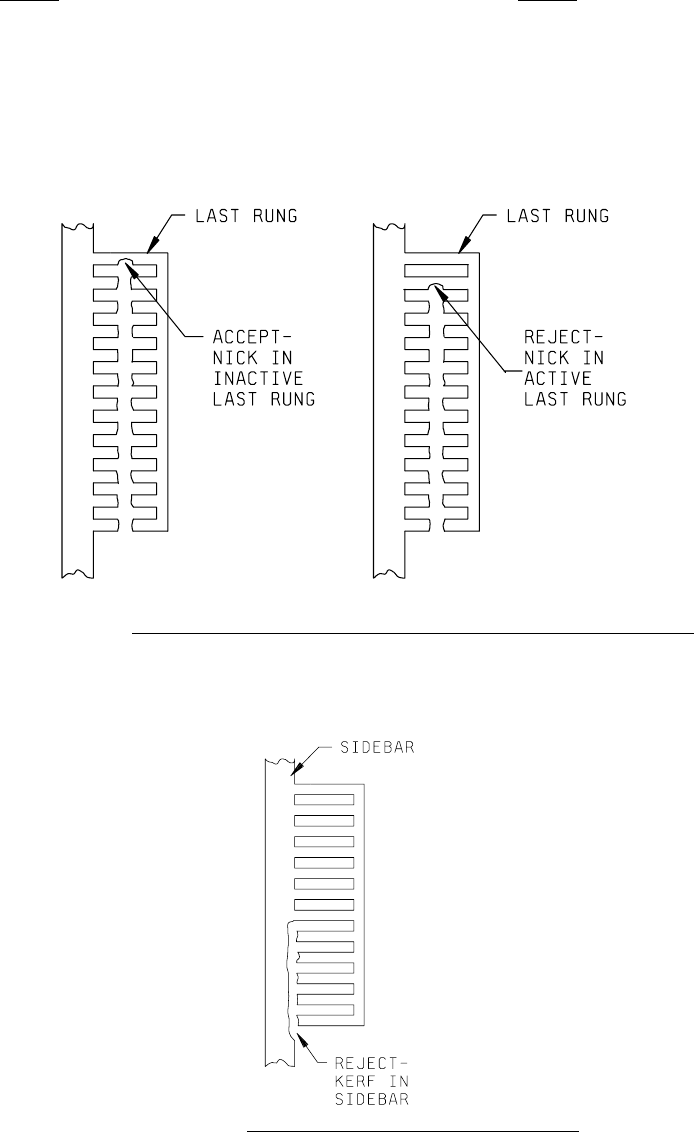
NOTE: This criterion does not apply to the last
rung of a resistor ladder if the last rung
is inactive (see figure 2032-29h).
FIGURE 2032-29h. Class H laser nicking criteria exception for the last rung of a resistor ladder
.
e. A kerf or scorch which extends into a e. Same as class H.
resistor ladder sidebar (see figure
2032-30h).
FIGURE 2032-30h. Class H resistor ladder sidebar trim criterion
.