MIL- STD-883F 2004 TEST METHOD STANDARD MICROCIRCUITS.pdf - 第452页
MIL-STD-883F METHOD 2032.2 18 June 2004 46 3.2.1. 9 Substr ate plug via def ects , “ low magnifi cati on” . W hen i nspect ed from eac h side of the subs tr ate, no element shall be accept able that exhibits : a. A compl…
MIL-STD-883F
METHOD 2032.2
18 June 2004
45
Class H Class K
3.2.1.7 Metallized through-hole defects, "low magnification"
.
No element shall be acceptable that exhibits:
a. Through-hole metallization that is not a. Same as class H.
vertically continuous or that does not cover
at least a continuous 50 percent of the inside,
circumferential surface area unless by design.
3.2.1.8 Wrap-around connection defects, "low magnification"
.
No element shall be acceptable that exhibits:
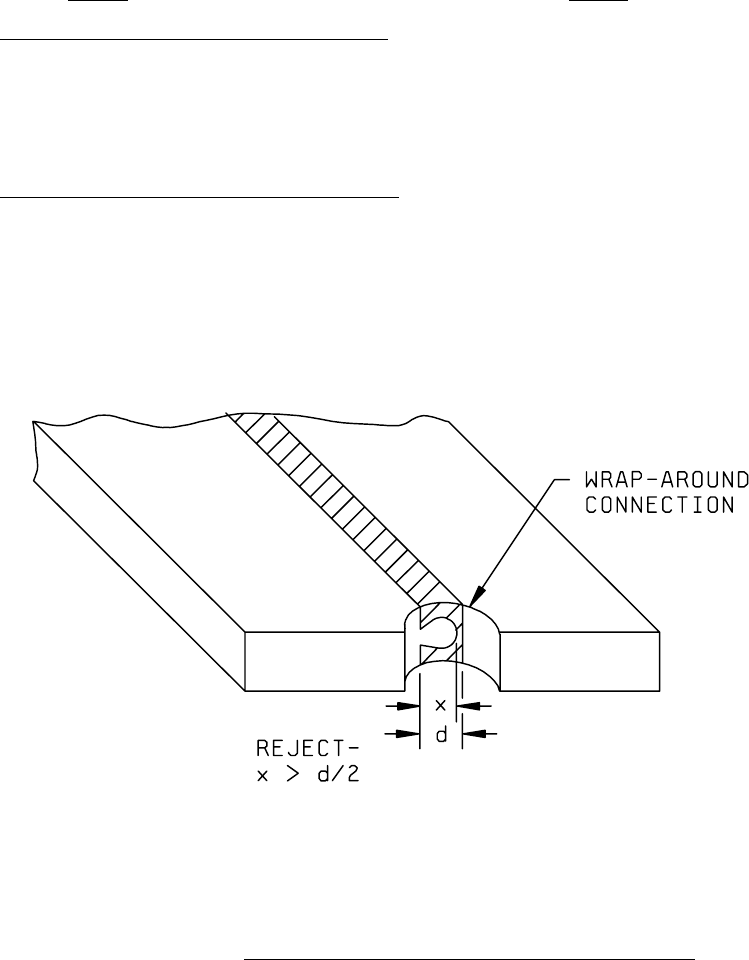
a. Unmetallized area in the edges of wrap-around a. Same as class H.
connections greater than 50 percent of the
largest dimension of the edge metallization
(see figure 2032-43Ah).
FIGURE 2032-43Ah. Class H wrap-around connection unmetallized area criterion
.
MIL-STD-883F
METHOD 2032.2
18 June 2004
46
3.2.1.9 Substrate plug via defects, “low magnification”
. When inspected from each side of the substrate, no element shall
be acceptable that exhibits:
a. A complete void through the via.
b. Any lifting, peeling, or blistering of the via metallization.
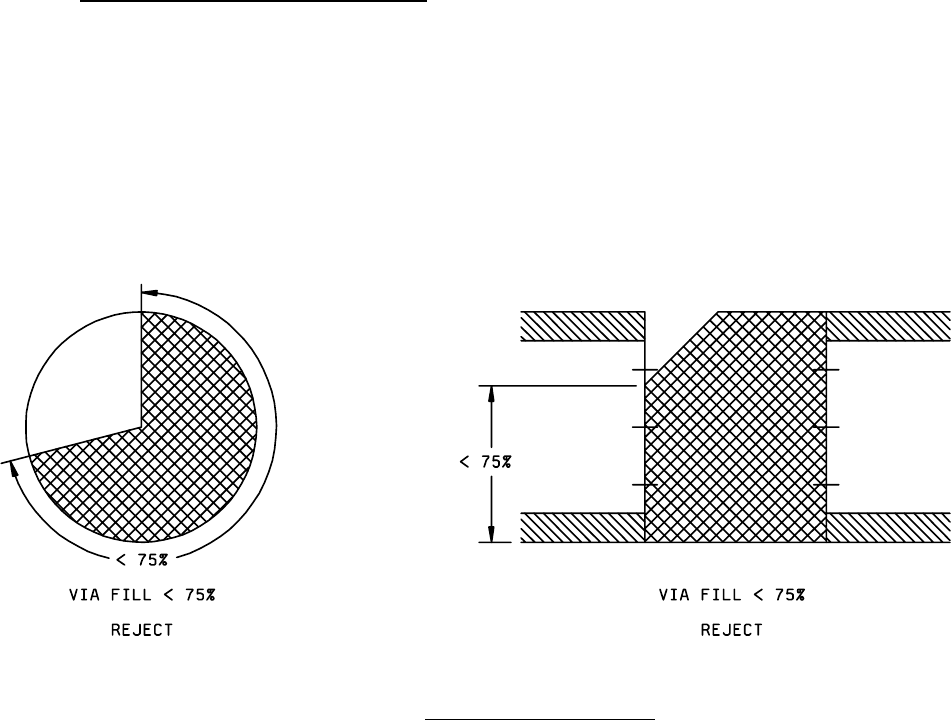
c. Via fill less than 75% of the total surface area of the via plug and less than 75% of the substrate thickness.
NOTE: These are minimum requirements. Via flatness and other requirements shall be in accordance with the
applicable detail drawings.
FIGURE 2032-43Bh. Classes H and K via fill criteria
.
MIL-STD-883F
METHOD 2032.2
18 June 2004
47
Class H Class K
3.2.2 Substrate defects, "low magnification"
.
No element shall be acceptable that exhibits:
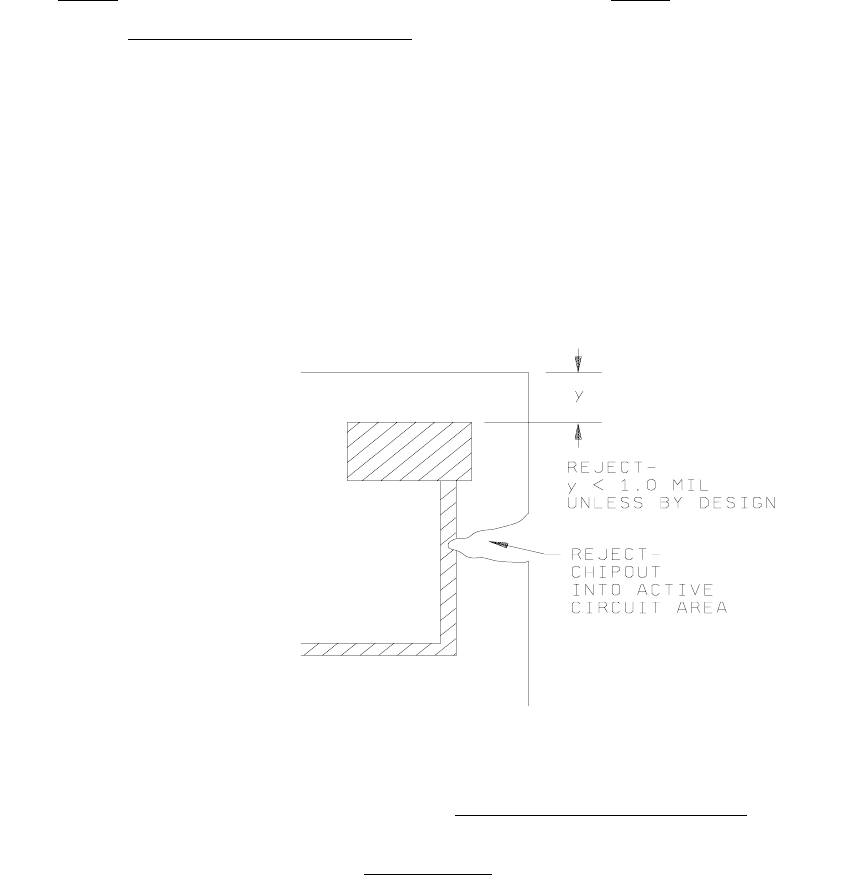
a. Less than 1.0 mil separation between the a. Same as class H.
operating metallization and the edge of the
element unless by design (see figure 2032-43h).
NOTE: This criterion does not apply to
substrates designed for wraparound conductors.
b. A chipout that extends into the b. Same as class H.
active circuit area (see figure 2032-43h).
FIGURE 2032-43h. Class H separation and chipout criteria
.
c. Any crack that exceeds 5.0 mils in length
c. Same as Class H.
(see figure 2032-44h).
NOTE: For fused quart or crystalline
substrates, no cracking is allowed.
d. Any crack that does not exhibit 1.0 mil of d. Same as class H.
separation from any active circuit area or
operating metallization (see figure 2032-44h).
*
*