MIL- STD-883F 2004 TEST METHOD STANDARD MICROCIRCUITS.pdf - 第470页
MIL-STD-883F METHOD 2032.2 18 June 2004 64 Cla ss H Class K 3.3.7 e. Build- up of ter minati on materi al on metall ized 3.3.7 e. Same as clas s H. termi nation ar eas great er than 3. 0 mils high for weldabl e meta lliz…
MIL-STD-883F
METHOD 2032.2
18 June 2004
63
Class H Class K
3.3.7 b. A kerf that leaves less than 50 percent 3.3.7 b. Same as class H.
of the original width of the resistor
unless by design.
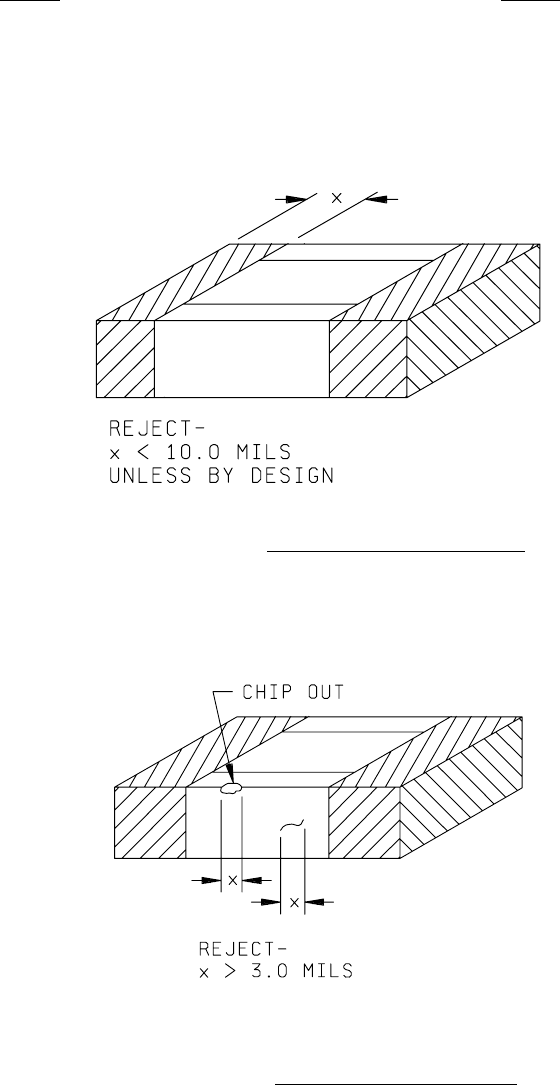
c. Metallized termination width less than c. Same as class H.
10.0 mils unless by design
(see figure 2032-63h).
FIGURE 2032-63h. Class H termination width criterion
.
d. A crack, chipout or void in the substrate d. Same as class H.
greater than 3.0 mils in any direction (see
figure 2032-64h).
FIGURE 2032-64h. Class H substrate defect criteria
.
MIL-STD-883F
METHOD 2032.2
18 June 2004
64
Class H Class K
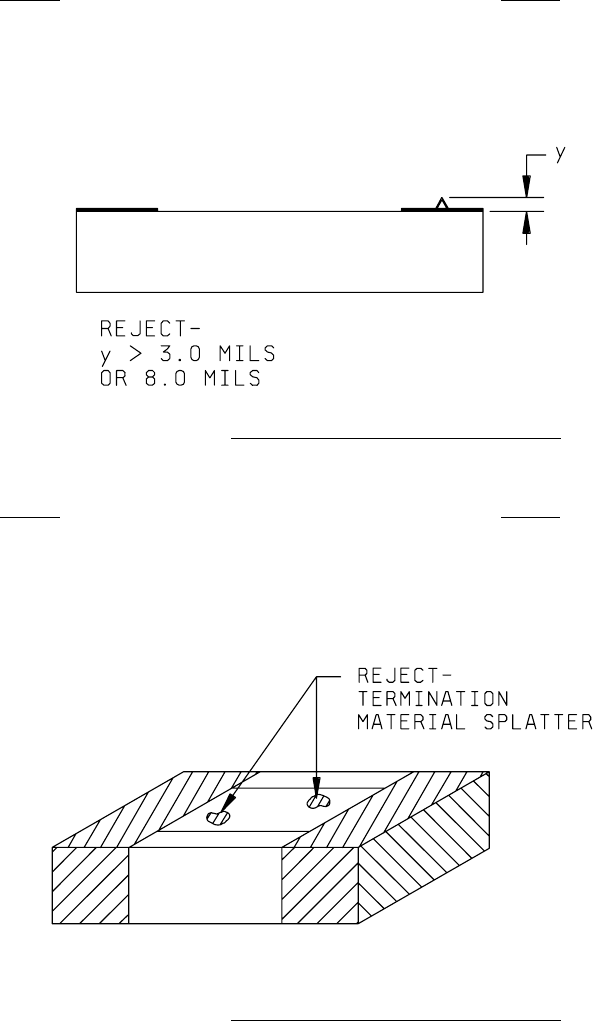
3.3.7 e. Build-up of termination material on metallized 3.3.7 e. Same as class H.
termination areas greater than 3.0 mils high
for weldable metallized terminations or 8.0 mils
high for solderable metallized terminations
(see figure 2032-65h).
FIGURE 2032-65h. Class H termination material buildup criteria
.
Class H
Class K
f. Termination material splattered throughout f. Same as class H.
the resistor (see figure 2032-66h).
FIGURE 2032-66h. Class H termination material splatter criteria
.

MIL-STD-883F
METHOD 2032.2
18 June 2004
65
3.4 Surface acoustic wave (SAW) element inspection. Inspection for visual defects described in this section shall be
conducted on each SAW element. When inspection is performed prior to mounting, then SAW elements may be inspected
using backlighting. All inspection shall be performed at "low magnification" within the range of 10X to 60X for both class H
and class K.
3.4.1 Defect control
. The manufacturer shall perform an audit on a weekly basis for the presence of process related
defects which impact SAW device performance (e.g., metallization voids, metallization scratches, metallization bridging, or
crystal material pits/scratches/chipouts). This audit may be satisfied during routine internal visual inspection. If the
presence of process related defects are discovered, the manufacturer shall monitor for a defect pattern to be used for the
improvement of process controls. The manufacturer shall document the results of his investigation and corrective action to
eliminate trends. The intent of this procedure is to require monitoring of process related defects which affect SAW device
performance but do not cause reliability degradation leading to eventual failure of device function.
Class H
Class K
3.4.2 Operating metallization defects "low
magnification." No element shall be acceptable
that exhibits:
3.4.2.1 Metallization corrosion
.
a. Any metallization corrosion. a. Same as class H.
3.4.2.2 Metallization adherence
.
a. Any metallization lifting, peeling or a. Same as class H.
blistering.
3.4.3 Substrate material defects "low magnification"
.
No element shall be acceptable that exhibits:
a. Any crack that exceeds 5.0 mils in length. a. Same as class H.
b. Any crack that is within 0.1 mil of any b. Same as class H.
active circuit area or operating
metallization.
c. Any crack exceeding 1.0 mil in length c. Same as class H.
extending from the element edge directly
toward the active circuit area or operating
metallization.