MIL- STD-883F 2004 TEST METHOD STANDARD MICROCIRCUITS.pdf - 第49页
MIL-STD-883F METHOD 1009.8 22 March 1989 1 METHOD 1009.8 SALT ATMOSPHERE (CORROSION) 1. PURPOSE . This test is pr oposed as an ac cel erated l aborator y corr osion t est s imulat ing the ef fect s of s eacoast atmospher…
MIL-STD-883F
METHOD 1008.2
25 August 1993
2
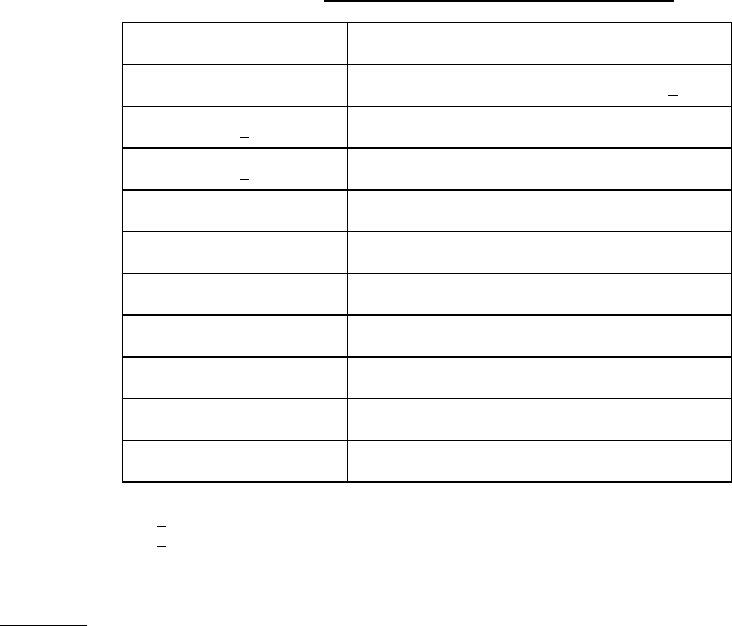
TABLE I. Stabilization bake time temperature regression
.
Minimum temperature Minimum time (hours)
°C Equivalent test condition C duration 1/
100 2/ 1,000
125 2/ 168
150 24
155 20
160 16
165 12
170 8
175 6
200 6
1
/ The only allowed conditions are as stated above.
2
/ These time-temperature combinations may be used for
hybrid microcircuits only.
4. SUMMARY
. The following details shall be specified in the applicable acquisition document:
a. Test condition letter if other than test condition C (see 3.1).
b. Test duration if other than 24 hours (see 3.1).
c. End point measurements, if applicable (see 3).
d. Intermediate measurements, if applicable (see 3).
e. Maximum test temperature rating, if applicable.

MIL-STD-883F
METHOD 1009.8
22 March 1989
1
METHOD 1009.8
SALT ATMOSPHERE (CORROSION)
1. PURPOSE
. This test is proposed as an accelerated laboratory corrosion test simulating the effects of seacoast
atmosphere on devices and package elements.
1.1 Terms and definitions
.
1.1.1 Corrosion
. Corrosion is the deterioration of coating or base metal or both by chemical or electrochemical action.
1.1.2 Corrosion site
. A corrosion site is the site at which the coating or base metal or both is corroded. The location of
corrosion.
1.1.3 Corrosion product (deposit)
. The effect of corrosion (i.e., rust or iron oxide, nickel oxide, tin oxide, etc.). The
product of corrosion may be at the corrosion site, or may flow or run (due to action of liquid carrier of salt) so as to cover
noncorroded areas.
1.1.4 Corrosion stain
. Corrosion stain is a semitransparent deposit due to corrosion products.
1.1.5 Blister
. A blister is a localized swelling and separation between the coating(s) and base metal.
1.1.6 Pinhole
. A pinhole is a small hole occurring in the coating as an imperfection which penetrates entirely through the
coating.
1.1.7 Pitting
. Pitting is the localized corrosion of coating or base metal or both, confined to a point or small area, that
takes the form of cavities.
1.1.8 Flaking
. Flaking is the separation of small pieces of coating that exposes the base metal.
2. APPARATUS
. Apparatus used in the salt-atmosphere test shall include the following:
a. Exposure chamber with fixtures for supporting devices. The chamber and all accessories shall be made of
material (glass, plastic, etc.) which will not affect the corrosiveness of the salt atmosphere. All parts within the
test chamber which come in contact with test specimens shall be of materials that will not cause electrolytic
corrosion. The chamber shall be properly vented to prevent pressure build-up and allow uniform distribution of
salt fog.
b. Salt solution reservoir adequately protected from the surrounding ambient. If necessary, auxiliary reservoirs may
be used for long duration tests in accordance with test conditions C and D (see 3.2).
c. Means for atomizing the salt solution, including suitable nozzles and compressed air or a 20 percent oxygen, 80
percent nitrogen mixture (the gas entering the atomizers shall be free from all impurities such as oil and dirt).
d. Chamber-heating means and controls.
e. Means for humidifying the air at temperature above the chamber temperature.
f. Air or inert gas dryer.
g. Magnifier(s) 1X to 3X, 10X to 20X and 30X to 60X.

MIL-STD-883F
METHOD 1009.8
22 March 1989
2
3. PROCEDURE
.
3.1 Maintenance and conditioning of test chamber
. The purpose of the cleaning cycle is to assure that all materials which
could adversely affect the results of the subsequent tests are removed from the chamber. The chamber shall be cleaned by
operating it at 95°F ±5°F (35°C ±3°C) with deionized or distilled water as long as necessary. The chamber shall be cleaned
each time the salt solution in the reservoir has been used up. Several test runs therefore could be run before cleaning,
depending on the size of the reservoir and the specified test condition (see 3.2). When long duration conditions (test
conditions C and D, see 3.2) are required, the reservoir may be refilled via auxiliary reservoirs so that the test cycle shall not
be interrupted. After the cleaning cycle, on restarting the chamber, the reservoir shall be filled with salt solution and the
chamber shall be stabilized by operating it until the temperature comes to equilibrium, see 3.1.4. If operation of the chamber
is discontinued for more than one week, the remaining salt solution, if any, shall be discarded. Cleaning shall then be
performed prior to restarting the test chamber. Intermittent operation of the chamber is acceptable provided the pH and
concentration of the salt solution are kept within limits defined in 3.1.1.
3.1.1 Salt solution
. The salt concentration shall be 0.5 to 3.0 percent by weight in deionized or distilled water as required
to achieve the deposition rates required by 3.1.4. The salt used shall be sodium chloride containing on the dry basis not
more than 0.1 percent by weight of sodium iodide and not more than 0.3 percent by weight total impurities. The pH of the
salt solution shall be maintained between 6.5 and 7.2 when measured at 95°F ±5°F (35°C ±3°C). Only CP grade (dilute
solution) hydrochloric acid or sodium hydroxide shall be used to adjust the pH.
3.1.2 Preconditioning of leads
. Unless otherwise specified, the test specimens shall not be preconditioned. If required
(see 4.c.), prior to mounting specimens for the salt atmosphere test, the device leads shall be subjected to the bending
stress initial conditioning in accordance with test condition B1 of method 2004. Where the specific sample devices being
subjected to the salt atmosphere test have already been subjected to the required initial conditioning, as part of another test
employing the same sample devices, the lead bend need not be repeated.
3.1.3 Mounting of test specimens
. The test specimens shall be mounted on the holding fixtures (plexiglass rods, nylon or
fiberglass screens, nylon cords, etc.) in accordance with the applicable orientation(s) below. Specimens shall also be
positioned so that they do not contact each other, so that they do not shield each other from the freely settling fog, and so
that corrosion products and condensate from one specimen does not fall on another.
a. Dual-in-line packages with leads attached to, or exiting from, package sides (such as side-brazed packages and
ceramic dual-in-line packages): Lid upward 15° to 45° from vertical. One of the package sides on which the leads
are located shall be oriented upward at an angle greater than or equal to 15° from vertical (see figure 1009-1a).
b. Packages with leads attached to, or exiting from the opposite side of the lid (such as TO cans, solid sidewall
packages, and metal platform packages): Lid 15° to 45° from vertical. One-half of the samples shall be tested
with the lid upward; the remaining samples shall be tested with the leads upward (see figure 1009-1b). For
packages with leads attached to, or exiting from the same side as the lid, only one orientation (lid and leads
upward) is required.
c. Packages with leads attached to, or exiting from package sides, parallel to the lid (such as flatpacks): Lid 15° to
45° from vertical. One of the package sides on which the leads are located shall be oriented upward at an angle
greater than or equal to 15° from vertical. For packages with a metal case, one-half of the samples shall be
tested with the lid upward; the remaining samples shall be tested with the case upward. All other packages shall
be tested with the lid upward (see figure 1009-1c).
d. Leadless and leaded chip carriers: Lid 15° to 45° from vertical. One-half of the samples shall be tested with the lid
upward; the remaining samples shall be tested with the lid downward (see figure 1009-1d).
e. Flat specimens (e.g., lids only and lead frames only): 15° to 45° from vertical.