MIL- STD-883F 2004 TEST METHOD STANDARD MICROCIRCUITS.pdf - 第683页
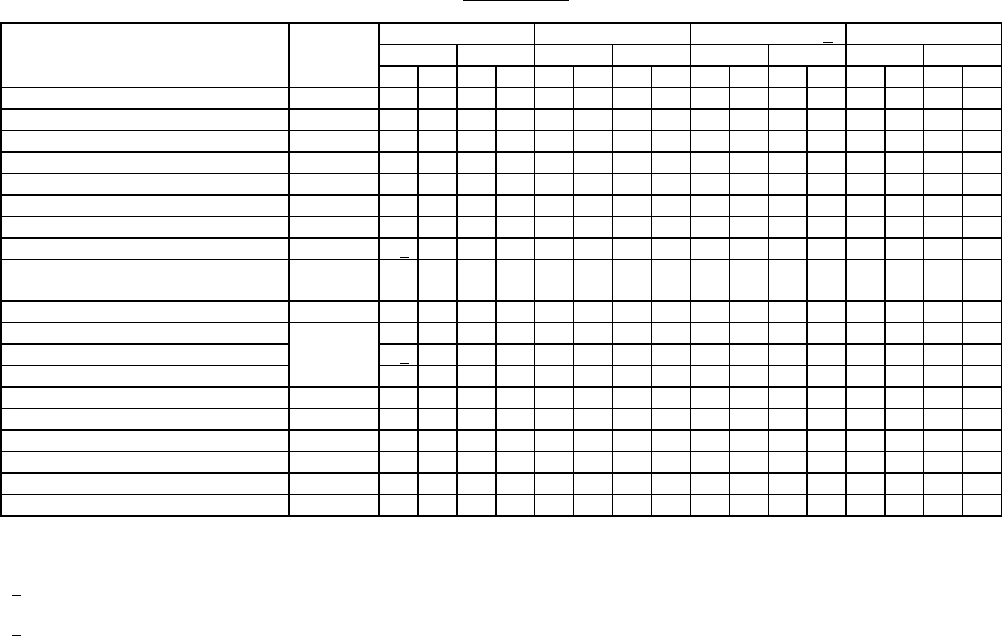
MIL-STD-883F METHOD 5011.4 31 October 1995 3 TABLE I. Requi rement s (Cont inued) Test or Conditi on Tes t Method Dessi cants J uncti on Coatings T-W ave Absorber s Encapsul ating Com pound s Paragrap h Supplier User Sup…
MIL-STD-883F
METHOD 5011.4
31 October 1995
2
TABLE I. Requirements
Test or Condition Test Adhesives α Absorbers Film Dielectrics 1
/
Particle Getters
Method Supplier
User Supplier
User Supplier
User Supplier
User
Paragraph
A C A C A C A C A C A C A C A C
Materials (3.4.1) 3.8.1 X X X X X X X X X X X X X X X X
Viscosity (3.4.2) 3.8.2 X X X X X X
Pot Life (3.4.3) 3.8.3 X X X X X X
Shelf Life (3.4.4) 3.8.4 X X X X
Thermogravimetric analysis (3.5.2) 3.8.5 X X X X X X X
Outgassed materials (3.5.3) 3.8.6 X X X X
Ionic impurities(3.5.4) 3.8.7 X X X X X X
Bond strength (3.5.5) 3.8.8 X 2/
X X
Coefficient of linear thermal
expansion (3.5.6)
3.8.9 X
Thermal conductivity (3.5.7) 3.8.10 X
Volume resistivity (3.5.8) 3.8.11 X
Type 1 materials X 2/
X
Type 2 materials X X X X X
Dielectric constant (3.5.9) 3.8.12 X X
Dissipation factor (3.5.10) 3.8.13 X X
Sequential test environment (3.5.11) 3.8.14 X X X
Density (3.5.12) 3.8.15
Mechanical integrity (3.5.13) 3.8.16 X
Operating life test (3.5.14) 3.8.17 X
A= Performed at acceptance testing.
C= Performed at certification testing.
1
/ Film dielectrics are defined as polymeric materials that are used in film form to act as either interlayer dielectrics,
passivation layers, and/or circuit support films.
2
/ Required at 25
o
C test condition only. No high temperature storage required.
MIL-STD-883F
METHOD 5011.4
31 October 1995
3
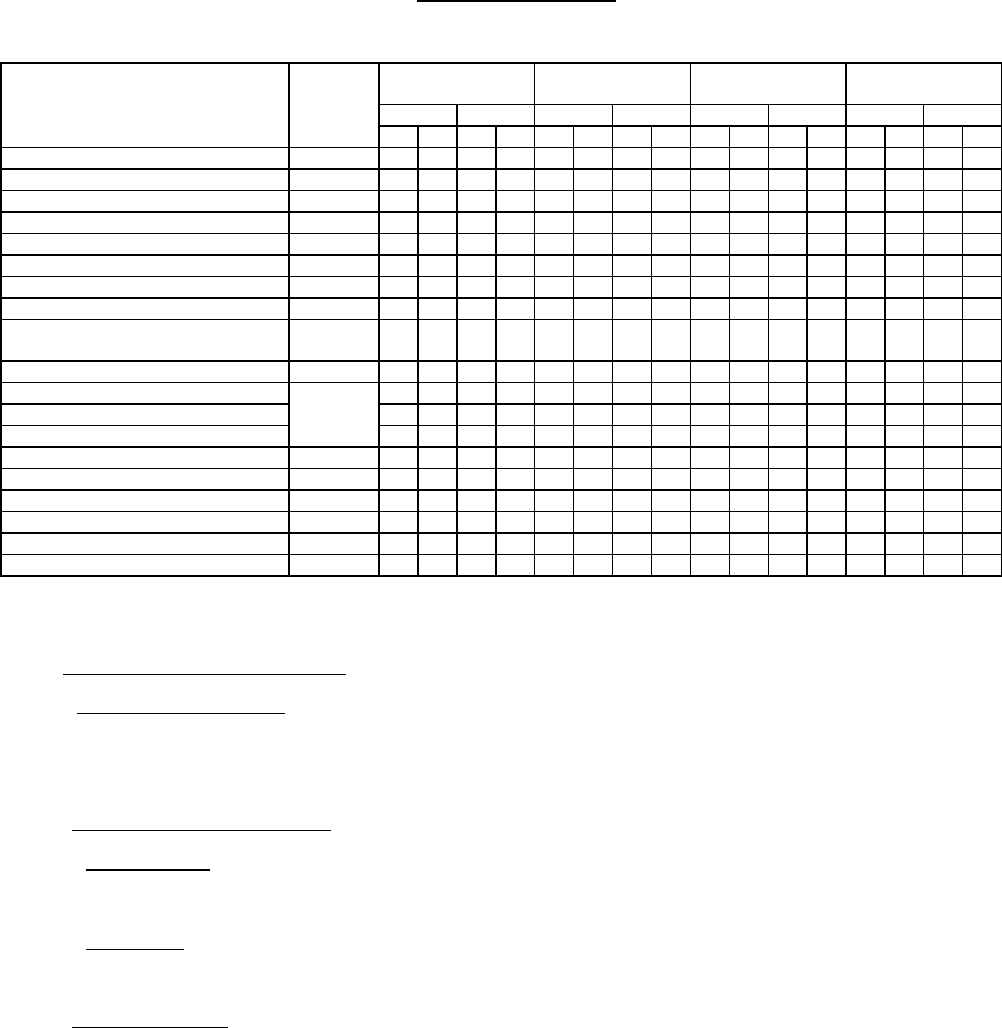
TABLE I. Requirements (Continued)
Test or Condition Test
Method
Dessicants Junction Coatings T-Wave Absorbers
Encapsulating
Compounds
Paragraph
Supplier
User Supplier
User Supplier
User Supplier
User
A C A C A C A C A C A C A C A C
Materials (3.4.1) 3.8.1 X X X X X X X X X X X X X X X X
Viscosity (3.4.2) 3.8.2 X
Pot Life (3.4.3) 3.8.3
Shelf Life (3.4.4) 3.8.4 X X X
Thermogravimetric analysis (3.5.2) 3.8.5 X X X X X
Outgassed materials (3.5.3) 3.8.6 X X X
Ionic impurities(3.5.4) 3.8.7 X X X X X
Bond strength (3.5.5) 3.8.8 X X
Coefficient of linear thermal
expansion (3.5.6)
3.8.9 X
Thermal conductivity (3.5.7) 3.8.10 X
Volume resistivity (3.5.8) 3.8.11 X
Type 1 materials
Type 2 materials X X X
Dielectric constant (3.5.9) 3.8.12 X
Dissipation factor (3.5.10) 3.8.13 X
Sequential test environment (3.5.11) 3.8.14 X X
Density (3.5.12) 3.8.15 X X X X
Mechanical integrity (3.5.13) 3.8.16
Operating life test (3.5.14) 3.8.17 X X
A= Performed at acceptance testing.
C= Performed at certification testing.
3.5 Properties of cured polymer materials
.
3.5.1 Curing of polymer materials
. The material must be capable of meeting the requirements of this document when
cured according to the supplier's instructions. The cure schedule for supplier tests shall be identical for all tests and shall be
reported. The cure schedule for the user tests shall be the minimum cure schedule plus, as a minimum, the pre-seal bake
specified in the user's assembly document and shall be reported. Deviation from the suppliers recommended cure schedule
will require verification by the user of the materials performance.
3.5.2 Thermogravimetric analysis (TGA)
.
3.5.2.1 Thermal stability
. The thermal stability of the cured material shall be determined in accordance with 3.8.5. Unless
otherwise noted, the weight loss at 200°C shall be less than or equal to 1.0 percent of the cured material weight. Equivalent
standard, i.e., "classical analytical techniques" are acceptable.
3.5.2.2 Filler content
. Polymeric materials using a filler to promote properties such as electrical and thermal conductivity
shall be tested in accordance with 3.8.5 to determine the inorganic filler content. For acceptance testing, the percent filler
content shall not differ from the filler content in the certified materials by more than ±2 percent.
3.5.3 Outgassed materials
. Outgassing of the cured material shall be determined in accordance with 3.8.6. Outgassed
moisture, as determined in 3.8.6.1, shall be less than or equal to 5,000 ppmv (0.5 percent V/V) for 3 packages (0 failures) or
5 packages (1 failure). Other gaseous species present in quantities greater than or equal to 100 ppmv (0.01 percent V/V)
shall be reported in ppmv or percent V/V. The data obtained in 3.8.6.2 shall also be reported in the same manner but for
information only. The outgassing of the cured getter shall be determined in accordance with 3.8.6. The vapor content of the
package with getter shall not exceed 2000 ppmv after 24 hours at 150°C and 3000 ppmv after 1000 hours at 150°C.
MIL-STD-883F
METHOD 5011.4
31 October 1995
4
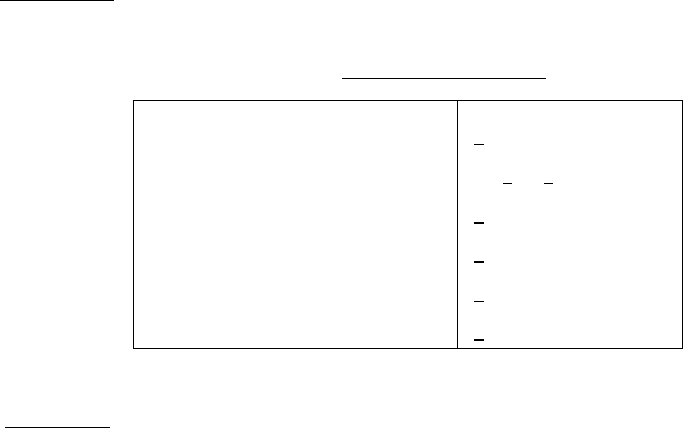
3.5.4 Ionic impurities
. The ionic impurity content shall be determined in accordance with 3.8.7 and shall meet the
requirements specified in table II. Ionic content analysis shall be in triplicate for certification and single analysis for
acceptance testing. Failure at acceptance shall require the passing of two additional samples.
TABLE II. Ionic impurity requirements
.
Total ionic content
specific electrical conductance)
Hydrogen (pH)
Chloride
Sodium
Potassium
Flouride
<
4.50 millisiemens/meter
4.0 <
pH < 9.0
<
200 ppm
<
50 ppm
<
50 ppm
<
50 ppm
Other ions present in quantities > 5 ppm shall be reported in ppm.
3.5.5 Bond strength
. The bond strength of a polymeric material shall be determined in accordance with 3.8.8 at 25°C,
and 25°C after 1,000 hours at 150°C. The bond strength shall meet as a minimum the 1.0X requirement specified in figure
2019-4 of method 2019 of MIL-STD-883 at each test condition. The manufacturer should test to shear or until twice the
minimum 1.0X shear force is reached.