MIL- STD-883F 2004 TEST METHOD STANDARD MICROCIRCUITS.pdf - 第687页
MIL-STD-883F METHOD 5011.4 31 October 1995 7 3.8.2 Vi scosi ty . Th e materia l user and suppli er shal l defi ne a mutually ac cept able meth od for ve rif ying the vis cosi ty of flui d or past e material s. The suppli…

MIL-STD-883F
METHOD 5011.4
31 October 1995
6
3.6 Responsibility for testing. The manufacturer and user are responsible for the performance of all tests as specified in
table I herein.
NOTE: The Government reserves the right to perform any of the inspections set forth in the specification where
such inspections are deemed necessary to assure that supplies and services conform to prescribed requirements.
3.6.1 Test equipment and testing facilities
. Test and measuring equipment and testing facilities of sufficient accuracy,
quality and quantity to permit performance of the required testing shall be established and maintained by the manufacturer
and user. The establishment and maintenance of a calibration system to control the accuracy of the measuring and test
equipment shall be in accordance with ANSI/NCSL Z540-1 or equivalent. The supplier and user may utilize a commercial
laboratory acceptable to the qualifying activity for performing the required certification and acceptance testing.
3.6.2 Testing conditions
. Unless otherwise specified herein, all testing shall be performed in accordance with the test
conditions specified in the "general requirements" of the MIL-STD-883.
3.7 Classification of testing
. The test requirements specified herein are classified as certification testing and acceptance
testing.
3.7.1 Certification testing
. Certification testing shall be performed on the initial lot of material and for any major changes
to the material thereafter and consist of all tests to determine conformance with all requirements specified herein. To insure
that both the polymeric material and the processes employing the material are controlled, both the supplier and the user of
the material shall be responsible for performance of the tests as designated in table I.
3.7.1.1 Sample size
. The number of samples to be subjected to each testing procedure shall be as specified in the
individual test methods.
3.7.1.2 Failures
. Failure of any polymeric material to meet the testing requirements shall be cause for refusal to grant
certification approval.
3.7.1.3 Retention of data
. The data generated for certification shall be retained for a period of 5 years or until a
recertification is performed, whichever is greater.
3.7.2 Acceptance testing
. Acceptance tests shall be performed on each lot and shall consist of tests as specified in
table I.
3.7.2.1 Test lot
. A test lot shall consist of all polymeric material manufactured under the same batch number, i.e., a batch
number identifies those materials whose constituents can be traced to a single lot of raw materials.
3.7.2.2 Sample size
. The number of samples to be subjected to each testing procedure shall be as specified in the
individual test methods.
3.7.2.3 Failures
. Failure of the samples to meet the testing requirements of a specific test shall be cause for rejection of
the lot.
3.7.2.4 Retention of data
. The data generated for acceptance testing shall be retained for a period of 5 years.
3.8 Methods of examination and test
. The following test criteria and analytical protocols shall be documented and
approved by the qualifying activity prior to material certification.
3.8.1 Materials
. The polymeric components or system or both shall be examined visually at a minimum magnification of
30X to ensure conformance with the requirements of 3.4.1.
MIL-STD-883F
METHOD 5011.4
31 October 1995
7
3.8.2 Viscosity
. The material user and supplier shall define a mutually acceptable method for verifying the viscosity of
fluid or paste materials. The supplier shall use the same method in performing the required certification and acceptance
testing.
3.8.3 Pot life
. The parameters to be used in the measurement of pot life (e.g., viscosity change, skin-over, loss of bond
strength, etc.) are generally material dependent. The material supplier and user shall select the procedure to be used in
establishing and testing the pot life.
3.8.4 Shelf life
. Where applicable, an unopened container of material shall be stored under the condition specified in
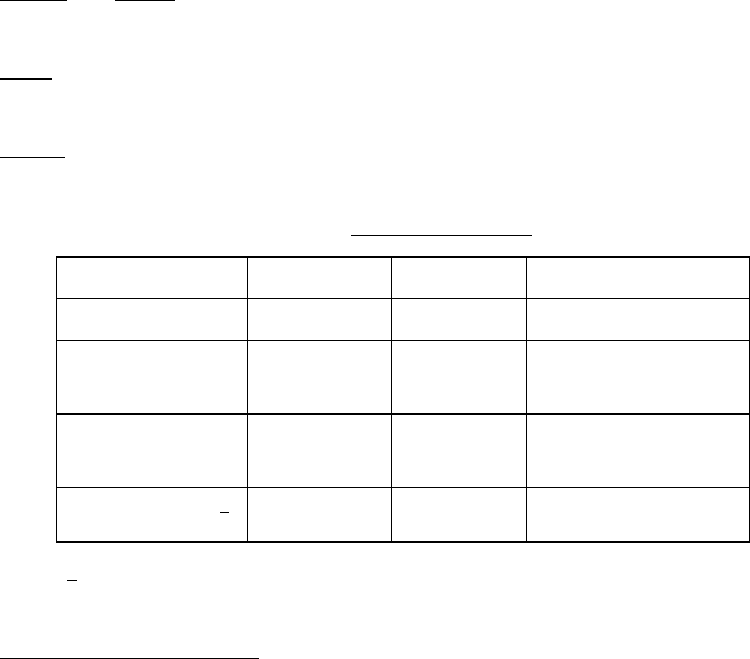
3.4.4. As a minimum, the test methods and requirements specified in table III shall be used to establish the shelf life.
TABLE III. Shelf Life Determination
.
Property
Requirement Test method Application/condition
Materials 3.4.1 3.8.1 All polymeric materials
Pot life 3.4.3 3.8.3
Adhesives; α Absorbers;
Junction coatings;
Dielectrics
Bond strength 3.5.5 3.8.8
Adhesives; α Absorbers;
Junction coatings;
25°C only
Volume resistivity 1/
3.5.8
3.8.11
Adhesives, type I, 25°C
only
1
/ To be determined for materials where electrical conductivity is a design parameter.
3.8.5 Thermogravimetric analysis (TGA)
. The thermal stability of the polymeric system and it's filler content (if any) shall
be determined by testing samples of the cured system (see 3.5.1) in nitrogen using suitable TGA equipment or in
accordance with ASTM D3850. Single point analyses are acceptable, however if the first sample fails, then two additional
analyses must be performed. The average value of the three samples must then meet or exceed the minimum
requirements.

MIL-STD-883F
METHOD 5011.4
31 October 1995
8
3.8.5.1 Thermal stability. The thermal stability of the polymeric material shall be determined by heating the specimens
from room temperature to not less than 210°C, at a heating rate between 10°C/minute and 20°C/minute, in a nitrogen
atmosphere with 20-30 milliliter/minute nitrogen flow. The weight loss at 200°C shall be determined.
3.8.5.2 Filler content
. The filler content of polymeric materials using a filler to promote properties such as electrical or
thermal conductivity shall be determined by heating the specimen from room temperature to 600°C, at a heating rate
between 10°C/minute and 20°C/minute, in an air atmosphere with 20-30 milliliter/minute air flow. The temperature shall be
maintained at 600°C until constant weight is obtained. It is permitted to perform 3.8.5.1, followed by heating from 210°C to
600°C as detailed above. The filler content shall be reported as weight percent of the cured specimen.
3.8.6 Outgassed materials
. Ten test specimens shall be prepared using gold- or nickel-plated Kovar or ceramic
packages, (dielectric materials may be prepared using aluminum coated silicon as the substrate). (The use of "leadless"
packages is permitted to reduce moisture contributions due to package construction). The material shall be cured using the
minimum cure schedule and shall receive the minimum pre-seal bake specified in the assembly document(s) (see 3.5.1).
After a pre-seal bake, the packages shall be hermetically sealed. Only those packages that meet the fine and gross leak
test requirements of test method 1014 shall be submitted for moisture content analysis. If less than 10 test specimens
remain after hermetically testing, the failed packages shall be replaced by additional hermetical packages processed and
tested in the same manner as the original group.
3.8.6.1 Testing for short term outgassing of moisture and other gaseous species
. Five packages containing polymer
prepared in accordance with 3.8.6 shall be heated in accordance with MIL-STD-883, method 1008, 24 hours at 150°C. The
packages shall then be immediately (less than or equal to 5 minutes) inserted into the ambient gas analysis apparatus. The
packages shall be subjected to ambient gas analysis in accordance with MIL-STD-883, method 1018, procedure 1. In
addition to moisture, other gaseous species present in quantities greater than or equal to 100 ppmv (0.01 percent V/V) shall
be reported in ppmv or percent V/V. This test shall meet the requirements of 3.5.3.
NOTE: From the 5 packages prepared in accordance with MIL-STD-883, method 1008, only 3 packages are required to
be subjected to the ambient gas analysis testing and the pass criteria of 3 packages (0 failures) shall apply (see
3.5.3). However, in the event of a failure, the testing of the remaining 2 packages shall be required in order to
pass with the criteria of 5 packages (1 failure).
All polymeric materials tested shall have quantities of material equivalent in mass and exposed surface area to that of
the intended application. Gold plated Kovar tabs and alumina blanks may be used as facsimile device elements.
Several polymeric materials of different application may be tested in combination with each other in this test, however
their combined moisture content shall not exceed 5,000 ppmv.
3.8.6.2 Testing for long term outgassing of moisture and other gaseous species
. Provided that the moisture requirement
of 3.5.3 has been met by packages tested in 3.8.6.1, the remaining five devices containing polymer from the group prepared
in accordance with 3.8.6 shall be heated in accordance with MIL-STD-883, method 1008 for 1,000 hours at 150°C. The
packages shall then be immediately (less than or equal to 5 minutes) inserted into the ambient gas analysis apparatus. The
packages shall be subjected to ambient gas analysis in accordance with MIL-STD-883, method 1018, procedure 1. In
addition to moisture, other gaseous species present in quantities greater than or equal to 100 ppmv (0.01 percent V/V) shall
be reported in ppmv or percent V/V.
3.8.7 Ionic impurities
. A water-extract analysis shall be performed to determine the level of ionic contamination in the
cured polymeric material. The total ion content (specific electrical conductance) and the specific ionic content for the
hydrogen (pH), chloride, sodium, fluoride and potassium ions shall be measured. Other ions present in quantities > 5 ppm
shall also be reported in ppm. The methods of analysis submitted in the following paragraphs are suggested techniques.
Alternate methods of analysis may be selected where it can be shown that the techniques are equivalent and the method of
analysis is approved by the qualifying activity.
3.8.7.1 Sample preparation
. Adequate material shall be cured to obtain 3 gram samples of polymer following grinding, for
final preparation. The material shall be cured on teflon or other inert surface in a forced draft oven. When possible the
cured specimen shall be removed from the curing substrate and ground to 60-100 mesh particles; polymeric film samples
less than or equal to 0.025 cm thick shall be cured and cut into less than or equal to 0.25 cm
2
samples; gels or low modulus
materials may be cast directly into the flat bottom of the sample flask for the extraction. Smaller sample sizes may be
selected where it can be shown that the accuracy of the test method has not changed.