MIL- STD-883F 2004 TEST METHOD STANDARD MICROCIRCUITS.pdf - 第704页
MIL-STD-883F METHOD 5012.1 27 July 199 0 10 TABL E III. Sam ple sizes u sed to o btain lo wer bo und on fault c overage us ing faul t si mulation pr ocedure 2 . r n 0.01 0.015 0.02 0.03 0.04 0.05 6860 3070 1740 790 450 2…
MIL-STD-883F
METHOD 5012.1
27 July 1990
9
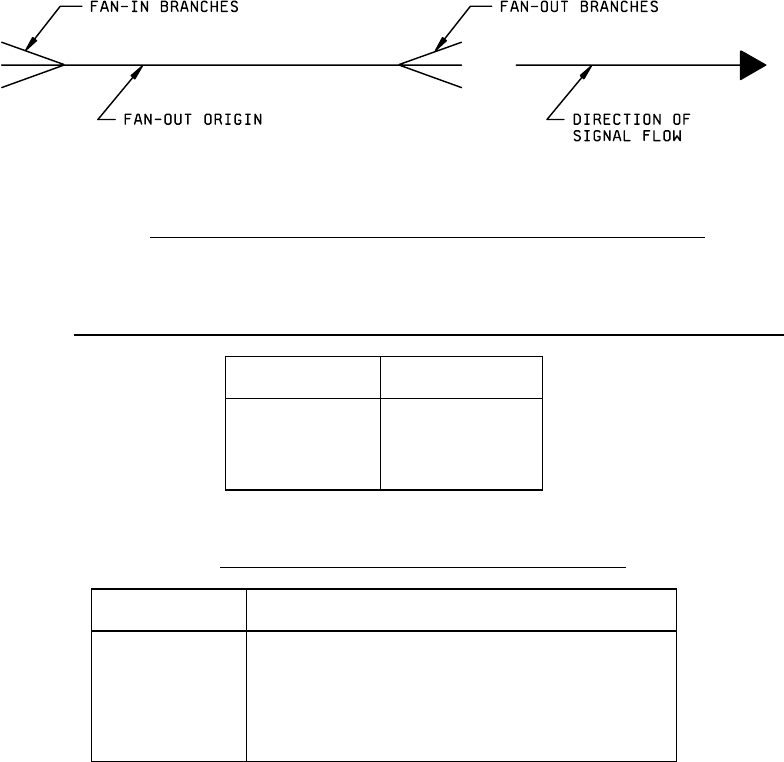
FIGURE 1. Node consisting of fan-in branches, a fan-out origin, and fan-out branches
.
TABLE I. Penalty values, P, for LFSR signature analyzers implementing primitive polynomial of degree k
.
K
p
k < 8
k = (8...15)
k = (16...23)
k > 23
1.0
0.05
0.01
0.0
TABLE II. Representative faults for the fault equivalence classes
.
Stuck-at faults
Type of logic line in logic model
s-a-1
s-a-0
s-a-0, s-a-1
s-a-0, s-a-1
s-a-0, s-a-1
Every input of multiple-input AND or NAND gates
Every input of multiple-input OR or NOR gates
Every input of multiple-input components
that are not AND, OR, NAND, or NOR gates
Every logic line that is a fan-out origin
Every logic line that is a primary output
Note: "s-a-0" is stuck-at-zero and "s-a-1" is stuck-at-one.

MIL-STD-883F
METHOD 5012.1
27 July 1990
10
TABLE III. Sample sizes used to obtain lower bound on fault coverage using fault simulation procedure 2.
r
n
0.01
0.015
0.02
0.03
0.04
0.05
6860
3070
1740
790
450
290
NOTE: "n" is the minimum sample size required for a chosen penalty "r".
TABLE IV. Sample sizes used to accept/reject lower bound on fault coverage using fault simulation procedure 3
.
F
n F'
50.0%
55.0%
60.0%
65.0%
70.0%
75.0%
76.0%
77.0%
78.0%
79.0%
80.0%
81.0%
82.0%
83.0%
84.0%
85.0%
86.0%
87.0%
88.0%
89.0%
90.0%
91.0%
92.0%
93.0%
94.0%
95.0%
96.0%
97.0%
98.0%
99.0%
5
6
6
7
9
11
11
12
13
13
14
15
16
17
18
19
20
22
24
26
29
32
36
42
49
59
74
99
149
299
87.1%
89.1%
89.1%
90.6%
92.6%
93.9%
93.9%
94.4%
94.8%
94.8%
95.2%
95.5%
95.8%
96.0%
96.2%
96.4%
96.6%
96.9%
97.2%
97.4%
97.6%
97.9%
98.1%
98.4%
98.6%
98.8%
99.1%
99.3%
99.5%
99.8%
NOTE: For a given minimum required fault coverage "F" simulate "n" faults. If all faults are detected, then conclude that the
actual fault coverage is greater than or equal to "F". Otherwise, conclude that the actual fault coverage is less than "F." The
column labeled "F'" shows the actual fault coverage that has a 50 percent probability of acceptance.

MIL-STD-883F
METHOD 5013
27 July 1990
1
METHOD 5013
WAFER FABRICATION CONTROL AND WAFER ACCEPTANCE
PROCEDURES FOR PROCESSED GaAs WAFERS
1. PURPOSE
. This method specifies wafer fabrication control and wafer acceptance requirements for GaAs monolithic
microcircuits for application in class level B or class level S microcircuits. It shall be used in conjunction with other
documents such as MIL-PRF-38535, MIL-PRF-38534 and an applicable device specification or drawing to establish the
design, material, performance, control, and documentation requirements.
2. APPARATUS
. The apparatus required for this test method includes metallurgical microscopes capable of up to 1,000X
magnification, a scanning electron microscope (SEM), electrical test equipment suitable for the measurement of process
monitor (PM) test structures and other apparatus as required to determine conformance to the requirements of this test
method.
3. PROCEDURE
. The procedures defined herein specify the wafer fabrication controls and wafer acceptance tests
necessary for the production of GaAs wafers compliant to the requirements of this test method.
3.1 Precedence
. Unless otherwise specified in the device specification or drawing, the test requirements and conditions
shall be as given herein.
3.2 Wafer fabrication line controls
.
3.2.1 Process baseline
. The use of this test method is restricted to a well characterized (controlled) and baselined
process. By "characterized" it is meant that the fabrication line has been adequately documented in relation to the
capabilities of the process. "Baselined" refers to the existence of a well defined process parameter target value with
associated variances (based on characterization data) against which the actual wafer to wafer process data is measured to
determine acceptability. The manufacturer shall submit process baseline documentation as specified herein to the acquiring
activity for approval.
3.2.2 Statistical process control
. The manufacturers shall have implemented statistical process control (SPC) for the
wafer fabrication line in accordance with the requirements of EIA-557-A.
3.2.2.1 Alternate visual inspection procedure for class level B microcircuits
. A sample plan for visual inspection in
accordance with 3.1 of test method 2010 may be implemented in lieu of 100 percent visual inspection for processes
controlled by the SPC program. The sample size for inspection shall be identified in the baseline process documentation.
3.2.3 Incoming material evaluation
. Incoming material evaluation shall be performed as documented in the process
baseline to assure compatibility with wafer fabrication specifications and manufacturing procedures.
3.2.4 Electrostatic discharge sensitivity
. The manufacturer shall develop and implement an ESD control program for the
wafer fabrication area.
3.2.5 Failure analysis
. When required by the applicable device specification or drawing, failure analysis shall be
performed on wafers rejected at in-process or acceptance testing.
3.3 Wafer acceptance tests
.
3.3.1 General
. This wafer lot acceptance procedure is based on wafer visual inspection and electrical testing of suitable
process monitors (PMs), see table I. The performance of each wafer shall be evaluated individually. Process monitor
measurements, verifying that the identified baseline parameters are within process limits, will be required from each wafer
lot in accordance with 3.3.2 herein.