17-2756-ASM Broschüre ASM AP EN_171020 - 第7页
Die Attach & SMT Encapsulation Singulation WLP Inspection, T ext & Packing 3 4 5 ELECTROFORM STENCIL PRODUCTS SPECIFICA TIONS Platinum Stencil Product Range Aperture (hole) size tolerance ±4 μm Aperture positiona…
Deposition
PrintingStencil technology
Die Attach & SMT
1
2
The assembly of ultra-compact SiP de-
signs requires maximum precision and
extremely thin stencils with ultra- ne
apertures. This is the only way to achieve
the area ratio parameters that permit a
reliable release of the print media and
ensure a stable printing process.
In addition, specially developed multi-layer
stencil technology is used to place solder
balls directly on the substrate. In a rst
step, ux is applied, which is important for
the soldering process. Next, the solder
balls for the SMT components are applied
in a second printing process. This would
be impossible without specially developed
multi-level stencils whose cavities leave
the ux deposits untouched.
Classic etching or laser-cutting methods
quickly hit their limits with such stencils,
which is why ASM has for many years pu-
shed the development of electroforming as
an additive manufacturing method for high-
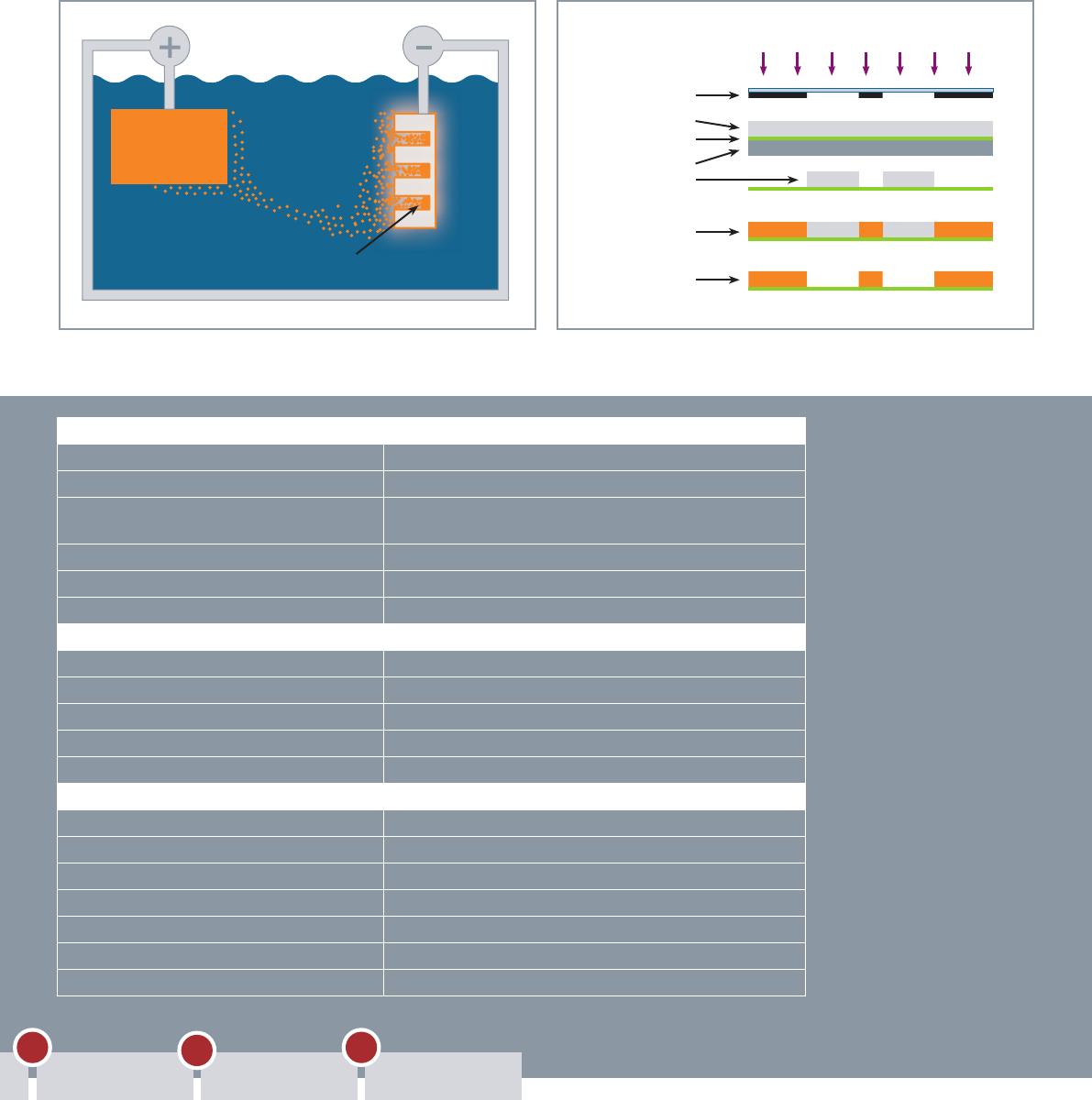
precision stencils. With a galvanic process
and supported by lithography, multi-level
stencils can be made from various materi-
als with tolerances in the nanometer range.
Another plus of DEK e-formed stencils is
the extremely high quality of their surfaces
and aperture walls, which makes for signi-
cantly improved printing media release
characteristics, more accurate paste de-
posits, and reduced understencil cleaning
frequencies.
In summary, the combination of DEK
E-Form high-precision stencils and DEK
printing solutions lets you manage your
printing process with ef ciency and relia-
bility.
Stencil Technology
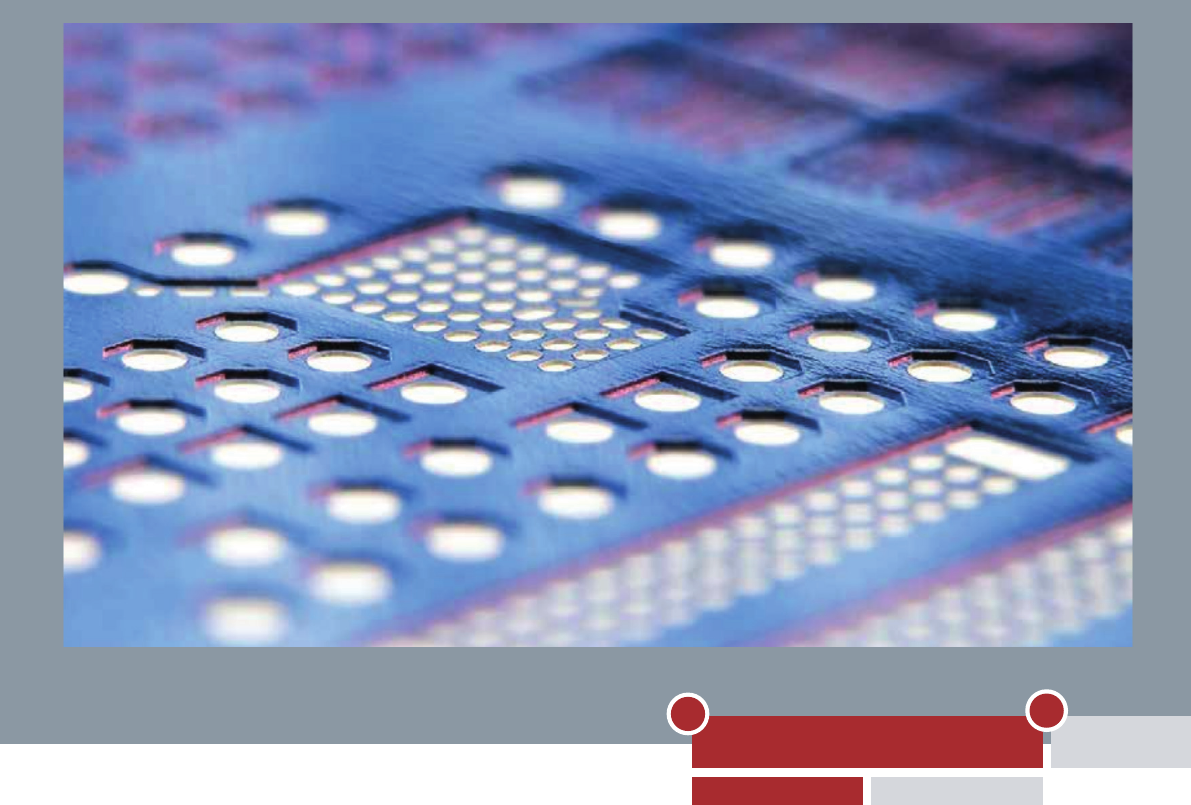
E-forming produces the finest multi-level apertures
6
Die Attach & SMT
Encapsulation Singulation
WLP Inspection,
Text & Packing
3
4
5
ELECTROFORM STENCIL PRODUCTS SPECIFICATIONS
Platinum Stencil Product Range
Aperture (hole) size tolerance ±4 μm
Aperture positional tolerance distance < 50 mm ±50 µm
> 50 mm 0.1 µ/mm (VG) , 0.3 µ/mm (mesh mounted)
Thickness tolerance ±5 % of thickness
Fiducials max. 8
Material nickel 500 HV ±50
QC
Aperture checking 10 apertures
Thickness checking 5 × in Image area + coc
X/Y accuracy check + coc
Documentation extended + drawing
Scan (presence/absence) 100 %
RECOMMENDED PRINT APPLICATIONS
semiconductor packaging
wafer level printing
LED and/or trace printing
high accuracy printing
multi layer stencil
aperture sizes down to 25 µ
min. thickness possible 20 µ (0.75mil)
7
Mask
Photoresist
Seed layer
Substrate
Photoresist
molds
Electroformed
metals
Metallic
microstructure
Source: Wikipedia
UV Light or X-rays
Electrolytic solution Electroform
Electrodeposition
process
Metal
TRS Tooling
Die Attach & SMTDeposition
PrintingStencil technology
1
2
Advanced packaging places extremely
high demands on the printing process, be-
cause it requires ultra-ne apertures and
maximum precision along with separate
printing steps involving different technolo-
gies and media.
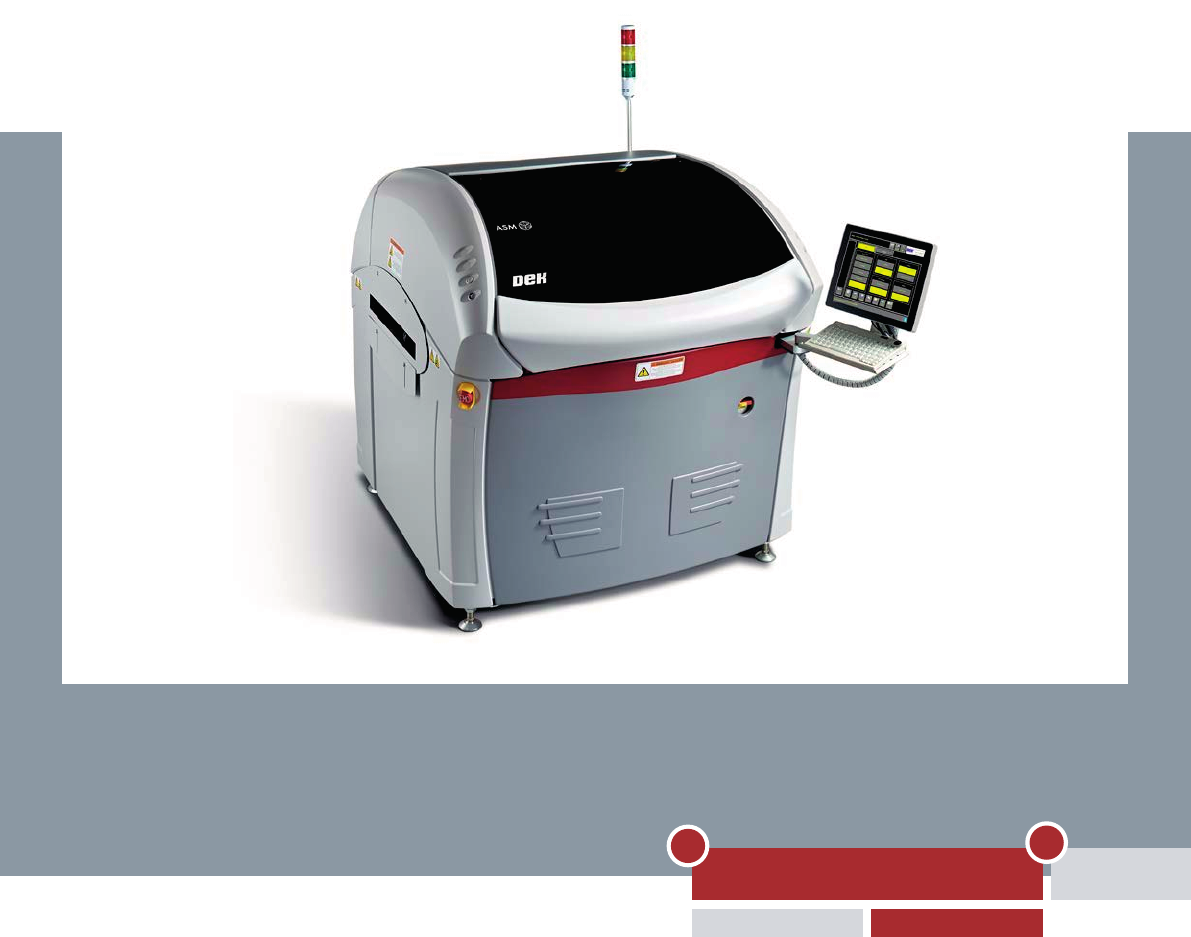
With the DEK Galaxy, our printing experts
have developed an extremely powerful,
modular and exibly congurable solution
for use in advanced-packaging processes.
Precise linear motors and a stable frame
ensure maximum precision even at high
printing speeds. In addition, ASM offers
a variety of options and accessories that
enable you to optimally adapt the DEK
Galaxy to your specic process require-
ments, starting with the conveyor, whose
standard version already accommodates a
wide range of panel sizes. Conveyor solu-
tions for high-precision (and heavy) wafer
carriers are also available.
A wide range of sensors and the
HawkEye
®
inspection system ensure
seamless process control. SMEMA- and
HERMES-compatible interfaces makes
it easy to integrate the machine into your
lines and processes.
Printing & Ball Drop
The printing solution for advanced packaging processes:
DEK Galaxy
8