1OPERATION_.pdf - 第71页
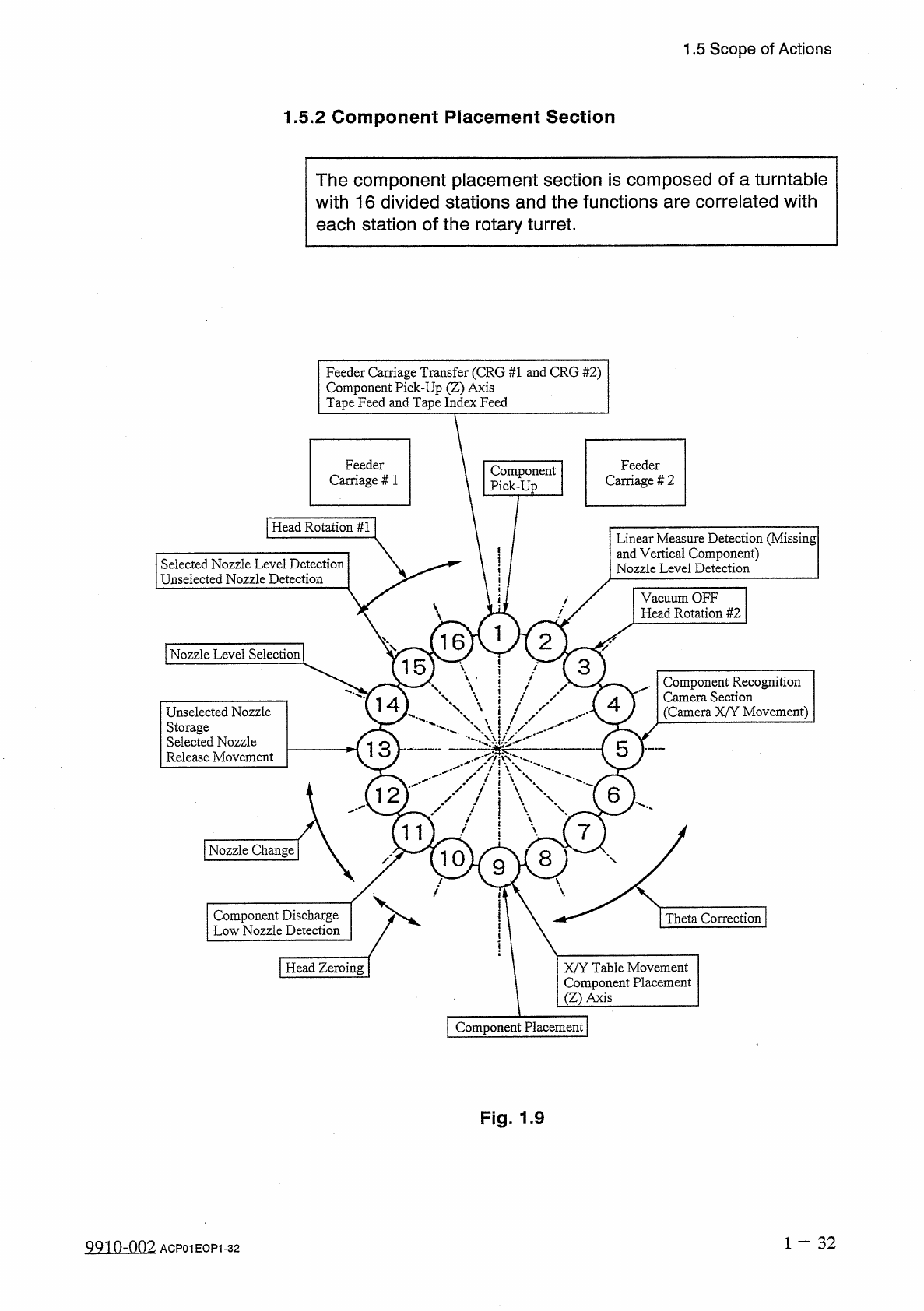
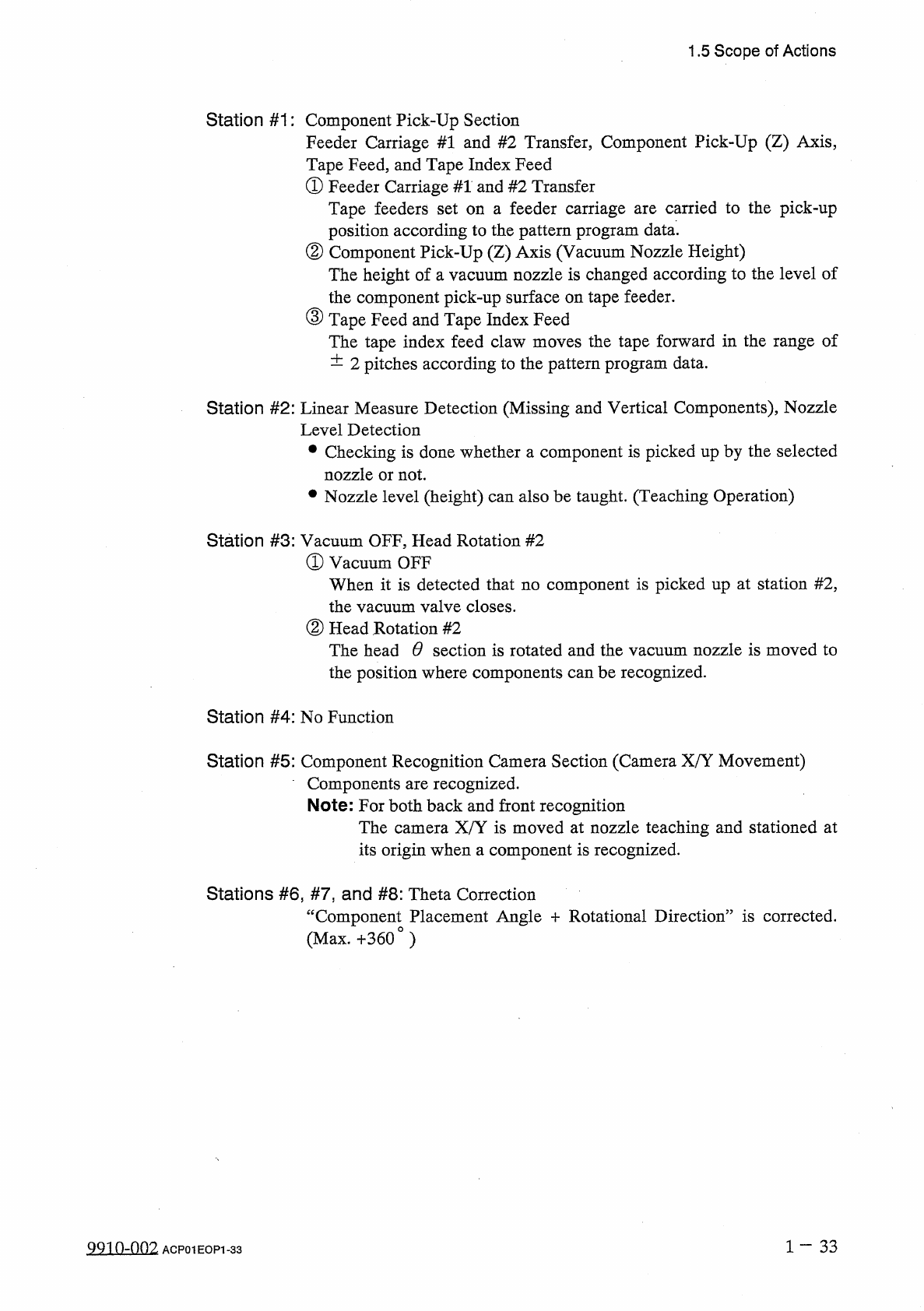
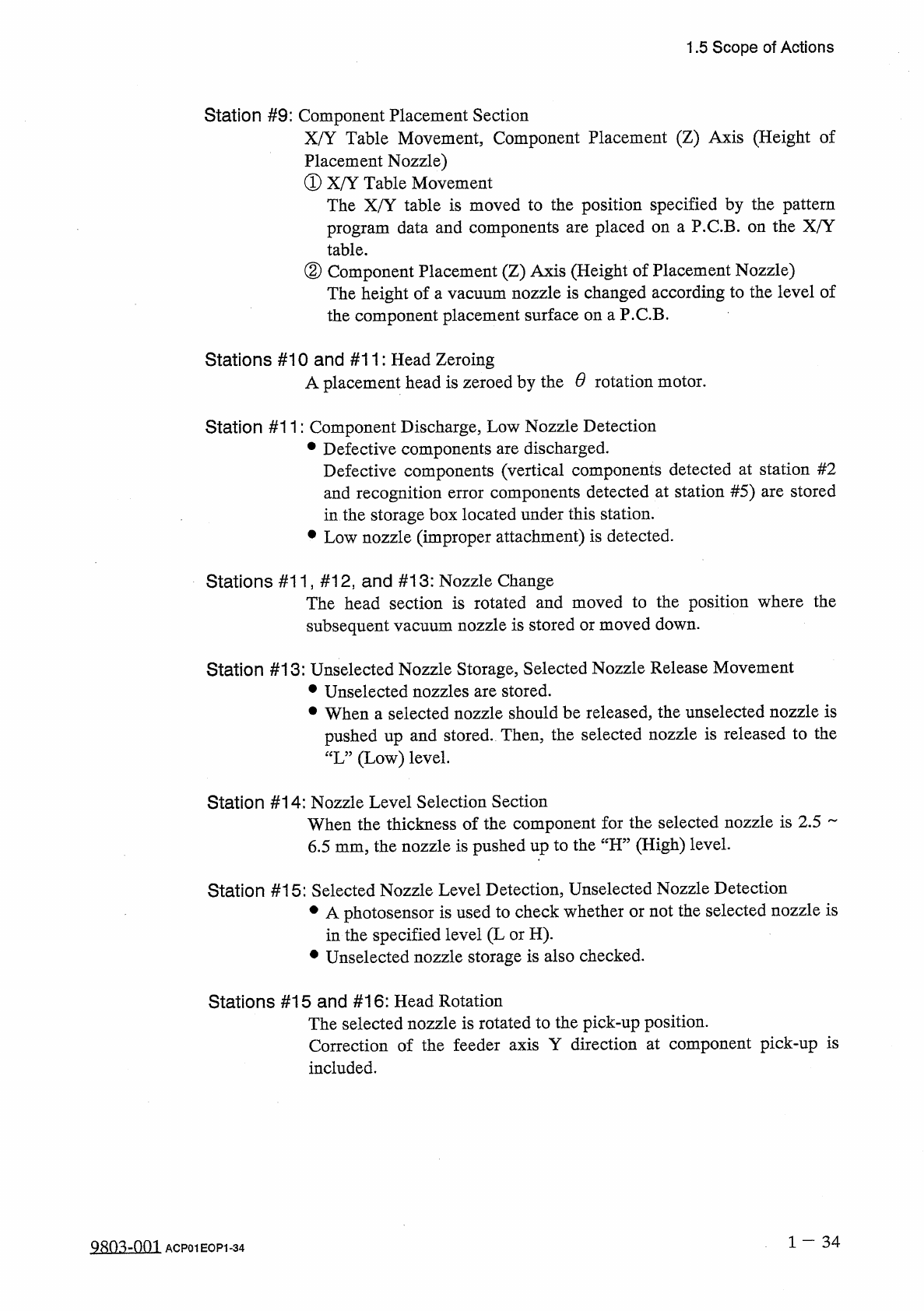
1.5 Scope of Actions Station # 1 : Component Pick - Up Section Feeder Carriage # 1 and # 2 Transfer , Component Pick - Up ( Z ) Axis , Tape Feed , and Tape Index Feed ① Feeder Carriage # 1 Tape feeders set on a feeder ca…
1.5
Scope
of
Actions
1.5
.
2
Component
Placement
Section
The
component
placement
section
is
composed
of
a
turntable
with
16
divided
stations
and
the
functions
are
correlated
with
each
station
of
the
rotary
turret
.
Feeder
Carriage
Transfer
(
CRG
#
1
and
CRG
#
2
)
Component
Pick
-
Up
(
Z
)
Axis
Tape
Feed
and
Tape
Index
Feed
Feeder
Carriage
#
1
Feeder
Carriage
#
2
Component
Pick
-
Up
|
Head
Rotation
#
1
Linear
Measure
Detection
(
Missing
and
Vertical
Component
)
Nozzle
Level
Detection
Selected
Nozzle
Level
Detection
Unselected
Nozzle
Detection
Vacuum
OFF
Head
Rotation
#
2
2
16
[
NozzleLevel
Selection
|
3
15
)
\
Component
Recognition
Camera
Section
(
Camera
X
/
Y
Movement
)
\
14
4
Unselected
Nozzle
Storage
Selected
Nozzle
Release
Movement
"
、
'
皱
:
5
13
6
12
11
7
I
Nozzle
Change
W
9
8
|
Theta
Correction
|
Component
Discharge
Low
Nozzle
Detection
I
Head
Zeroing
X
/
Y
Table
Movement
Component
Placement
(
Z
)
Axis
|
Component
Placement
|
Fig
.
1.9
1
-
32
QQ
10
-
002
ACP
01
EOP
1
-
32
1.5
Scope
of
Actions
Station
#
1
:
Component
Pick
-
Up
Section
Feeder
Carriage
#
1
and
#
2
Transfer
,
Component
Pick
-
Up
(
Z
)
Axis
,
Tape
Feed
,
and
Tape
Index
Feed
①
Feeder
Carriage
#
1
Tape
feeders
set
on
a
feeder
carriage
are
carried
to
the
pick
-
up
position
according
to
the
pattern
program
data
.
②
Component
Pick
-
Up
(
Z
)
Axis
(
Vacuum
Nozzle
Height
)
The
height
of
a
vacuum
nozzle
is
changed
according
to
the
level
of
the
component
pick
-
up
surface
on
tape
feeder
.
③
Tape
Feed
and
Tape
Index
Feed
The
tape
index
feed
claw
moves
the
tape
forward
in
the
range
of
±
2
pitches
according
to
the
pattern
program
data
.
and
#
2
Transfer
Station
#
2
:
Linear
Measure
Detection
(
Missing
and
Vertical
Components
)
,
Nozzle
Level
Detection
•
Checking
is
done
whether
a
component
is
picked
up
by
the
selected
nozzle
or
not
.
•
Nozzle
level
(
height
)
can
also
be
taught
.
(
Teaching
Operation
)
Station
#
3
:
Vacuum
OFF
,
Head
Rotation
#
2
①
Vacuum
OFF
When
it
is
detected
that
no
component
is
picked
up
at
station
#
2
,
the
vacuum
valve
closes
.
②
Head
Rotation
#
2
The
head
6
section
is
rotated
and
the
vacuum
nozzle
is
moved
to
the
position
where
components
can
be
recognized
.
Station
#
4
:
No
Function
Station
#
5
:
Component
Recognition
Camera
Section
(
Camera
X
/
Y
Movement
)
Components
are
recognized
.
Note
:
For
both
back
and
front
recognition
The
camera
X
/
Y
is
moved
at
nozzle
teaching
and
stationed
at
its
origin
when
a
component
is
recognized
.
Stations
#
6
,
#
7
,
and
#
8
:
Theta
Correction
“
Component
Placement
Angle
+
Rotational
Direction
”
is
corrected
.
(
Max
.
+
360
°
)
1
—
33
QQ
10
-
002
ACP
01
EOP
1
-
33
1.5
Scope
of
Actions
Station
#
9
:
Component
Placement
Section
X
/
Y
Table
Movement
,
Component
Placement
(
Z
)
Axis
(
Height
of
Placement
Nozzle
)
①
X
/
Y
Table
Movement
The
X
/
Y
table
is
moved
to
the
position
specified
by
the
pattern
program
data
and
components
are
placed
on
a
P
.
C
.
B
.
on
the
X
/
Y
table
.
②
Component
Placement
(
Z
)
Axis
(
Height
of
Placement
Nozzle
)
The
height
of
a
vacuum
nozzle
is
changed
according
to
the
level
of
the
component
placement
surface
on
a
P
.
C
.
B
.
Stations
#
10
and
#
11
:
Head
Zeroing
A
placement
head
is
zeroed
by
the
6
rotation
motor
.
Station
#
11
:
Component
Discharge
,
Low
Nozzle
Detection
•
Defective
components
are
discharged
.
Defective
components
(
vertical
components
detected
at
station
#
2
and
recognition
error
components
detected
at
station
#
5
)
are
stored
in
the
storage
box
located
under
this
station
.
•
Low
nozzle
(
improper
attachment
)
is
detected
.
Stations
#
11
,
#
12
,
and
#
13
:
Nozzle
Change
The
head
section
is
rotated
and
moved
to
the
position
where
the
subsequent
vacuum
nozzle
is
stored
or
moved
down
.
Station
#
13
:
Unselected
Nozzle
Storage
,
Selected
Nozzle
Release
Movement
•
Unselected
nozzles
are
stored
.
•
When
a
selected
nozzle
should
be
released
,
the
unselected
nozzle
is
pushed
up
and
stored
.
Then
,
the
selected
nozzle
is
released
to
the
“
L
”
(
Low
)
level
.
Station
#
14
:
Nozzle
Level
Selection
Section
When
the
thickness
of
the
component
for
the
selected
nozzle
is
2.5
~
6.5
mm
,
the
nozzle
is
pushed
up
to
the
“
H
”
(
High
)
level
.
Station
#
15
:
Selected
Nozzle
Level
Detection
,
Unselected
Nozzle
Detection
•
A
photosensor
is
used
to
check
whether
or
not
the
selected
nozzle
is
in
the
specified
level
(
L
or
H
)
.
•
Unselected
nozzle
storage
is
also
checked
.
Stations
#
15
and
#
16
:
Head
Rotation
The
selected
nozzle
is
rotated
to
the
pick
-
up
position
.
Correction
of
the
feeder
axis
Y
direction
at
component
pick
-
up
is
included
.
1
-
3 4
9803
-
001
ACP
01
EOP
1
-
34