00195346-0302_SM_WPC4_EN.pdf - 第10页
Operational Safety Safety Instructions Qualified P ersonnel 10 Ser vice Manual SIPLACE WPC4 2.2 Safety Instructions 2.2.1 Qualified Personnel Qualified or adequately trained personnel means th at these people are fam ili…
Operational Safety
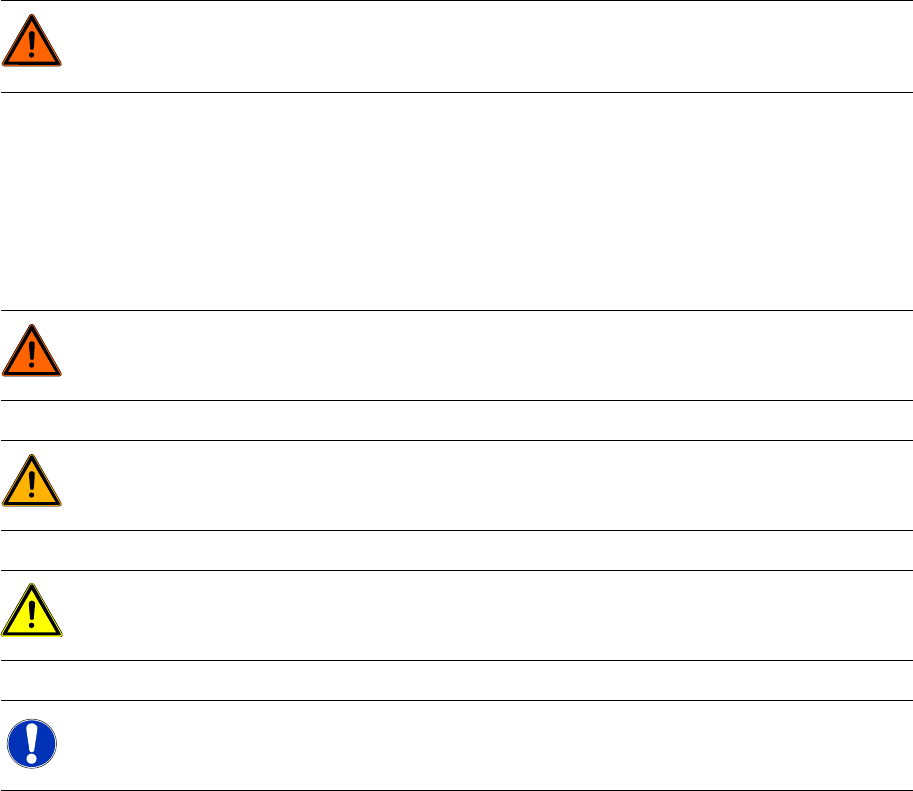
Conventions for the Use of Safety Instructions
Service Manual SIPLACE WPC4
9
2 Operational Safety
2.1 Conventions for the Use of Safety Instructions
Always follow the safety instructions in this manual to ensure your personal safety and to avoid damage
to property. These instructions are marked by triangular warning symbols and show the degree of hazard
as follows:
DANGER: Nonobservance increases the risk of injury and/or damage to the machine!
X Please observe the safety instructions in the relevant user manual of the machine for all
service work!
DANGER:
For the purposes of this manual, this indicates that fatal or severe injuries or considerable
damage to property will occur if these warning instructions are not observed.
WARNING:
For the purposes of this manual, this indicates that fatal or severe injury or considerable damage
to property may occur if this warning is not observed.
ATTENTION:
For the purposes of this manual, this indicates that minor injury or damage to property may occur
if this caution is not observed.
NOTE:
For the purposes of this manual, this note provides information about the product or indicates a
part of the manual that requires particular attention.

Operational Safety
Safety Instructions Qualified Personnel
10 Service Manual SIPLACE WPC4
2.2 Safety Instructions
2.2.1 Qualified Personnel
Qualified or adequately trained personnel means that these people are familiar with the setting up,
operation and maintenance of placement machines and add-on devices and are suitably qualified. e.g:
Have been trained, instructed or authorized to switch on and off, isolate, earth and identify electrical
circuits and system components in accordance with normal safety standards.
Have been trained or instructed in the upkeep and use of appropriate safety equipment in
accordance with normal safety standards.
Have received first aid training.
2.2.2 Safety Instructions for the Power Supply
This means that some parts of the system carry potentially lethal voltages - even when switched off
at the main power switch.
Incorrect handling of the machine can therefore result in fatal or severe injuries or considerable
damage to property.
Measurements and repairs must always be carried out by appropriately qualified personnel.
Always follow the applicable accident prevention and DIN regulations (particularly DIN EN 60 204
part 1) or the regulations specific to your country.
Before starting any repairs, switch off at the main switch and disconnect the machine from the main
power supply.
Always secure the machine against unauthorized reactivation. If these instructions are not followed,
it is possible to touch live parts, which could result in death or severe injury.
Replacing Assemblies
X End all placement operations on the machine.
X Shut down the Windows operating system correctly, otherwise problems may occur when restarting
or data may be lost.
X Switch the placement machine off at the main power switch.
X Disconnect the machine from the power supply.
X Secure the machine to prevent it being switched on again and put up warnings signs to indicate that
service work is in progress.
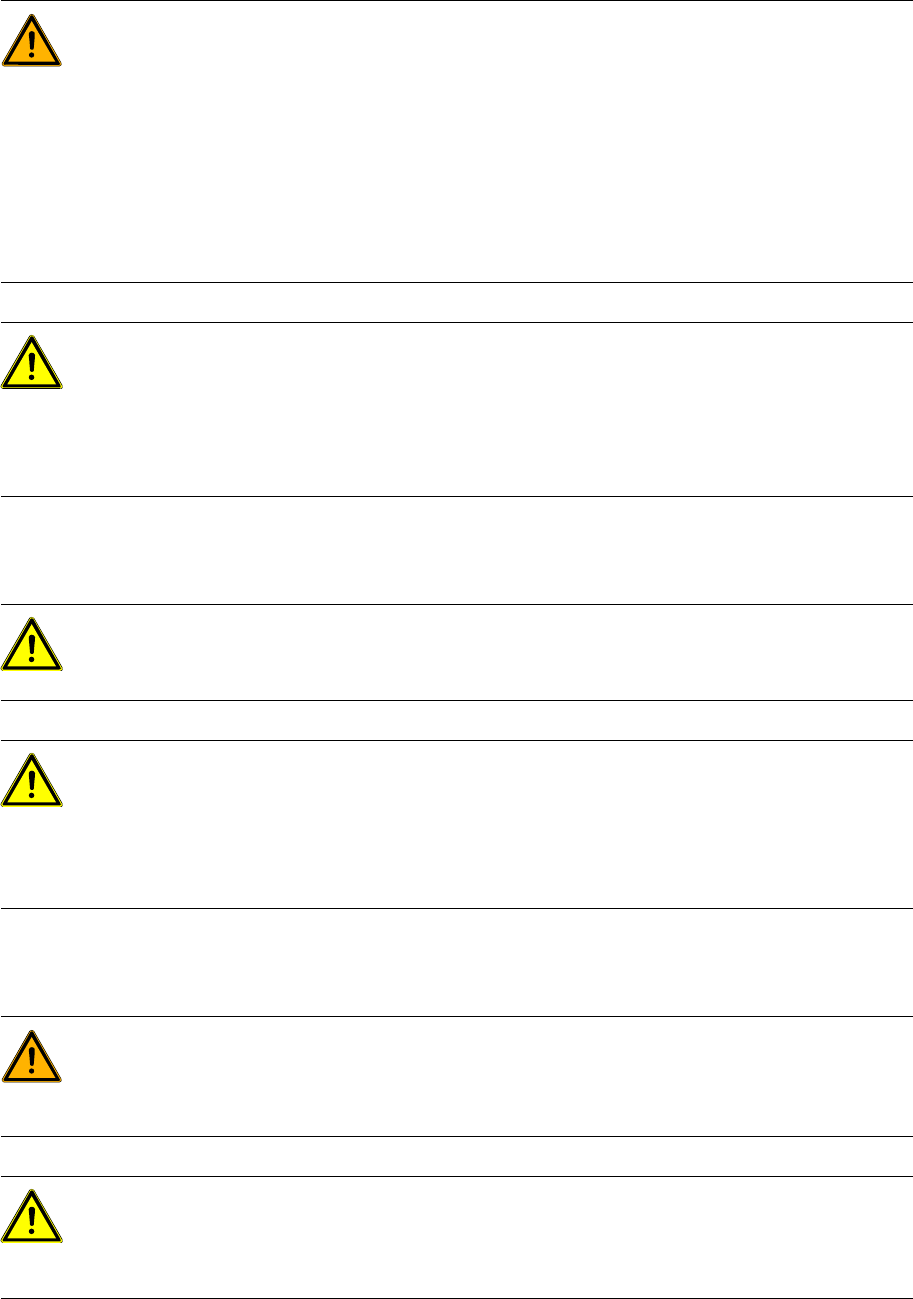
WARNING: Hazardous Voltages
The machine is supplied with 3 x 400 V~ (or 3 x 204 V~ / 3 x 230 V~ / 3 x 380 V~ / 3 x 415 V~)
± 5 %, 50/60 Hz mains voltage.
X Observe the safety instructions in the operating manual during all service work!
Operational Safety
Safety Instructions for the Compressed Air Supply Safety Instructions
Service Manual SIPLACE WPC4
11
2.2.2.1 Safety Instructions for Work on the Cutting Device
2.2.3 Safety Instructions for the Compressed Air Supply
2.2.4 Safety Instructions for Working with Strong Magnetic Fields
WARNING: Risk of injury when working near the cutter.
If you wish to work on the tape cutter, disconnect the machine from the mains supply and
compressed air supply.
X Wait until the operating pressure has dropped to 0 MPa.
X Always secure the machine against unauthorized reactivation.
X Wear appropriately thick protective gloves when working near the blades/the tape deflector!
X There is a high risk of injury from stationary blades and moveable blades and from the tape
deflector of the cutter, even when the machine has been turned off!
X Never reach into the pneumatic cutter from below or into the empty-tape duct from above, not
even to resolve a problem (e.g. when tape is jammed).
CAUTION: Risk of injury when performing service work on the cutter.
Never support the cutter on your body, e.g., on your knees or thighs. Do not place your feet
under the cutter.
X Wear robust protective gloves.
X When removing the cutter, grasp it only on the left and right, on the outside.
X Make certain that no one can injury themselves on the cutter, after it has been dismantled!
CAUTION: Risk of injury from compressed air!
Risk of injury when disconnecting the compressed air lines.
X NEVER detach compressed air lines while they are still pressurized.
ATTENTION: Prolonged interruptions to the compressed air supply could cause damage.
When the machine is switched on, do not use the stop valve to interrupt the compressed air
supply for more than 30 minutes.
X If you need to shut off the pneumatic system for longer in order to carry out preventive
maintenance or servicing work, you must switch the placement system off at the main switch
and disconnect it from the power supply.
WARNING: STRONG MAGNETIC FIELDS
Fatal hazard: persons with active implants (e.g. pacemakers, defibrillators, insulin pumps etc.)
are at risk from strong permanent magnetic fields inside the machine.
X Persons are risk should avoid the immediate vicinity of the machine.
CAUTION: DANGER OF CRUSHING
Danger of crushing for persons with passive metal implants (e.g. plates, screws).
X Do not reach into the machine or bend towards it when the protective covers are open.
X Do not bring any metal objects into the area.