【IPC-7095C】_BGA设计与组装工艺的实施_(IPC标准).pdf - 第164页
Theo I. Eijm, Albert Holliday , Frank E. Bader and Steven Gahr . A T & T Bell Laboratories, Princeton, J. “Designed Experiment to Determine Attachment Reliability Drivers for PBGA Packages.” ‘ ‘Thermal and Power Cyc…

11 参考书⽬与参考⽂献
ASI/IPC-MF-150F, “Metal Foil for Printed Wiring
Applications,” The Institute for Interconnecting and
Packaging Electronic Circuits, Lincolnwood, IL, October
1991.
Attarwala, A. I., and R. Stierman, “Failure Mode Analysis
of a 540 Pin Plastic Ball Grid Array,” Proc. Surface
Mount International Conf., San Jose, CA, August-
September 1994, pp. 252-257.
Bogatin, E., “BGAs for Workstation Application,” Proc.
Ball Grid Array at. Symp., Dallas, TX, March 1995.
Davignon, John, and Gray, Foster. “An evaluation of via
hole tenting with solder mask designed to pass Mil-P-
55110D thermal shock requirements.” Proceedings of
Technical Program SMI 91, San Jose, August 25-29,
1991, pp. 905-921.
Denkler, J. D. “The speed of liquid.” Circuits Manufac-
turing, May 1986, pp. 21-24.
D. Hillman, D. Adams, T. Pearson, B. Williams, B.
Petrick, R. Wilcoxon, Rockwell Collins; and D. Bernard,
J. Travis, E. Krastev, V. Bastin, ordson Dage, “The Last
Will and Testament of the BGA Void,” SMTA Interna-
tional 2011.
Engelmaier, W., and B. Fuentes, “Alloy 42: A Material to
be Avoided for Surface Mount Solder Component Leads
and Lead Frames,” Proc. Surface Mount International
Conf., San Jose, CA, August-September 1994, pp. 644-
655; also in Proc. Int. Electronics Packaging Conf.
(IEPS), Atlanta, September 1994, pp. 503-516.
Engelmaier, W., “Reliability Figures of Merit for Surface
Mount Solder Attachments of Components: 2nd Genera-
tion Generic Design Tools,” Proc. Surface Mount Interna-
tional Conf., San Jose, CA, August 1991, pp. 1239-1243.
Engelmaier, W., “Solder Joint Reliability for BGAs and
Other Advanced Electronic Components,” Workshop
otes, Engelmaier Associates, L.C., Ormond Beach, FL,
1999.
Greg Hillman, DfR Solutions, Long-term reliability of
Pb-free electronics (Kirkendall Voiding) hhtp://
www.electronicproducts.com/rohs/?filename+dfr.sep
2005. html
Hines, L. L., “SOT-23 Surface Mount Attachment Reli-
ability Study,” Proc. 7th Annual Int. Electronics Packag-
ing Conf. (IEPS), Boston, MA, ovember 1987, pp.
613-629.
Hwang, J. & Kho, V., “Lead-free Implementation:
Drop-In Manufacturing,” APEX Conference Proceed-
ings, 2004, pp. S40-2-1 to S-40-2-13.
Hwang, J., “Environment-Friendly Electronics: Lead-
free Technology,” ISB 0 901150 401, Electrochemical
Publications LTD, 2001, p. 242 and pp. 64-105.
IPC-TR-462, “Solderability Evaluation of Printed Boards
with Protective Coatings over Long Term Storage,” Octo-
ber 1987, IPC Publications.
John Lau, “Ball Grid Array Technology” 1995. p.122.
Shows a graph of relative PCB cost per layer count.
Katchmar, R., “Position Dependence of CTE in Plastic
Ball Grid Arrays,” Proc. Int. Electronics Packaging Conf.
(IEPS), Atlanta, September 1994, pp. 271-283.
Lebonheur, C. Matayaba, S. Houle, and Y. Xu, Thermal
Interface Material Development, Intel Assembly & Test
Technology Journal, Vol 3, 2000.
Mawer, A. J., S. C. Bolton, and E. Mammo, “Plastic BGA
Solder Joint Reliability Considerations,” Proc. Surface
Mount International Conf., San Jose, CA, August-
September 1994, pp. 239-251.
CMS, Lead-free Solder Project Final Report, August
1997, www.ncms.org.
Orsten, G. S. F., “The Problems Associated with Adhesive
Bonding of Components on Surface Mount Assemblies,”
Proc. 19th Ann. Electronics Manufacturing Seminar,
China Lake, CA, February 1995, pp. 153-163.
Orsten, G. S. F., W. ew, Y. Wang, and M. L. Peloquin
“SMT Considerations in Spaceflight and Critical Military
Applications,” Proc. 18th Ann. Electronics Manufactur-
ing Seminar, China Lake, CA, February 1994, pp. 75-89.
Phelan, G., and S. Wang, “Solder Ball Connection Reli-
ability Model and Critical Parameter Optimization,”
Proc. 43rd Electronic Components and Technology
Conf., Orlando, FL, June 2-4, 1993, pp. 858-862.
Ref: Robert Crowley, Chip Scale Review, May 1998,
p. 37).
Rukavina, J., “Ball Grid Array Attachment Methodolo-
gies,”Proc. Ball Grid Array at. Symp., Dallas, TX,
March 1995.
2013年1月 IPC-7095C-C
149

Theo I. Eijm, Albert Holliday, Frank E. Bader and Steven
Gahr. AT&T Bell Laboratories, Princeton, J. “Designed
Experiment to Determine Attachment Reliability Drivers
for PBGA Packages.”
‘‘Thermal and Power Cycling Limits of Plastic Ball Grid
Array (PBGA) Assemblies,” Robert Darveaux and
Andrew Mawer, Motorola.
IPC-7095C-C 2013年1月
150
附录A
减少空洞发⽣的⼯艺控制特性描述
就焊球中空洞及空洞百分比而言,更需关注空洞的位置。没有证据或经验数据表明焊球中的空洞会导致失效。焊球
与封装基板界面以及焊球与PCB界面的空洞更易导致焊点产生裂纹。这是因为纹裂(如发生)通常会发生在界面,
并且空洞会提供(适时地)路径而加速开裂。
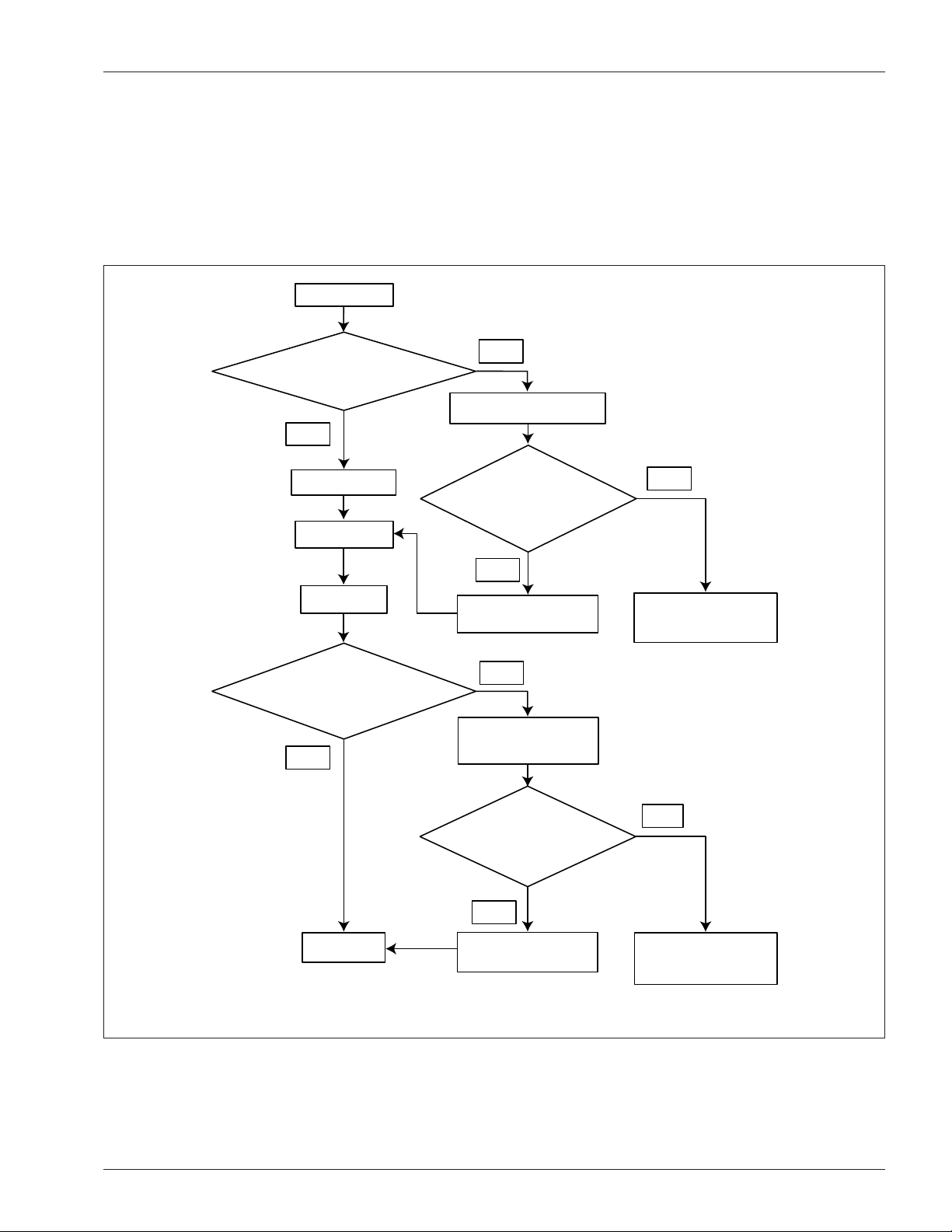
空洞对最终产品影响的决定,可最
佳地以如图A-1所示的流程图表述。纠正措施指标见表A-1到A-3。
IPC-7095c-a-1-cn
图A-1 典型空洞评估流程图
Yes
No
No
Yes
PCA
组装
No
BGA
检验
BGA
通过检验标准
No
Yes
BGA 出货
Yes
检验
PCA
是否存在焊球空洞尺寸大
于所允许空洞最大值?
抽检元器件批
焊球空洞超出允许百分比?
无需工艺措施
依据产品级别采取恰
当的纠正措施
更换
BGA
并抽检组件批
空洞焊球超出允许百分比
PCA出货
无需工艺措施
依据产品级别采取恰
当的纠正措施
注意:空洞检测的抽样率由产品的要求决定
2013年1月 IPC-7095C-C
151