CP45FVNEO Maintenance Reference (Eng, Ver3).pdf - 第64页
Samsung Component Placer CP45NEO Series Maintenance Refer ence 3.1.5.4. PCB Detect Sensor Inspection Check to see if the sensor wi ndow has been contaminated. Check the sensor's perfo rmance to see whether it is…
Weekly Inspection
3-13
Solution
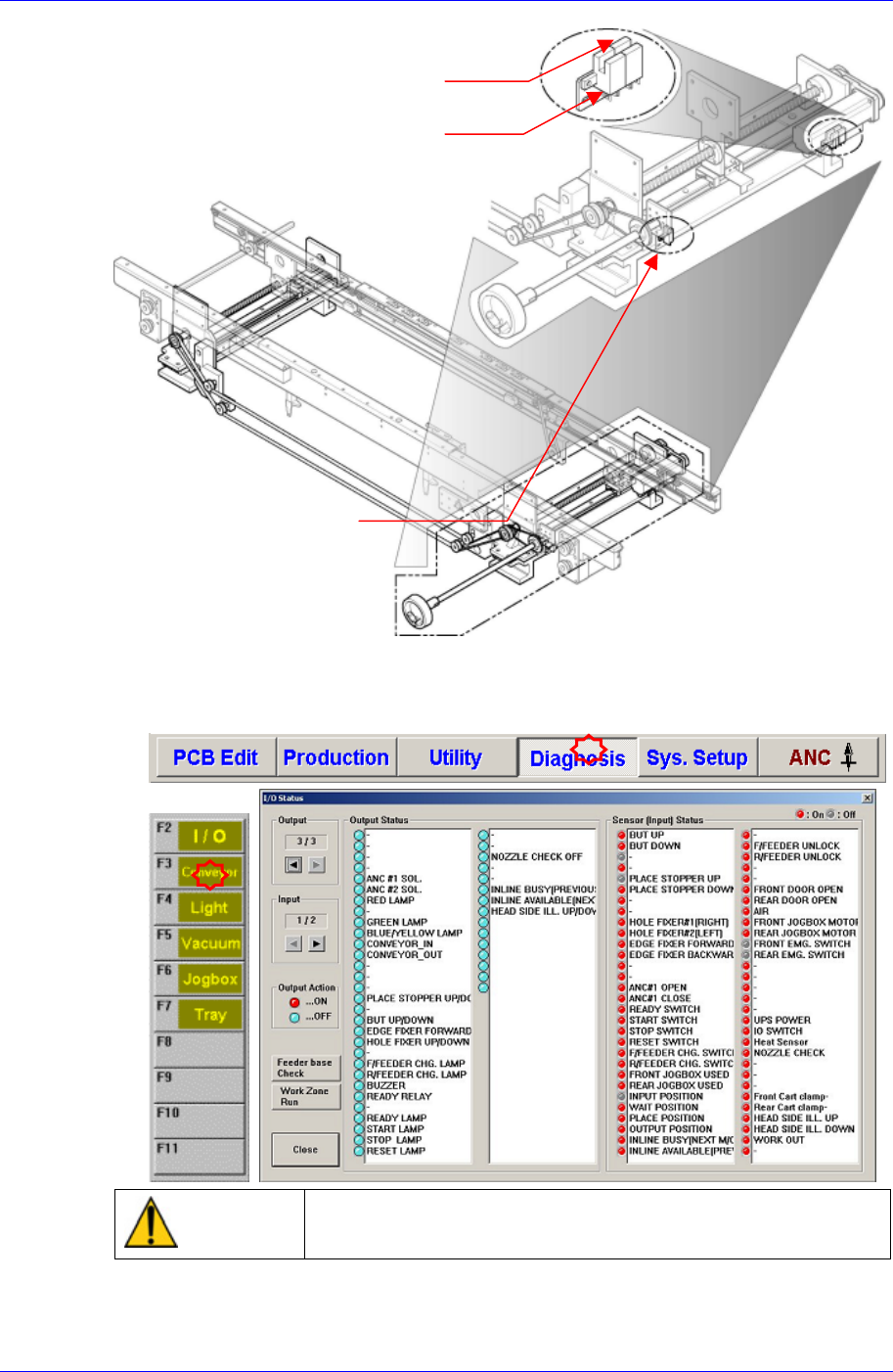
(+)Limit Sensor
Home Sensor
(-)Limit Senso
r
After selecting the Diagnosis from the main menu tool bar in the MMI screen, select
the I/O command from the sub menu tool bar to check the sensor operation.
Warning
Do not insert any part of your body into the machine during
I/O testing. Otherwise, serious injury may result.
If any problems still occur, contact our designated C/S company (STS) and local
agent.
Samsung Component Placer CP45NEO Series Maintenance Reference
3.1.5.4. PCB Detect Sensor
Inspection
Check to see if the sensor window has been contaminated.
Check the sensor's performance to see whether it is functioning or not.
Check the sensor operation through the MMI screen.
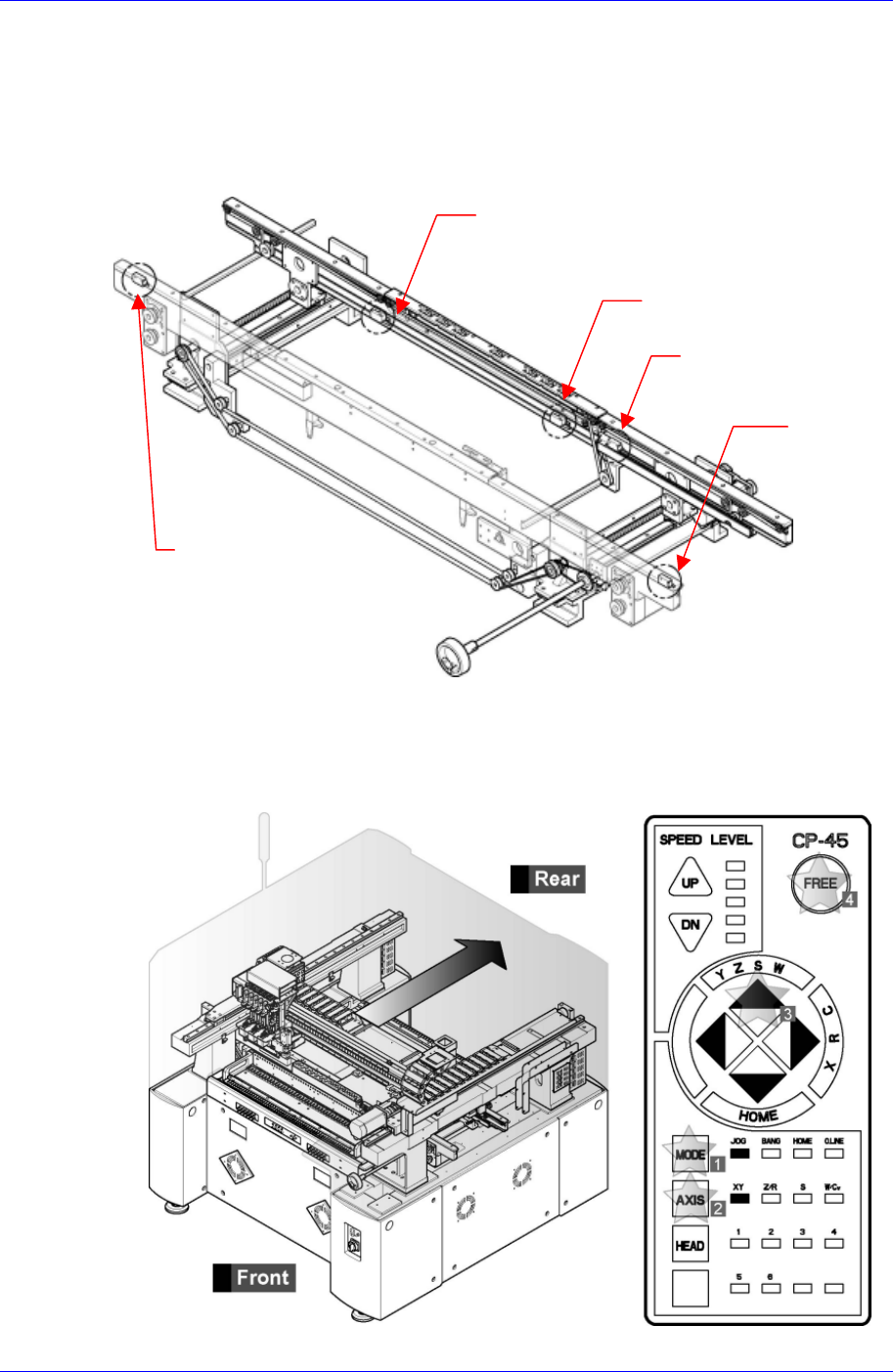
Figure 3-4. PCB Detect Sensor
Solution
Wait Sensor
Quick load sensor
Placement Sensor
Output Sensor
Input Sensor
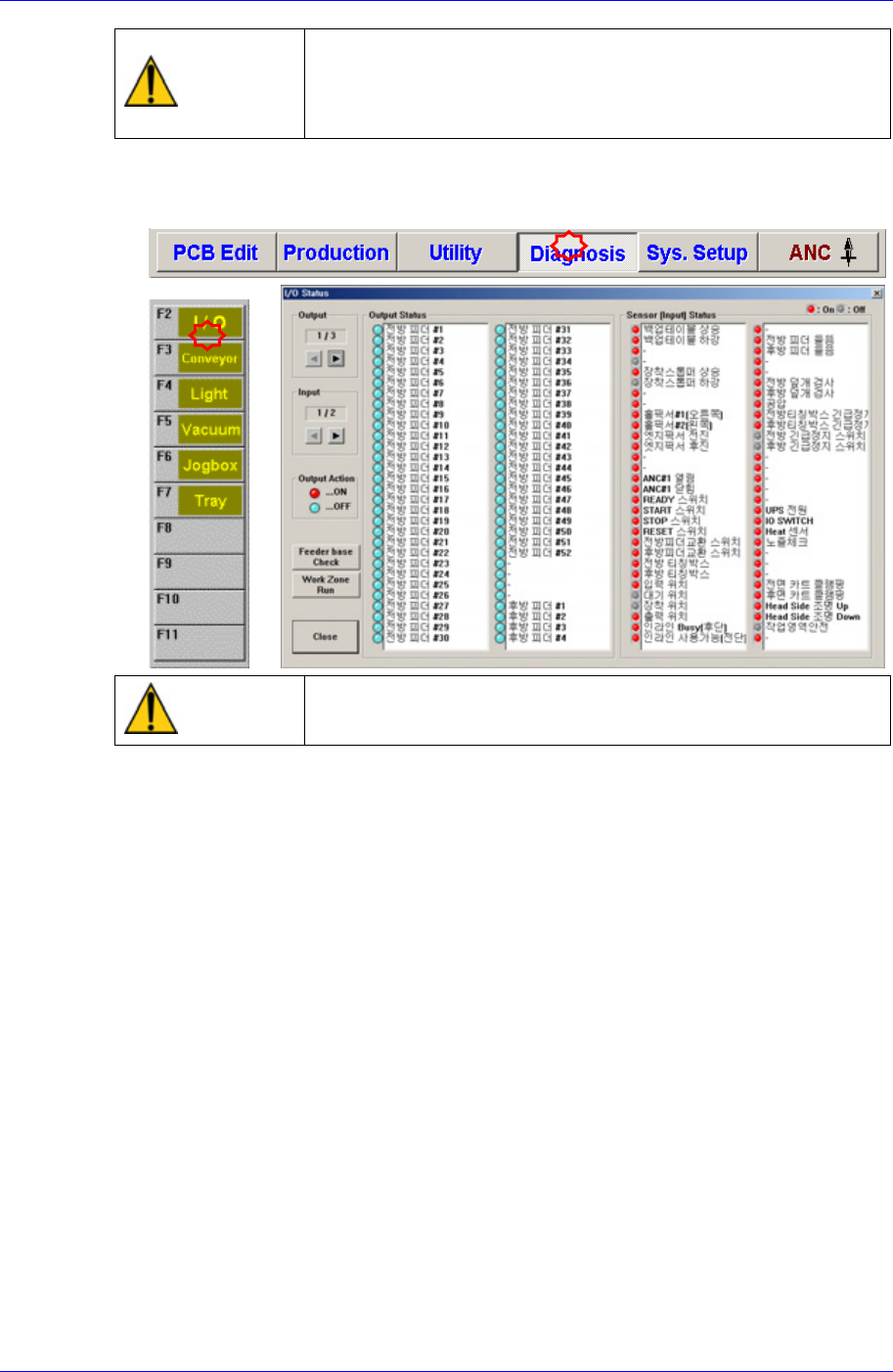
Operate the teaching box to move the head assembly to the rear side as far as possible.
3-14
Weekly Inspection
3-15
Warning
After clicking the “Motor Free” button on the teaching box,
click the “Stop” button on the front operation panel.
Conduct inspection while the motor power supply is turned
off.
After selecting the Diagnosis from the main menu tool bar in the MMI screen, select
the I/O command from the sub menu tool bar to check the sensor operation.
Warning
Do not insert any part of your body into the machine during
I/O testing. Otherwise, serious injury may result.
After checking the quality of recognition, clean the sensor window using the swab
and clean cloth included in the cleaning kit provided by us.
Check the state of the cable connector assembly connecting with the sensor.
Check the sensitivity of sensor.
The conditions for detection may vary depending on the installation method, distance,
and angle and location of each sensor as well as due to dust, external light, shape, and
color of the board. Therefore, sensitivity of a sensor should be adjusted by using the
actual board that will be used. When adjusting the sensitivity of the board detecting
sensor, if there is no PCB, neither the red nor the green LEDs shall be turned on. The
“lightness/darkness“ adjusting screw shall always be turned to the “L” side.
If there is a PCB, turn the sensitivity adjusting screw clockwise so that both the red
and green LEDs are turned on.
If the “lightness/darkness“ adjusting screw is not turned to the “L” side, only the red
LED is turned on.
For reference, the sensitivity of the input sensor, quick load sensor and output sensor
cannot be adjusted.