YesAX V3.1.2 - Software User Manual - 第185页
Part List and Part Libraries 13 -7 W ith recipe specifics stored in the ce ntral library, it is also possible to create new recipes from the information stored in the central library. This feature is useful when you prop…
13-6 Part List and Part Libraries
The central library usually contains many more part numbers than the local library. During the
CAD import process new part numbers are pulled from the central library on an as-needed basis.
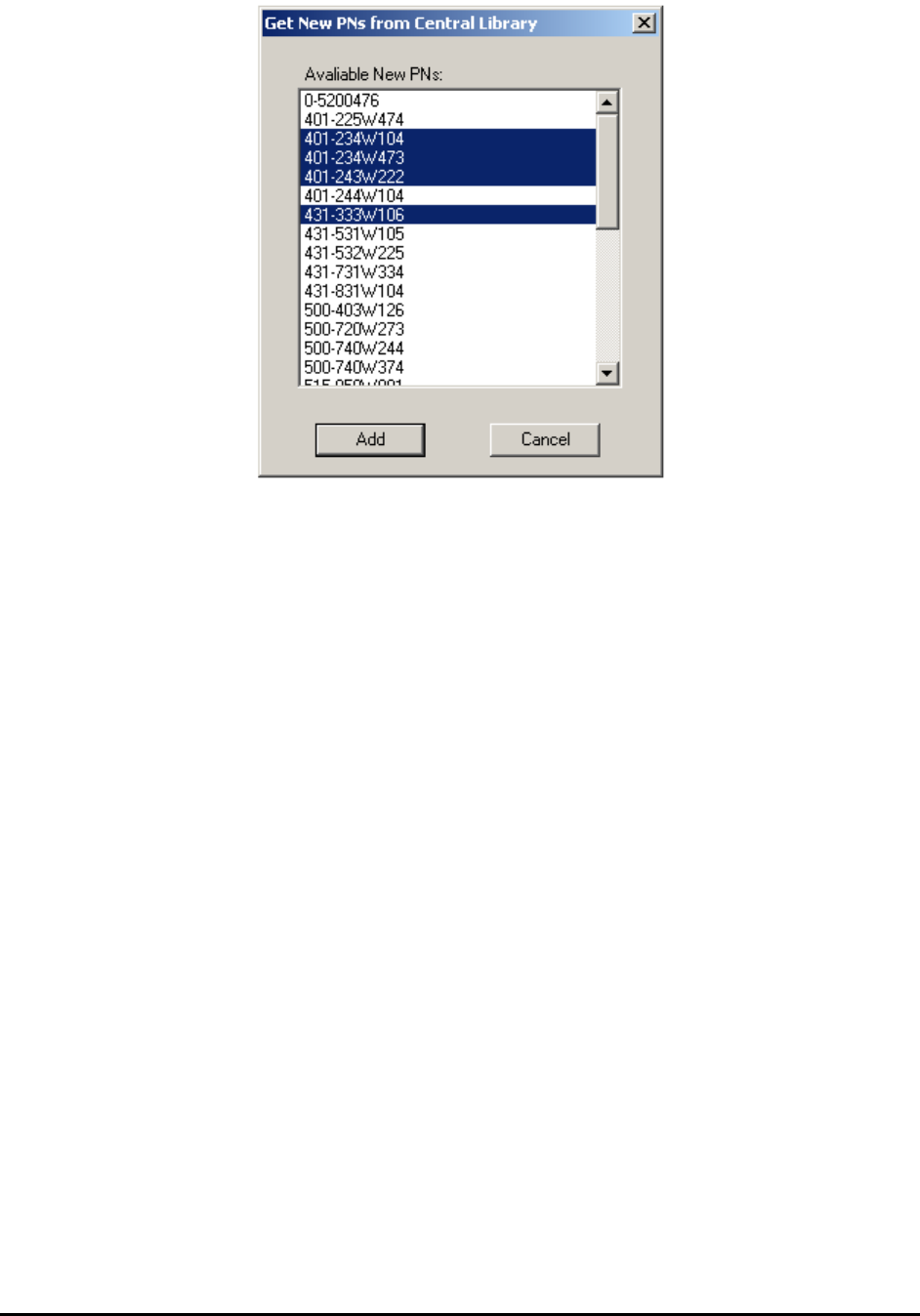
Pull in additional part numbers by using the Get New PNs from Central Lib button. Pressing
the button launches a dialog that lists all the part number in the central library that are not in the
local library. Select the part number(s) and press the Add button to pull those part definitions
from the central library and copy them into the local library.
You can optionally store part package information in the central library. It is like having a central
package library. To enable the option, check the Store Package Information in Central
Library checkbox in the Central Library Setup dialog.
NOTE
With this option enabled it is even more critical that the part rotation is consistent
across all recipes. Establishing a rotation convention is highly recommended.
User can use Appendix 27.3 Part Rotation Worksheet to help establish the
convention.
You can also optionally store recipe specifics in the central library. This includes information
such as the part lists, recipe notes, local part information and map view backgrounds. To enable
this feature, check the Store Recipe Specifics in Central Library checkbox in the Central
Library Setup dialog..
To check in the “recipe specifics” of the existing recipes into the central library, press the Check
In Recipes button. A dialog opens that lists the recipes that can be checked into the current
central library. Check in one or several recipes at a time.
Part List and Part Libraries 13-7
With recipe specifics stored in the central library, it is also possible to create new recipes from
the information stored in the central library. This feature is useful when you propagate a group of
recipes onto a new AXI machine. Press the Create New Recipe from Central Lib. button to
launch a dialog listing the available recipes stored on the central library. Select one or more
recipes to create.
Inside the central library folder part data is saved in a text file with the “.part” extension.
Appendix B Sample Central Library .part file shows a sample “.part” file.
Recipes with both local and central libraries have the best of both worlds; the flexibility offered
by the local library plus the convenience offered by the central library.
13.4.1 YesCLM
The Central Library is a very useful feature on Nordson YESTECH’s AXI machines, especially
in a high-mix production environment where many AXI recipes need to be created and managed.
YesCLM is the secondary central library management software for Nordson YESTECH’s AXI
machines. Central libraries can be managed using the YesAX software, so YesCLM is not
absolutely needed for using the central library feature. However, YesCLM makes managing
central libraries a lot easier. This is especially true for environments with multiple AXI machines
sharing multiple central libraries. The YesCLM software is provided to all Nordson YESTECH
AXI customers at no additional charge. Please refer to the document on YesCLM (YesCLM.doc)
in the document folder on the release CD.
13.5 Package Library
The package of a part contains attributes such as part size, number of leads, lead pitch, etc. For
example, 0805 and 0402 are common packages for chip parts; QFP100 and SOIC16 are common
packages for ICs. The YesAX software has predefined packages that include Solder and Lead
inspection only. The user must define the part marking.
13-8 Part List and Part Libraries
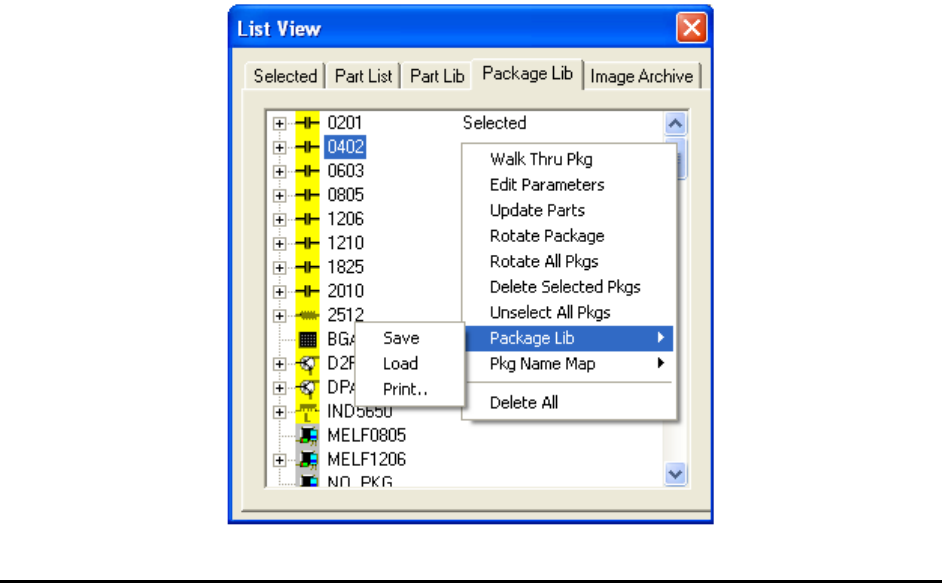
On the Package Lib page it is possible to select multiple packages using a combination of the
mouse and the Shift- Ctrl keys.
The YesAX software ships with one Standard Package Library (StdPkg_AX1.pkg) that contains
all the common packages used in the industry. Having the standard package library speeds up the
setup of solder and lead inspection tremendously.
13.6 Pin Library
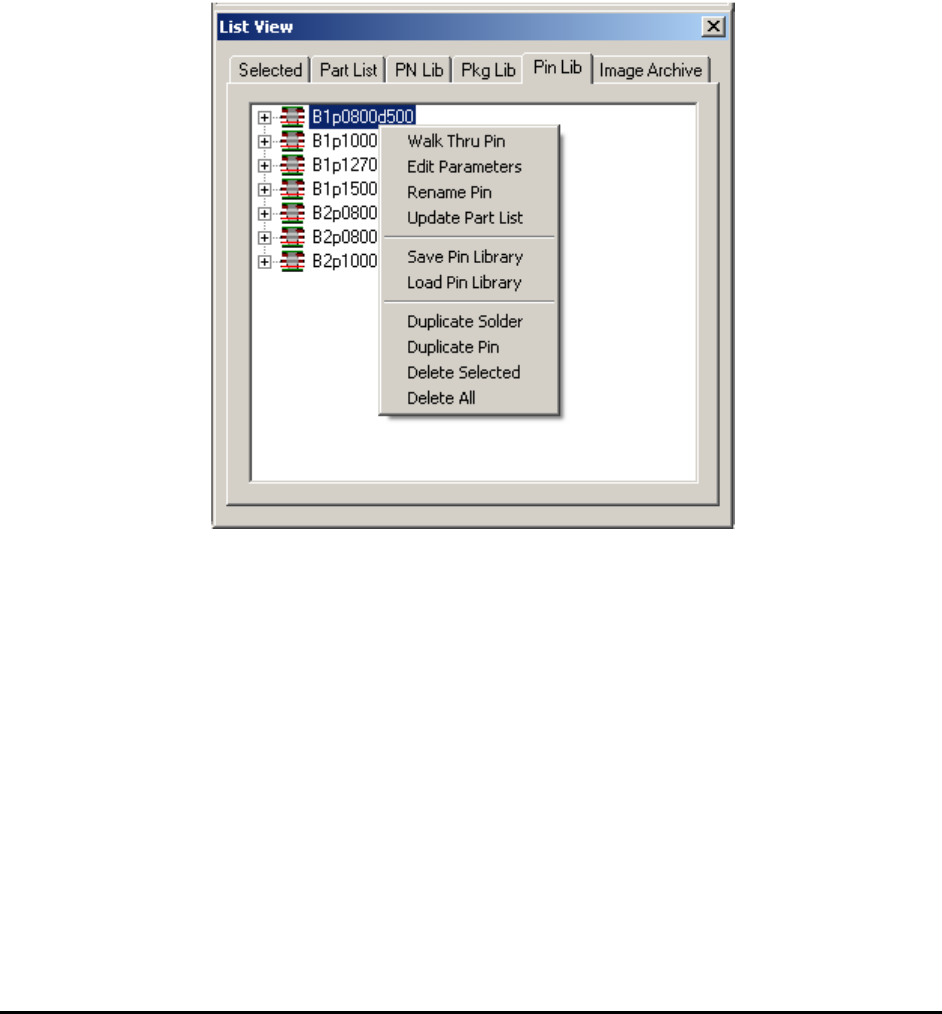
A pin is one or a stack of multiple solder inspection boxes on 3D slices. One pin is used to
inspect one solder joint of a BGA ball or a PTH pin. The Pin Library is a library that lists the
different types of pins. A new page is added in the List View to show the Pin Library. From the
pin library you can adjust inspection parameters for the pin.