00194614-08 Trainingsdoku. SG X-Serie_X4i SW70x (AL2)_EN.pdf - 第404页
Modular Conveyor Lifting Table Functions Conveyor Settings Student Guide SIPLACE X-Serie and X4I SW70x (AL2) 404 Lifting table down function Requirements for de tecting that the lifting table is down: ▪ 30-35 pulses from…
Modular Conveyor
Conveyor Settings Lifting Table Functions
403 Student Guide SIPLACE X-Serie and X4I SW70x (AL2)
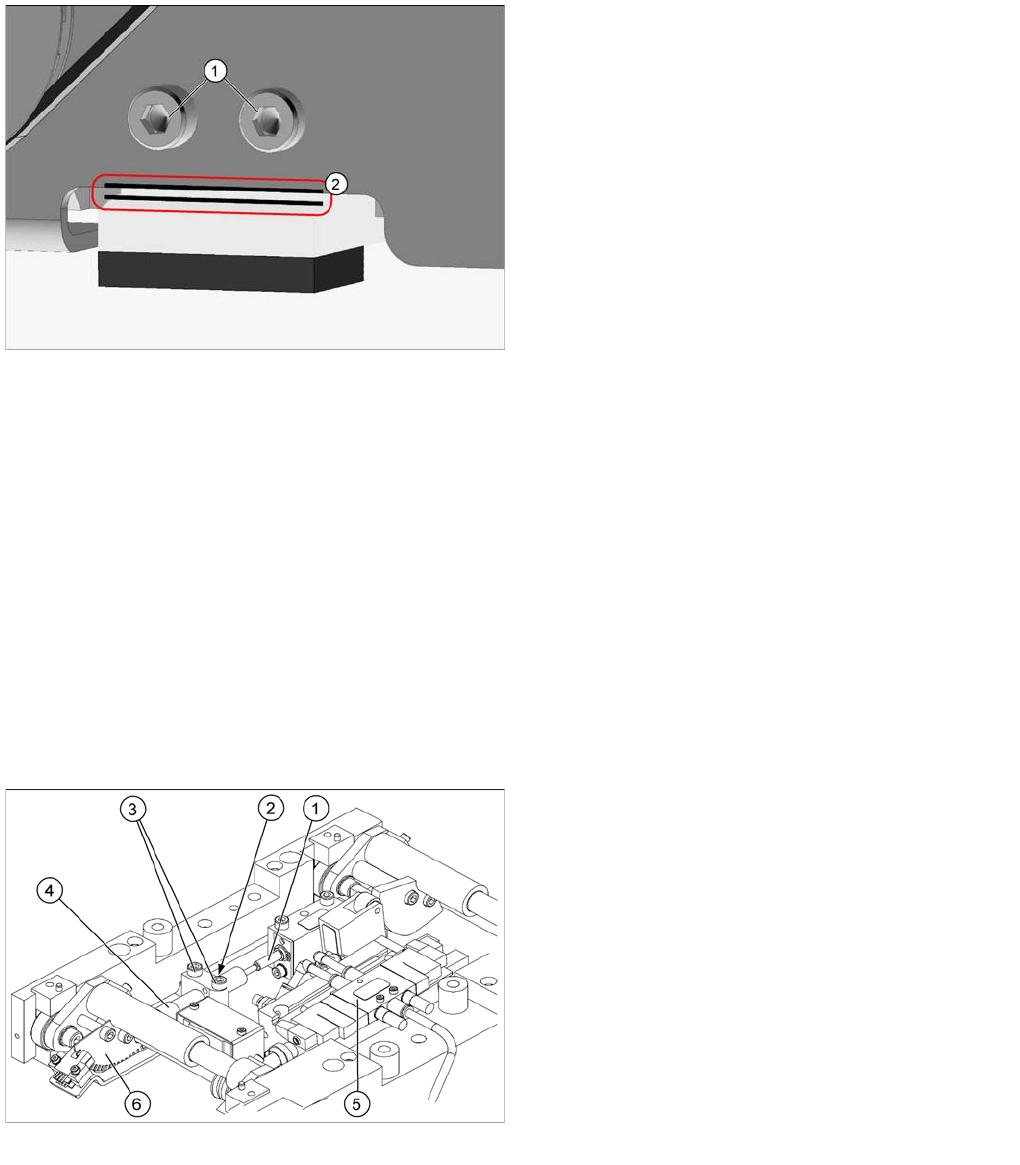
B) Setting the play on the actuator:
► Disable the clamp and move the lifting table down.
► Measure the play between the actuator and the side edge with a feeler gauge.
► Loosen the actuator screws.
► Adjust the distance with the help of a feeler gauge.
Add the clamp play to the measured play of the actuator.
► Tighten the actuator screws again.
► You now need to recheck the gap between the conveyor belt and the clamp when the lifting table
has moved up. (see above)
► If a problem occurs during board clamping, recheck this setting again. We recommend that you
check this setting every 3 months. When cleaning the machine, always make sure that you remove
all components from the conveyor belt.
Lifting Table Functions
11.3.8 Lifting Table Functions
Lifting table up function
Requirements for detecting that the lifting table is up:
▪ 30-35 pulses from the incremental disc
▪ Check performed by software (see "11.3.7 Board Clamping Functions" [ ➙ 399])
▪ Dynamic response for board clamping of approx. 500 ms
Legend
1. Actuator screwed fixtures
2. Measuring the play with the feeler gauge
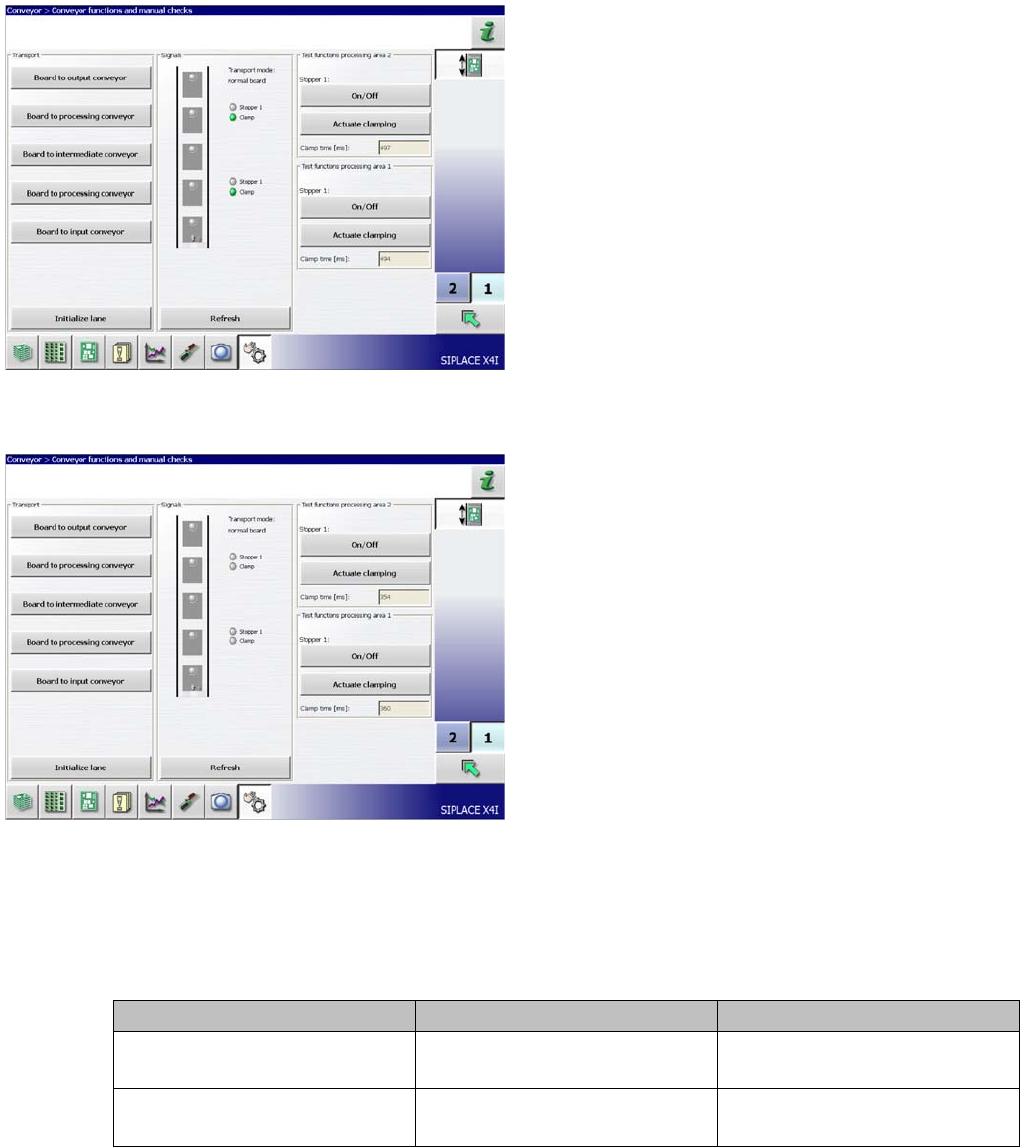
Lifting table unit
Legend
1. Actuator
2. Lock nut damper
3. Fastening screws for mounting block
4. Damping unit
5. 3/5 way solenoid valve mounted on lifting table drive
cylinder
6. Fork-type light barriers / incremental disk
Modular Conveyor
Lifting Table Functions Conveyor Settings
Student Guide SIPLACE X-Serie and X4I SW70x (AL2) 404
Lifting table down function
Requirements for detecting that the lifting table is down:
▪ 30-35 pulses from the incremental disc
▪ Proximity switch on the lifting table cylinder
▪ Dynamic response for board release of approx. 480 ms
Adjustin g the Spee d of the Lifting Table (fr om SW701)
11.3.8.1 Adjusting the Speed of the Lifting Table (from SW701)
► If the travel times are not inside the tolerance range or if error messages appear during production,
adjust the travel times as follows:
► Adjust the valve on the lifting table cylinder, so that you get the following values:
► If malfunctions occur during the downwards movement or if the board is shaken, reduce the lowering
speed accordingly.
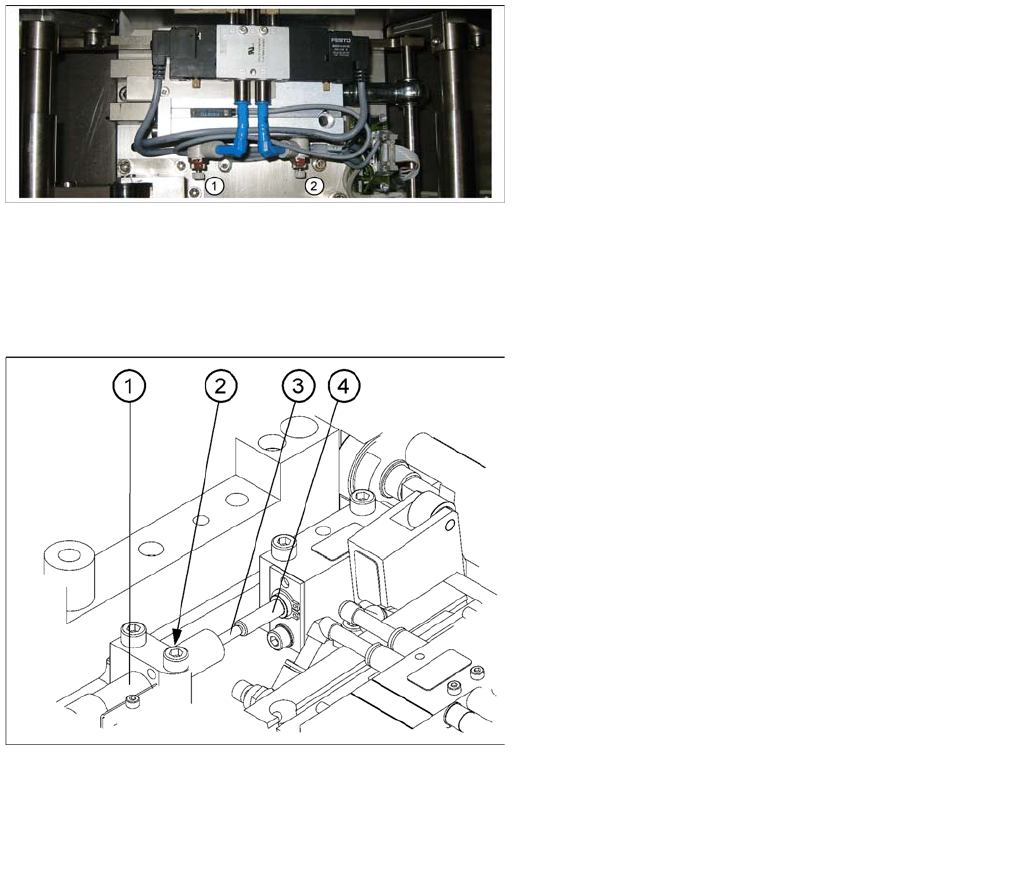
Time needed to move lifting table up with lifting table
plate
► Switch the machine on.
► In the Conveyor --> Conveyor functions and
manual checks menu, you can move the lifting
table up and down. The time is shown directly.
► Click on Actuate Clamp.
Time needed to move lifting table down with lifting table
plate
► The lifting table will be moved up and the travel time
will be displayed (see diagram).
► Press the Actuate Clamp button again to move
the lifting table downwards and to view the travel time
for the downwards movement.
Lifting Table Move upwards Move downwards
Lifting table (standard)
bumper: 20 mm
520 ms +/- 20 ms 480 ms +/- 20 ms
Lifting table (X4I)
bumper: 35 mm
430 ms +/- 20 ms 400 ms +/- 20 ms
Modular Conveyor
Conveyor Settings Checks After Mechanical Work on the Conveyor
405 Student Guide SIPLACE X-Serie and X4I SW70x (AL2)
Setting valve anticlockwise: Decrease the lifting table moving time
Setting valve clockwise: Increases the lifting table moving time
Setting the Lifting Table Unit [003586 84-05]
11.3.8.2 Setting the Lifting Table Unit [00358684-05]
Checks After Me chanical Work on t he Conveyor
11.3.9 Checks After Mechanical Work on the Conveyor
Check: The distance between the top edge of the conveyor belt and the top stop should be 6 mm.
Legend
1. (3) adjust valve downwards
2. (4) adjust valve upwards
Setting the damping unit
The damping unit (1) allows the lifting table to move
gently upwards. When the PCB is clamped, it also
prevents excessive bounce by the PCB.
► Check whether the damping unit is fixed with the
locknut (2) in the mounting block and that the plunger
(3) of the damping unit is just touching the actuator
(4). In this default setting, the lifting table should
move up gently.
► If this is not the case, loosen the locknut at the
mounting block and turn the damping unit approx.
one rotation into the mounting block..
► Move the lifting table upwards, with the help of the
software.
► The lifting table should move gently upwards.
The PCB clamping should not engage audibly and
there should be no PCB clamping error message.
► Check the speed of the lifting table and correct where
necessary.