m330_01_gas_cabinet气柜.pdf.pdf - 第13页
GAS SYSTEM G AS CABINET R EFERENCE M ANUAL Digital pressure switch The SMC Digital Pressure Switch is a wide pressure range device with High and Low alarm limits. It is used to monitor N 2 supply pressure an d to activat…
GAS SYSTEM
GAS CABINET REFERENCE MANUAL
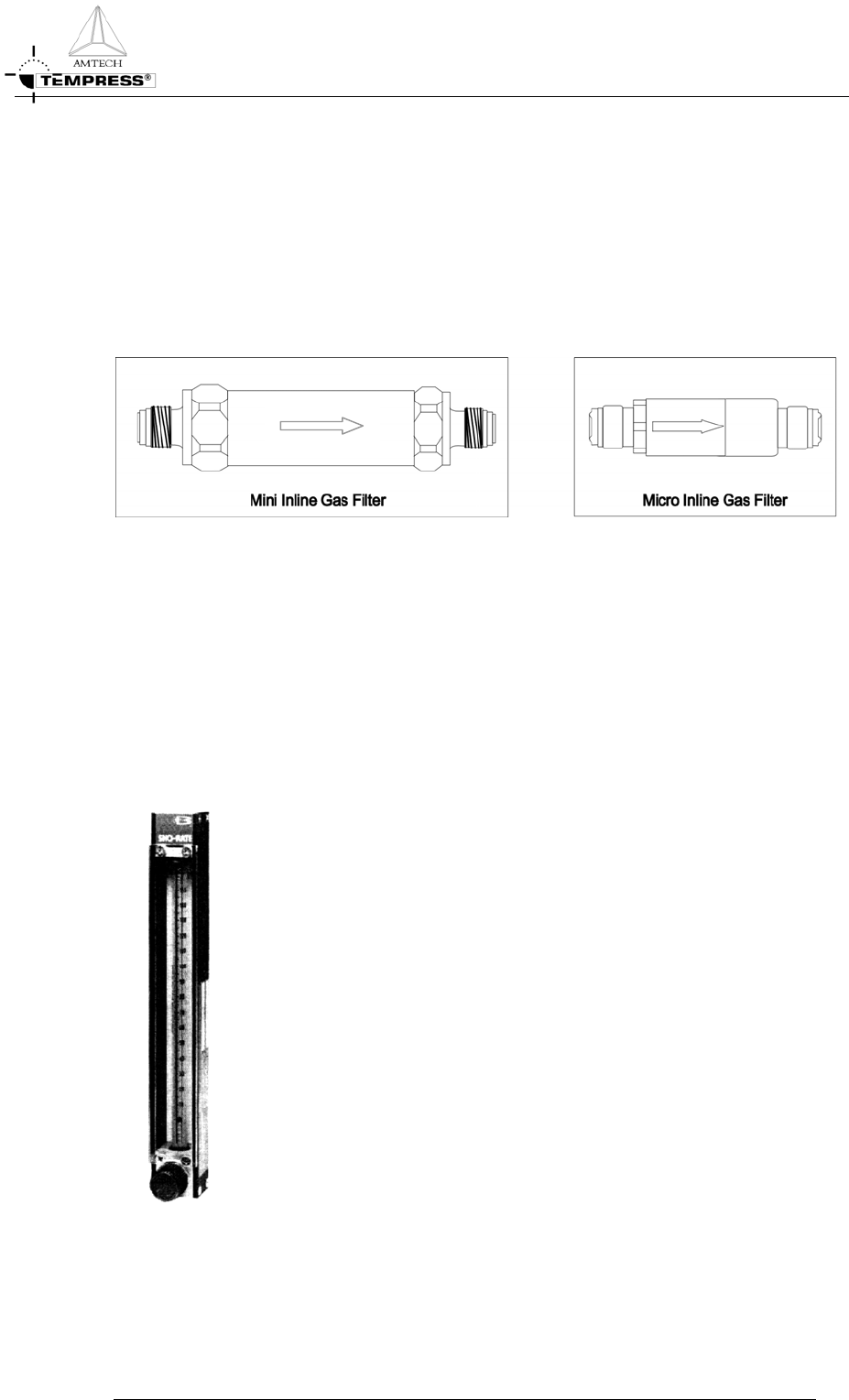
Mini and Micro Inline Gas Filters
Mini and micro inline gas filters are designed for flow rates up to 100 slm (3.5 scfm) and are
usually installed in bulkhead areas. Mini filters are normally used in the pre-plumbing and
micro filters on gaspanels. Teflon
®
PTFE membrane on a Teflon PFA support eliminates
downstream shedding and provides full compatibility with all process gases.
Functionally gas passes through the inlet around the filter core through the membrane. Inlet
gas is isolated from the purified outlet gas by a hermetic seal between the filter element and
the stainless steel shell.
Figure 2-4 Mini and micro inline gas filter
Flowmeters
The flowmeters are variable area flowrate indicating meters used in low cost systems. The
basic elements are a tapered glass metering tube and a metering float. Features include quick
and simple removal or installation of the tube and float while the meter remains in the
process piping.
After the flowmeter has been installed in the flowsystem it is ready for
operation. A built-in needle control valve controls the flow through the
flowmeter. These control valves are designed for fine control. Excessive
tightening may damage the valve seat and limit its effectiveness as a control
valve. If tight shut-off is required, it is recommended that a separate shut-
off valve be installed in the line immediately before the flowmeters.
Figure 2-5 Flowmeter
2-7
GAS SYSTEM
GAS CABINET REFERENCE MANUAL
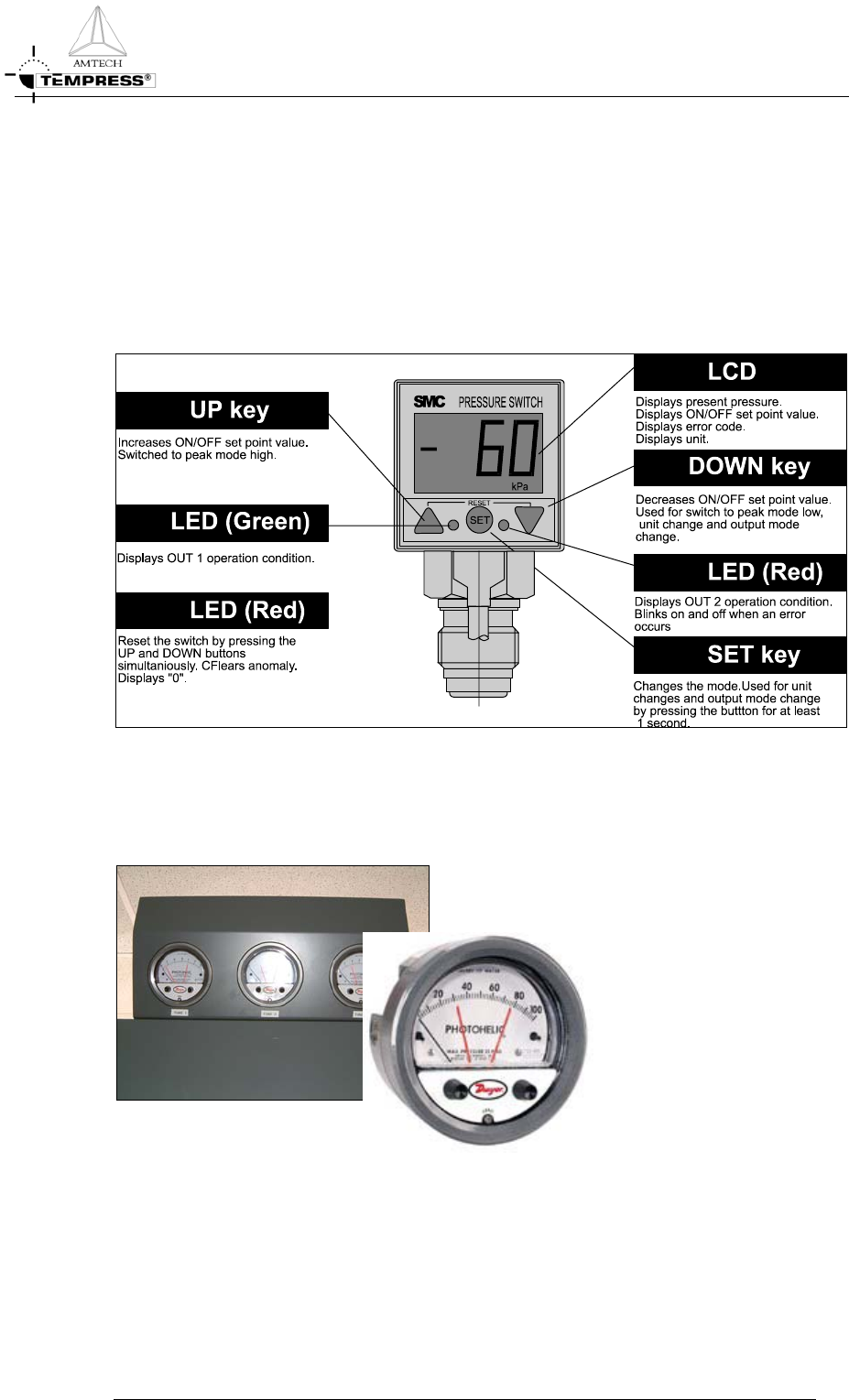
Digital pressure switch
The SMC Digital Pressure Switch is a wide pressure range device with High and Low alarm
limits. It is used to monitor N
2
supply pressure and to activate the (optional) LPCVD
baratron isolation valve. The diaphragm design prevents the sensor to directly contact fluid
media.
The calibration data is stored in an EEPROM. The EEPROM is rated to keep its memory
for 100,000 hours without having power supplied.
Figure 2-6 SMC digital pressure switch
Photohelic
Figure 2-7 Photohelic with high and low alarm limits
The photohelic is normally mounted above the gaspanels at the front of the gas cabinet. It is
a repeatable differential pressure switch with an analog pressure gauge. Switch setting can be
adjusted with large external knobs on the gauge face. The gauge reading is unaffected by the
switch operation – it will indicate accurately even if power is interrupted. This model
provides both low and high limit control.
2-8
GAS SYSTEM
GAS CABINET REFERENCE MANUAL
Bubbler systems
Bubbler systems are used to deliver liquid sources such as POCl
3
, TMB, TransLC
®
or DCE,
to atmospheric or LPCVD process tubes. Carrier gas pick-up can be used for atmospheric
tubes while direct evaporation is used for LPCVD tubes.
Any brand and type of bubbler system can be used to match customer needs such as
Schumachers ATCS or Komatsus etc. Bubbler systems must be designed for the particular
chemical and application.
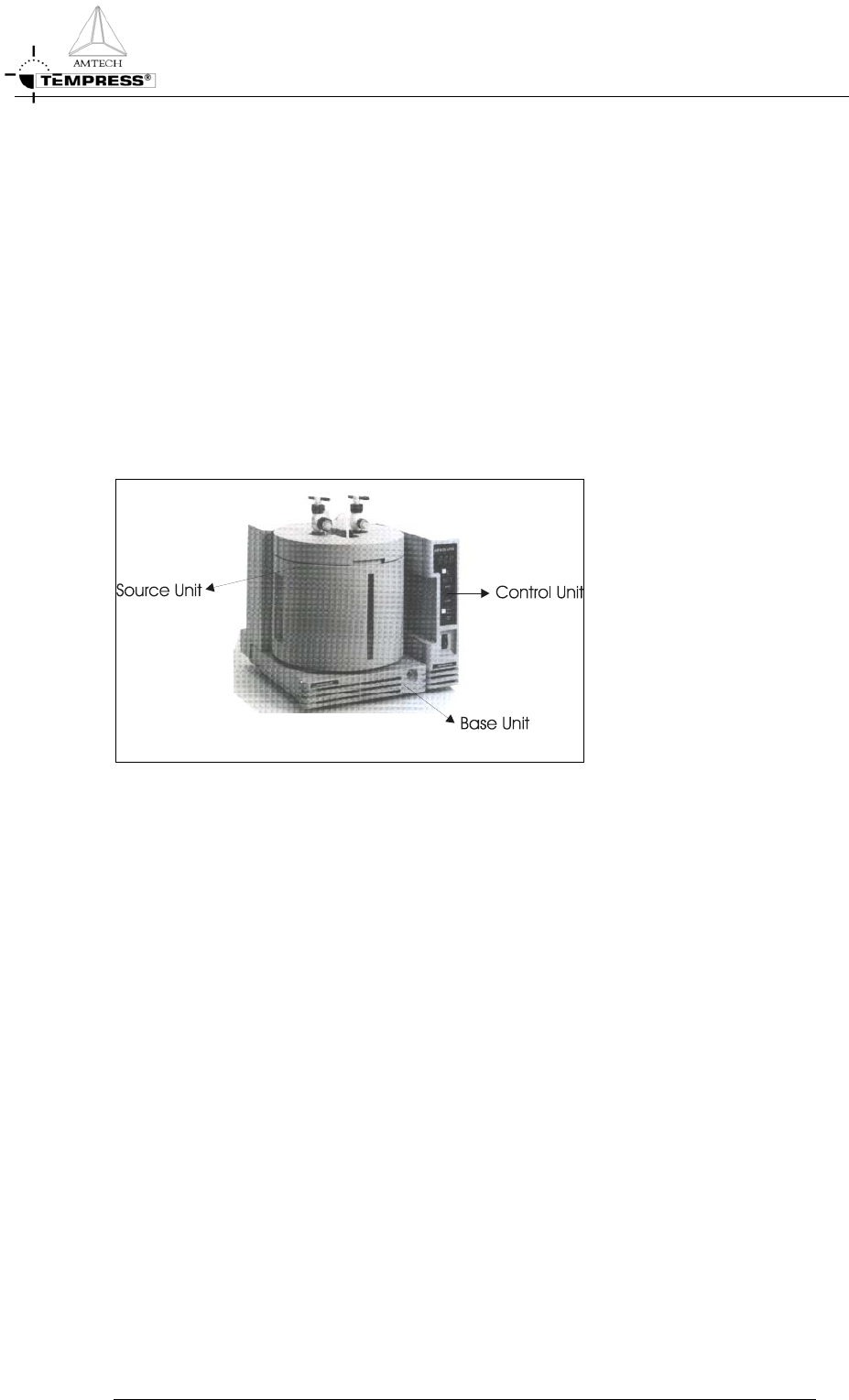
Schumacher ATCS bubbler system
The Schumacher ATCS Temperature Controller is a micro-processor based temperature
control system for accurate and stable temperature control of liquid source chemicals. It
consists of a Base Unit, a Source Unit and a Control Unit.
Figure 2-8 Schumacher ATCS bubbler system
The Bubbler containing the chemical is placed in the Source Unit. The Source Unit allows for
easy access, installation, maintenance, and replacement of the Bubblers. The Source Unit is
equipped with a power-connecting socket for connection to the Base Unit, a four segment
level sensor and window to allow visual inspection of the Bubbler level. The Source Unit can
be removed from the Base Unit and be placed in an exhaust hood for added safety during
replacement of Bubblers.
The Base Unit accommodates the Source Unit and provides the interface between the Source
Unit and the Control Unit. The Base Units are equipped with coolers, heaters and a
temperature-sensing probe. The heater offsets the effect of the cooler to attain the
temperature within the specified range. A multiple conductor cable connects the Base Unit to
the Control Unit, providing current paths for the cooler, heater, temperature probe and level
sense. The push button on the front illuminates the back light to view the liquid level
through the window on the Source Unit.
The Control Unit provides the electrical power and necessary current control to maintain a
selected temperature and, therefore, constant vapor pressure within the Bubbler. The front
panel controls consist of an ON/OFF power switch, an audio defeat, and mode selection
push button. The Control Unit furnishes a regulated voltage for the cooler. Voltage pulses at
varying rates to the heater. Thus, an average power level is established in the Base Unit that
2-9