'操作说明 Hotflow THREE_26_zh.pdf - 第470页
T ranslation of the original ENGLISH 1. FOR YOUR SAFETY 451820.66.03_EN 2020-05-05 13 1.10 General requirements for the coolant 1.10.1 General T o minimise the probability of corrosion damage, algae and sludge formation …
1. FOR YOUR SAFETY ENGLISH Translation of the original
12
451820.66.03_EN
2020-05-05
1.8 Correct use of the cooling unit
The cooling unit is designed to be used with a closed refrigerant circuit and solely for cooling defined
operating mediums within the specified temperature limits. The machine must only be used for the
purposes described in these operating instructions or other applicable documents.
Correct use of the machine also includes:
• Compliance with the applicable safety regulations in the country of use
• Observance of the operating instructions and all safety notes
• Timely and professional execution of all inspection and maintenance work as well as all
retesting required by EN 378
• The presence and correct function of all safety features
• Compliance with all maximum permissible operating values and performance data as
specified in the chapter "Technical data"
1.9 Incorrect use of the cooling unit
Any other utilization of the machine or usage for purposes other than those described above
constitutes incorrect use. This includes in particular:
• Operation outside the specified temperature limits
• Unauthorized additions and/or modifications
• The use of an operating medium in the cooling water circuit that does not meet the
specifications
• Operation in potentially explosive environments
Risk of personal injury or damage, liability exclusion, loss of warranty!
Incorrect use can result in injury, material damage and loss of warranty. All associated risks are
borne solely by the operator or user.
The machine must only be used for its intended purpose!
Translation of the original ENGLISH 1. FOR YOUR SAFETY
451820.66.03_EN
2020-05-05
13
1.10 General requirements for the coolant
1.10.1 General
To minimise the probability of corrosion damage, algae and sludge formation in the coolant circuit,
the physical and chemical properties of the coolant must be considered during planning,
commissioning and operation. We recommend that the quality of the coolant be checked in
accordance with the specifications of chapter 12 "Maintenance" as a minimum.
The cycles should be determined by the operator based on the environmental and operating
conditions. The existing guideline values are based on empirical values and notes for assessing the
probability of corrosion as set out in EN 12502. Due to the complex interactions between the
materials used and the medium, as well as the different physical and chemical boundary conditions,
universally valid standards cannot be drawn up.
Evaporation on the system water surface can result in thickening of the system water. Raw water
values that are still below guide levels can exceed these levels as a result of this thickening. We
therefore recommend that the water quality be checked on a regular basis and that the water be
replaced if necessary to eliminate the thickening and realign the water values with the basic
conditions.
1.10.2 Guideline values for water quality
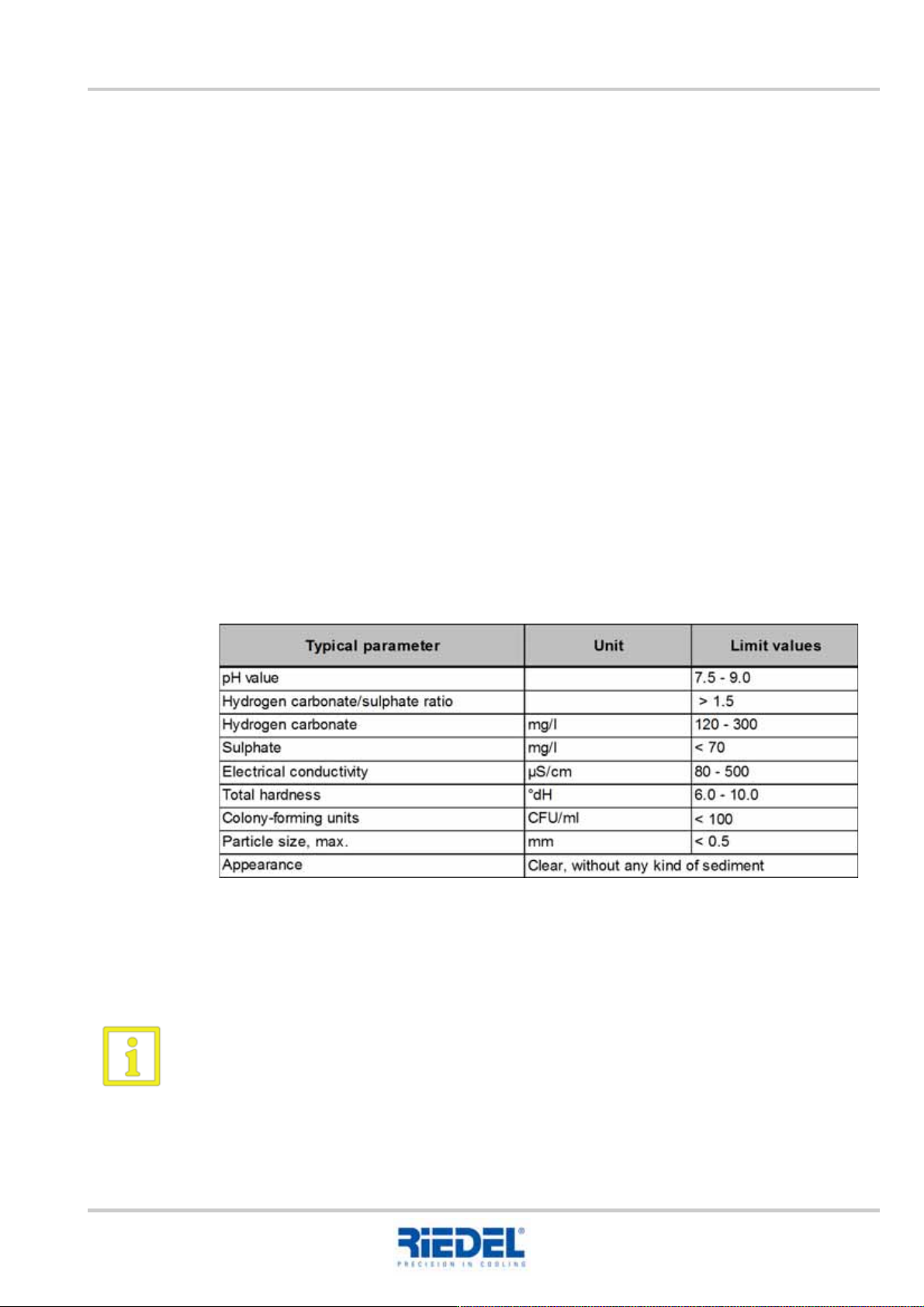
Generally speaking, the guideline values for drinking water quality in the EU are met. If necessary,
the water quality should be measured according to EN 50930-6.
The coolant should not contain any organic, settleable or abrasive materials. The use of surface
water or saline water is not permissible.
Corrosion resistance depends primarily on the formation of a protective, stable and adhesive
surface layer. The relevant parameters for developing and maintaining the protective layer are the
pH value and the hydrogen carbonate and sulphate content ratio.
A detailed overview of the water quality requirements can be requested from Glen Dimplex
Deutschland GmbH.
1. FOR YOUR SAFETY ENGLISH Translation of the original
14
451820.66.03_EN
2020-05-05
1.10.3 Guideline values for water glycol mixtures
Only the monoethylene glycol approved by the manufacturer must be used. Pre-mixed water-glycol
mixtures can be ordered from the manufacturer.
To avoid corrosion in the coolant circuit, a concentration of 20 vol % Glykosol N and Antifrogen N
must be maintained.
The quality of the water-glycol mixture must be checked at least once per year. In addition, each
time the medium is supplemented, the composition must be checked using a suitable measuring
device.
Applications with other glycoles and mixture ratios as coolant must be agreed with the manufacturer
before use or at the development stage of the refrigerating system.
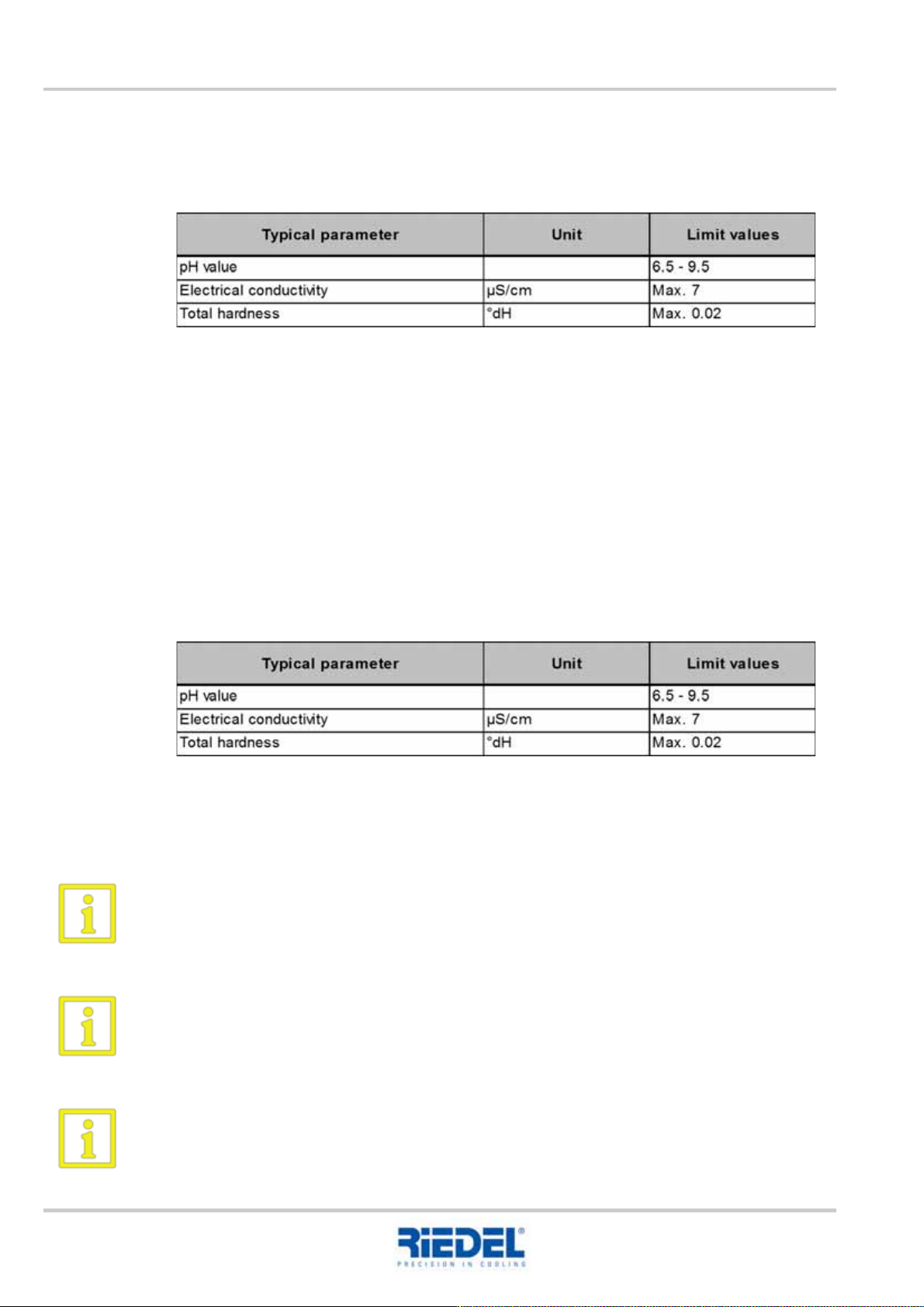
1.10.4 Guideline values for demineralised water
The properties of demineralised water, also referred to as desalinated water or deionised water, are
described in DIN 43530.
Demineralised water can lead to copper corrosion in the coolant circuit. This affects components
and pipework made of copper or with a copper content.
To avoid corrosion, no components which release sulphur compounds or zinc must be used
in the external coolant circuit.
Differing coolant regulations and requirements on the part of the application must be taken
into account.
A detailed overview of the water quality requirements can be requested from Glen Dimplex
Deutschland GmbH.