The new PrexisionTM series Setting the global standards for displays - 第3页
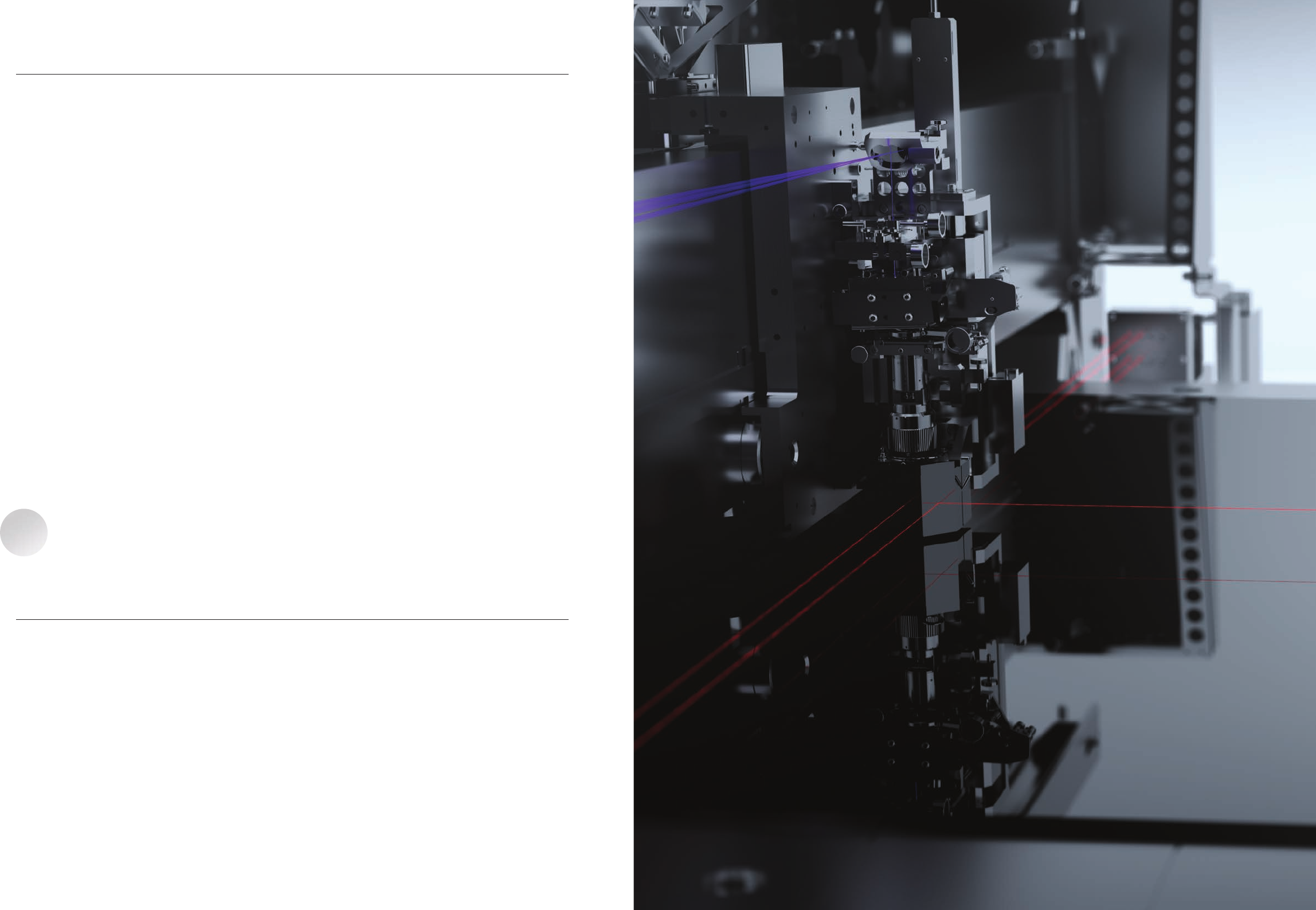
4 5 Prexision 8 0 0 Evo is the m ost adva nce d m ask wr iter whe n it comes to e cie nt pro duc tion of top critical phot omask manufacturin g for cutting-edge displa ys such as AM O LED a nd fol dabl e dis plays for fl…
2
IMPROVED STABILITY AND HIGHER UPTIME
New servo board with linear movement, simplified
electronics with better performance and modern
bus structure provide superior stability and better
error handling to create higher system uptime.
SUPPORT FOR HIGHER LEVEL OF FACTORY
AUTOMATION WITH VARIOUS LOADER SOLUTION
Newly developed PLS (Pre Loading System) and
interface supporting communication from factory
automation system to minimize human interface in
order to reduce contamination and human error.
The new generation Prexision series are built on the Evo control platform.
Updated with new, innovative software and hardware architecture,
it’s been designed for the future of production automation, advanced
connectivity and big data applications.
Prexision Evo series
Remarkable precision for
all the world’s displays
BETTER SUPPORT FOR LOGGING, CONNECTIVITY
AND BIG DATA APPLICATIONS
New servo board log all motions in system which can
be analyzed and used for many dierent purpose,
enabling stable system operation and extension to
big data applications.
EXTENDABLE WITH NEW FUNCTIONALITY
Build on completely new modern hardware and
software architecture for possibility to develop new
functions in the future meeting customers’ demand.
4 5
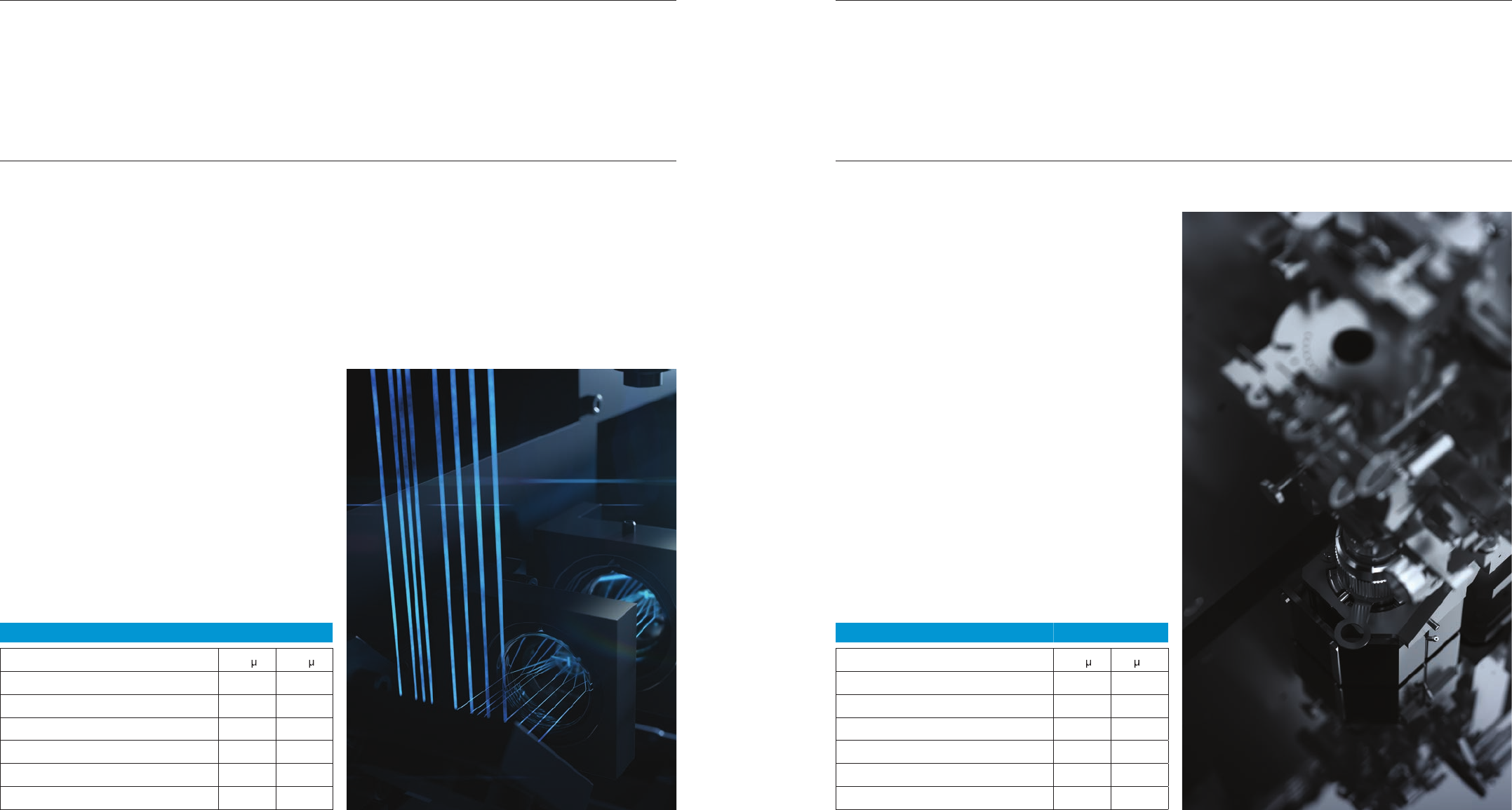
Prexision 800 Evo is the most advanced mask writer
when it comes to ecient production of top critical
photomask manufacturing for cutting-edge displays
such as AMOLED and foldable displays for flagship
smartphones.
Benefits of the Prexision 800 Evo
• 25% increase resolution with custom made
final lens
• 3 times better lens and mirror quality with
stress free optic mounter
• More multi beams to maintain throughput
even with smaller pixels
• HT mode specs similar with Prexision 80 Evo
HA mode
• New improved software algorithm to
compensate uneven beam performance
2X better CD uniformity performance compared
to Prexision 80 Evo. Prexision 800 Evo is perfect
for defining small enough feature size with good
quality, such as OPC (Optical Correction Proximity)
on photomasks that are required for the most
advanced display manufacturing, as well as support
for future R&D.
Prexision 800 Evo
Prexision 800 Evo
The new resolution standard for top critical
photomask manufacturing
Prexision 80 Evo
Prexision 80 is known for overcoming the challenge
of the “invisible Mura” for advanced AMOLED
displays for smartphones. With the Evo control
platform, the Prexision 80 Evo is more robust and
stable than ever which is perfect for critical photo-
masks manufacturing used for high resolution
LCDs and mid to advanced AMOLED displays.
Key highlights
• Software algorithm to compensate uneven
beam performance
• 2X better CD Uniformity performance
compared to Prexision 8 Evo/Prexision 10
• Z-correction as a standard function
Prexision 80 Evo
Higher yield for high resolution advanced
LCD and AMOLED displays
KEY SPECIFICATIONS
HA mode HT mode
Minimum lines and spaces (pitch/2) 0.55 m 0.85 m
Constituent CD uniformity (3σ) 10 nm 15 nm
CD linearity 1.0-10 um (p-p) 50 nm 85 nm
Local placement (3σ) 30 nm 50 nm
Written registration (3σ) 125 nm 175 nm
Written overlay (3σ) 40 nm 50 nm
Mask set overlay (3σ) 75 nm 100 nm
KEY SPECIFICATIONS
HA mode HT mode
Minimum lines and spaces (pitch/2) 0.75 m 1.0 m
Constituent CD uniformity (3σ) 15 nm 25 nm
CD linearity 1.5-10 um (p-p) 50 nm 85 nm
Local placement (3σ) 30 nm 50 nm
Written registration (3σ) 150 nm 200 nm
Written overlay (3σ) 50 nm 70 nm
Mask set overlay (3σ) 75 nm 100 nm
6 7
Prexision 8 has been the display industry standard
for a decade, and is now being upgraded to the
Prexision 8 Evo. Prexision 8 Evo can handle up to
generation 8 mask size and comes with new mode
confi guration, o ering a wide range of choices
depending on the user’s business strategy.
Prexision 10 system can handle up to generation
11 mask size.
Key highlights
• The most well balanced system between perfor-
mance and volume production of advanced TFT
LCD photomask.
• New calibration procedure used for advanced
mask writer to maintain system performance for
Prexision 8 Evo
• New “Entry mode” for Prexision 8 Evo widening
system o ering
Prexision 10
*Requires Z-correction option
Prexision 8 Evo and Prexision 10
The best fi t for volume production of
photomasks for advanced LCDs
*Requires Z-correction option
Prexision 8 Evo
KEY SPECIFICATIONS
ENTRY MODE HA mode HT mode
Minimum lines and spaces (pitch/2) 1.2 m 0.75 m 1.0 m
Constituent CD uniformity (3σ) 30 nm 20 nm 25 nm
CD linearity (p-p) 85 nm (2.4 – 10 um) 50 nm (1.5 – 10 um) 85 nm (1.5 – 10 um)
Registration (3σ) 90 nm 90 nm 90 nm
Written overlay (3σ) 150 (120*) nm 120 (90*) nm 150 (120*) nm
Mask set overlay* (3σ) 120 nm 90 nm 120 nm
KEY SPECIFICATIONS
HA mode HT mode
Minimum lines and spaces (pitch/2) 0,75 m 1.0 m
CD uniformity (3σ) 60 nm 85 nm
CD linearity 1.5-10 um (p-p) 50 nm 85 nm
Registration (3σ) 90 nm 90 nm
Written overlay (3σ) 120 (90*) nm 150 (120*) nm
Mask set overlay* (3σ) 90 nm 120 nm
Prexision Lite 8 Evo
Prexision Lite 8 Evo
A cost-e cient mask writer for low to
mid-end display photomasks
Mycronic LRS systems have supported the market
for less complex photomasks for a decade, despite
its limitations in terms of stability and data path to
handle increase in pattern data size. The Prexision
Lite 8 Evo is the new system model that supports
low to mid-end display photomasks, developed and
based on know-how from old experience and new
technologies that’s been proven to work from the
fi eld systems.
Key highlights
• Fastest mask writers with writing speed
1,350 mm
2
/min
• Level 60 fi nal lens
• Granite stage that can handle generation 8
photomask size
• Stable data path to handle increasing data size
• Adoption of improved calibration procedure
from advanced mask writers to widen address-
able market
KEY SPECIFICATIONS
HA mode
Minimum lines and spaces (pitch/2) 1.2 m
Constituent CD uniformity (3σ) 30 nm
CD linearity 2.4-10 um (p-p) 85 nm
Registration (3σ) 120 nm
Written overlay (3σ) 300 (250*) nm
*Requires Z-correction option