00197295-01_UM_D4i_SR605_EN.pdf - 第168页
4 Setting up and commissioning User manual SIPLACE D4i 4.3 Setting up the machine From software version SR.605.03 SP2 10/2012 EN edition 168 4.3.7.4 Machine foot clearances and the st ationary lef t conveyor edge for the…
User manual SIPLACE D4i 4 Setting up and commissioning
From software version SR.605.03 SP2 10/2012 EN edition 4.3 Setting up the machine
167
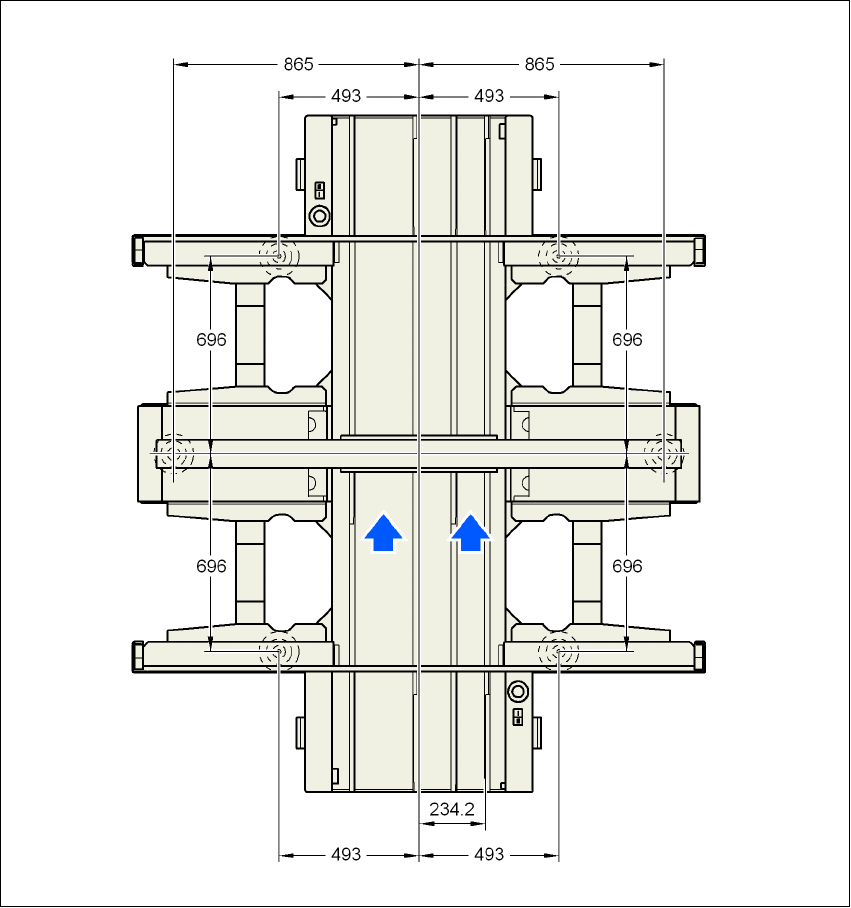
4.3.7.3 Machine foot clearances and the stationary right conveyor edge for the
PCB dual conveyor
4
Fig. 4.3 - 5 Machine foot clearances and the stationary right conveyor edge for the PCB dual conveyor
4 Setting up and commissioning User manual SIPLACE D4i
4.3 Setting up the machine From software version SR.605.03 SP2 10/2012 EN edition
168
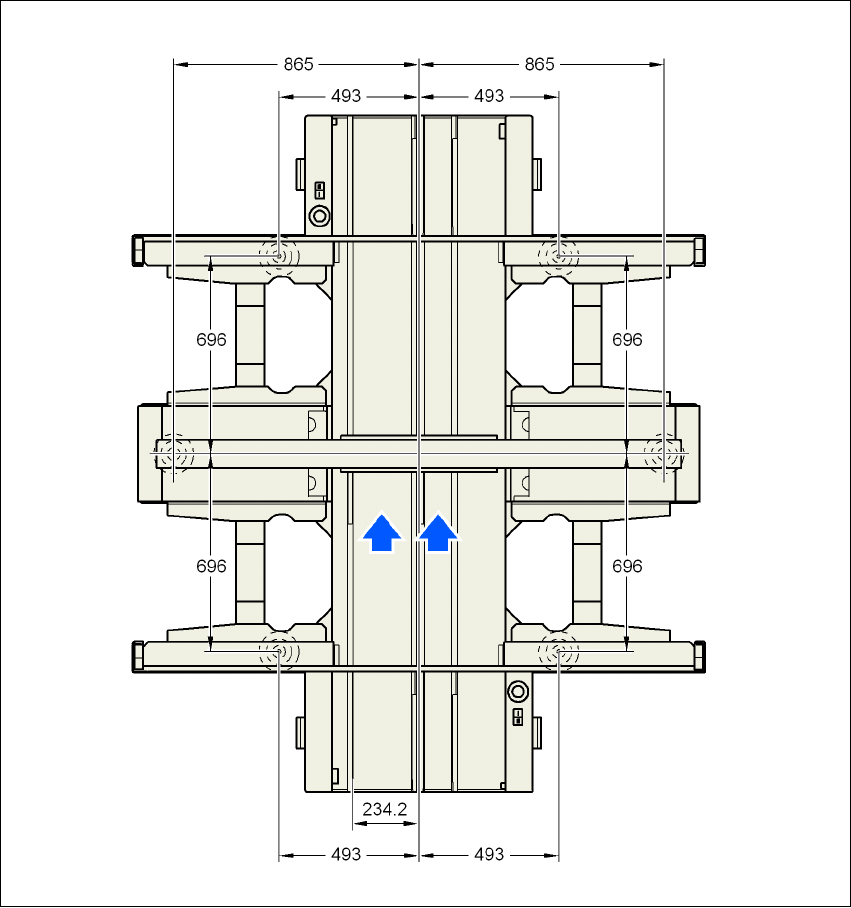
4.3.7.4 Machine foot clearances and the stationary left conveyor edge for the
PCB dual conveyor
4
Fig. 4.3 - 6 Machine foot clearances and the stationary left conveyor edge for the PCB dual conveyor

User manual SIPLACE D4i 4 Setting up and commissioning
From software version SR.605.03 SP2 10/2012 EN edition 4.3 Setting up the machine
169
4.3.8 Integrating the machine into the line
→ Note the warning instructions described in Section 4.3.2, page 159.
→ The tools and equipment are listed in Section 4.3.3
, page 160.
4.3.8.1 Positioning the fork lift
→ Position the fork-lift across the PCB travel direction and open the forks far enough so that the
machine's contact surface lies evenly on the forks (see Fig. 4.3 - 7
).
WARNING 4
Please note the following points before you raise the machine in order to avoid irreversible dam-
age to the machine:
– The distance between the forks must be between 800 and 900 mm. The attachment surfaces
for the fork-lift are shown in Fig. 4.3 - 7
, page 170. The average distance between the contact
surfaces is 840 mm. NEVER increase the distance between the forks so that the machine is
lifted on the side parts of the machine frame, since this would deform the machine frame.
→ Make sure that the forks are evenly loaded when you lift the machine. A firm support between
the forks and machine will prevent the machine tilting when it is raised. This will also prevent
a one-sided load on the machine feet, which would deform the fixing of the machine feet. We
recommend that a second person watch the machine as it is raised, and make sure that the
machine does not tip to one side when lifted with the fork-lift.