YSD_Users_E.pdf - 第106页
2-46 2 Basic operation 4. Basic tasks for optional units 4.1 Low-liquid sensor When the dispensing liquid inside the syringe is low , the low-liquid sensor detects it and issues a warning. The low-liquid sensor consists …
2-45
2
Basic operation
5
Remove the syringe.
1. Press the [Cylinder exchange] button.
2. Press the [Move default] button to move the head to the syringe replacement position.
e
3. Press the emergency stop button and open the safety cover.
4. Disconnect the air hose from the air fitting.
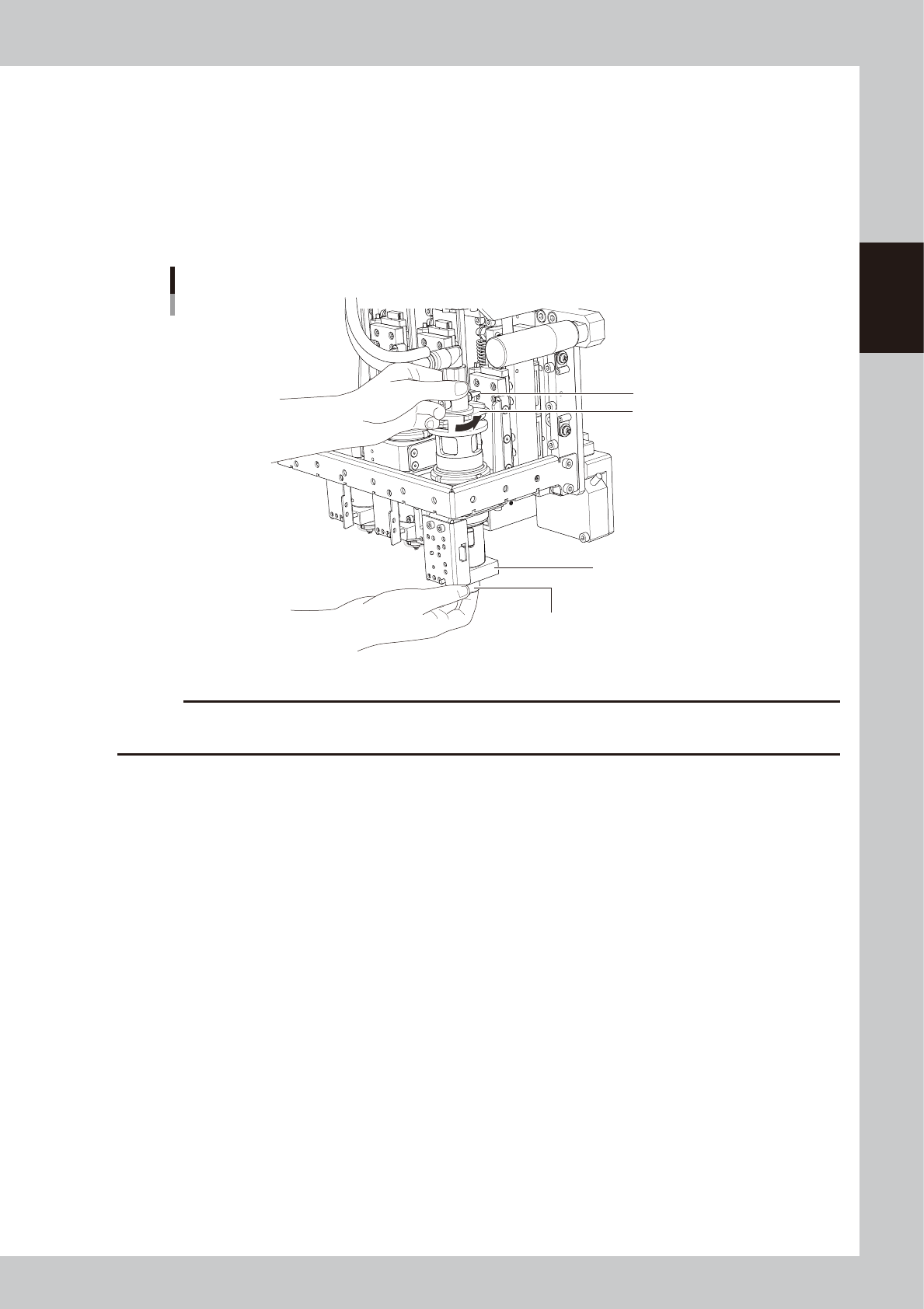
5. While holding the lock nut by hand, turn the adapter holder in the direction of arrow to loosen and
remove the syringe.
Removing the syringe
Lock nut
Heater
Adapter holder
Muffler
63210-N7-00
c
CAUTION
• The heater in the head is hot, so use caution.
• The muffler is likely to break, so do not touch it.
6
Clean the nozzle.
Loosen the lock nut and remove the nozzle. For instructions on how to clean the nozzles, refer to “1.1
Cleaning the nozzles” in Chapter 2 of the YSD maintenance manual.
7
Cancel emergency stop.
Close the safety cover, release the emergency stop button, and press the [READY] button.
2-46
2
Basic operation
4. Basic tasks for optional units
4.1 Low-liquid sensor
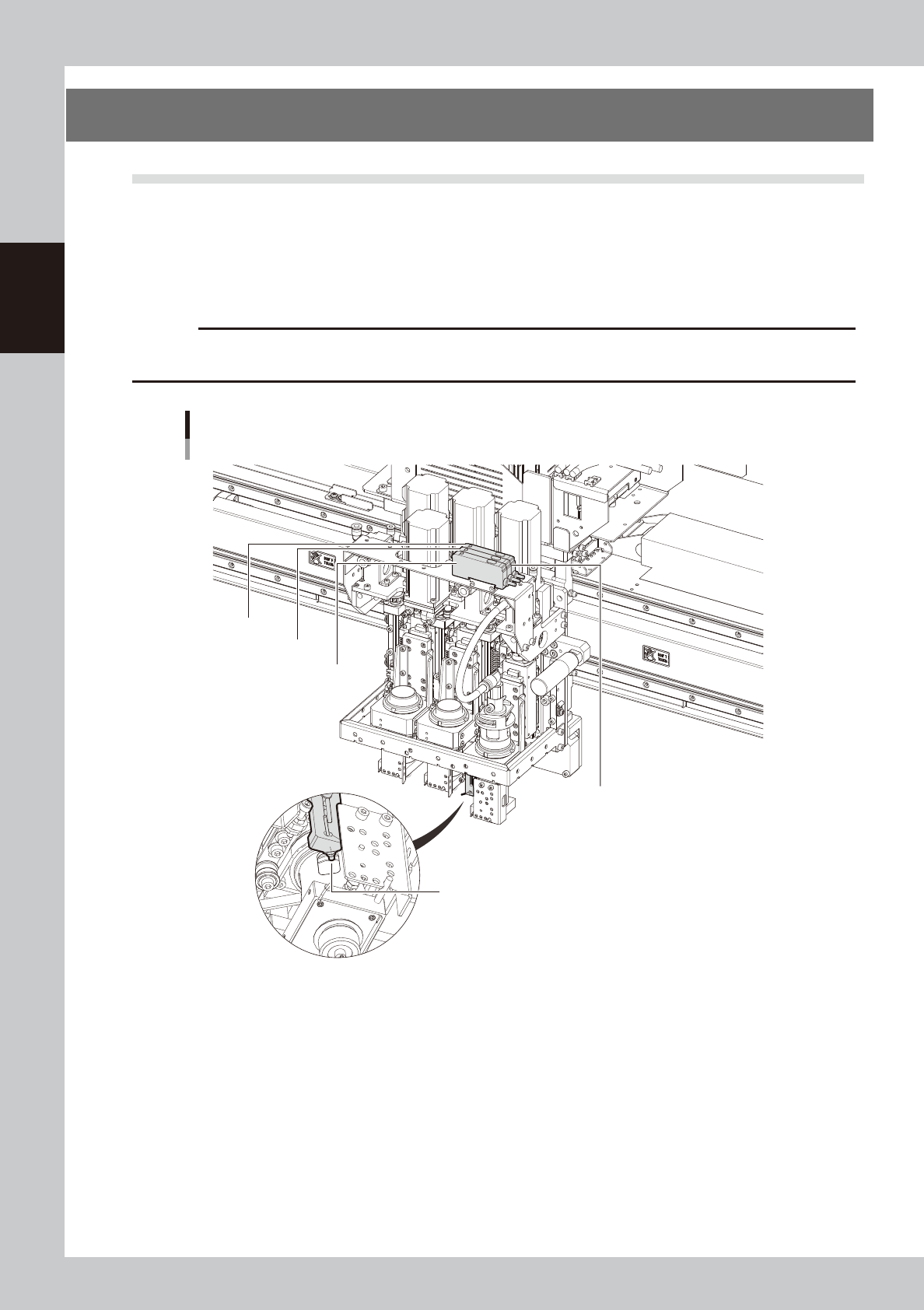
When the dispensing liquid inside the syringe is low, the low-liquid sensor detects it and issues a warning.
The low-liquid sensor consists of a sensor head and an amp section. The sensor head is installed at the side
of the nozzle mounting section, while the amp section is installed on the top of the dispenser head assembly.
The low-liquid sensor must be readjusted after changing the type of liquid or after replacing the low-liquid
sensor itself.
c
CAUTION
Prepare a used (empty) syringe and a syringe full of liquid before starting adjustment. Accurate adjustment will not be
possible if only an empty syringe is used.
Low-liquid sensor
Sensor amp section
For Head 3
For Head 2
For Head 1
Sensor head
63211-N7-00
2-47
2
Basic operation
n
Applicable syringes and pistons
Operations of the syringes and pistons of the following type numbers have been verified.
n
NOTE
If the type number is unknown, contact the adhesive manufacturer.
Syringe capacity Syringe manufacturer / Type No. Piston manufacturer / Type No.
* Piston position when liquid
has run out [mm]
30cc
Musashi (PSY-30E) Musashi (PSY-30E) 5.7
Iwashita (PS30S)
Iwashita (PP30S) 2
Iwashita (PP30ND) 6
EFD (7012134) EFD (7012184) 2.7
10cc
Musashi (PSY-10E) Musashi (PSY-30E) 13.5
Iwashita (PS10S)
Iwashita (PP30S) 6
Iwashita (PP30ND) 11.5
EFD (7012112) EFD (7012178) 2.8
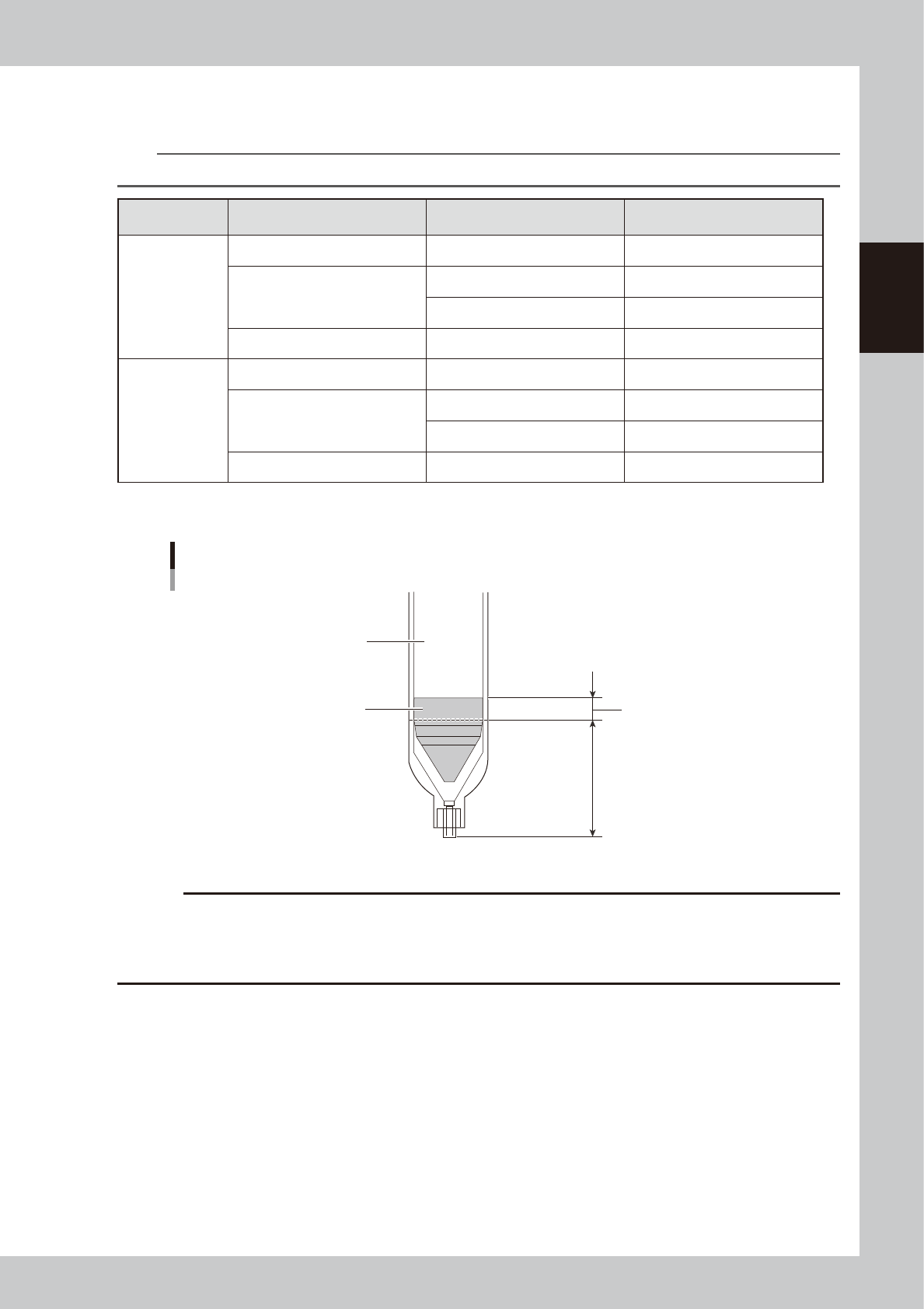
* Distance from the lower end of the piston when the low-liquid sensor detects that the liquid has run out.
Piston position when liquid has run out
Piston position when liquid
has run out [mm]
Piston position when sensor
detects that liquid has run out
Lower end of piston
(no liquid remaining)
Syringe (clear)
63217-N7-00
c
CAUTION
• The sensor may fail to detect whether the liquid has run out or not, depending on the liquid type and how the
piston scrapes the liquid .
• If the product label is affixed to a position that can be seen from the holder opening, the sensor may not detect
whether the liquid has run out or not.