YSD_Users_E.pdf - 第8页
vi Safety instructions 1.9 Handling solvents T ake the following precautions when handling cleaning solv ents during solder printing or preparation. Hazards when handling solvents 1. Hazards to human health Organic solve…
v
Safety instructions
n
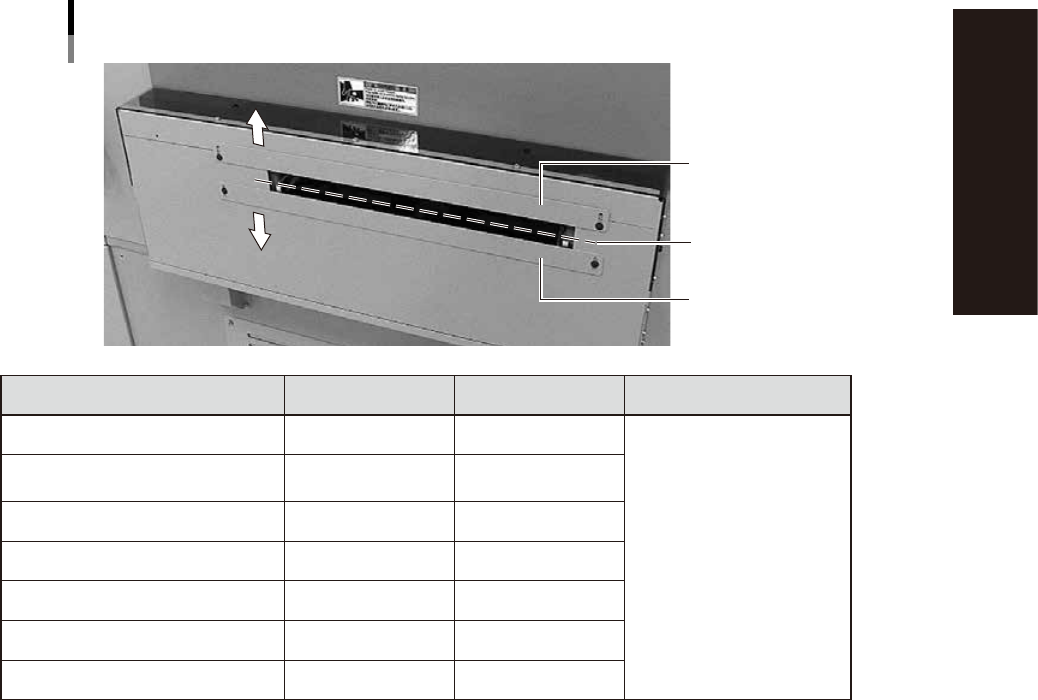
Muzzle plate
Use these plates as a safety measure for the board conveyor entrance and exit openings. Each plate is movable, so adjust
the mounting position to match the boards to be produced.
Muzzle plate
Upper muzzle plate
Lower muzzle plate
Board conveyance plane
91205-L0-00
Upper clearance Lower clearance Remarks
YS100/YS88 8.0 to 38.5mm 1.0 to 31.0mm
From board conveyor plane
YS12, YS12P, YS12F, YS24,
YS24X, YSD
5.0 to 20.0mm 4.2 to 39.2mm
YSM40 0 to 44.0mm 0 to 39.0mm
Z:LEX (YSM20) 0 to 36.0mm 4 to 40.0mm
YC8 13.4 to 80.4mm 4.6 to 39.2mm
YSP 0 to 6.6mm 0 to 26.4mm
YSi-V 0 to 48.0mm 0 to 102mm

vi
Safety instructions
1.9 Handling solvents
Take the following precautions when handling cleaning solvents during solder printing or preparation.
Hazards when handling solvents
1. Hazards to human health
Organic solvents constantly vaporize and contaminate the surrounding atmosphere. Inhaling or coming in contact with
organic solvent vapor may cause serious damage to human health.
2. Flammability
Organic solvents are highly flammable substances and can easily catch fire if handled improperly.
3. Adverse effects on machines
Some solvent types will damage the cleaning unit, electrical wire sheath and various units used in the solder paste
printer.
To avoid hazards of solvents
1. Be careful not to inhale toxic vapors of solvents for extended periods.
2. Do not use solvents near fire or flame. Keep solvents away from flame or fire.
3. Use only the specified solvent in the correct manner. Do not reuse any solvent repeatedly, and do not mix with other
solvents or chemicals.
1.10 Handling the X-ray unit
Some YS series inspection equipment models contain an X-ray unit. Take the following precautions when using
with an X-ray unit.
1. The X-ray output window of the X-ray source is made of very thin beryllium foil.
· Beryllium in the form of dust particles can cause acute toxicity or chronic toxicity, and may induce respiratory
problems if inhaled.
· To ensure safety, the X-ray unit is designed so that the X-ray window cannot be touched. However, should the X-ray
output window be broken for some reason, immediately turn off the power switch and use extreme care not to inhale
the dust particles.
· Chlorine gas can corrode the beryllium window of the X-ray tube, causing permanent damage to the X-ray tube. Do
not use the X-ray unit in environments where chlorine gases are generated. Take special care when handling samples
such as vinyl chloride materials which may generate chlorine gases.
2. Lead is used in the covers of machines equipped with an X-ray unit.
Although lead is sealed within the covers so that the lead portions cannot be directly touched, use caution since lead is
known as heavy metal having harmful effects.
3. A safety key is provided for machines equipped with an X-ray unit.
The safety key must be managed by the supervisor of the machine.
4. Safety education about X-ray
Appropriate measures are taken for YAMAHA's X-ray unit so that the amount of the X-ray leak to the outside of the
equipment is very small. Therefore, when using this equipment in Japan, it is not necessary to set controlled areas defined
in Article 3 of the Ordinance on Prevention of Ionizing Radiation Hazards.
It is not legally obligated to conduct the safety education, but it is recommended to conduct the education by the
customer.
When operating this equipment outside Japan, the safety education is conducted as required according to the relevant
country's laws, regulations, and standards.
TIP
When conducting the safety education in Japan, the contents stated in “Special Education Standard for Radiography
(Ordinance of the Ministry of Health, Labor and Welfare No. 50)” are recommended. However, the safety education
does not necessarily need to be these contents.

vii
Safety instructions
2. Safety message
This section describes information you should always comply with to prevent unforeseen accidents that might
lead to injury of the operator and others or damage the machine. Hazards and injuries that might result from
ignoring safety instructions and operating the machine incorrectly are categorized as follows.
2.1 Safety message and categories in this manual
This manual uses the following safety alert symbols, signal words, and format styles according to the degree of
hazard.
n
Safety alert symbols and signal words
w
WARNING
INDICATES A POTENTIALLY HAZARDOUS SITUATION WHICH, IF NOT AVOIDED, COULD RESULT IN DEATH OR SERIOUS INJURY.
THESE ARE POINTS MOST ESSENTIAL FOR PROTECTING THE SAFETY OF THE MACHINE OPERATOR, INSPECTOR AND SERVICE
PERSONNEL.
c
CAUTION
Indicates a potentially hazardous situation which, if not avoided, may result in minor injury, or material loss or damage
to the machine. These points are important for protecting the safety of the machine and data, etc.
n
NOTE
Gives helpful information or key points when operating the machine, in a simple and clear manner.
e
EMERGENCY STOP
THIS MARK INDICATES THE EMERGENCY STOP BUTTON MUST FIRST BE PRESSED BEFORE CONTINUING THE PROCEDURE.