YS24X_Mainte_E - 第10页
vii Safety instructions 1.9 Handling solvents (including solder , adhesive and flux) Cleaning organic solvents, suc h as isopropyl alcohol (IP A) and ethanol are used for the maintenance of this machine (including option…
vi
Safety instructions
n
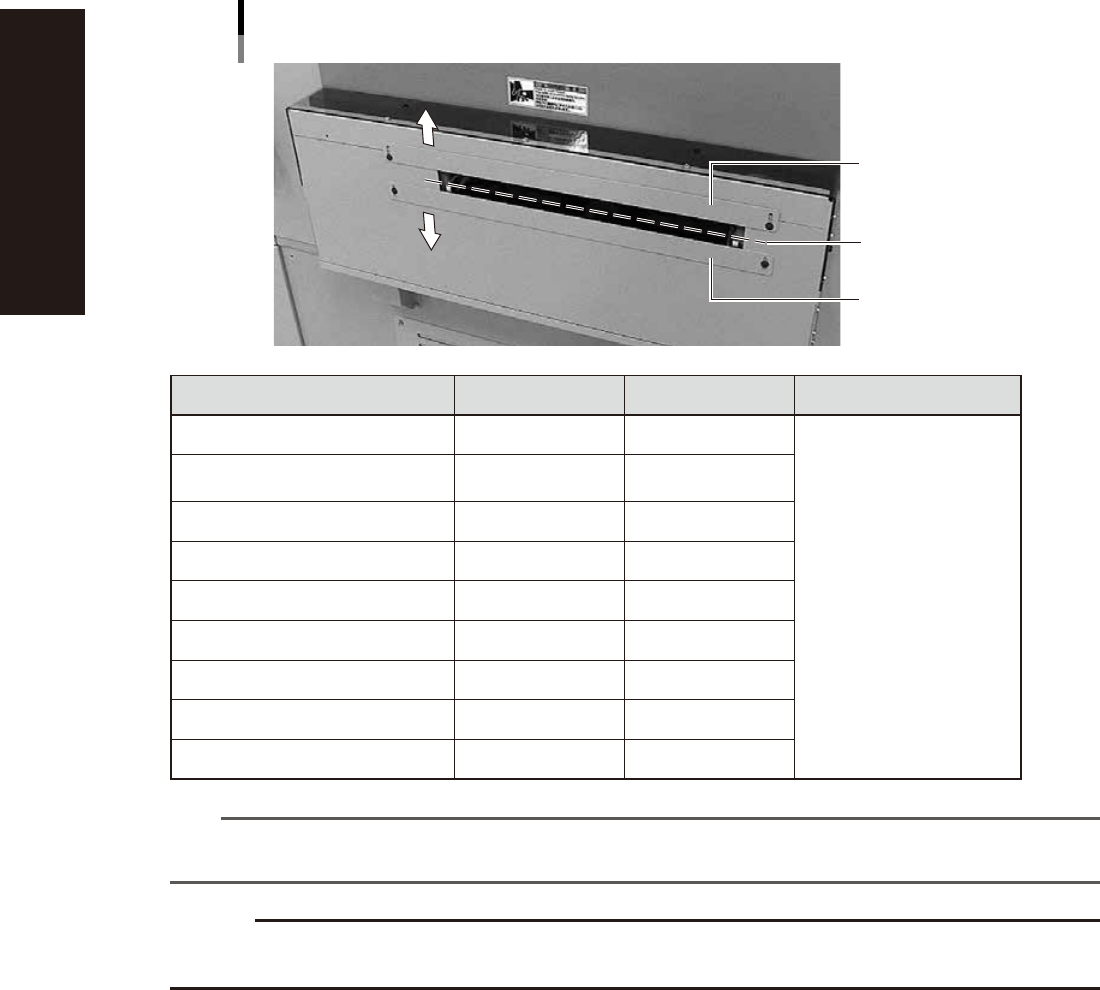
Muzzle plate
Use these plates as a safety measure for the board conveyor entrance and exit openings. Each plate is movable, so adjust
the mounting position to match the boards to be produced.
Muzzle plate
Upper muzzle plate
Lower muzzle plate
Board conveyance plane
91205-L0-00
Upper clearance Lower clearance Remarks
YS100, YS88 8.0 to 38.5mm 1.0 to 31.0mm
From board conveyor plane
YS12, YS12P, YS12F, YS24,
YS24X,YSD
5.0 to 20.0mm 4.2 to 39.2mm
YSM40/YSM40R 0 to 44.0mm 0 to 39.0mm
Z:LEX(YSM20/YSM20W) 0 to 36.0mm 4 to 40.0mm
YSM10 0 to 44.0mm 4 to 40.0mm
YC8 13.4 to 80.4mm 4.6 to 39.2mm
YSB55w 0 to 10mm 6mm (fixed)
YSP 0 to 6.6mm 0 to 26.4mm
YSi-V 0 to 48.0mm 0 to 102mm
n
NOTE
The values above show the maximum adjustable range of the muzzle plate.
See the product specification of each machine for the component mountable height and the restrictions of the substrate.
c
CAUTION
When installing a unit such as a loader or an unloader on the upstream or the downstream side of the machine, set the
muzzle plates to the opening of the board conveyor entrance or the board conveyor exit to make the opening small.

vii
Safety instructions
1.9 Handling solvents (including solder, adhesive and flux)
Cleaning organic solvents, such as isopropyl alcohol (IPA) and ethanol are used for the maintenance of this
machine (including optional units). Additionally, the solder paste printers, dispensers, and some hybrid placers
and flip chip bonders use solder, flux, or bond, etc. during normal production. Since many of these materials
include organic solvents, great care should be taken when handling them.
Cautions on handling solvents
1. Hazards to human health
Organic solvents constantly vaporize and contaminate the surrounding atmosphere. Inhaling or coming in contact with
organic solvent vapor may cause serious damage to human health.
2. Flammability
Organic solvents are highly flammable substances and can easily catch fire if handled improperly.
3. Adverse effects on machines
Some kind of solvent may deteriorate parts used in the machine, electric cable sheathes, and other resin parts.
To prevent accidents caused by solvents
1. Be careful not to inhale toxic vapors of solvents for extended periods.
2. Do not use solvents near fire or flame. Keep solvents away from flame or fire.
3. Use only the specified solvent in the correct manner. Do not reuse any solvent repeatedly, and do not mix with other
solvents or chemicals.
4. Check the contents of the safety data sheet (MSDS/SDS), thoroughly notify work personnel of toxicities of included
chemical materials and measures to be taken in case of an accident, and take necessary countermeasures.
5. Use appropriate safety gear (safety goggles, protective gloves, and respiratory protective devices) corresponding to the
solvent or material types.
6. See the safety data sheet (MSDS/SDS) for how to dispose the solvents and the cloths used for wiping off the solvents.
c
CAUTION
If no safety data sheets (MSDS/SDS) are supplied with solvents or materials you have purchased, be sure to acquire
the safety data sheets from the suppliers.

viii
Safety instructions
1.10 Handling the X-ray unit
Some YS series inspection equipment models contain an X-ray unit. Take the following precautions when using
with an X-ray unit.
1. The X-ray output window of the X-ray source is made of very thin beryllium foil.
· Beryllium in the form of dust particles can cause acute toxicity or chronic toxicity, and may induce respiratory
problems if inhaled.
· To ensure safety, the X-ray unit is designed so that the X-ray window cannot be touched. However, should the X-ray
output window be broken for some reason, immediately turn off the power switch and use extreme care not to inhale
the dust particles.
· Chlorine gas can corrode the beryllium window of the X-ray tube, causing permanent damage to the X-ray tube. Do
not use the X-ray unit in environments where chlorine gases are generated. Take special care when handling samples
such as vinyl chloride materials which may generate chlorine gases.
2. Lead is used in the covers of machines equipped with an X-ray unit.
Although lead is sealed within the covers so that the lead portions cannot be directly touched, use caution since lead is
known as heavy metal having harmful effects.
3. A safety key is provided for machines equipped with an X-ray unit.
The safety key must be managed by the supervisor of the machine.
4. Safety education about X-ray
Appropriate measures are taken for YAMAHA's X-ray unit so that the amount of the X-ray leak to the outside of the
equipment is very small. Therefore, when using this equipment in Japan, it is not necessary to set controlled areas defined
in Article 3 of the Ordinance on Prevention of Ionizing Radiation Hazards.
It is not legally obligated to conduct the safety education, but it is recommended to conduct the education by the
customer.
When operating this equipment outside Japan, the safety education is conducted as required according to the relevant
country's laws, regulations, and standards.
TIP
When conducting the safety education in Japan, the contents stated in “Special Education Standard for Radiography
(Ordinance of the Ministry of Health, Labor and Welfare No. 50)” are recommended. However, the safety education
does not necessarily need to be these contents.
c
CAUTION
When disposing of an X-ray unit (X-ray source), dispose of it in compliance with the laws and regulations of the
country where the machine is used. If you have any questions about disposal of the unit, please contact our sales
representatives.
1.11 Handling the laser
In this machine (including optional units), there are portions using the laser, such as a sensor and barcode
reader.
c
CAUTION
The laser to be used by this machine is class 2 (visible light and low output) at a maximum.
Knowledge and information about laser
1. Harmful to human body
Never look at the laser directly even when it is weak. In particular, if the laser is irradiated to an eye for a long time,
this may cause serious injury.
2. Reflection of laser
The laser is reflected by a glass or metal surface. Pay special attention to the reflected laser light during maintenance
work.
To prevent accidents caused by laser
1. Do not align your eye with the laser height so that you do not look at the laser directly.
2. Wear safety goggles during work, when necessary.
3. Shield the laser during work, when necessary.