YS24X_Mainte_E - 第64页
2-6 2 Daily maintenance items 1.2 Checking the nozzles visually T o visually check nozzles, remo ve each nozzle from the head or from the nozzle station. n Points to check the removed nozzles Check the remov ed nozzles w…
2-5
2
Daily maintenance items
1.1.1 Vacuum level when nozzle is open
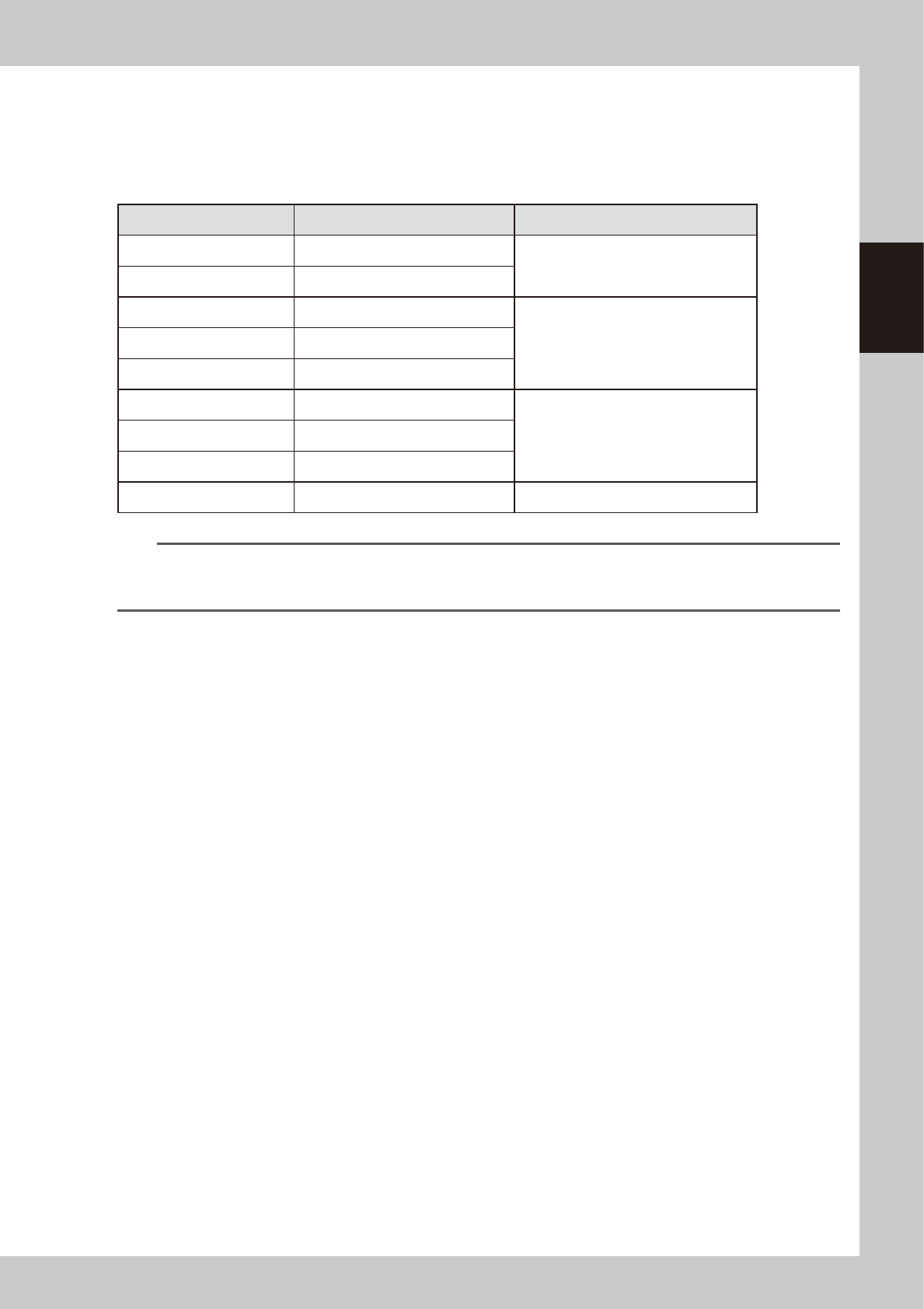
The table below shows the vacuum level measured when each nozzle is open.
The values might differ slightly depending on the air source and operating conditions. Use these values for
reference during maintenance.
n
Standard vacuum level when nozzle is open
Nozzle Standard value when nozzle is open Remarks
Type301A 160 to 200
Standard nozzle
Type302A 80 to 120
Type311A 180 to 210
Narrow-pitch nozzleType312A 140 to 180
Type313A 60 to 100
Type303A/Type314A* 50 to 90
Standard & Narrow-pitch common nozzleType304A/Type315A* 40 to 80
Type307A/Type318A* 40 to 80
No nozzle 40 to 80
n
NOTE
The nozzle holes of the nozzles marked with an asterisk are larger than those of other nozzles. If a nozzle marked with
an asterisk exceeds its standard value shown above, the air path in the head (spline shaft, etc.) may be
contaminated.
2-6
2
Daily maintenance items
1.2 Checking the nozzles visually
To visually check nozzles, remove each nozzle from the head or from the nozzle station.
n
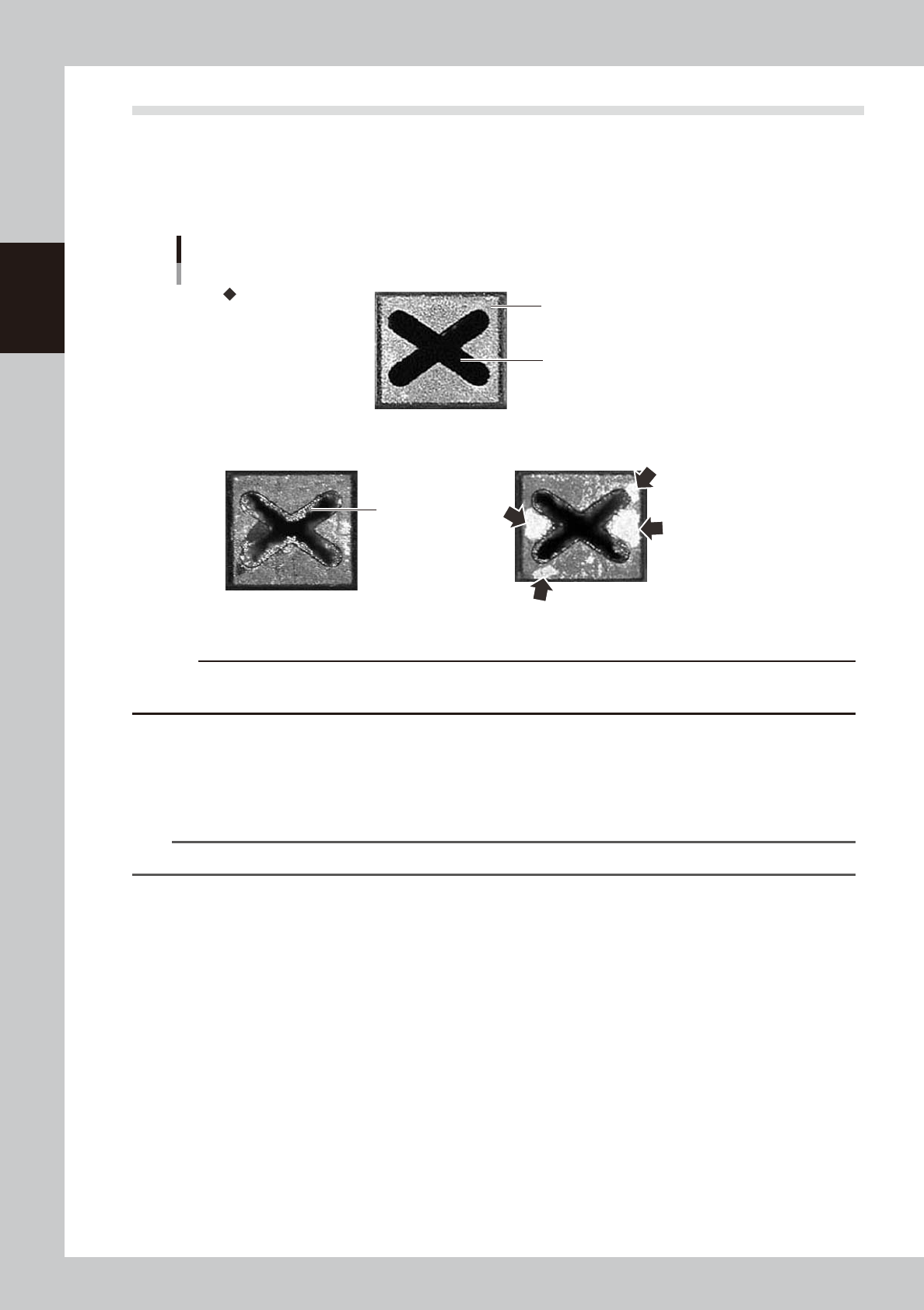
Points to check the removed nozzles
Check the removed nozzles with a magnifying glass or similar tool.
If any solder or contaminant sticks to the nozzle tip or nozzle hole, clean the nozzle.
Nozzle tip
Solder is adhering to
nozzle hole
Solder is adhering to
nozzle tip (flat surface)
Nozzle hole
Checking the nozzle condition
No good: Nozzle is clogged No good: Shiny material on tip
Normal condition
53200-L4-00
c
CAUTION
If the above check reveals a clogged or dirty nozzle, clean the nozzle hole and nozzle tip.
See chapter 3,"1.2 Nozzle cleaning" and "2.1 Cleaning the nozzle air path".
n
Checking nozzles by removing them from the head
1. Move the head to a position where the nozzles can be easily removed, then remove each nozzle by hand.
2. After checking and cleaning the nozzle, reattach the nozzle to the head while making sure the head position and the
nozzle's orientation are correct.
n
NOTE
As for a simple method, check the nozzle attached to the head with a mirror or similar tool.
n
Checking nozzles by removing them from the nozzle station
1. Return all nozzles in the nozzle station.
2. On the [Unit] - [Head] tab screen, press the [Npzzle Stn Shutter] button to allow the nozzles to be removed from the
nozzle station, then remove each nozzle by hand.
3. After checking and cleaning the nozzle, return the nozzle back in the nozzle station and press the [Npzzle Stn Shutter]
button.
2-7
2
Daily maintenance items
2. Cleaning the feeder plate
Chips or foreign matter falling on the feeder plate might bite into the surface during feeder setting and cause
the pickup position to deviate. Periodic inspection and cleaning are recommended to prevent this problem.
n
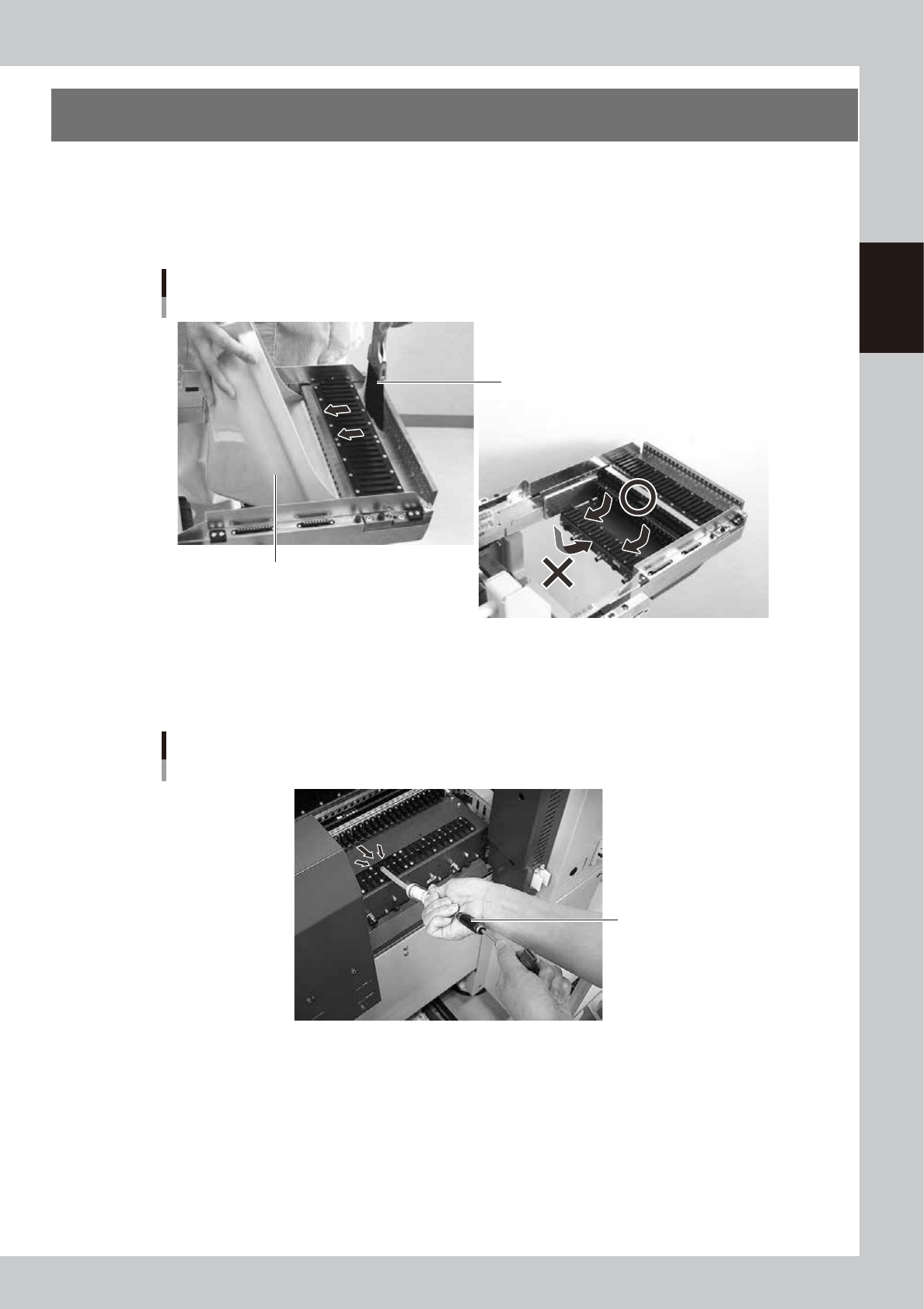
Cleaning with the accessory brush
Clean the feeder plate with the accessory brush as shown below.
Cleaning brush
Cleaning the feeder plate
Use the brush.
Dustpan
53203-L4-10
n
Cleaning with the vacuum cleaner or vacuum ASSY (option)
Use a vacuum cleaner or optional vacuum ASSY(KHY-M88V0-A0X) connecting to the air connector on the front of the
machine to suck in fine dust particles to clean the feeder plate.
Vacuum ASSY
Cleaning the feeder plate
Use the vacuum ASSY
53204-L4-00