JANETS_INM.pdf - 第458页
J aN et s Instr ucti on M anua l 10 . Feed er S et D at a ba se 10 -2 Startin g up th e Feeder Set Dat ab as e 10.1.1 Whe n the Sy stem I s Connected to a Ser v er If you st art up th e Fe eder Set D at abas e w hen th e…
JaNets Instruction Manual 10. Feeder Set Database
10-1
Feeder Set Database 10.
What is the Feeder Set Database?
While the Feeder Layout application displays the machine assignment of a production line, this
application displays component pick-up information for one feeder to be assigned to a machine,
and uses the database to manage feeder set data for one machine as a feeder group. In addi-
tion, this application allows you to add, edit and/or delete the feeder set data.
Starting Up or Quitting the Feeder Set Database 10.1
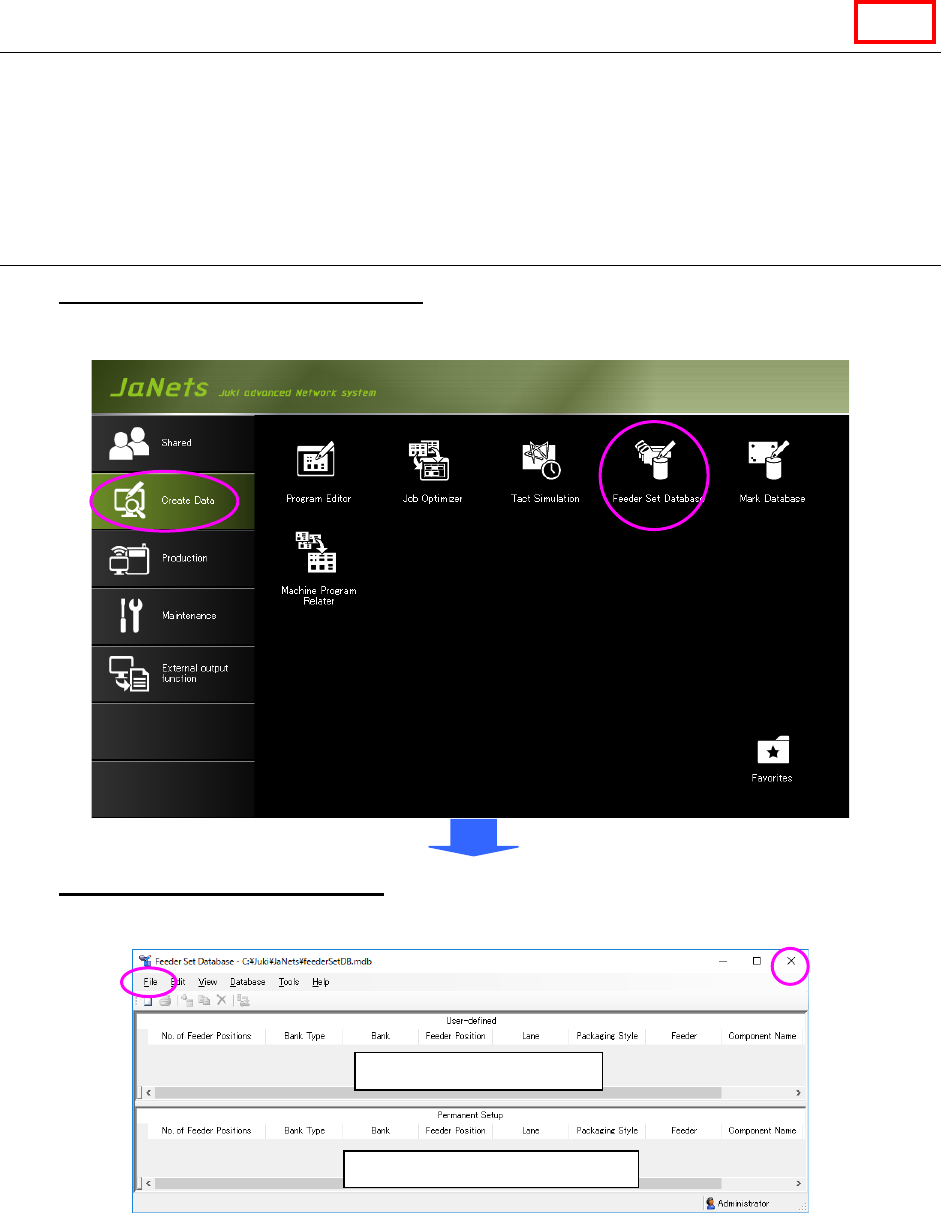
To start up the Feeder Set Database: Double-click the “Create Data” tab from the JaNets
Launcher, and then the “Feeder Set Database” icon.
To quit the Feeder Set Database: Select the [File] command from the menu bar, and then the
[Exit Feeder Set Database] command on the “File” menu, or select the close (×) button located
on the upper right corner of the title bar.
Figure 10.1-1 Starting up the Feeder Set Database from the JaNets Launcher
* The information displayed on the above screen is displayed only. You cannot edit it directly.
* A feeder group associated with a machine is called “Permanent Setup” group, while one not
associated with a machine is called “User-defined” group. To associate a feeder with a ma-
chine, use the [Permanent Setup] command of the Shopfloor Setup application. (You cannot
edit the “Permanent Setup” group with this Feeder Set Database. You can edit it with the
[Permanent Setup] command of the Shopfloor Setup only.
“User-defined” feeder list
“Permanent Setup” feeder list
Line

JaNets Instruction Manual 10. Feeder Set Database
10-2
Starting up the Feeder Set Database 10.1.1
When the System Is Connected to a Server
If you start up the Feeder Set Database when the system is set to be connected to a server, the
system regards the database as a server to obtain data from it.
When you select the [New] menu command or the [Open] menu command from this point, you
can switch a database to a database of .mdb files.
The [Switch to connection to the server] menu command allows you to switch the database to
the database of a server again also.
Data Manager
JaNets Instruction Manual 10. Feeder Set Database
10-3
Menu Items 10.2
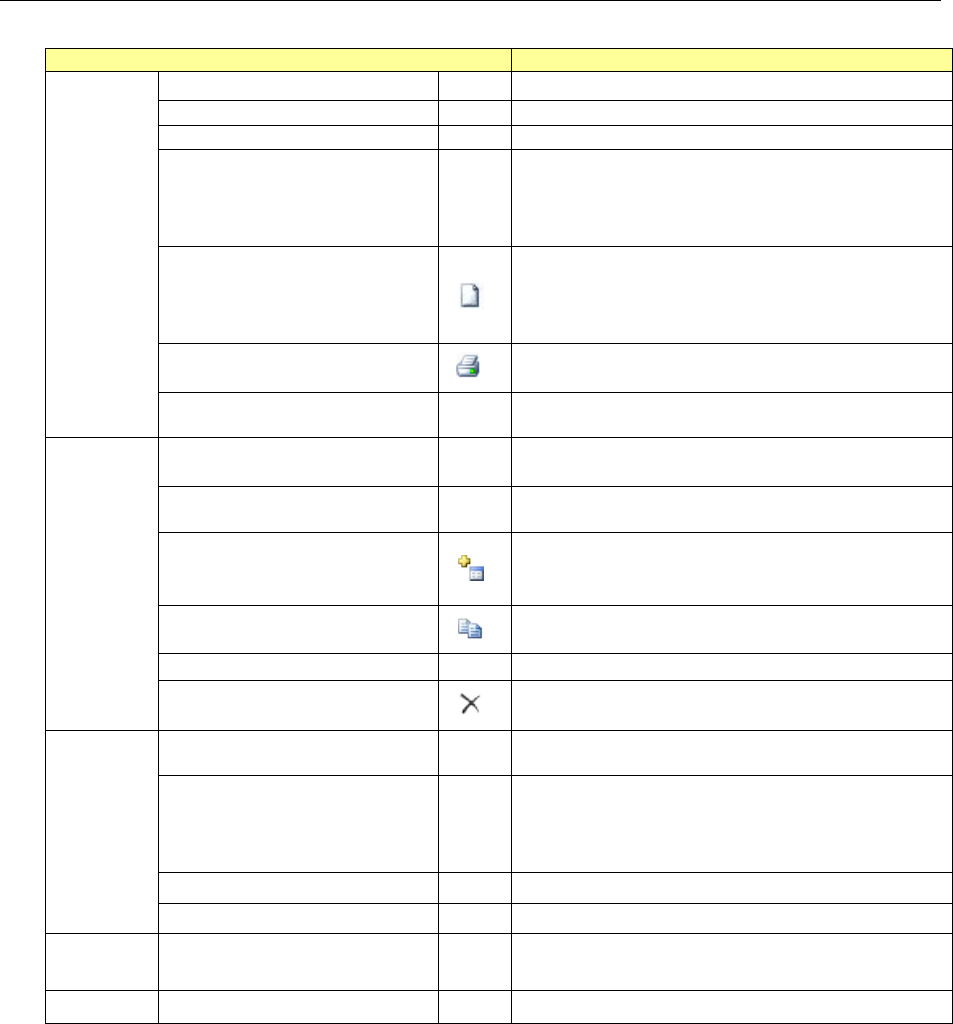
Table 10.2-1 Menu items
Menu item
Description
File (F)
New (N)
Ctrl+N
An empty MDB file is created.
Open (O)
Ctrl+O
The created MDB file is opened.
Save as (A)
Ctrl+A
The opened MDB file is saved with a different name.
Switch to connec-
tion to the server
(S) *1
Switches a database to a database of a server.
When you select the [New] menu command or the
[Open] menu command again, you can switch the
database to a database of .mdb files.
Import Data (I)
Ctrl+I
Loads the specified production program data. The
system automatically assigns a group name to a
group from “GRP1” by default. The system obtains
the pick data whose machine is specified also.
Print/Save as
Text
Ctrl+P
Displays the “Print /Save as Text” screen for the
feeder set data.
Exit Feeder Set
Database (X)
Ctrl+X
Quits the Feeder Set Database.
Edit (E)
New (N)
Ctrl+N
Displays the “Data Creation Wizard” (for creating a
feeder group) on the screen.
Rename Group
(N)
Ctrl+N
Renames a group.
Add (A)
Ctrl+A
Adds the feeder information to the created group.
You have to enter the data input form to add the
information.
Copy (C)
Ctrl+C
Copies the selected feeder set data to another
group.
Change (E)
Ctrl+E
Displays the “Feeder Set Database” editing screen.
Delete (D)
Ctrl+D
Deletes a group if it is selected, or deletes feeder set
data if it is selected.
View (V)
Feeder Layout
(F)
Ctrl+F
Displays the feeder layout.
Program Explorer
(E) *1
Displays or hides the Program Explorer.
You can select one of the following tabs of the Pro-
gram Explorer: “Manage,” “Production Program”
and “Reservation File.”
Toolbar (T)
Displays/hides the toolbar.
Status Bar (B)
Displays/hides the status bar.
Database
(D)
Refresh View (I)
Obtains the updated database information and cre-
ates the list again.
Help (H)
About (A)
Displays the version information.
*1 Yo u can use these commands when you add a Data Manager option to the system.