Specification SIPLACE X-Series规格说明书2 - 第42页
42 SIPLACE Software Suite SIPLACE Station Software The extreme flexibility of the SIPLACE X-series is also reflected in many functions and application s of the 705 version station software. The aim of the softw are is to…
41
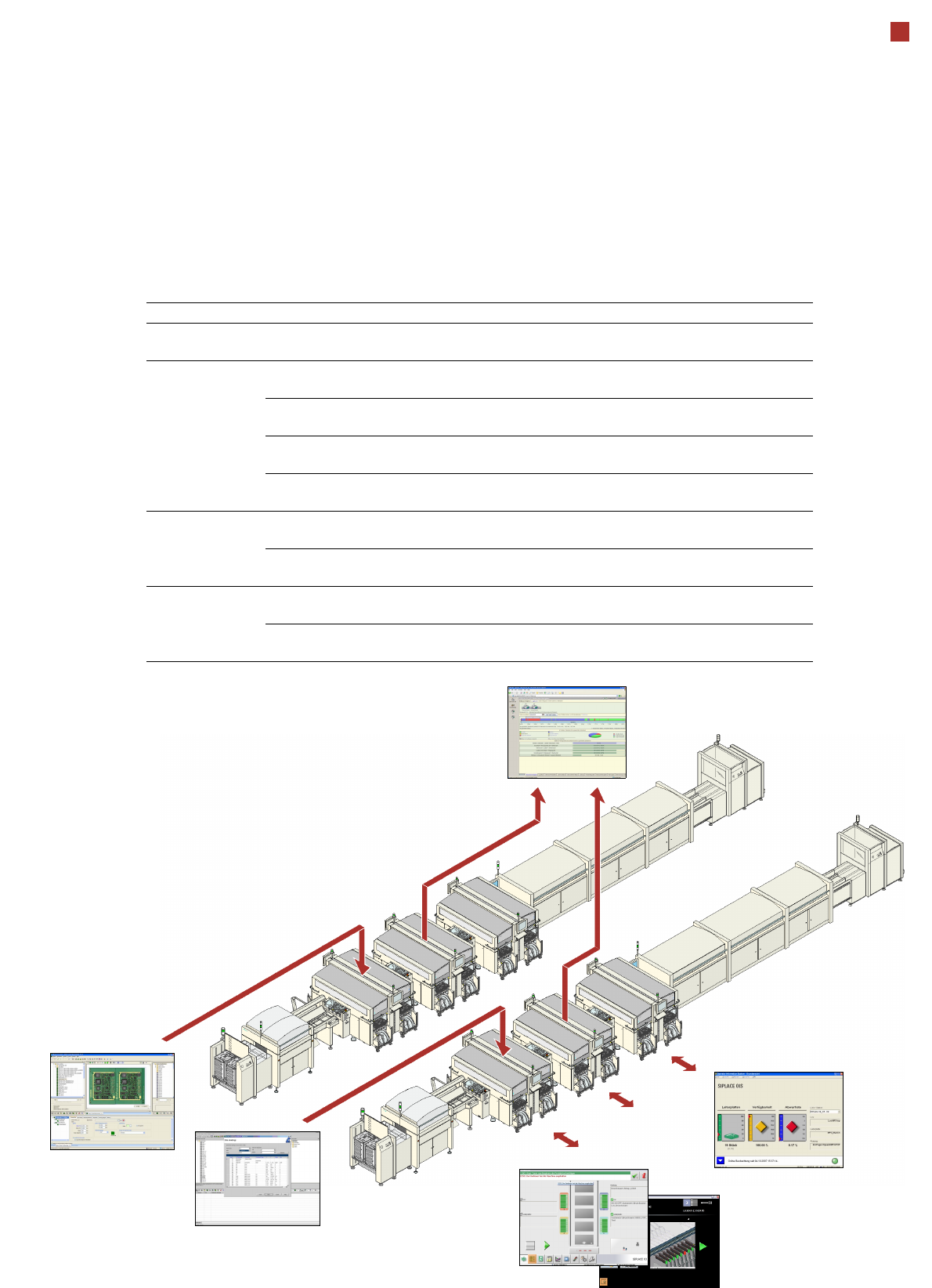
SIPLACE Software Suite
Overview
Production monitoring:
SIPLACE Explorer
Product definition:
SIPLACE Pro
Station control:
SIPLACE Station Software with SMART GUI
Product definition
SIPLACE Pro
SIPLACE software product Standard Option
Station operation
and control
SIPLACE station software with SMART GUI X
Product defini-
tion, optimization
and line control
SIPLACE Pro
A single application for all programming tasks
X
SIPLACE ASCII Centroid Import Wizard
Fast and easy data conversion
X
SIPLACE SiCluster Professional
Fully automatic product grouping
X
SIPLACE EDM
Straightforward data management for placement programs
X
Production moni-
toring & process
control
SIPLACE OIS
Operator Information System
X
SIPLACE Explorer
Line monitoring system
X
Set-up verifica-
tion & traceability
SIPLACE Setup Center
Avoids set-up errors with reliable set-up verification
X
SIPLACE Traceability
Traceability of the placement processes
X
Station monitoring:
SIPLACE OIS
42
SIPLACE Software Suite
SIPLACE Station Software
The extreme flexibility of the
SIPLACE X-series is also
reflected in many functions
and applications of the 705
version station software. The
aim of the software is to sup-
port users in their daily work,
to simplify processes on the
machine and thus to
increase the productivity of
the overall line. There are
four different user levels that
ensure that every user has
access to the information
and options that he needs for
his work on the machine.
The benefits of the SIPLACE
station software 705 at a
glance:
• Simple and innovative
user guidance, ideal for
both inexperienced users
(-> Smart GUI) and
experts
• Fast, direct access to all
machine functions and
systems, as required.
• Best in class NPI features
• Maximum user-friendli-
ness
• Maximum ruggedness
during placement
New product introduction
made easy
The enhanced options for
new product introduction
(NPI) on the line is one of the
key features in the SIPLACE
station software 705.
New products must be pro-
duced without error right
from the very first PCB.
SIPLACE is able to rise fully
to this challenge with the
SIPLACE station software,
which supports the user
through the product introduc-
tion process with the follow-
ing functions.
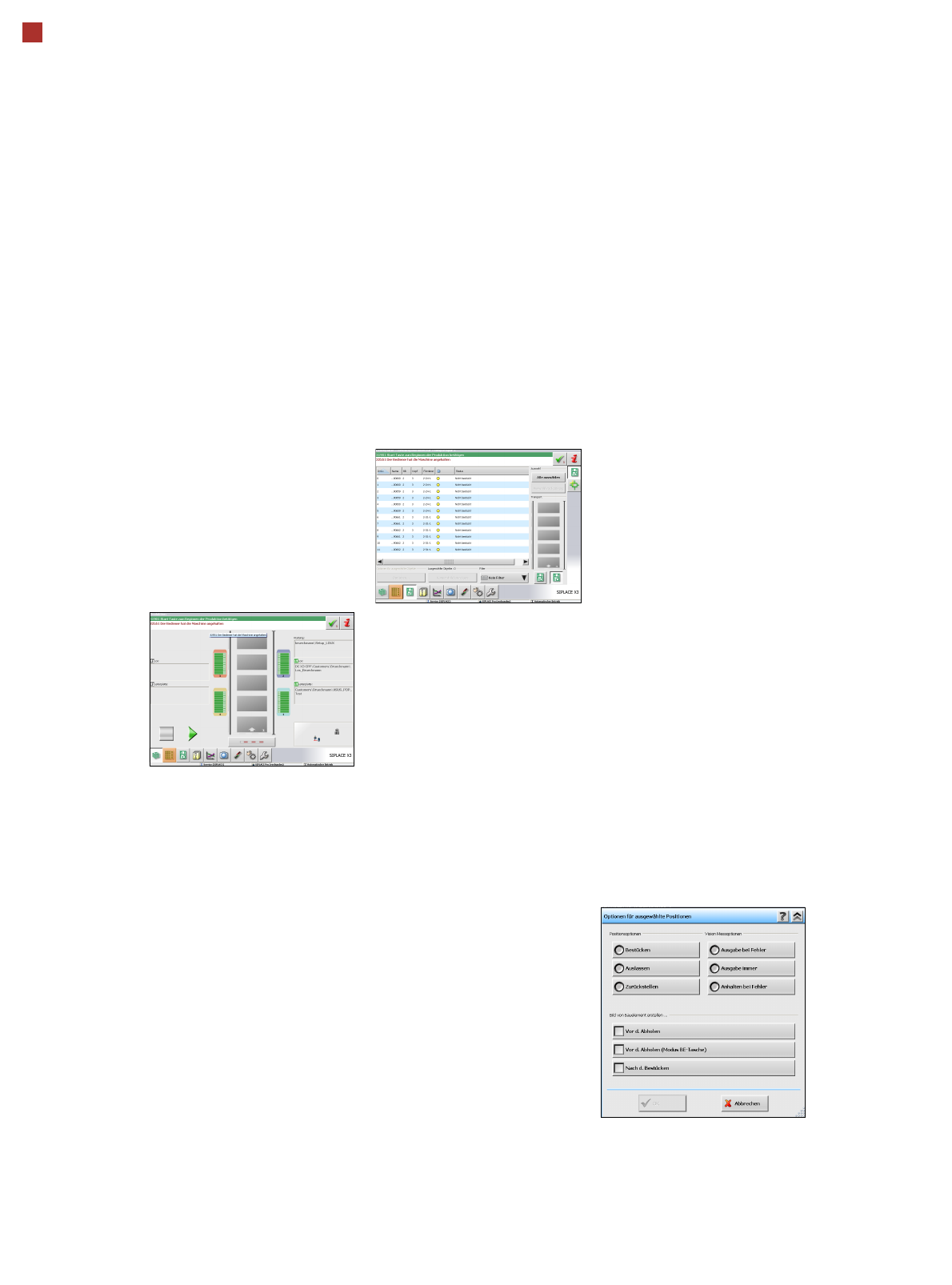
Placement list at the sta-
tion
The placement list for the
PCB currently being pro-
cessed is always available at
the station. The placement
list shows at a glance:
• The placed components in
the selected placement
area
• The order in which the
components are placed
• The placement head that
places the components
• The feeder module from
which the components
are fetched
• The status of the place-
ment position.
The status of the placement
position can be modified
online at the station. If certain
components are not avail-
able on the line, users can
postpone and then resume
their placement later.
The status of the placement
position is broken down into
the following categories
(position options):
• Place.
• Omit. (The placement
position is not placed. This
status can be selected
either for the current PCB
or for the entire job. In the
latter case, this compo-
nent will be omitted from
all following PCBs until a
new job is sent to the line.)
• Postpone. (The compo-
nent is placed at the end of
the placement cycle.)
43
SIPLACE Software Suite
SIPLACE Station Software
General
Individual measured data
The individual measured
data determined by the
SIPLACE 705 station soft-
ware (measurement con-
texts) can be saved at the
station. This can be made
contingent upon the following
conditions (Vision measure-
ment options):
1. Component cannot be
measured and measured
data (measurement con-
texts) should be saved.
This measured data can
then be used for fine-tun-
ing during a subsequent
analysis. As with other
optical inspection sys-
tems, pseudo-errors can
then be distinguished
from real errors, thus
allowing the affected
package form to then be
optimized to suit the spe-
cific application.
2. Vision measurement
reports should always be
produced at the same
time for this component.
If there is any doubt
about the quality of the
component, the vision
reports for all compo-
nents can be produced at
the same time.
3. The machine should stop
as soon as a vision error
occurs for components.
If it is essential to avoid
rejected components
because the compo-
nents are very expensive,
for example, this option
may be used to correct all
measuring errors that
occurred without a single
component being
rejected. The machine
stops with the component
in front of the camera so
that the component can
be checked.
In addition, pick-up and
placement positions can be
approached with the PCB
camera for checking. This
means that a one hundred
percent placement check
can be carried out inside the
machine.
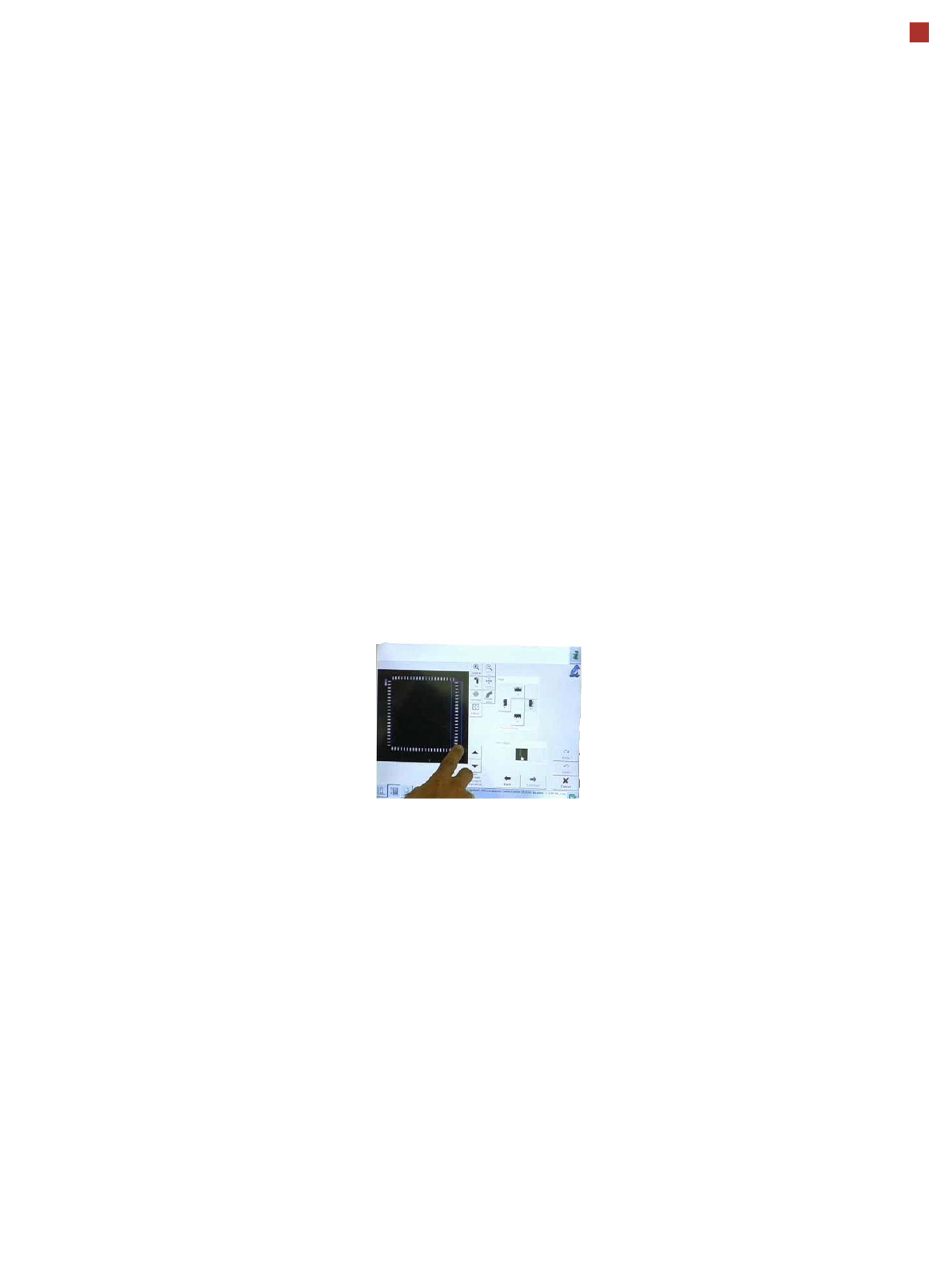
Teaching components
Package forms that are not
included in the standard
package form library may be
created using the SIPLACE
Pro offline programming sys-
tem with the aid of data
sheets or using the offline
vision teach station with a
sample component.
Alternatively a package form
may be identified incomplete
and presented to the station
as such. The description can
be finished on the line after
the first pick-up operation.
After the description, a
robustness analysis can be
carried out at the station.
This will ensure that the com-
ponent will always be
detected reliably, even with
different frames.
You can also program the
placement positions on the
board in the station software.
This software provides
advanced support functions
which allow you, for
example, to combine images
from the PCB camera with
data from the placement pro-
gram. This boosts the pro-
ductivity significantly for
production environments
with frequent new production
introductions or product
changeovers.
The SIPLACE station soft-
ware makes users’ daily
work much easier.
Many other features of the
station software make users’
daily work easier and thus
optimize the processes in
SMT production.
• Calibration operations are
fully integrated into the
software
• Self-healing nozzles and
feeder modules
• Cycle self-determination
by feeder modules
• Alarms - Everything at a
glance
• FaceDown recognition
• Direct access to board
conveyor functions, such
as Nonstop board trans-
port