IPC 7711A.pdf - 第39页
OUTLINE This procedure uses a solvent to remove surface coatings. This procedure can be use for spot or overall coating removal of conformal coatings or solder resists. Approved solvents may be used to remove specific so…
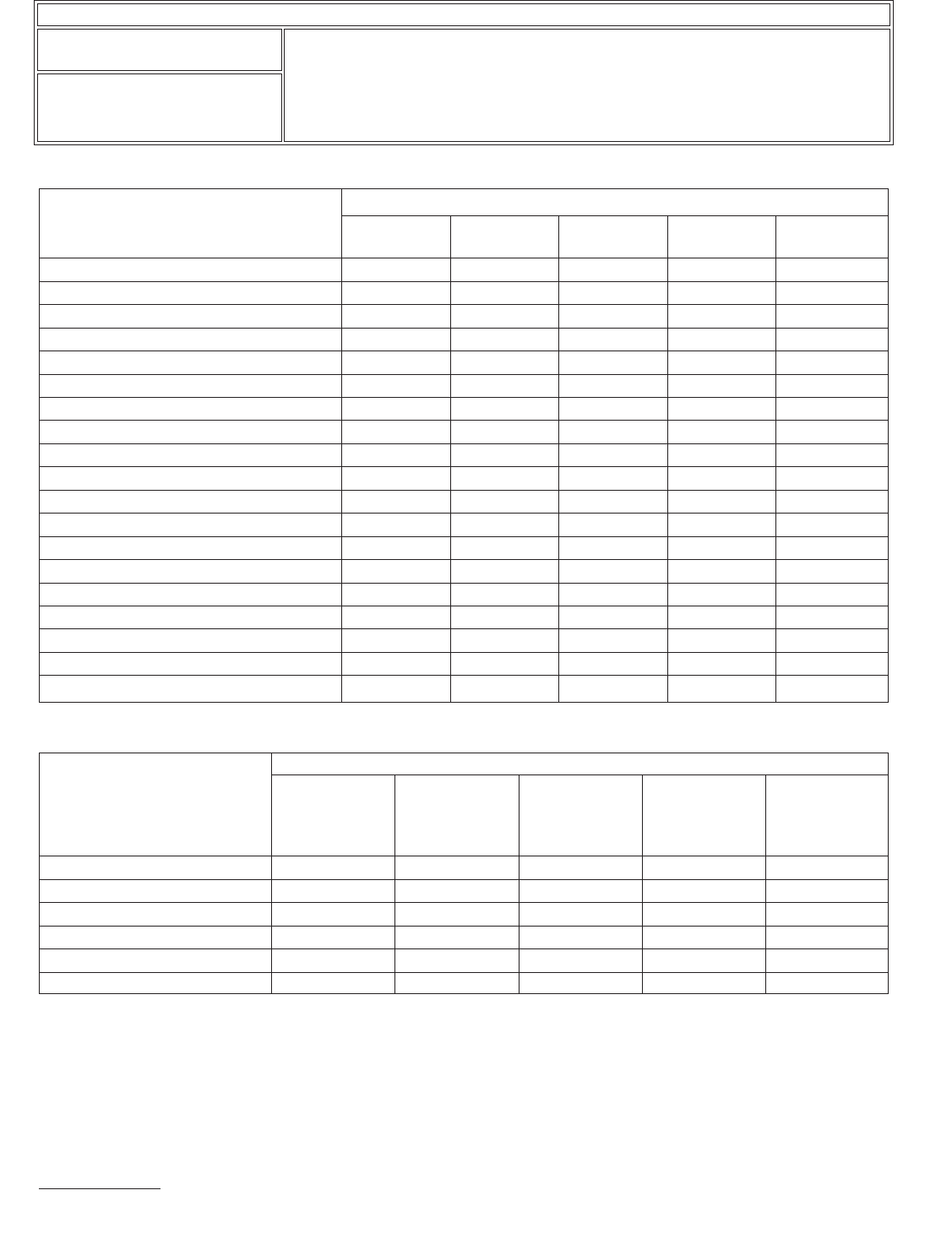
Table 1 Conformal Coating Characteristics
Characteristics
Conformal Coating Type
Epoxy Acrylic
Poly-
urethane
Silicone
Resin
Para-
xylylene
Hard UUU
Medium Hard UU
Soft UU
Heat Reaction UUU
Surface Bond - Very Strong UUU
Surface Bond - Strong UU
Surface Bond - Medium UU
Surface Bond - Light U
Solvent Reaction U
Non-porous Surface UUU U
Glossy Surface UUU
Semi-glossy Surface UU
Dull Surface U
Rubbery Surface U
Brittle UU
Chips UU
Peels and Flakes UU U
Stretches UU
Scratch, Dent, Bend, Tear UUU
Table 2 Conformal Coating Removal Methods
Conformal Coating
Removal Method
2.3.2
Solvent Method
2.3.3
Peeling Method
2.3.4
Thermal
Method
2.3.5
Grinding
Scraping
Method
2.3.6
Micro Blasting
Method
Paraxylyene 1 2 3
Epoxy 123
Acrylic 1 2 3 4
Polyurethane 3 1 2 4
Silicone Thin 1 2 3 4
Silicone Thick 1 2
NOTE: The preferred order for applying removal methods to specific coatings is numerically indicated. These removal methods are listed in ascending order.
More than one method may be required.
IPC-7711A/7721A
Number: 2.3.1
Revision:
Date: 2/98
Subject: Coating Removal, Identification of Conformal Coating
Page4of4
Copyright Association Connecting Electronics Industries
Provided by IHS under license with IPC
Not for Resale
No reproduction or networking permitted without license from IHS
--``,``,-`-`,,`,,`,`,,`---
OUTLINE
This procedure uses a solvent to remove surface coatings. This procedure can be
use for spot or overall coating removal of conformal coatings or solder resists.
Approved solvents may be used to remove specific soluble type coatings on a spot
basis by brushing or swabbing the local area with the controlled application of sol-
vent until the area is free of the coating material.
If warranted, all the soluble type coating can be removed by immersing and brush-
ing the entire printed board or printed board assembly.
To determine the appropriate coating removal procedure the coating must first be
identified. Refer to procedure number 2.3.1.
NOTE
Coating removal may require the use of one or more methods.
CAUTION
Determine, on a module by module basis, the hazards to parts, etc., by short term
immersion in the removal solvents. If chloride based or other harsh solvents are
used, extreme care must be exercised to prevent damage to base material, compo-
nent parts, plated-through holes, and solder joints. Some solvent coating removal
methods can cause expansion or swelling of the base material which can degrade
the printed board or printed board assembly. Under no circumstances should these
solvents be used except in a closely controlled process. It is recommended that the
printed board or printed board assembly be inspected to ensure that no damage has
occurred.
Before using any solvent refer to Material Safety Data Sheets.
REFERENCES
2.1 Handling Electronic Assemblies
2.2 Cleaning
2.3.1 Coating Removal, Identification of Conformal Coatings
2.4.1 Coating Replacement, Solder Resist
2.4.2 Coating Replacement, Conformal Coatings/Encapsulants
TOOLS AND MATERIALS
Brush
Cotton Swab
Polyimide Tape
Knife
Suitable Solvent
Thermal Parting Tool
Wood Stick
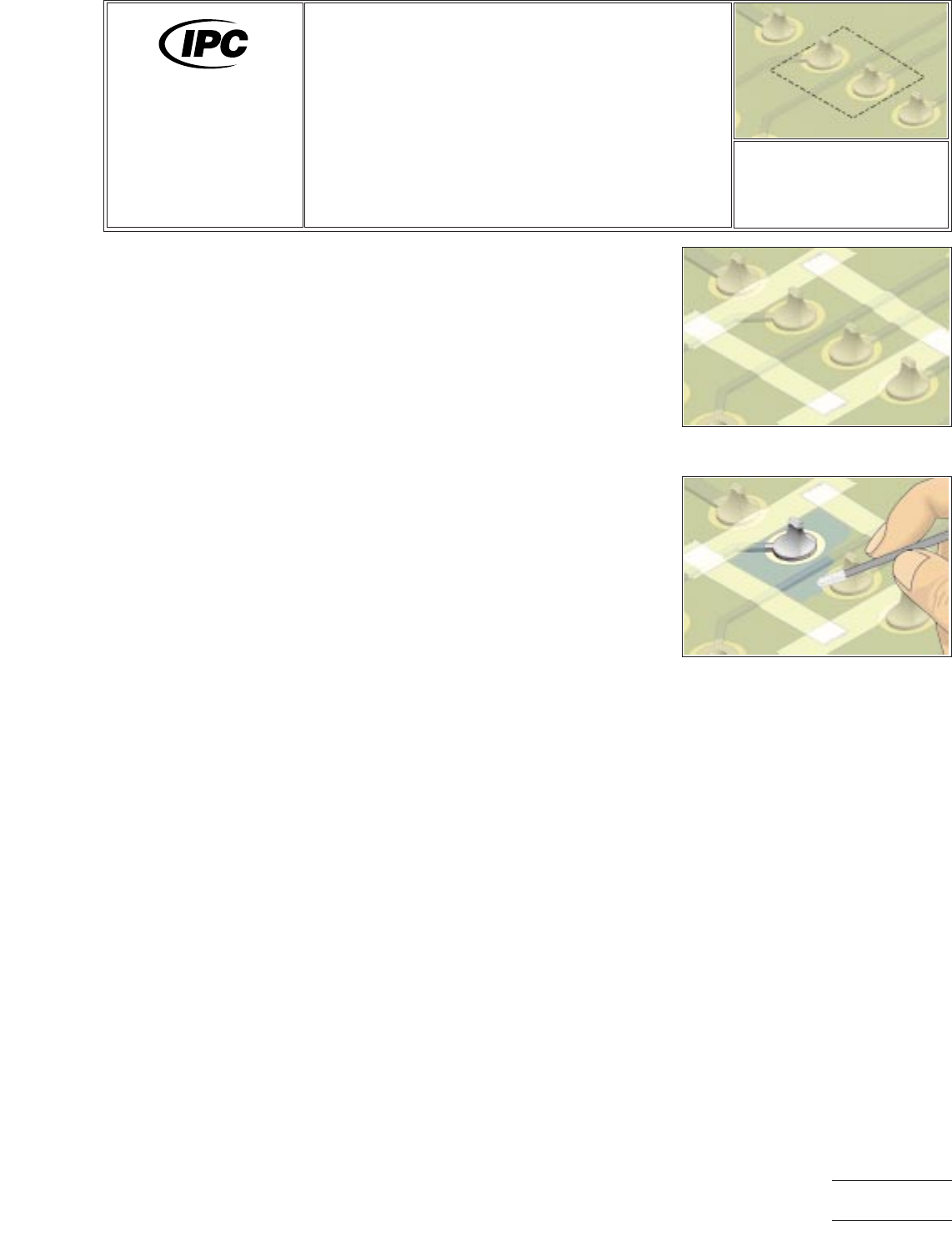
Figure 1 Apply tape to outline for
coating removal.
Figure 2 Apply solvent with foam
swab to remove coating.
7711A/7721A
General
Information and
Common Procedures
Revision:
Date: 2/98
Coating Removal,
Solvent Method
Number: 2.3.2
Product Class: R, F, W, C
Skill Level: Advanced
Level of Conformance: High
Material in this manual was voluntarily established by Technical Committees of IPC. This material is advisory only and its use
or adaptation is entirely voluntary. IPC disclaims all liability of any kind as to the use, application, or adaptation of this material.
Users are also wholly responsible for protecting themselves against all claims or liabilities for patent infringement. Equipment
referenced is for the convenience of the user and does not imply endorsement by IPC.
Page1of2
Copyright Association Connecting Electronics Industries
Provided by IHS under license with IPC
Not for Resale
No reproduction or networking permitted without license from IHS
--``,``,-`-`,,`,,`,`,,`---
PROCEDURE – LOCAL SPOT REMOVAL
1. Apply Polyimide tape to outline the area where the coating needs to be removed.
(See Figure 1.)
2. Dip the end of a foam swab in stripping solution and apply a small amount to the
area of coating to be removed. (See Figure 2.)
As an alternative, a small cotton patch can be cut to the size of the area masked
(see Figure 1), saturated with the stripping solution, and pressed into intimate
contact with the surface of the coating to be removed. The patch will retard the
evaporation of certain solvents and reduce exposure time.
NOTE
Since various substances may be used as coatings, the time required for a given
coating to dissolve or soften will vary. Reapply solvent several times as most sol-
vents evaporate rapidly.
3. Rub the treated surface carefully with a brush or wood stick to dislodge the coat-
ing. A wedge shaped applicator tip, knife, or heated blade may be effective in
removing some coatings, particularly polyurethanes.
4. Neutralize or clean the stripped area and dry.
PROCEDURE – OVERALL REMOVAL
1. A single step for removal of all the coating may be completed by providing a con-
tinuous flow of solvent.
Alternately, process the board in a series of tanks containing mild solvent, start-
ing with a high contamination tank and progressing sequentially to a final, fresh
solvent tank.
EVALUATION
1. Visual examination or UV light may be used to verify complete removal of coating.
NOTES
Coating Removal Required at Outlined Areas
IPC-7711A/7721A
Number: 2.3.2
Revision:
Date: 2/98
Subject: Coating Removal, Solvent Method
Page2of2
Copyright Association Connecting Electronics Industries
Provided by IHS under license with IPC
Not for Resale
No reproduction or networking permitted without license from IHS
--``,``,-`-`,,`,,`,`,,`---