IPC 7711A.pdf - 第42页
NOTES IPC-771 1A/7721A Number: 2.3.3 Revision: Date: 2/98 Subject: Coating Removal, Peeling Method P a g e2o f2 Copyright Association Connecting Electronics Industries Provided by IHS under license with IPC Not for Resal…
OUTLINE
This peeling removal method for coating can be used only under special circum-
stances. Normally this method is used to remove RTV silicone or other thick rubbery-
like coating materials.
The coating material is removed using a dull knife or otherwise dull blade to slit the
coating material and to peel it off the printed board or printed board assembly.
To determine the appropriate coating removal procedure the coating must first be
identified. Refer to procedure number 2.3.1.
NOTE
This method is limited to coatings that are rubbery in nature to allow the coating
material to be slit into small sections and peeled off the printed board assembly.
REFERENCES
2.1 Handling Electronic Assemblies
2.2 Cleaning
2.3.1 Coating Removal, Identification of Conformal Coatings
2.4.1 Coating Replacement, Solder Resist
2.4.2 Coating Replacement, Conformal Coatings/Encapsulants
TOOLS AND MATERIALS
Heated Blade
Knife
Wood Sticks
PROCEDURE
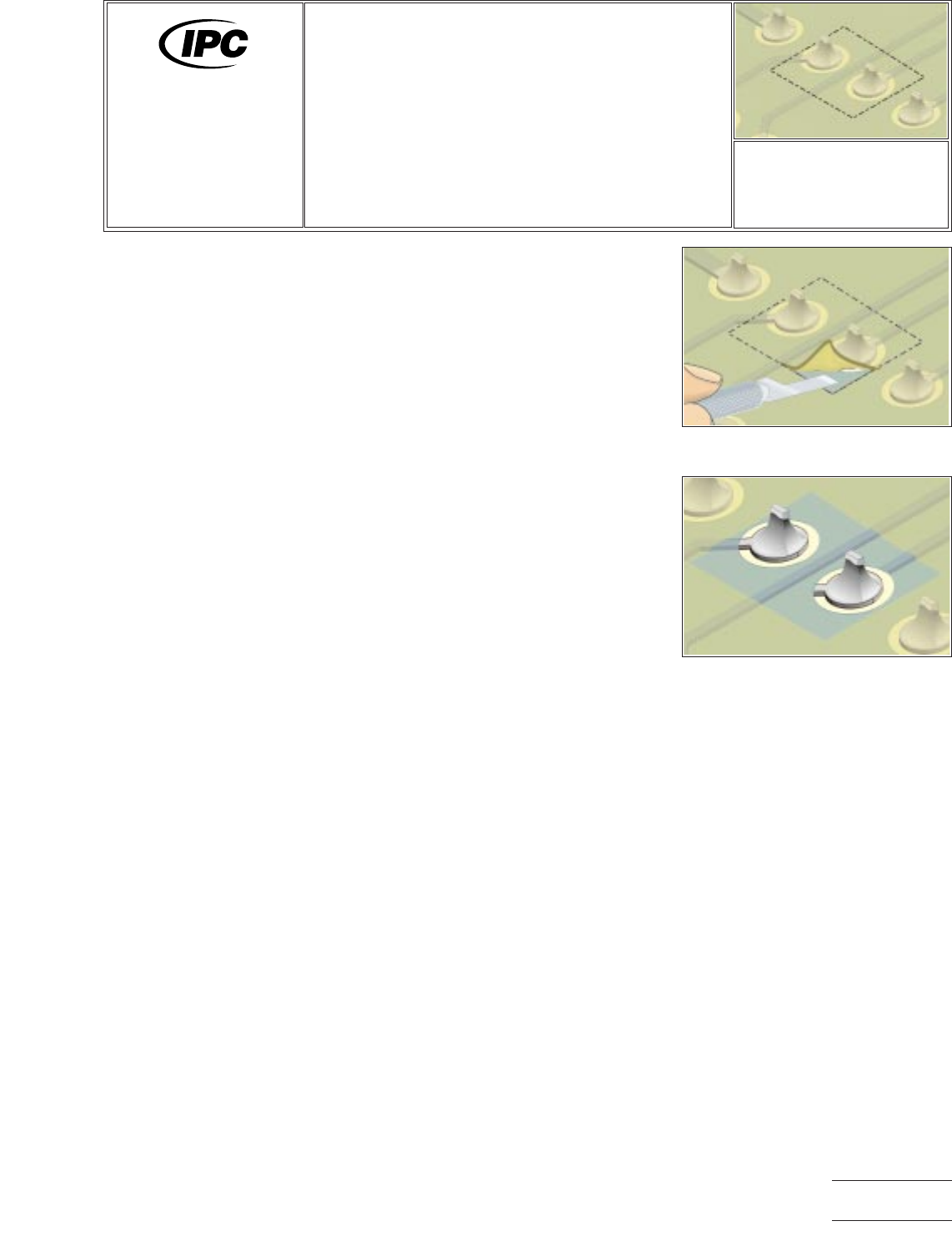
1. Slit and peel off the coating material with a dull knife or heated dull blade. (See
Figure 1.)
2. Repeat as needed until the required material is removed.
EVALUATION
1. Visual examination or UV light may be used to verify complete removal of coating.
NOTE
Coating Removal Required at Outlined Area
Figure 1 Slit and peel off coating
using a knife or heated blade.
Figure 2 Removal complete.
7711A/7721A
General
Information and
Common Procedures
Revision:
Date: 2/98
Coating Removal,
Peeling Method
Number: 2.3.3
Product Class: R, F, W, C
Skill Level: Advanced
Level of Conformance: High
Material in this manual was voluntarily established by Technical Committees of IPC. This material is advisory only and its use
or adaptation is entirely voluntary. IPC disclaims all liability of any kind as to the use, application, or adaptation of this material.
Users are also wholly responsible for protecting themselves against all claims or liabilities for patent infringement. Equipment
referenced is for the convenience of the user and does not imply endorsement by IPC.
Page1of2
Copyright Association Connecting Electronics Industries
Provided by IHS under license with IPC
Not for Resale
No reproduction or networking permitted without license from IHS
--``,``,-`-`,,`,,`,`,,`---

NOTES
IPC-7711A/7721A
Number: 2.3.3
Revision:
Date: 2/98
Subject: Coating Removal, Peeling Method
Page2of2
Copyright Association Connecting Electronics Industries
Provided by IHS under license with IPC
Not for Resale
No reproduction or networking permitted without license from IHS
--``,``,-`-`,,`,,`,`,,`---
OUTLINE
This coating removal procedure uses a controlled, low temperature, localized heat-
ing method for removing thick coatings by an overcuring or softening means.
Two methods are covered. The first method uses various shaped, temperature con-
trolled tips, with dull edges to soften and remove the coating.
The second method uses a localized controlled jet of hot air or inert gas to soften
the coating material which is pushed away or removed by a non-marring tool.
These methods do not burn or char either the coating or printed board.
CAUTION
Soldering irons should not be used for coating removal as their high operating tem-
peratures will cause the coatings to char and possibly delaminate the printed board
base material.
The use of thinned down soldering iron tips or soldering iron heated thin cutting
blades are not recommended since they do not provide controlled heating and may
present dangerous sharp edges to the workpiece surface.
To determine the appropriate coating removal procedure the coating must first be
identified. Refer to procedure number 2.3.1.
REFERENCES
2.1 Handling Electronic Assemblies
2.2 Cleaning
2.3.1 Coating Removal, Identification of Coatings
2.4.1 Coating Replacement, Solder Resist
2.4.2 Coating Replacement, Conformal Coatings/Encapsulants
TOOLS AND MATERIALS
Brush
Heated Blade or Thermal
Parting Tool
Hot Air Tool
Knife
Small Cutters
Wood Sticks
PROCEDURE - THERMAL PARTING METHOD
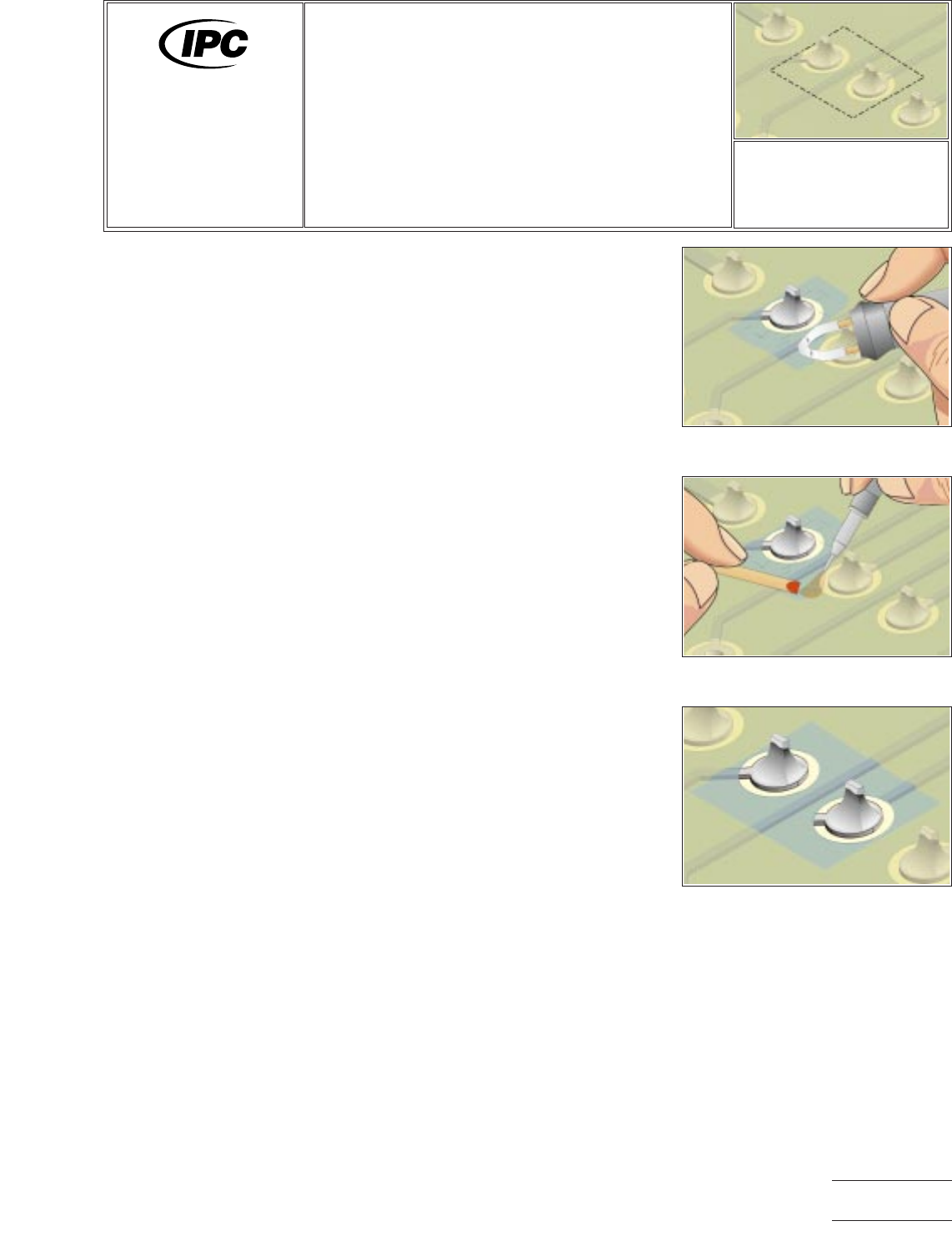
1. Select an appropriate thermal parting tip to suit the workpiece configuration. Set
the nominal tip temperature, using the manufacturer’s recommended procedure.
2. Apply the thermal parting tip to the coating, using a light pressure. The coating
material will either soften or granulate. Polyurethanes will soften and epoxies will
granulate. The tip temperature should be regulated to a point where it will effec-
tively ‘‘break down’’ the coating without scorching or charring. (See Figure 1.)
Figure 1 Apply thermal tip to soften
or granulate the material.
Figure 2 Apply hot air to the work
area and remove overcured coating.
Figure 3 Removal complete.
7711A/7721A
General
Information and
Common Procedures
Revision:
Date: 2/98
Coating Removal,
Thermal Method
Number: 2.3.4
Product Class: R, F, W, C
Skill Level: Advanced
Level of Conformance: High
Material in this manual was voluntarily established by Technical Committees of IPC. This material is advisory only and its use
or adaptation is entirely voluntary. IPC disclaims all liability of any kind as to the use, application, or adaptation of this material.
Users are also wholly responsible for protecting themselves against all claims or liabilities for patent infringement. Equipment
referenced is for the convenience of the user and does not imply endorsement by IPC.
Page1of2
Copyright Association Connecting Electronics Industries
Provided by IHS under license with IPC
Not for Resale
No reproduction or networking permitted without license from IHS
--``,``,-`-`,,`,,`,`,,`---