YRM20_Mainte_E.pdf - 第3页
w Be sure to read safety instructions before using Y AMAHA sprinter or related products. SFSMT -EN-213-01 10 Safety in stru cti ons Contents 1. CE marking i 2. W arning labels ii 2.1 W ar ning label format and mark descr…
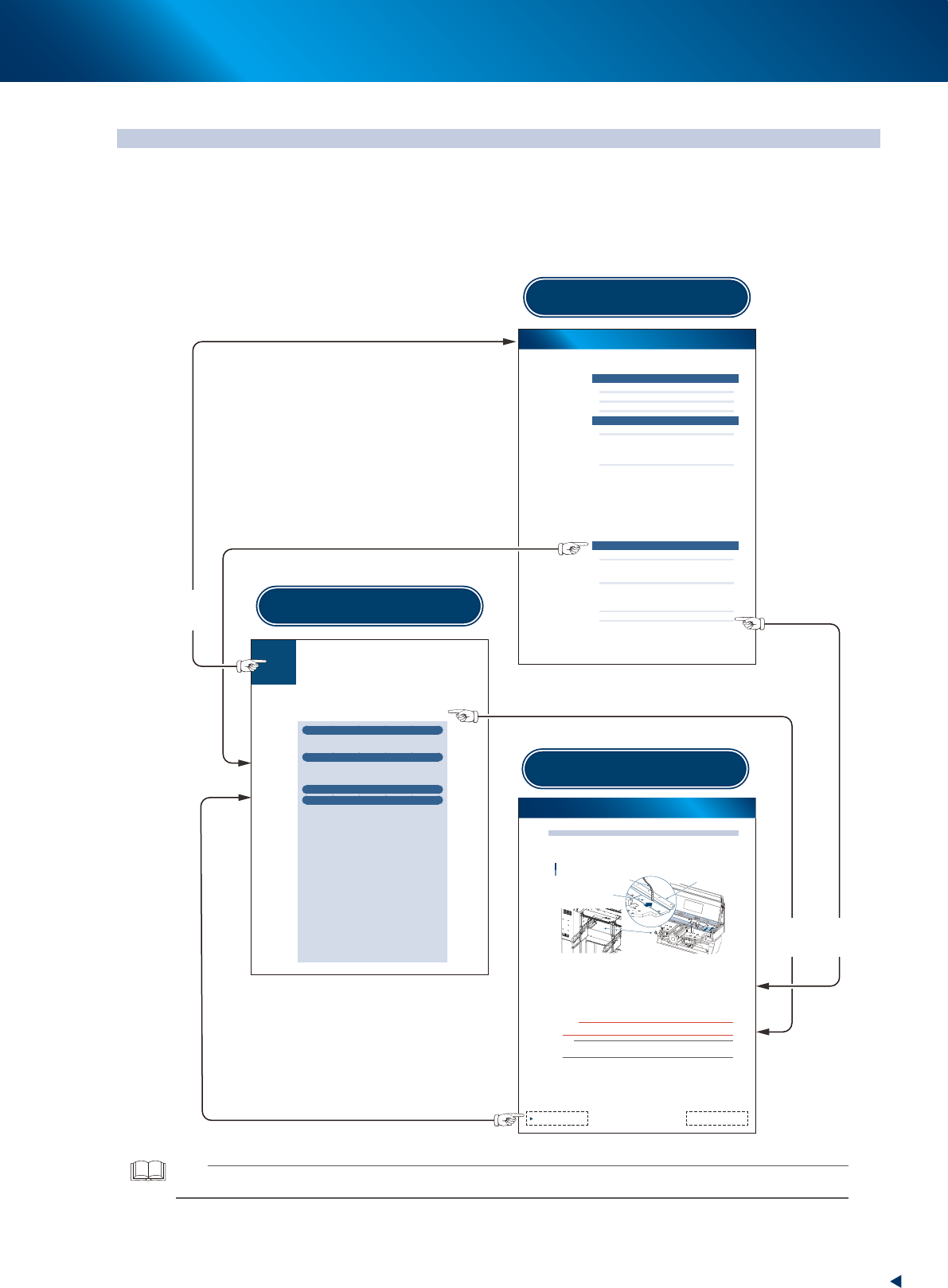
Page links in this manual
1
Page links in this manual
Page links in this manual
The degital maintenance manual for YRM20 contains the function to jump to specified page by
clicking the content on the “General Contents”. In addition to this function, page links are provided
on this digital manual for quick search. See the figure below for comfort and easy usage of this
digital manual on PC or smart device.
General Contents
EMKMX-213-0100
General Contents
Introduction
1. About this manual pf-1
2. Contents of each chapter pf-2
3. Maintenance list pf-3
Chapter 1 Maintenance
1. Maintaining machine performance 1-1
1.1 Essential conditions and working environment 1-1
1.2 Importance of periodic inspections and cleaning 1-2
1.3 Importance of appropriate humidity management 1-2
2. Preparing for maintenance tasks 1-3
2.1 Consumable parts 1-3
2.1.1 HM head unit 1-3
2.1.2 RM head unit 1-4
2.1.3 Common to all models 1-5
2.2 Replacement parts 1-9
2.2.1 HM head unit 1-9
2.2.2 RM head unit 1-10
2.2.3 Conveyor and base unit 1-11
2.3 Maintenance tools 1-12
2.3.1 Cleaning tools 1-12
2.3.2 Lubricating tools and grease 1-14
2.3.3 Special tools 1-16
2.4 Required tools 1-17
Chapter 2 Daily maintenance items
Before beginning work 2-1
Maintaining head unit 2-2
Attaching/Detaching upper cover 2-3
1. Checking the nozzle 2-6
1.1 Checking with software 2-6
1.1.1 Vacuum level when nozzle is open 2-9
1.2 Checking the nozzles visually 2-10
2. Cleaning the feeder plate and related 2-12
3. Checking tape cutter sharpness 2-14
Chapter 2 Daily maintenance items
Contents
Before beginning work 2-1
Maintaining head unit 2-2
Attaching/Detaching upper cover 2-3
1. Checking the nozzle 2-6
1.1 Checking with software 2-6
1.1.1 Vacuum level when nozzle is open 2-9
1.2 Checking the nozzles visually 2-10
2. Cleaning the feeder plate and related 2-12
3. Checking tape cutter sharpness 2-14
3. Checking tape cutter sharpness
2-14
Chapter 2 Daily maintenance items
3. Checking tape cutter sharpness
The used carrier tape after mounting components are automatically cut by tape cutters in the machine
and collected in empty tape box. If a tape cutter loses the sharpness, carrier tapes that are not cut may
clog in the path to the empty tape box. Check tape cutter sharpness everyday.
Checking tape cutter sharpness
Lower tape cutters (movable side)
Upper tape cutters (fixed side)
Tape
53205-KMX-00
►
3 checkpoints of daily tape cutter inspection
•
The sound when cutting tape is normal.
Check that the sound of tape cutter moving is not louder than usual.
Check that abnormal sound such as metal sound is not heard.
•
Carrier tapes in the empty tape box are cut appropriately.
Check the cut sections of carrier tapes when disposing of carrier tapes in the empty tape box.
•
Carrier tapes in the empty tape box are disposed of.
Check the empty tape box everyday and dispose of accumulated carrier tapes.
c
CAUTION
As used carrier tapes accumulates in the empty tape box, dispose of them periodically. If the empty tape box is fi lled with
them, trouble such as cutter operation error may occur.
n
NOTE
Lubricating tape cutter with disassembly, and replacing tape cutter blade must be performed by YA MAHA service
personnel as failure in these tasks cause serious injury. Contact your sales representatives when tape cutter abnormality is
noticed.
Click chapter title.
Click
desired content.
Jump to
chapter contents
Jump to top of general contents
Click lower left/right chapter title.
General Contents
Chapter Contents
Desired page
Jump to
desired page
Click upper
left square.
Click desired content.
TIP
See the instruction manual supplied from software distributor for how to use application for browsing digital contents.

w
Be sure to read safety instructions before using YAMAHA sprinter or related products.
SFSMT-EN-213-0110
Safety instructions
Contents
1. CE marking i
2. Warning labels ii
2.1 Warning label format and mark description ii
2.1.1 Warning label format ii
2.1.2 Mark description iii
3. Label positions iv
4. Safety x
4.1 To ensure safety x
4.1.1 Defining safety x
4.1.2 Causes of injuries and accidents x
4.2 Using safety gear xi
4.3 Restrictions on machine use xi
4.3.1 Defining the operator and service personnel xi
4.3.2 Restricting machine operation with passwords xi
4.3.3 Lock out the main switch and the air supply/exhaust switch xii
4.4 Cautions during machine operation xiii
4.5 Cautions during power outage xiii
4.6 Cautions regarding ferromagnetic fields xiii
4.7 Handling the internal tape cutter xiii
4.8 Keeping hands away from moving parts xiv
4.9 Handling solvents (including solder, adhesive, and flux) xvi
4.10 Handling the laser xvi
4.11 Handling grease and oil xvii
4.12 Handling batteries xvii
4.13 Handling heavy objects xviii
5. Safety message in this manual xix

1. CE marking
i
Safety instructions
1. CE marking
This equipment conforms to the EU Machinery Directive 2006/42/EC (description A1 below) and EMC
Directive 2014/30/EU (description A2 below).
However, this equipment does not bear CE marking if a custom order item was installed.
A1.
Cautions regarding the official language of EU countries and the language used in operation manuals,
CE declarations, operation screen characters, and warning labels when this equipment is installed in an
EU country.
• All materials except warning labels are written in English only.
n
NOTE
Warning labels only have pictograms or else include warning messages in English, Chinese, Korean and Japanese
languages.
A2.
EMC description
• Electromagnetic immunity (Immunity)
Complies with test standards as specified by EN 61000-6-2.
• Electromagnetic emissions (Emission)
Complies with test standards for ISM category: Group 1, Class A, as specified by EN 55011.
n
NOTE
Class A equipment is intended for use in industrial environments. If used in other environments, ensuring electromagnetic
compatibility (EMC) might be difficult. Refer to EN 55011 standards for detailed information.