P-TOOL说明书.pdf - 第50页
2-16 2 Board Explorer 4. When the following message appears indicating th at the new machine registration is complete, check the contents and click the [OK] button. The display returns to the Board Explorer window. Messa…
2-15
2
Board Explorer
6
Register the machines.
After registering the line, register machines with that line. Up to 10 machines can be registered with one
line.
c
CAUTION
For solder paste printers, only one machine can be registered at the top of each line.
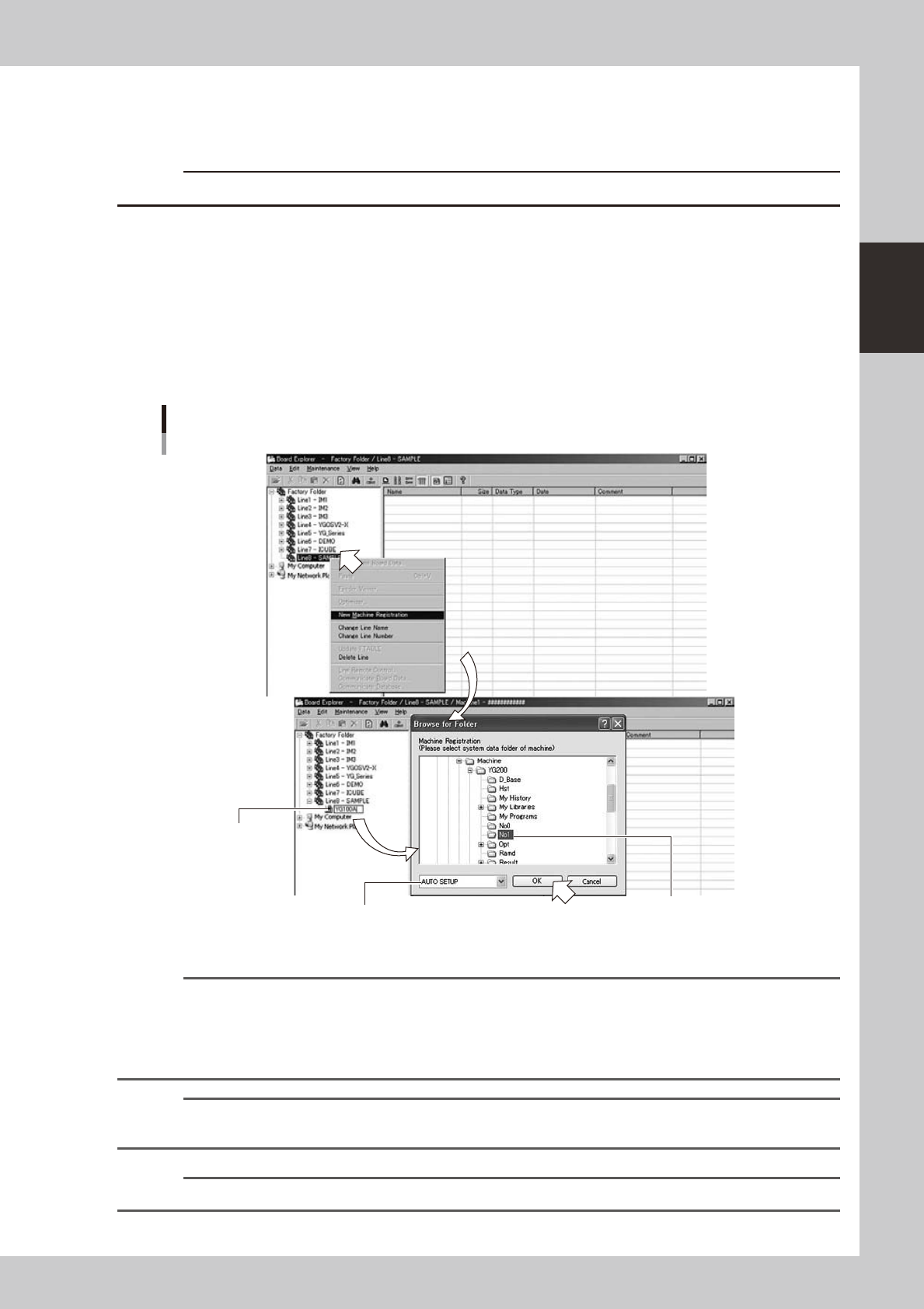
1. Click the right mouse button on the registered line to display the context menu and select "New
Machine Registration" from the menu.
2. Type the machine name and press the [Enter] key.
Any name can be used if each machine can be identified with the name. We recommend using the
model name of the machine. The machine name can be up to 12 alphanumeric characters
including underbars.
3. When the "Browse for Folder" dialog box appears, select the folder that contains the machine data
to be registered (for example, A:\NO.1) and click the [OK] button.
The selected machine data will be copied.
Machine registration
Type the machine name
and press [Enter].
Select the folder containing
the machine data to be registered,
and click [OK].
Select the data type.
64224-S0-00
Reference
When "AUTO SETUP" is selected for data type, the following data formats are automatically specified.
•YVP-Xg,YCP :Printertext
•YGP :YGZ
•YSseries,YGseries(exceptYG200,YGP) :YGX
•Othermachines :VIOSorYGX
Reference
Ifyouwanttosetanoptionotherthan"AUTOSETUP",referto<"
n
Data formats used with each machine model" in "3.3
Board data format" of Before Reading>.
n
NOTE
The Board Editor will use the data type specified here as the default data type.
2-16
2
Board Explorer
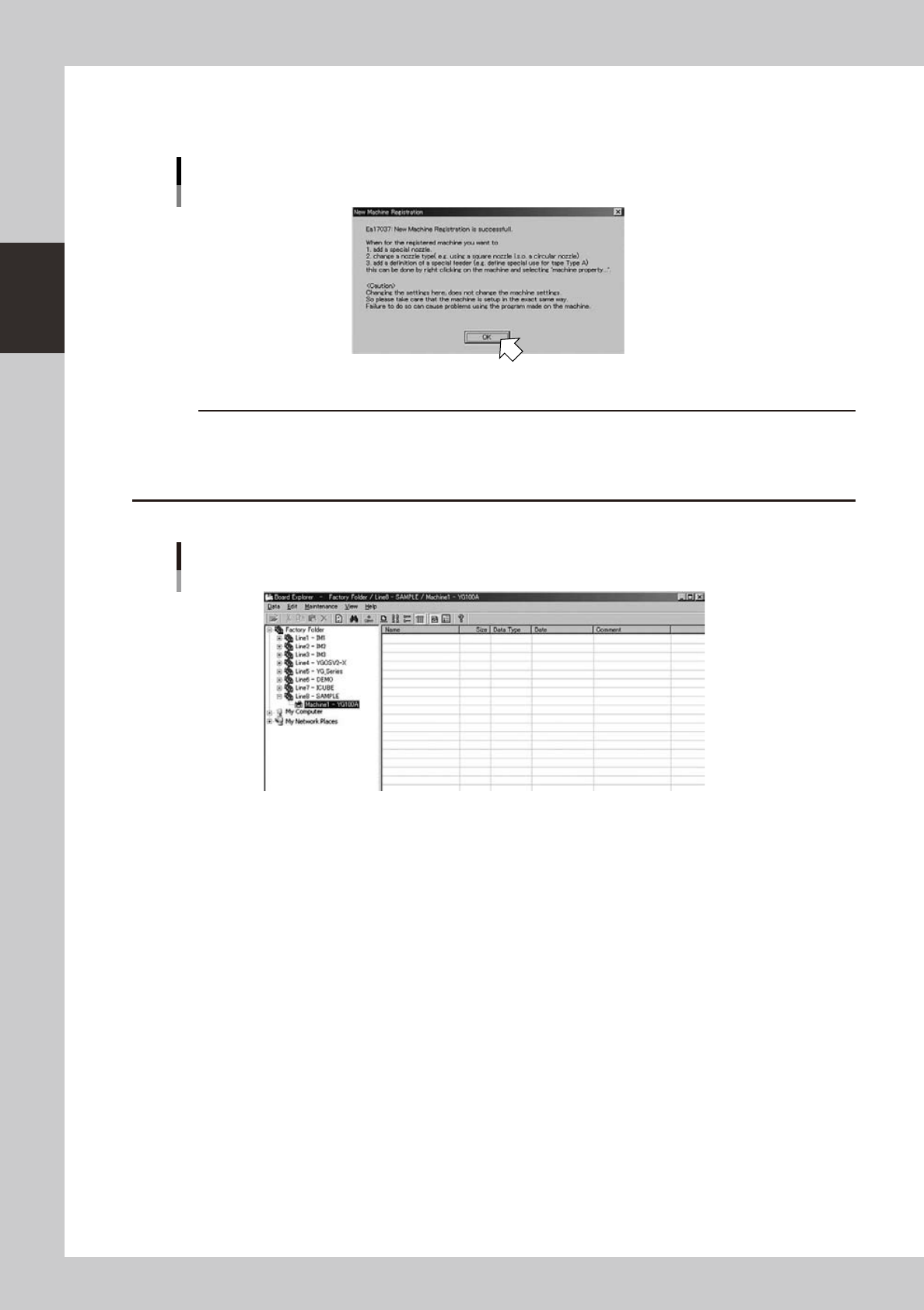
4. When the following message appears indicating that the new machine registration is complete,
check the contents and click the [OK] button.
The display returns to the Board Explorer window.
Message for new machine registration
64225-S0-00
c
CAUTION
Feeder spec and nozzle spec are not registered when a machine is registered.
To register the feeder spec and nozzle spec, you must set the machine property (VmSpec) To start the machine
property (VmSpec), click the right mouse button on the machine icon to display the context menu and select
“Machine Property”. The VmSpec window then appears, so set “Specification Information”.
5. Check that the registered machine is displayed under the specified line in the tree view.
Tree view showing the registered machine
64226-S0-00
6. To register two or more machines, repeat the above substeps 1 to 4.
7
To register two or more lines and machines, use the same procedure from steps 3
to 6.
2-17
2
Board Explorer
8
Check the default data type for the machine.
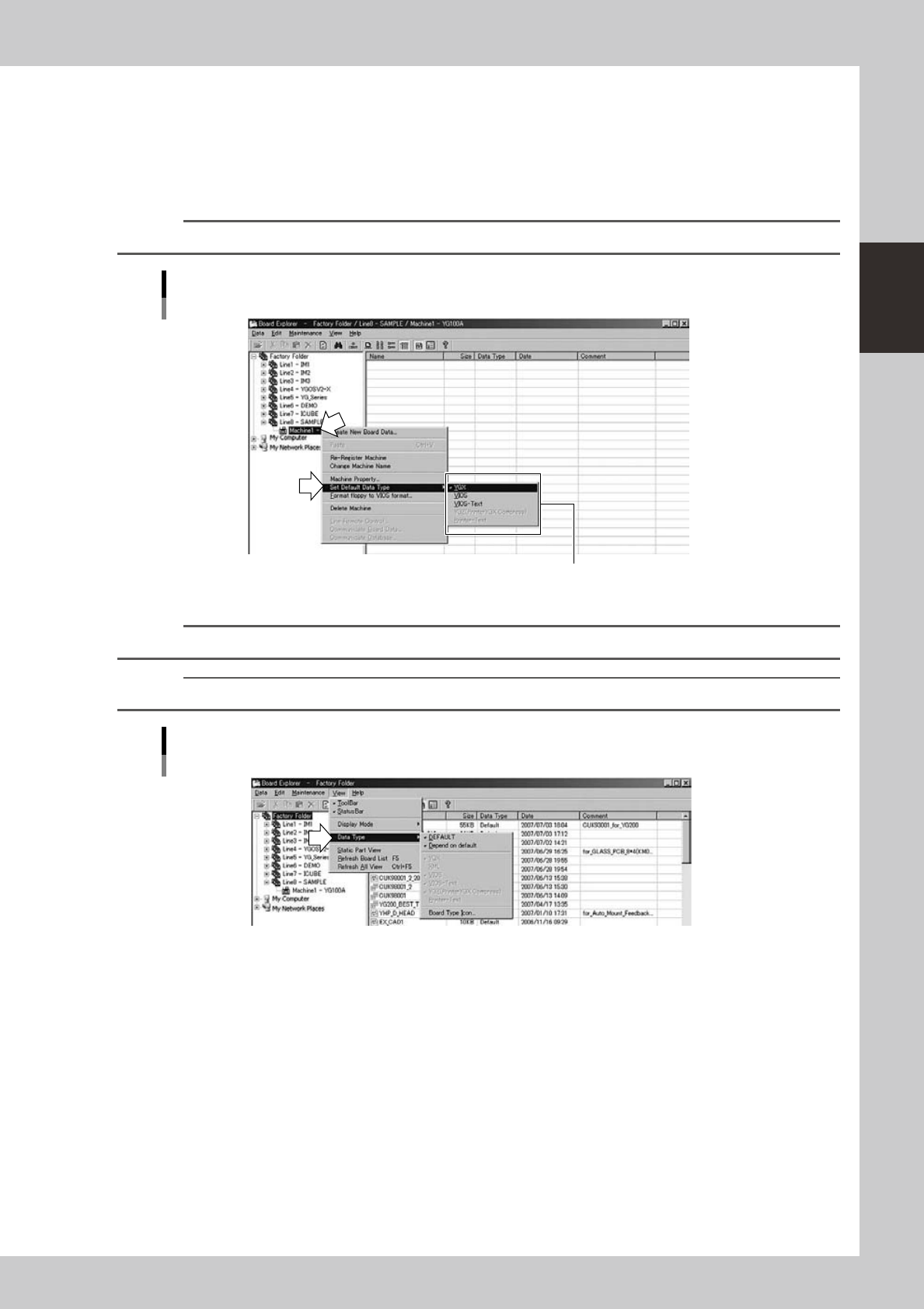
1. Click the right mouse button on the registered machine to display the context menu.
2. Select "Set Default Data Type" from the menu to display the submenu.
3. Check the default data type on the submenu.
A check mark appears at the beginning of the data type you selected in step 6.
n
NOTE
If you want to change the data type, select the desired data type from the submenu.
Default data type setting
Select data type.
64227-S0-00
n
NOTE
YGX (Combined) is not displayed for data type initialisation. Please select YGX Multi Lane Machine.
Reference
Data type can be changed by selecting it form the "Data Type" submenu in the View menu.
Changing the data type
64228-S0-00
You can perform the following operations regarding machine registration.
●
Registration of all machines
You can reregister all machines at a time, which have been registered under the “Factory Folder” except for those
registered without using floppy disks.
Select“AllMachinere-registration”fromtheMaintenancemenuandfollowtheinstructionsinthedialogboxthat
appears.
●
Creation of Board data disk
When using a floppy disk to copy board data from the machine or load it into the machine, you need a board data disk.
To create a board data disk, select the machine icon in the tree view, press the right mouse button to display the context
menu and select “Format floppy to VIOS format”.