Nordson_EFD_7_Critical_Steps_to_Implement_Semi_Automation - 第3页
Automated Fluid Dispensing | 7 Cri tical S t e ps to Implem ent Sem i-Automation to Y our D ispen sing Proc ess 3 1. IS T HER E A P A RTI CUL AR S TEP T HA T I S HA Z AR DOU S OR INV OL VES HAZARDOUS MA TERIAL ? A rob ot…
Automated Fluid Dispensing | 7 Critical Steps to Implement Semi-Automation to Your Dispensing Process
2
Decide (What) to Automate �������������������������������������������������������������������������������������������������������������� 3
Evaluate Your Automation Options ���������������������������������������������������������������������������������������������� 4-5
Evaluate Your Dispensing Options ���������������������������������������������������������������������������������������������� 5-6
Design the System ���������������������������������������������������������������������������������������������������������������������������7
Pilot Testing ��������������������������������������������������������������������������������������������������������������������������������������8
Scale Up / Optimize the Process ����������������������������������������������������������������������������������������������������� 9
How Big Can Your Savings Be? ����������������������������������������������������������������������������������������������������� 10
Why Nordson EFD �������������������������������������������������������������������������������������������������������������������������� 11
Request More Information ������������������������������������������������������������������������������������������������������������ 12
Contents
Automated Fluid Dispensing | 7 Critical Steps to Implement Semi-Automation to Your Dispensing Process
3
1. IS THERE A PARTICULAR STEP THAT IS HAZARDOUS
OR INVOLVES HAZARDOUS MATERIAL?
A robot is a better choice than a human for performing
delicate, difcult work or for dispensing hazardous
materials.
2. IS THERE A STEP THAT NEEDS TO HAPPEN FASTER?
Dispensing robots can dispense intricate uid patterns
in a fraction of the time of a human operator.
3. IS THERE A STEP THAT INCURS CONSIDERABLE COST
WHEN A MISTAKE IS MADE?
A robot can perform such a step exactly the same way,
with little variation, time and time again.
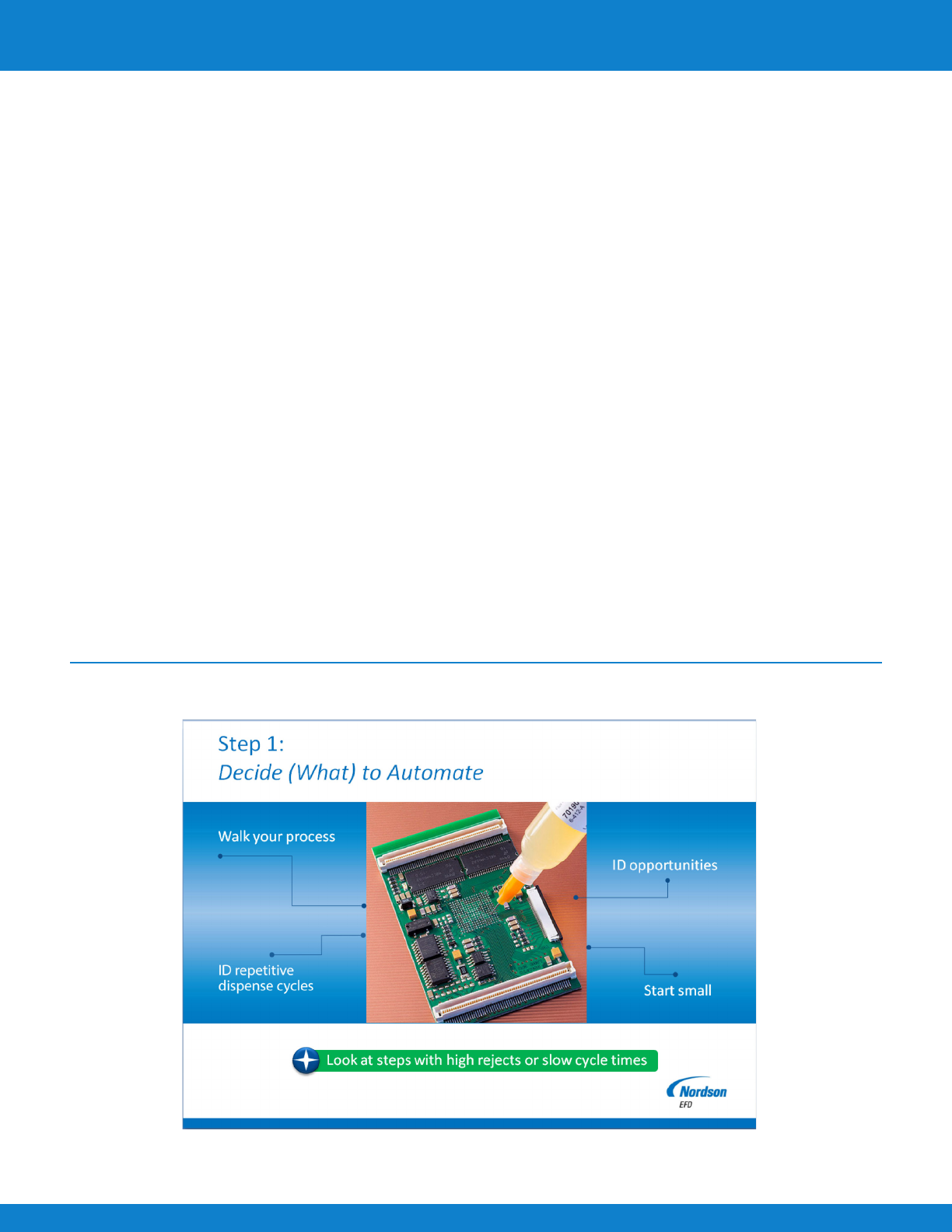
1. Decide (What) to Automate
Walk your process, identify opportunities, and think small
Moving to automation is more than just deciding to automate—determining what to automate is key� The first step in moving to
automation is to take a close look at an entire process to see if there is a piece of that process which, if automated, would improve
safety, performance, or productivity� For example:
4. HOW IMPORTANT ARE PRECISION AND ACCURACY?
Robots offer superior precision and accuracy, better than
most humans.
5. ARE THE SUBSTRATES TOO SMALL TO DISPENSE ON?
The accuracy that automation can offer negates any
issues created in the process by handling or dispensing
on small substrates.
If done correctly, automation will change your process for
the better.
Automated Fluid Dispensing | 7 Critical Steps to Implement Semi-Automation to Your Dispensing Process
4
1. IS THERE A GOOD PLANT AIR SUPPLY?
Dispensing from a valve or syringe barrel requires dry,
ltered air.
2. WHAT TYPE OF ELECTRICAL SERVICE IS AVAILABLE?
This varies by country.
3. HOW CLEAN IS THE ENVIRONMENT? DOES THE ROBOT
NEED TO BE UNDER A VENT HOOD?
Robots are actually an excellent choice if the environment
is potentially hazardous to human operators.
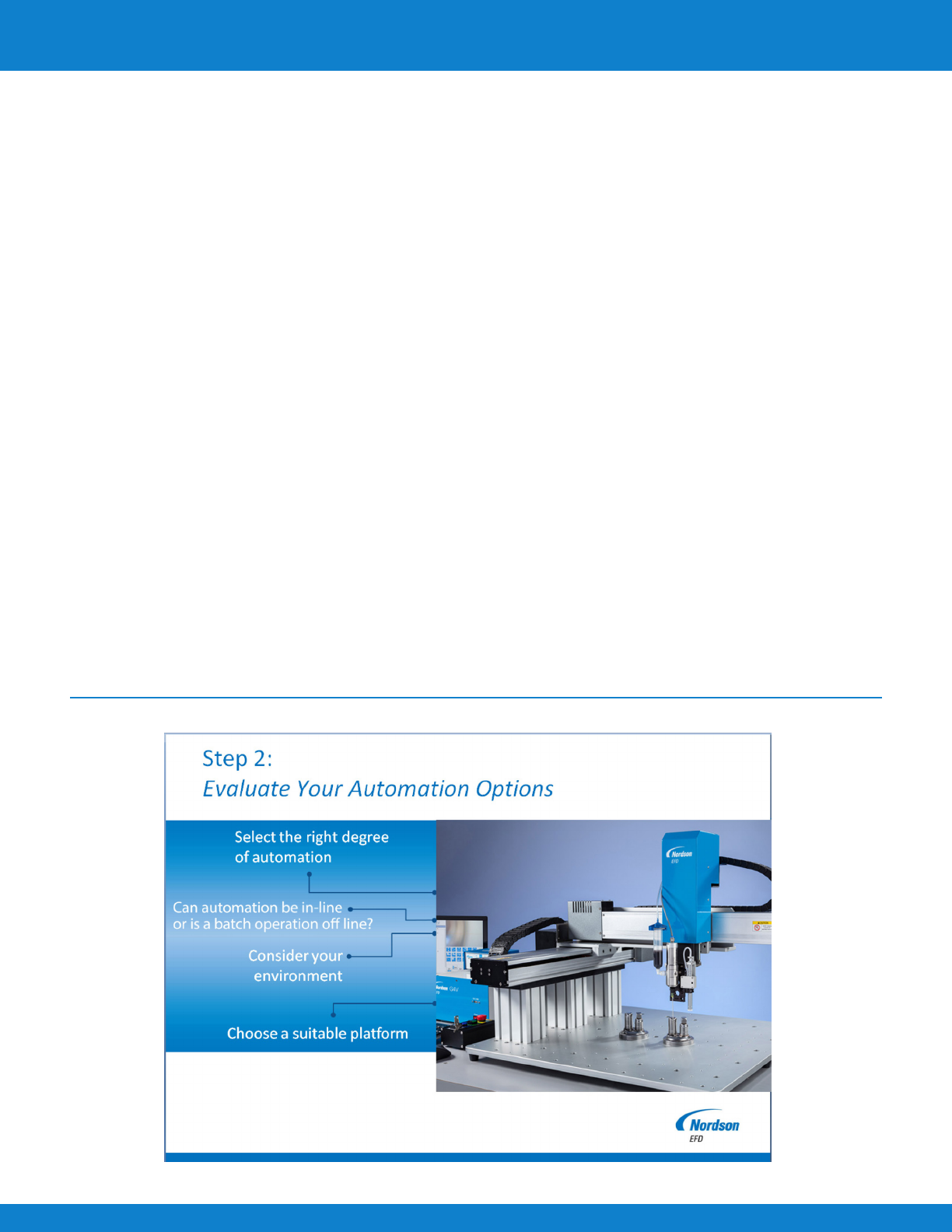
2. Evaluate Your Automation Options
Choose the right degree of automation
Once you have identified a process that would benefit from automation, consider the degree of automation� It is generally best to
start small� For example, a process that requires the application of adhesive to a part, then the adhesion of that part to another
part, can be automated, but implementation could be time consuming and complex� It might be better to begin by automating
just one step in that process, such as the fluid dispensing step� This is known as semi-automation� Semi-automation describes a
system in which a human operator or a small production line feeds a product to a robot, the robot performs a single task on that
product, and then the human operator removes the product and completes the task�
Consider your environment
Before choosing any automation products, you need to know the physical environment of the work location:
4. HOW WILL PEOPLE MOVE AROUND THE AUTOMATION
EQUIPMENT? WHAT SIZE FOOTPRINT IS AVAILABLE?
There needs to be enough room for an operator to work
with a robot without being bumped or jostled by other
workers.
5. HOW HUMID IS THE AMBIENT TEMPERATURE?
There is a good robot option for every environment, but
you need to know what the environmental challenges are
in order to choose the right robot.
Continued next page