JUKI FX-3R MAINTENANCE GUIDE.pdf - 第216页
FX-3R Maintenance Guide 13-47 13-8. Head Unit 13-8-1. Adjusting the Boards of the Head Unit 13-8-1-1. Adjusting the Head Main Board Assembly See “Head Vacuum Level and Temperature Sensor Output Level” on page 1-10 for th…
FX-3R Maintenance Guide
13-46
<Adjustment Procedure for Machines Applicable to EN>
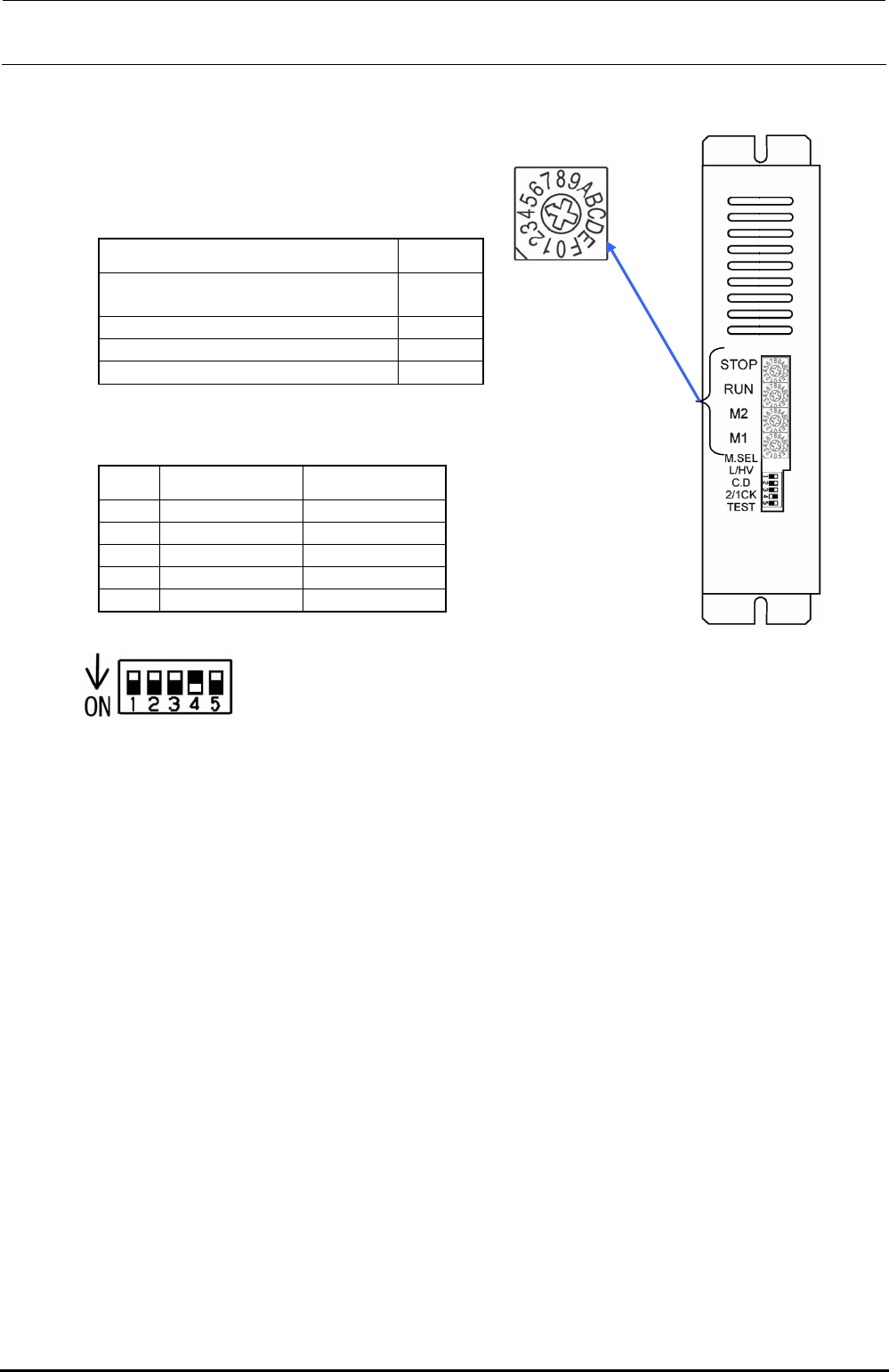
c Set the rotary switches to the values in the table below.
Rev. 1.00
Switch Settings
STOP (For support table)
STOP (For auto width adjustment)
9
5
RUN C
M2 0
M1 0
d Set the DIP switches to the values in the table below.
No. Switch Settings
1 TEST OFF
2 2/1CK OFF
3 C.D OFF
4 L/HV ON
5 M.SEL OFF
Figure 13-7-3-2-4 DIP SW
Switch lever positions
When the switch is flipped down, it is
turned ON. On the contrary, when the
switch is flipped up, it is turned OFF.
Figure 13-7-3-2-3 DIP SW
FX-3R Maintenance Guide
13-47
13-8. Head Unit
13-8-1. Adjusting the Boards of the Head Unit
13-8-1-1. Adjusting the Head Main Board Assembly
See “Head Vacuum Level and Temperature Sensor Output Level” on page 1-10 for the QA table.
13-8-1-1-1. Switch Settings
The switches have already been set corresponding to the status of the board assembly. Check
the contents described below.
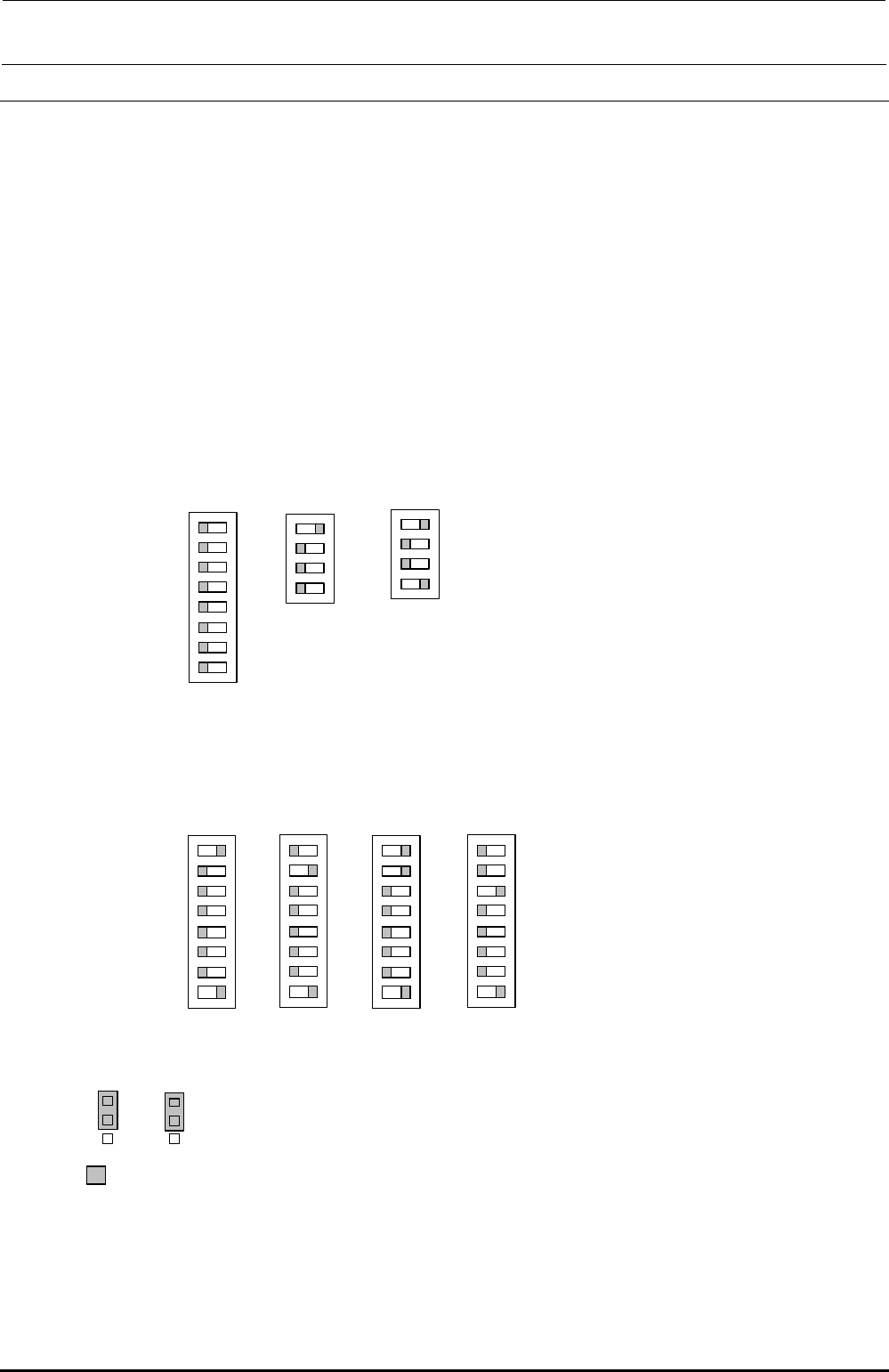
Additionally, the SW4 settings may vary depending on the head position. Set the SW4
corresponding to the head position.
・
SW1, SW2, SW5
・
SW3
・
SW4
・
W4, W5
Check that the W4, W5 are set as described below.
*
portion shows the switch set position and receptacle mounting position.
Check that the SW1, SW2, SW5 are set as described below.
Function Rev. and pattern Rev. of the board are set on the SW 2. Normally, do not change the switch
settings.
The SW4 setting may vary depending on the head position. Check that this switch is set as follows
according to the heat position.
O
N
1
SW1
2
3
4
5
6
7
8
O
N
1
SW2
2
3
4
SW4
O
N
1
2
3
4
5
6
7
8
LF
O
N
1
SW4
2
3
4
5
6
7
8
L
R
O
N
1
SW4
2
3
4
5
6
7
8
R
F
O
N
1
SW4
2
3
4
5
6
7
8
RR
O
N
1
SW5
2
3
4
W4
1
2
3
W5
1
2
3
Rev. 1.00
FX-3R Maintenance Guide
13-48
Rev. 1.00
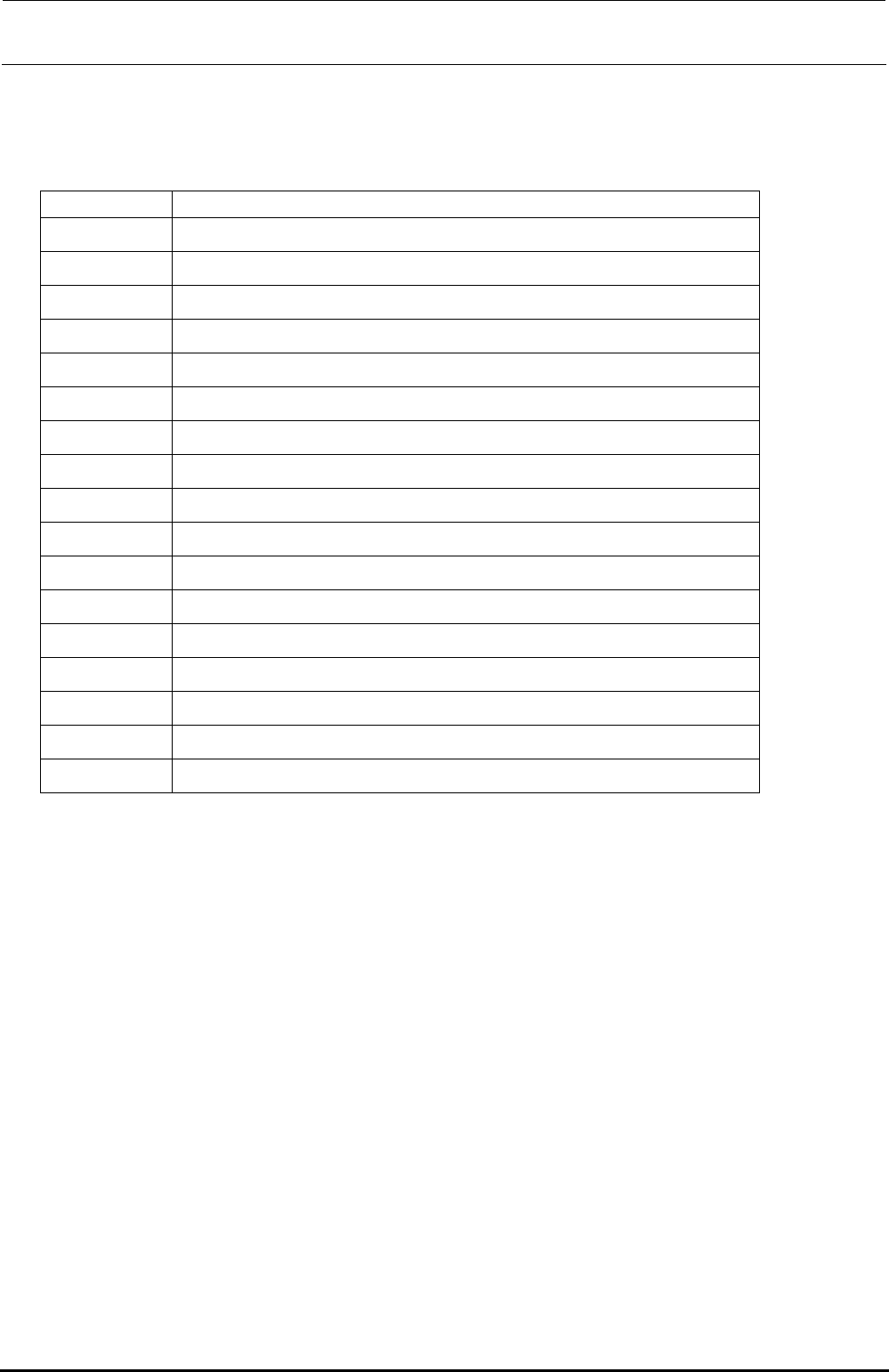
13-8-1-1-4. LED Indications
The following Table shows the meanings of the LEDs mounted on the HEAD MAIN PCB ASM.
No. Lighting conditions
LD4 (Note)
Ether (ch2) Speed 100Mbps: Lit 10Mbps: Unlit
LD5 (Note)
Ether (ch2) Full Dup/Col Full-duplex: Lit Collision occurs.: Flashing
LD6 (Note)
Ether (ch2) Link/Act Linked: Lit Data send/receive: Flashing
LD7
Ether (ch1) Speed 100Mbps: Lit 10Mbps: Unlit
LD8
Ether (ch1) Full Dup/Col Full-duplex: Lit Collision occurs.: Flashing
LD9
Ether (ch1) Link/Act Linked: Lit Data send/receive: Flashing
LD25
Not used: (Lights up when the home position sensor of the LZ1-axis is turned ON.)
LD26
Not used: (Lights up when the home position sensor of the LZ2-axis is turned ON.)
LD27
Not used: (Lights up when the home position sensor of the LZ3-axis is turned ON.)
LD28
Not used: (Lights up when the home position sensor of the LZ4-axis is turned ON.)
LD29
Not used: (Lights up when the home position sensor of the LZ5-axis is turned ON.)
LD30
Not used: (Lights up when the home position sensor of the LZ6-axis is turned ON.)
LD11
Lit when the bad mark sensor is turned ON.
LD15
Lights up when the DC24V power supply is turned ON.
LD13
Lights up when the DC12V power supply is turned ON.
LD16
Lights up when the DC5V power supply is turned ON.
LD14
Lights up when the DC3.3V power supply is turned ON.
Note: LD4, LD5, and LD6 function only for the LF and RF heads. These LEDs are always off
for the LR and RR heads.