KE2010.Instruction Manual.Ver.2.01,Rev.08.pdf - 第474页
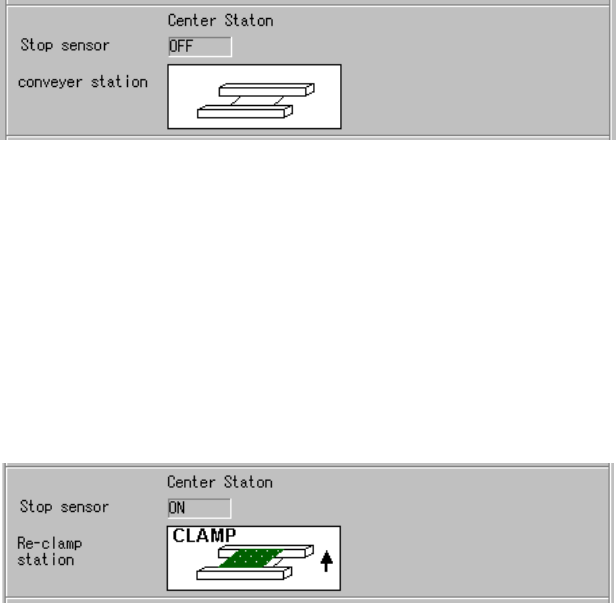
6 − 98 Figure 6.4.14. 1.5 ⑤ ⑤ ⑤ ⑤ Condition of the PWB transport path − W hen you execute the selection described above, the “Re- clamp” dialog box appears on the screen. Aft er the system clamps a boar d again, it resum…
6 − 97
Step
④
④④
④
.
When there is no board on the PWB transport path and the PWB transport path
information indicates that there is a board on the path when production is interrupted
When you select “Continue the production.” and “Load a new PWB”, the screen
shows the following PWB transport path condition:
Figure 6.4.14.1.5
③
③③
③
Condition of the PWB transport path
When you execute the selection described above, the system loads a board before
start of production, and resumes the production.
Step
⑤
⑤⑤
⑤
.
When there is a board on the PWB transport path, and the PWB transport path
information indicates that there is a board on the path when production is interrupted
When you select “Continue the production.” and “Re-clamp current PWB”, the screen
shows the following PWB transport path condition:
Figure 6.4.14.1.5
④
④④
④
Condition of the PWB transport path
When you execute the selection described above, the “Re-clamp” dialog box appears
on the screen. After a board is clamped again, the system resumes the production
without loading any board before starting production.
Step
⑥
⑥⑥
⑥
.
When there is a board on the PWB transport path and the PWB transport path
information indicates that there is no board when production is interrupted
You cannot select “Continue the production.” and “Re-clamp current PWB”.
The system always selects “Load a new PWB” automatically.
(See
②
of “I. When there is a continuous production file”.)
Step
⑦
⑦⑦
⑦
.
When there is a board on the PWB transport path and the PWB transport path
information indicates that there is no board on the path
When you select “Continue the production.” and “Re-clamp current PWB”, the screen
shows the following PWB transport path condition:
6 − 98
Figure 6.4.14.1.5
⑤
⑤⑤
⑤
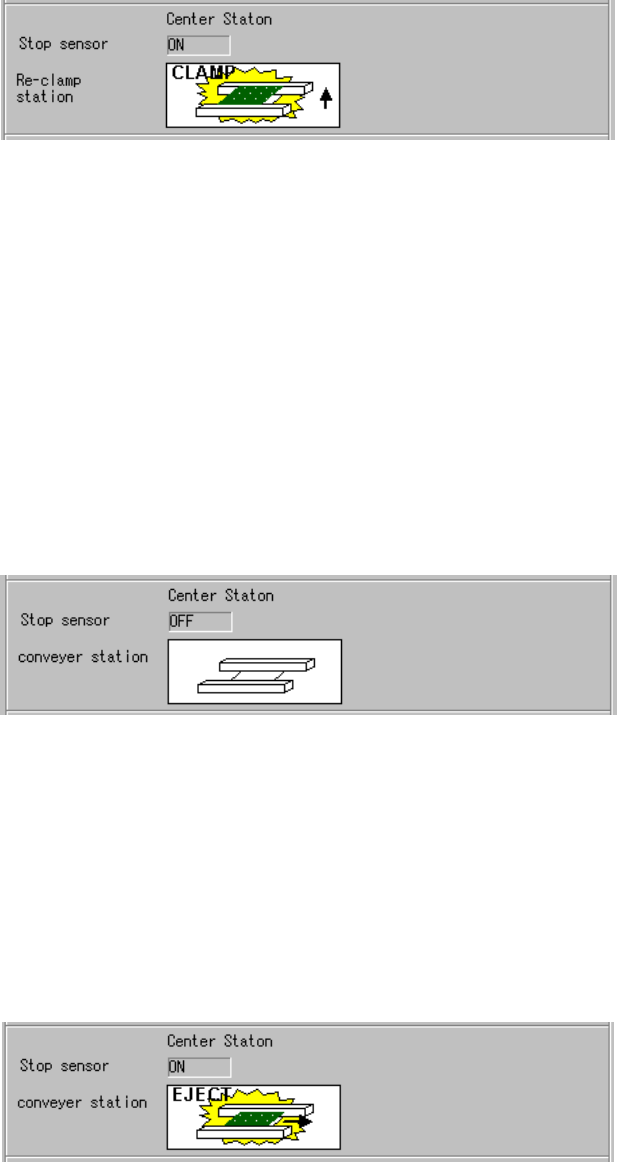
Condition of the PWB transport path
− When you execute the selection described above, the “Re-clamp” dialog box
appears on the screen. After the system clamps a board again, it resumes the
production without loading any board before starting production.
In this case, since there is no PWB transport information when production is
interrupted, some component(s) may not be placed on a board or may be placed
at a wrong position of a board. Be careful to perform production.
Step
⑧
⑧⑧
⑧
.
When there is no board on the PWB transport path and the PWB transport path
information shows that there is a board on the path when production is interrupted
When you select “Continue the production.” and “Re-clamp current PWB”, the screen
shows the following PWB transport path condition:
Figure 6.414.1.5
⑥
⑥⑥
⑥
Condition of the PWB transport path
− When you execute the selection described above, an error occurs since there is
no board on the PWB transport path.
Steps
⑨
⑨⑨
⑨
to
⑪
⑪⑪
⑪
.
If you select “Produce newly.” and “Load a new PWB” regardless of what the PWB
transport path information indicates during production interruption and whether there
is a board on the PWB transport path or not, the screen shows the following PWB
transport path condition:
Figure 6.4.14.1.5
⑦
⑦⑦
⑦
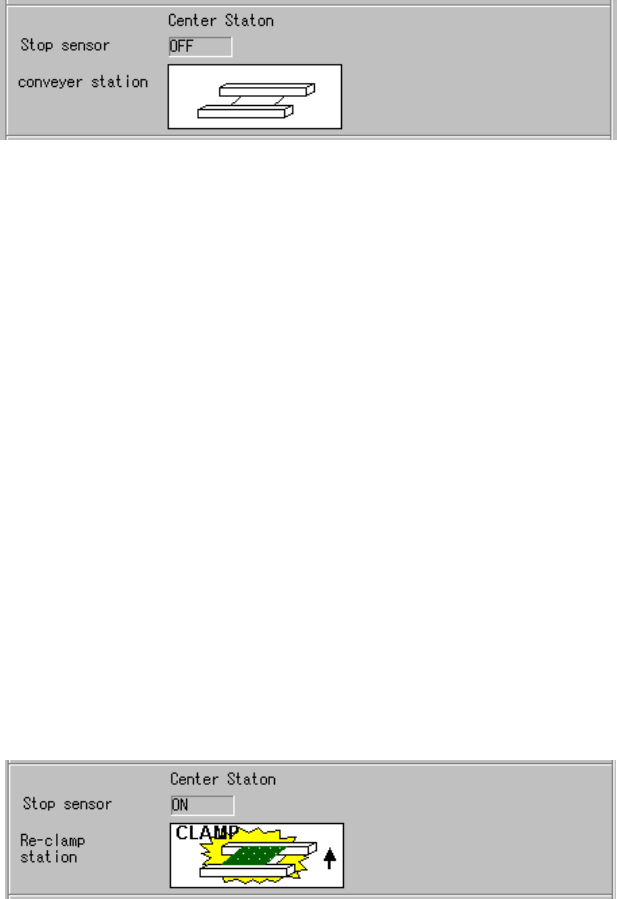
Condition of the PWB transport path
6 − 99
− When you execute the selection described above, the “PWB ejecting” dialog box
appears on the screen. After ejecting a board, the system loads a board before
starting production, and performs new production or resumes production.
The system operates with assuming that there is a board created during the
previous production on the PWB transport path. Some component(s) may not be
placed on the ejected board or some component(s) may be placed at a wrong
position of the board. Be careful to start production.
Step
⑫
⑫⑫
⑫
.
When there is no board on the PWB transport path and the PWB transport path
information indicates that there is a board on the path when production is interrupted
When you select “Don’t resume the product.” and “Load a new PWB”, the screen
shows the following PWB transport path condition:
Figure 6.4.14.1.5
⑧
⑧⑧
⑧
Condition of the PWB transport path
− When you execute the selection described above, the system loads a board
before starting production to perform new production or continue the production.
Step
⑬
⑬⑬
⑬
.
When there is a board on the PWB transport path and the PWB transport path
information indicates that there is a board or no board on the path
You cannot select “Don’t resume the product” or “Re-clamp current PWB”.
However, these items can be selected when you are to continue the production.
interrupted. In this case, the system operates in the same manner as it does when
there is no PWB transport path information.
(See
⑭
of “I. When there is a continuous production file”.)
Step
⑭
⑭⑭
⑭
.
When there is a board on the PWB transport path and the PWB transport path
information indicates that there is no board on the path
When you select “Don’t resume the product.” and “Re-clamp current PWB”, the
screen shows the following PWB transport path condition:
Figure 6.4.14.1.5
⑨
⑨⑨
⑨
Condition of the PWB transport path