1OM-1603-006_w.pdf - 第158页
1OM-1603 3-33 2. Pattern Program Change : Chap.3 2.4.2 ConrmationofComponentPlacement Conrm whether the components can be placed correctly or not. Procedure (1) Input the PCB from the input machine. Reference When …
1OM-1603
3-32
2. Pattern Program Change : Chap.3
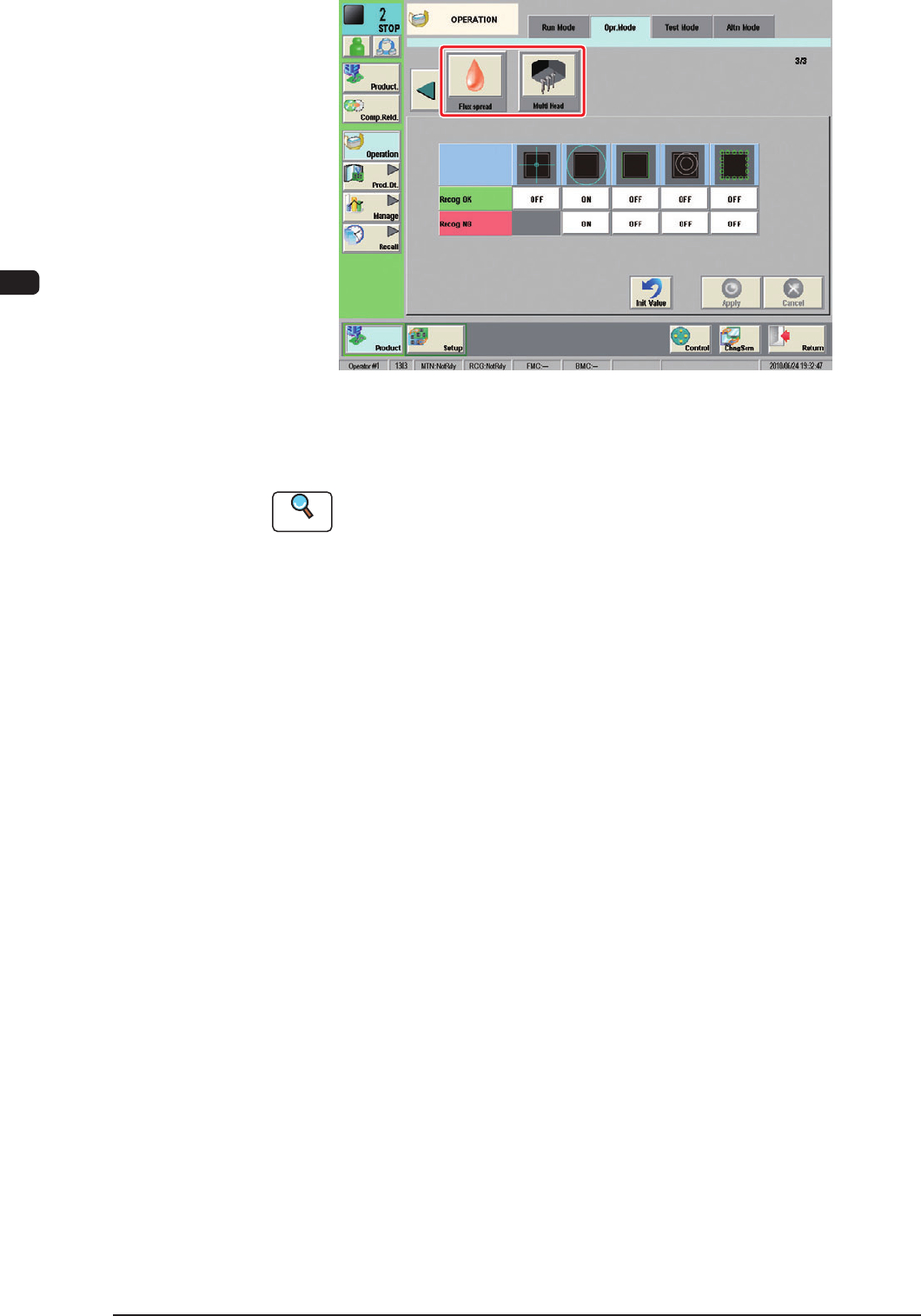
F1C22
Using each icon, the check and setting of the corresponding function are
performed.
Reference
Refer to "4.2 Operation Mode" in "Chapter 1 (Volume 2)" for details.
1007-004

1OM-1603
3-33
2. Pattern Program Change : Chap.3
2.4.2 ConrmationofComponentPlacement
Conrm whether the components can be placed correctly or not.
Procedure
(1) Input the PCB from the input machine.
Reference
When the PCB is to be input manually, refer to "4.1.1 PCB Manual Input
Procedure", in Chapter 3.
(2) Press the [START] button on the operation panel.
The placement operation starts.
(3) Press the [All PCB out] button.
(4) Conrm whether the placement position, angle, and component types of the
processed PCB are correct or not.
1007-004
1OM-1603
3-34
3. Component Replenishment : Chap.3
3. Component Replenishment
There will be two cases of component supply replenishment during automatic
operation - Component Replenishment with Machine in Short of Components and
Intentional Component Replenishment.
3.1 Countermeasures against Component Shortage
When component shortage occurs during the automatic operation, the machine
issues an alarm as follows.
Light Tower
: The red lamp illuminates.
Auxiliary Lamps
: When a lamp ickers, it indicates that component shortage
has occurred in the block where the lamp belongs.
(Indication of Component Shortage)
Buzzer
: The buzzer sounds intermittently.
[START] Button on Operation Panel
: The button ickers.
In this case, follow the steps below to replenish the component supply and restart
the automatic operation.
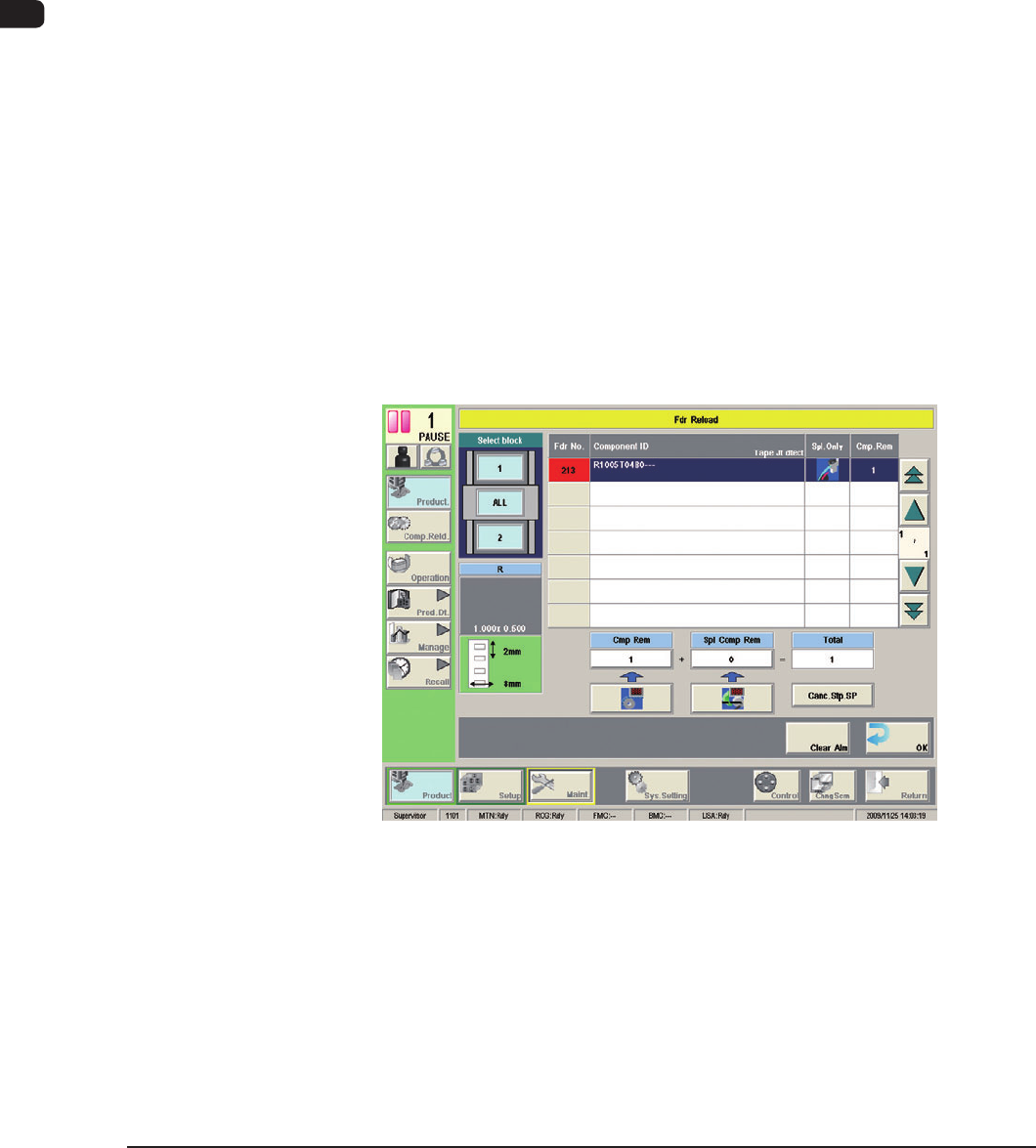
When component shortage occurs, the "Comp.Reload" window opens.
As for the feeder base in short of components, the button representing the feeder
base turns red.
F1C23
1108-005