196396 Iss 2 Nov 2015 - Semi Appendix Manual.pdf - 第66页
PREVENTIVE MAINTENANCE CLEANING AND LUBRICATION Chapter Issue 5, Aug 14 Technical Reference Manual 28.5 TRS Pull Down Forks The pull down forks are scheduled in for in spection, cleaning and greasing on a six monthly bas…
PREVENTIVE MAINTENANCE
CLEANING AND LUBRICATION
28.4 Technical Reference Manual Chapter Issue 5, Aug 14
CLEANING AND LUBRICATION
MANDATORY
TOXIC CHEMICALS MAY BE PRESENT. SAFETY GLOVES MUST BE WORN.
MANDATORY
TOXIC CHEMICALS MAY BE PRESENT. EYE PROTECTION MUST BE WORN.
Linear Bearings
and Guide Rails
All linear bearing blocks, fitted to the machine, are greased for life and require
no greasing although a grease nipple may be fitted.
The linear bearing guide rails require no maintenance unless they become
contaminated. In the event of contamination, carry out the following procedure:
1. Clean the linear bearing guide rail using a plastic spatula.
2. Remove any build up of grease around the linear bearing block.
3. Apply a very thin coating of THK AFB grease (part No 141146) along the
whole length of the guide rail using a cloth.
4. Ensure that the three exposed faces are greased to prevent surface rust.
5. Remove any surplus grease using the cloth ensuring that there is no build
up of grease near the linear bearing block.
For locations of linear bearings, refer to the table below:
Rising Table and
Transport Rail
Ballscrews
The rising table and transport rail ballscrew bearing blocks are greased for life
and require no greasing.
The rising table and transport rail ballscrews require no maintenance unless
they become contaminated. In the event of contamination, carry out the
following procedure:
1. Clean the ballscrew using a plastic spatula.
2. Remove any build up of grease around the ballscrew bearing block.
3. Apply a very thin coating of THK AFB grease (part No 141146) along the
whole length of the ballscrew using a cloth.
4. Using the cloth, remove any surplus grease near the ballscrew bearing
blocks.
Location Linear Bearing Guide Rails Linear Bearing Blocks
Camera 3 (2 Y and 1 X) 5
Paste Dispenser 1 1
Print Carriage 2 3
Rising Table 2 4
Transport Rails 6 6
Underscreen Cleaner Uses the 2 Camera Y Rails 2

PREVENTIVE MAINTENANCE
CLEANING AND LUBRICATION
Chapter Issue 5, Aug 14 Technical Reference Manual 28.5
TRS Pull Down
Forks
The pull down forks are scheduled in for inspection, cleaning and greasing on
a six monthly basis.
Only a small amount of grease needs to be applied to the grooved area that
engages the pull down cylinder cap and to an equivalent area at the base of the
fork.
Once applied, the system should be cycled to allow the dynamic distribution of
the grease and at the end of the cycle, any excess (grease that has spread away
from the applied areas) should be removed.
Light grease p/n 120011 should be used.
PREVENTIVE MAINTENANCE
SUMMARY OF THE PROGRAMME
28.6 Technical Reference Manual Chapter Issue 5, Aug 14
SUMMARY OF THE PROGRAMME
The PM Plan
Daily This maintenance schedule is a recommended programme which should be
carried out on a daily basis. Tasks are generally limited to surface cleaning and
minor inspections and should take no more than fifteen minutes to complete.
Monthly This maintenance schedule is a recommended programme which should be
carried out on a month by month basis. It comprises two modules that are
designed to take approximately 2 hours each to complete.
In the first module, SPC Alignment, Machine Cycle Count, Software Checks and
a standard Monthly Maintenance Check make up the elements.
NOTE
SPC Alignment is included in the QC Calc Software package which is an
optional measurement tool.
The second element comprises the Monthly Hardware Check, each month one
or more hardware modules are scheduled for maintenance. Over a twelve
month period all machine modules are checked and serviced at least once.
Each monthly schedule, January through to December is the same no matter
where the machine resides. ASM service engineers already have maintenance
history on which modules have been serviced and those that are in need of
service. If an error occurs the precise service history is known and this could
prove useful in tracking a fault condition.
Daily Schedule
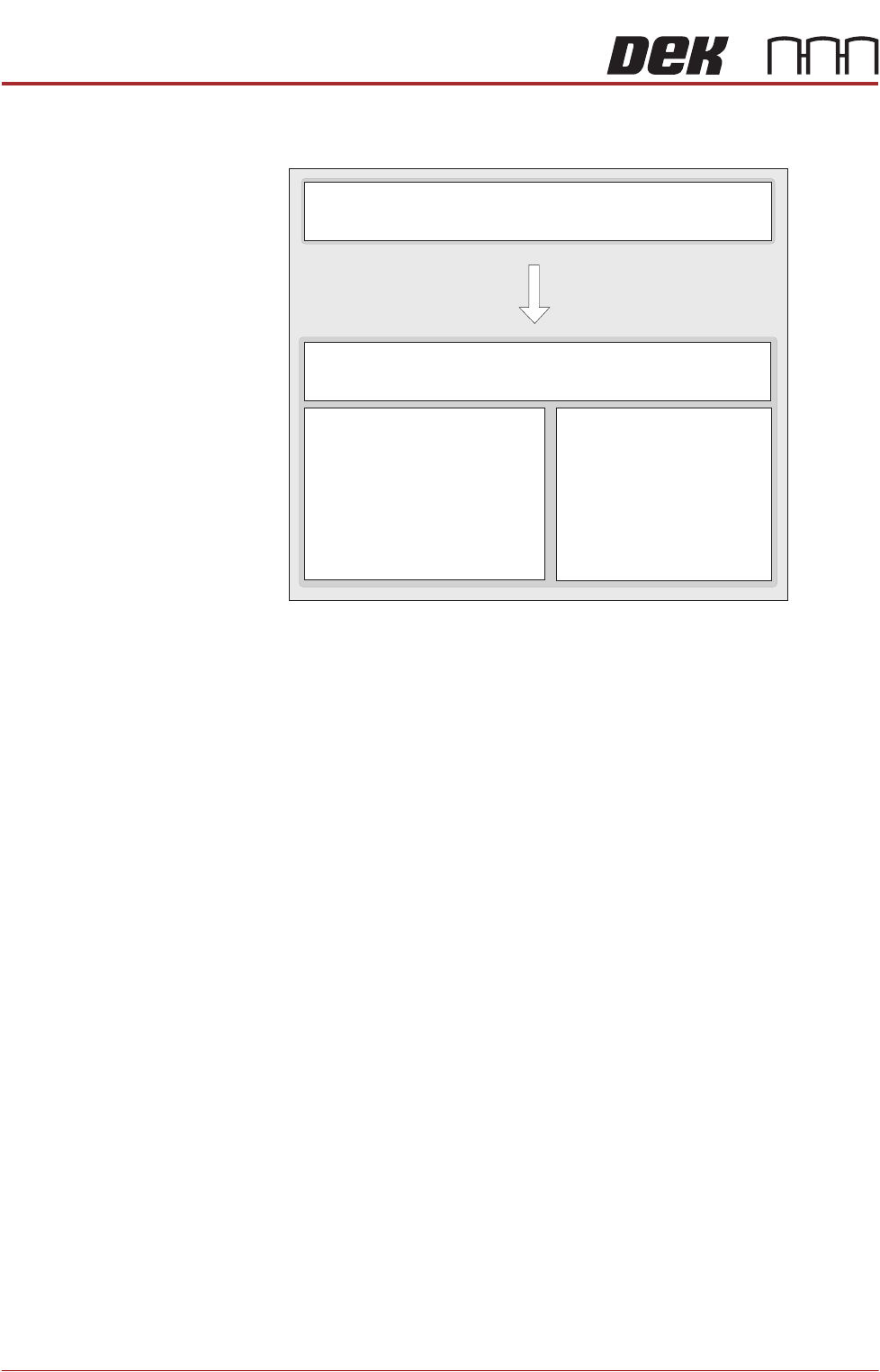
Approximately 15 Minutes
Approximately 4 Hours
SPC Alignment Check
(where available)
2 Hours
Software Check
Monthly Maintenance Check
Machine Cycle Count
2 Hours
Monthly Hardware Check
Monthly Schedule