西门子SIPLACE S25 HM-设备性能参数_EN - 第13页
11 Description Thanks to reduced non-productive times the dual PC B conveyor can substantially increase the through- put, depending on the progr am. It makes it possi ble to transport two PCBs through the machin e. In th…
10
Description
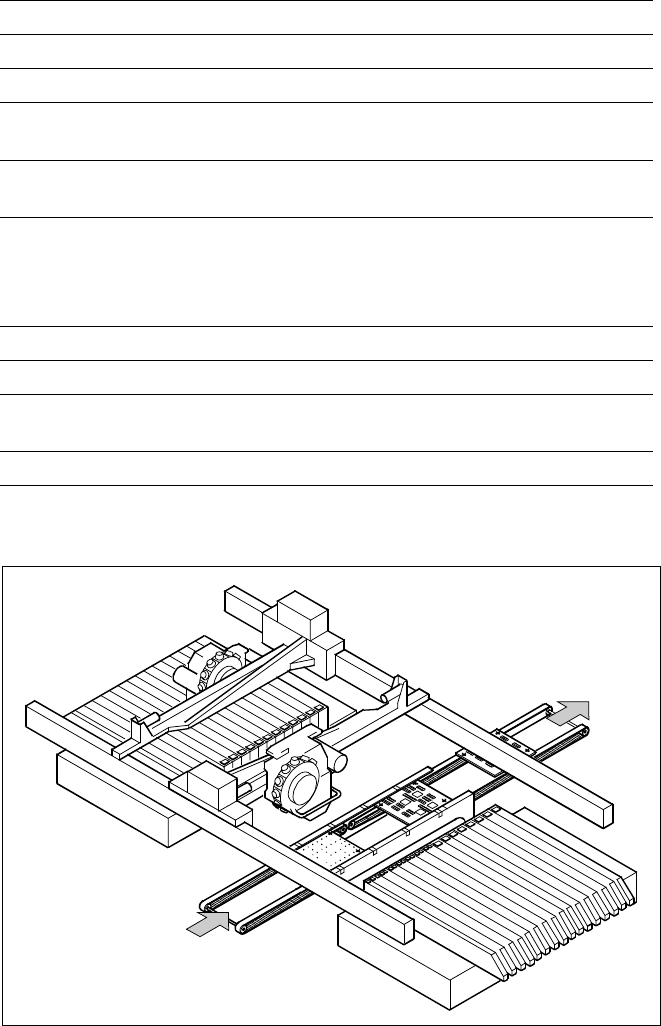
On SIPLACE S-25 HM the in-line
conveyor system guarantees a
quick adjustment to new PCB
widths. The change is made either
at the station computer using the
menu function or from the line
computer via the automatic width
adjustment unit.
Ceramic substrates can be also
transported and, if necessary, fas-
tened in place with the optional
ceramic substrate centering unit.
The single conveyor system is
standard on SIPLACE placement
systems.
PCB Conveyor:
Single Conveyor
Technical Data
PCB dimensions See table on page 3
PCB thickness 0.5 to 4.5 mm
Max. PCB weight 3 kg
Max. PCB warpage Top: 4.5 mm - PCB thickness
Bottom: 0.5 mm + PCB thickness
Free space on PCB bottom side Standard: 25 mm,
Option: max. 40 mm
PCB conveyor height
830
± 15 mm (Standard)
900
± 15 mm (Option)
930
± 15 mm (Option)
950
± 15 mm (Option) SMEMA
Fixed conveyor edge Right (standard), left (option)
Type of interface Siemens (standard); SMEMA (option)
Component-free PCB
handling edge 3 mm
PCB loading time 2.5 s
PCB Conveyor
PCB
Transport Direction
11
Description
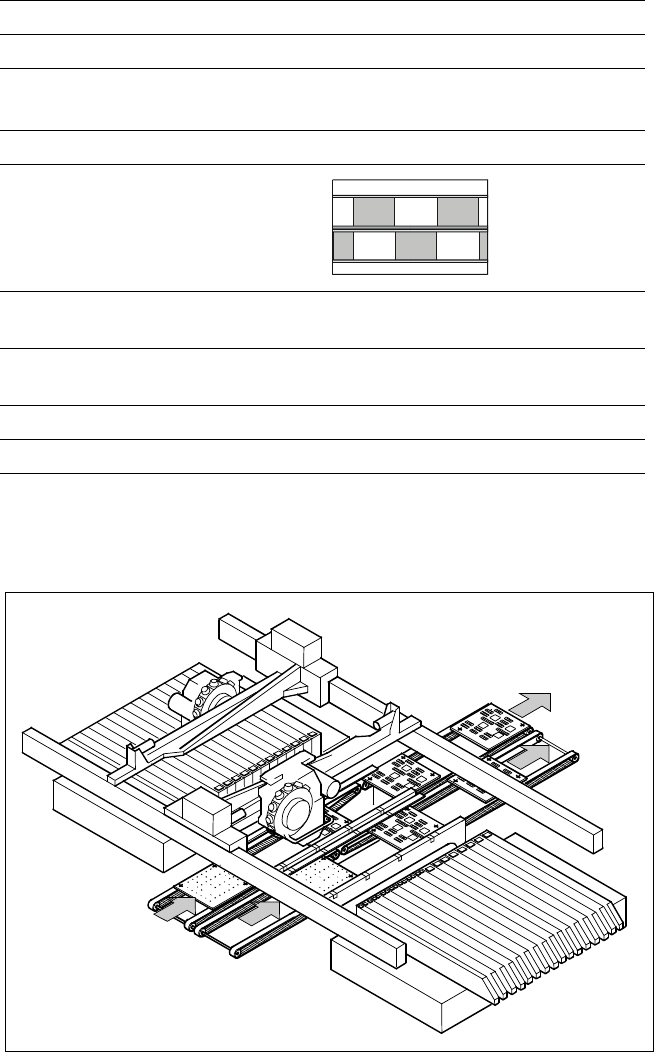
Thanks to reduced non-productive
times the dual PCB conveyor can
substantially increase the through-
put, depending on the program. It
makes it possible to transport two
PCBs through the machine.
In the asynchronous mode of
transport a PCB is moved into the
machine in “slack time” while an-
other of the same PCB is being
populated. The non-productive
time caused by the PCB transport
is therefore completely eliminated.
The increase in placement speed
to be anticipated is between 10
and 30%, depending on the com-
ponents placed on the PCB.
PCB Conveyor:
Dual Conveyor
Technical Data
PCB dimensions See table on page 3
Fixed conveyor edge Right (standard), left (option)
Asynchronous Transport on Dual Conveyor
Transport mode Asynchronous
View
Placement program
per conveyor
same or different
PCB width
per conveyor
same
Ink spot recognition possible
Automatic width adjustment possible
Dual Conveyor with Asynchronous Transport
PCB Transport
Direction
12
Description
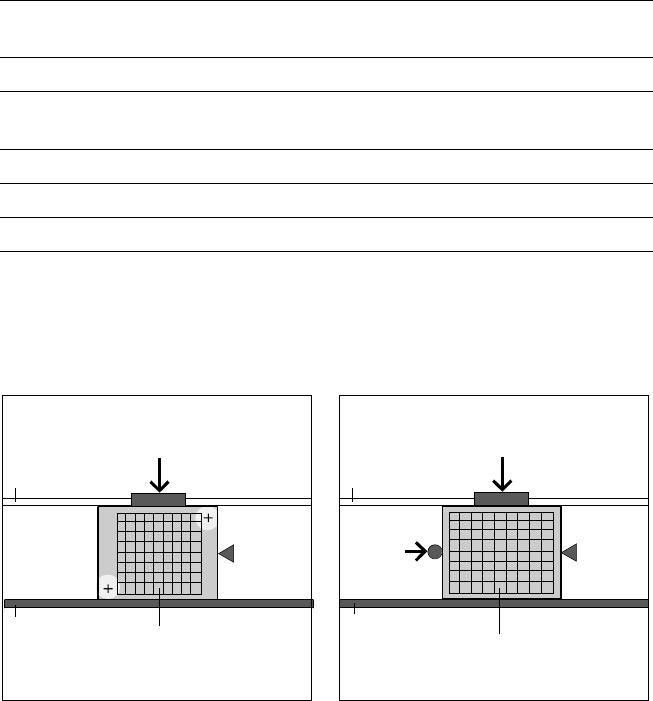
Two methods of ceramic substrate
centering are available:
Optical centering
Optical centeringOptical centering
Optical centering
Like the PCB vision module, opti-
cal centering of ceramic substrate
is conducted with the aid of refer-
ence marks (fiducials). Depending
on the contrast ratio the machine
activates the standard lighting or
the oblique lighting contained in
the option:
§ On ceramic and CM blue light.
§ On flexible PCBs using vision
module without IF-filter infrared
light.
Mechanical centering
Mechanical centeringMechanical centering
Mechanical centering
In certain cases, mechanical cen-
tering is required, e.g., when
placement is to continue to the
substrate edge, when handling of
the edges of the substrate is to be
particularly gentle, or when sub-
strates are scribed. In this gentle,
bounce-free procedure, the sub-
strate is fixed in place in the Y-
direction between a stop rail and
a rocking lever pneumatically
centered in the X-direction.
PCB Conveyor:
Ceramic Substrate Centering (Option)
Technical Data
Substrate dimensions 50 x 50 mm
2
to 101.6 x 177.8 mm
2
/
2" x 2" to 4" x 7"
Substrate thickness 0.5 to 1.5 mm
Substrate model Unscribed (no difficulty)
Scribed (after test)
Contact in conveyor 2.5 mm
Substrate bottom clearance 12 mm
Compressed air connection 5.5 bar
Optical Centering via Mechanical Centering
PCB Camera
Movable
Transport Side
Y-Fixation
Y-Fixation
Fixed
Transport
Side
Fixed
Transport
Side
Stopper
Stopper
Ceramic Substrate
Ceramic Substrate
Movable
Transport Side
X-Center-
ing