CM602规格说明书(英文).pdf - 第42页
CM602-L 2006.0515 - 37 - 6.2 Recognition Mark PCB needs two PC B reco gnit ion m arks at its oppos ite c orners . ■ PCB Recognition Mark Specifications Standard Mark Shapes Dimens ions ○ φ 0.5 mm to φ 1.6 mm △ (Equila te…
CM602-L 2006.0515
- 36 -
6. PCB Design Standard
6.1 PCB Specifications
Standard: PCB fixing method (PCB marks are required.)
* For the dual conveyor, please see “4.5 Dual Conveyor (Option)”.
■
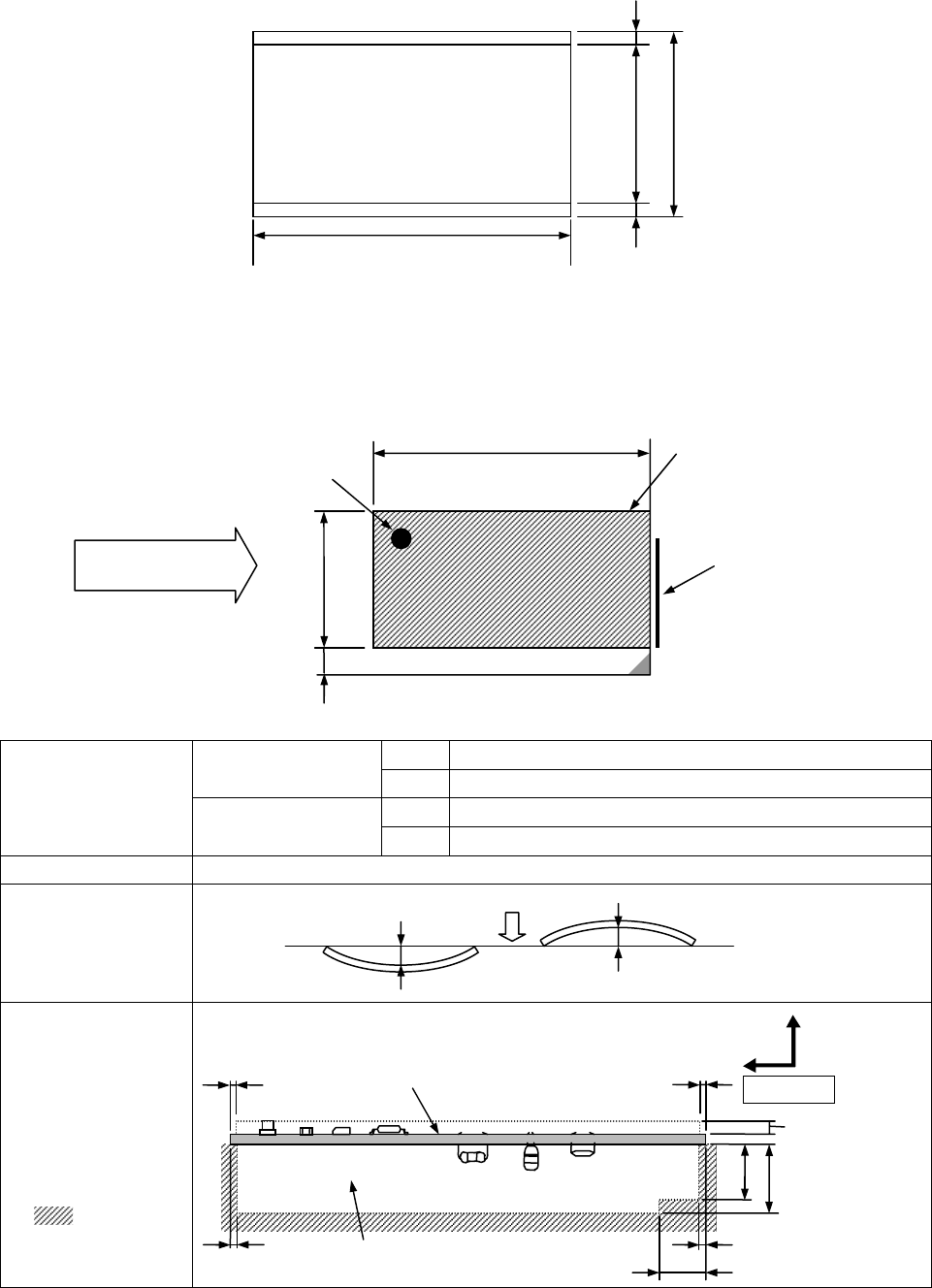
PCB cutout conditions
To secure the PCB stop position by the PCB stopper and to secure the stable operation of the PCB detection
sensor, the following conditions are set on the position and the dimensions of the PCB cutout.
[The below figure indicates the case of the left to right flow/front reference (standard). Also the other condi-
tions (options) follow this.]
Min. 50 mm × 50 mm
Dimensions
Max. 510 mm × 460 mm
Min. 50 mm × 44 mm
Dimensions
(Placement PCB
Dimensions)
Placement Area
Max. 510 mm × 454 mm
Thickness of PCB 0.3 mm to 4.0 mm
Permissible
PCB warpage
Conditions of PCB
before placement
※
The area
where no components
shall exist.
* For the dual conveyor, please see “4.5 Dual Conveyor (Option)”.
Placement direction
Max. 0.5 mm
Max. 0.5 mm
Open space for transport
3 mm3 mm
3 mm
3 mm
30 mm
25 mm
High Speed head
: Max. 6.5 mm
Multi-functional head
: Max. 21 mm
PCB
20 mm
Y
Z
Fixed side
50 mm to 510 mm
Placement Area
44 mm to 454 mm
50 mm to 460 mm
3 mm3 mm
50 mm
20 mm
4.5 mm
PCB detection sensor position
PCB cutout
prohibited area
PCB flow direction
PCB stopper
CM602-L 2006.0515
- 37 -
6.2 Recognition Mark
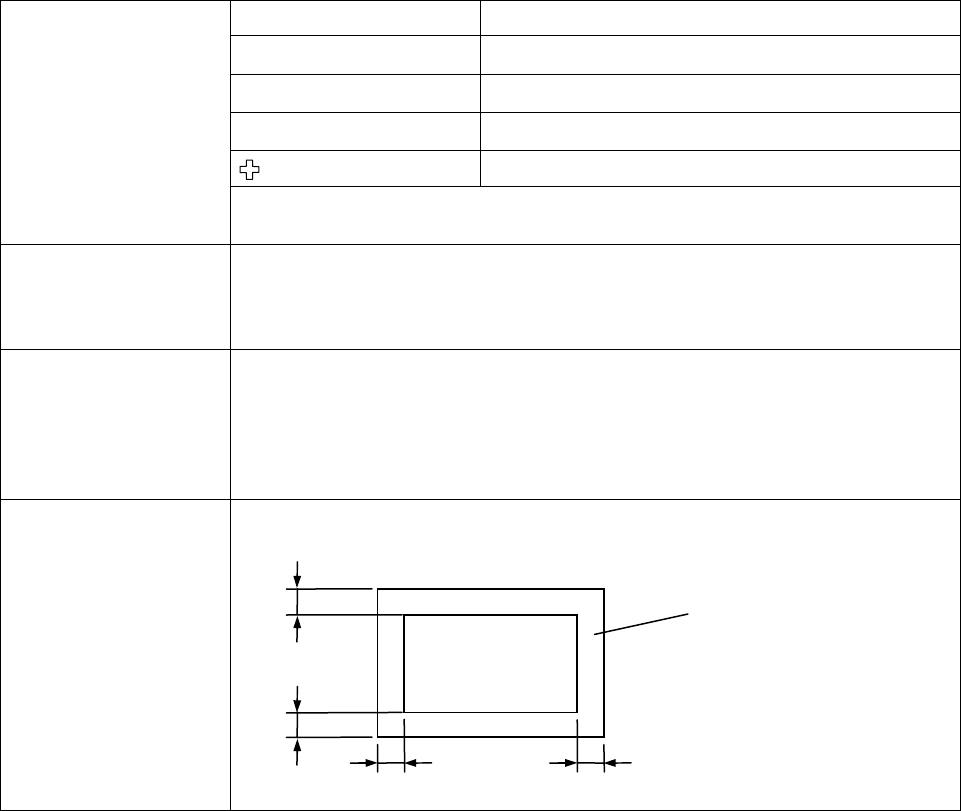
PCB needs two PCB recognition marks at its opposite corners.
■
PCB Recognition Mark Specifications
Standard Mark Shapes Dimensions
○
φ
0.5 mm to
φ
1.6 mm
△
(Equilateral triangle)
Length of one side: 0.5 mm to 1.6 mm
□
Length and width: 0.5 mm to 1.6 mm
Length and width: 0.5 mm to 1.6 mm
Standard Mark Shapes
and Dimensions
Length and width means the dimensions of the quadrangle circumscribing the
mark.
Mark Materials and
Circuit Pattern
Because PCB recognition correction is based on the positional relationship be-
tween the marks and the circuit pattern (conductor pattern), the marks must be
made in the same process and of the same materials as the circuit pattern from
the viewpoint of correction accuracy.
Image Conditions of
Mark Materials and
PCB Base
Because, basically, mark recognition process is carried out based on the inten-
sity difference of reflected light, a fixed contrast is required between the mark
materials and the PCB base.
This difference varies significantly depending on the plating condition, oxidation
condition, surface height, unevenness, degree of mirroring, coating, or distur-
bance light; therefore, the assessment of the marks is required beforehand.
Mark Dimensions and
Background
The background of a mark requires the noninterference area (larger than fixed
dimensions) outside the mark.
Noninterference area
Mark
a
≧
0.2 mm or more
Noninterference area
Not all the marks are black.
a
a
aa
CM602-L 2006.0515
- 38 -
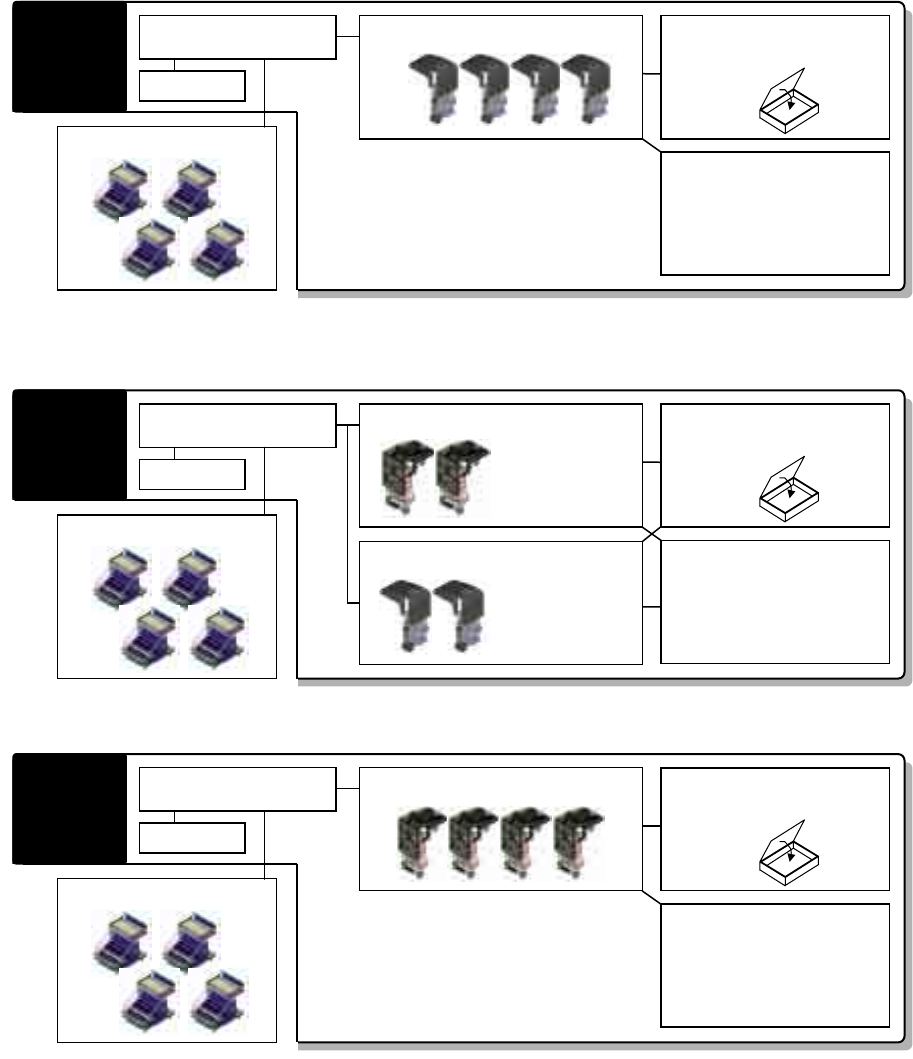
Type
A-0
Nozzle case
×
2
(For High Speed head)
High Speed head (8 nozzles)
×
4
Main body
Accessories
Feeder cart
×
4
Line camera
×
4
7. Standard Machine Configuration
There are six types of standard machine configuration according to the selection of heads.
* This is the same as the previous type A.
Type
A-2
Nozzle case
×
2
(For High Speed head)
High Speed head (12 nozzles)
×
4
Main body
Accessories
Feeder cart
×
4
Line camera
×
4
Type
A-1
Nozzle case
×
2
(For High Speed head)
High Speed head (12 nozzles)
×
2
Main body
Accessories
Feeder cart
×
4
Line camera
×
4
High Speed head (8 nozzles)
×
2
(Upstream side)
(Downstream side)