4OM-1050-002.pdf - 第330页
4.3.7 Lighting Control Board-to-Board Communication Errors AA BB C DDDDD Detail Code Secondary Error Classification (0) Primary Error Classification (0) Classification (14) of Recognition Functions When an error ID other…
4.3.6 Component Recognition Lighting Lamp Burnout Errors
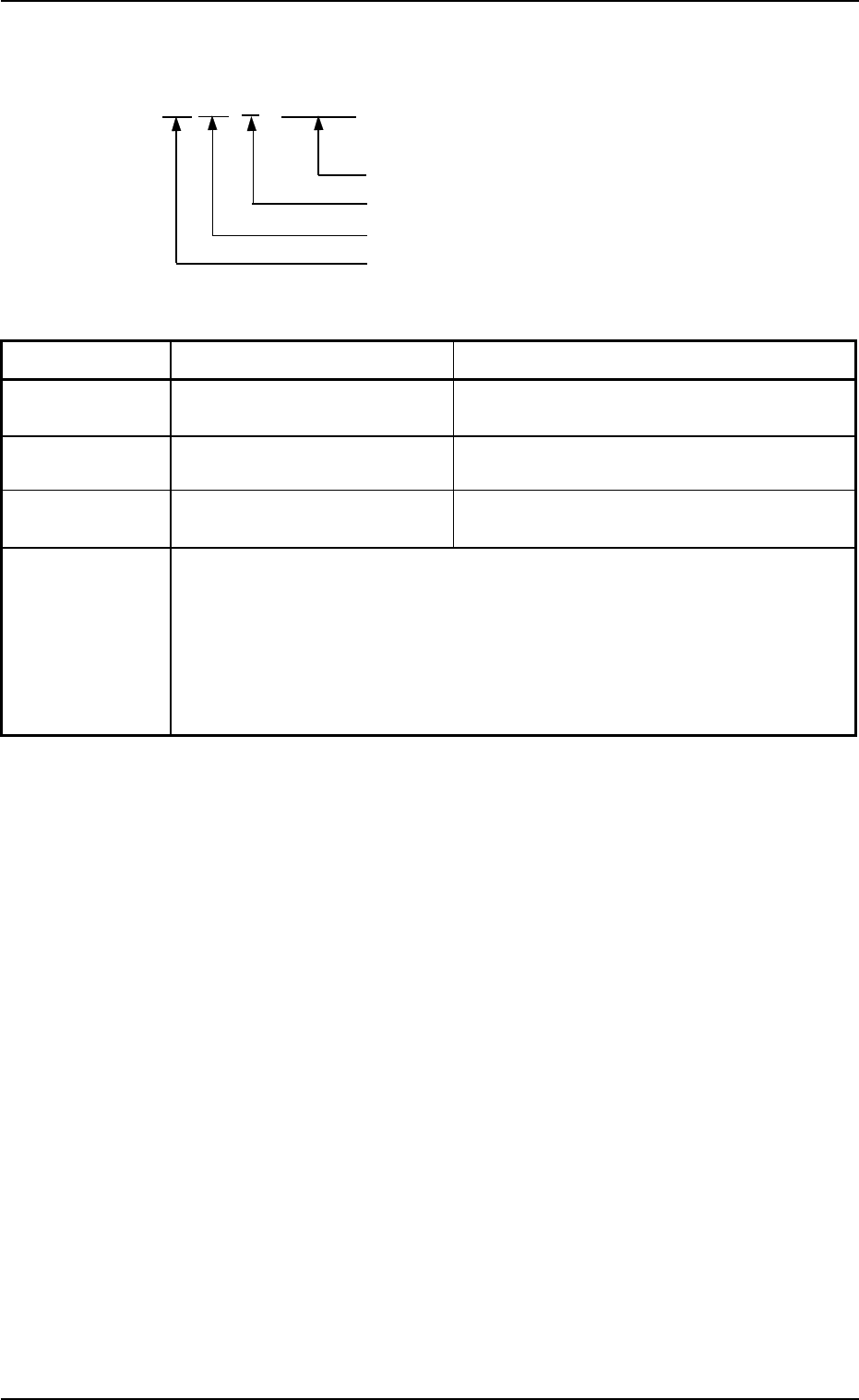
AA BB C DDDDD
Detail Code
Secondary Error Classification (0)
Primary Error Classification (0)
Classification (13) of Recognition Functions
Table 4B15
Recognition Error ID Item Description
1300000000 ---- The lamp for back lighting has blown in the com-
ponent recognition lighting unit.
1300000001 ---- The lamp for Front Lighting 1 (Ring 1) has blown in
the component recognition lighting unit.
1300000002 ---- The lamp for Front Lighting 2 (Coax) has blown in
the component recognition lighting unit.
(Cause 1) The lamp of the component recognition lighting device was burnt out.
(Remedy 1) Replace the lamp with a new one.
After the replacement, perform the teaching operation required for com-
ponent recognition.
0307-005 2-193 AFO01ETRP
4.3 Recognition Error IDs and Remedial Procedures
4.3.7 Lighting Control Board-to-Board Communication Errors
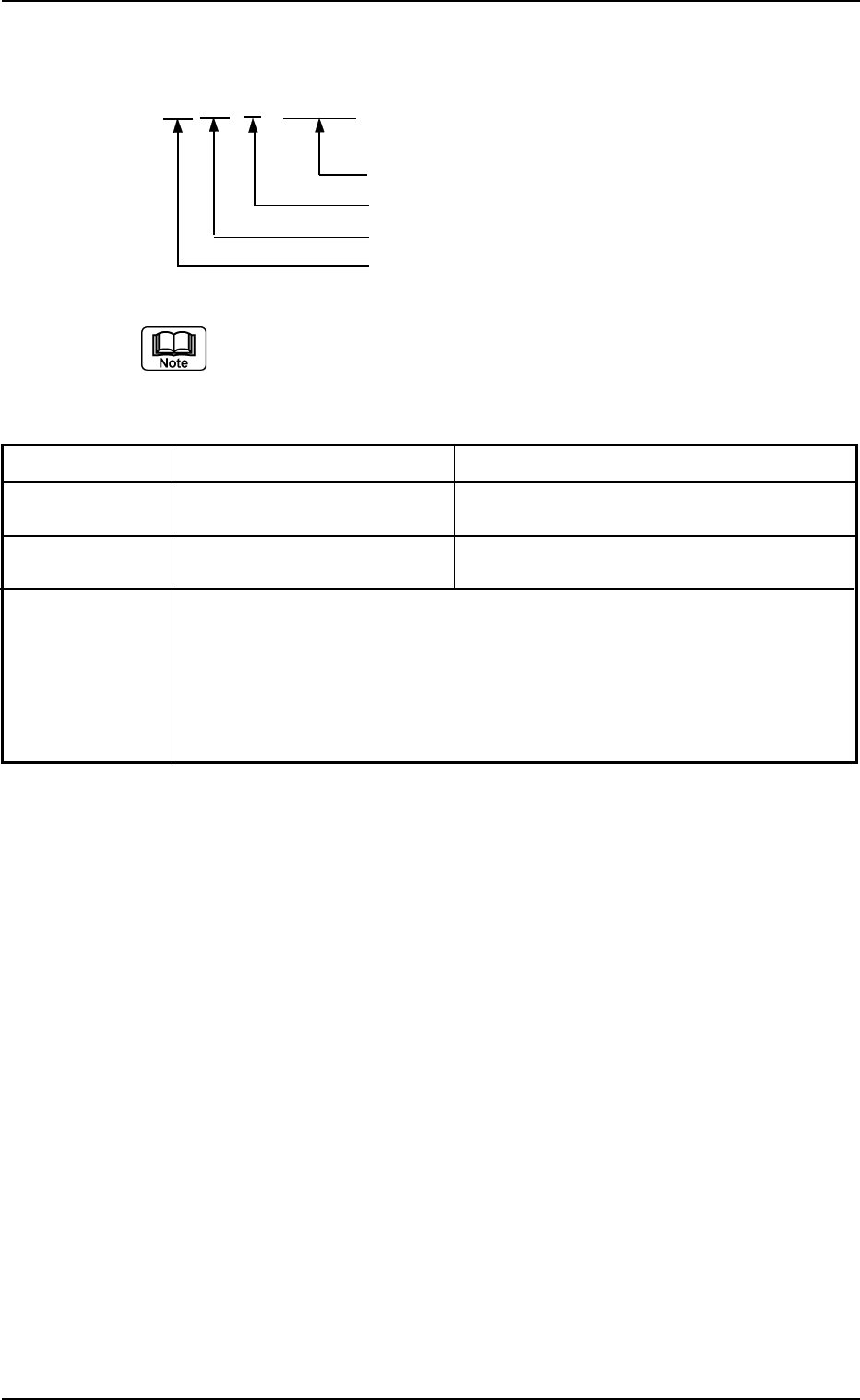
AA BB C DDDDD
Detail Code
Secondary Error Classification (0)
Primary Error Classification (0)
Classification (14) of Recognition Functions
When an error ID other than the described ones is issued, con-
tact our service personnel for some advice.
Table 4B16
Recognition Error ID Item Description
14******** ---- Other Errors in Communication between Lighting
Control Boards
1400000001 ---- An error occurred during data transfer between
recognition and lighting control boards.
(Cause 1) Self-Diagnostics Error Message
(Remedy 1) Contact our service personnel for details.
0210-004 2-194 AFO01ETRP
4.3 Recognition Error IDs and Remedial Procedures
0110-003 2-195 AFO01ETRP
5. Troubleshooting related to Component Pick and Placements
5. Troubleshooting related to Component Pick and
Placements
5.1 Classification of Failure Symptoms and Helpful
Hints on Countermeasures against Failure
5.1.1 Classification of Failure Symptoms
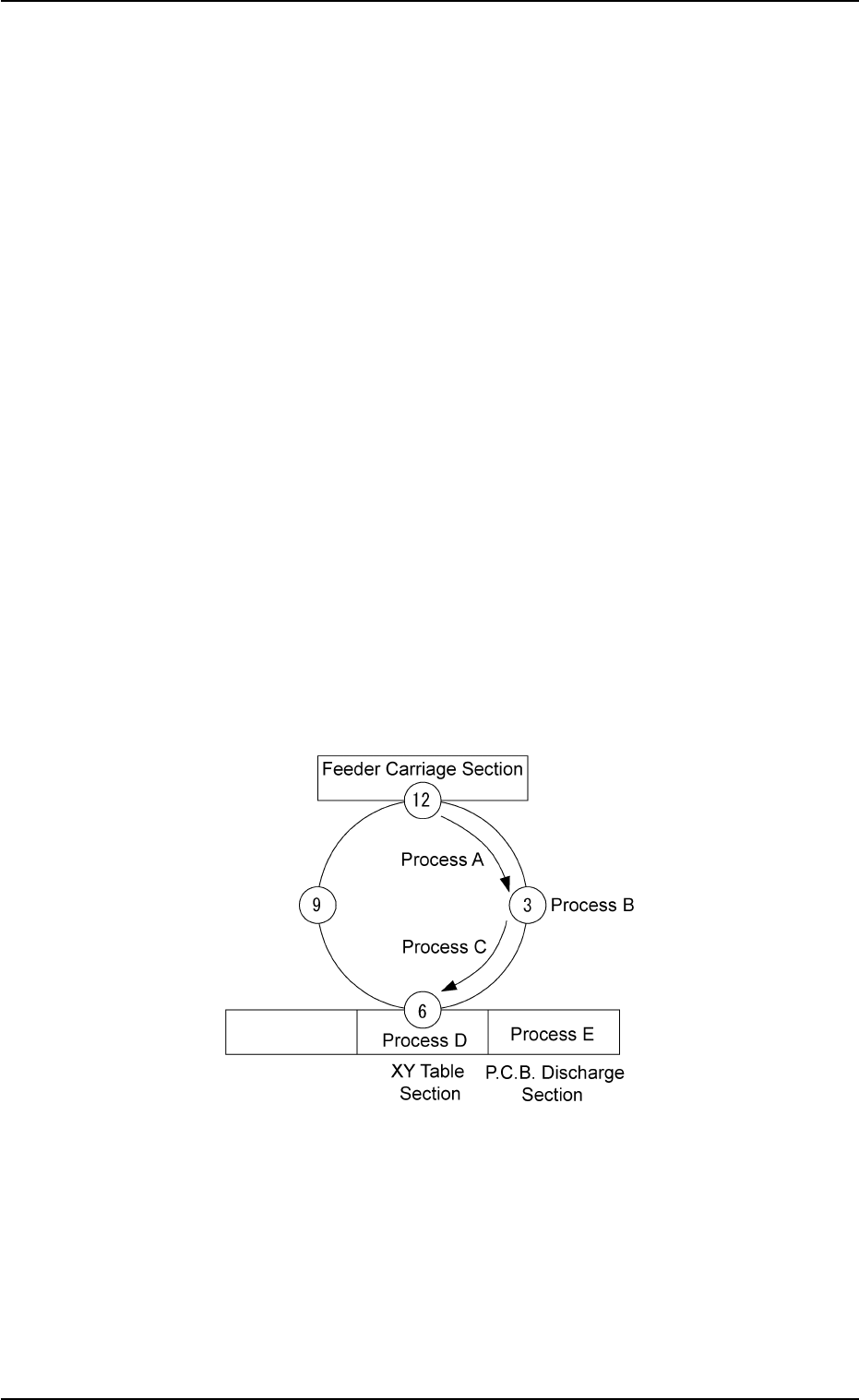
The turret movement can be classified into Processes A, B, C, D, and
E as shown below.
Refer to “1. Outline of Actions” in “Section 2” of the instruction manual
(Volume 2: Operation (Supervisor)) for the outline of actions.
Process A : A component is picked up at Station #12 and transferred
to Station #3.
Process B : The component recognition function is implemented on
the component at Station #3.
Process C : The placement angle is corrected at Station #3 and the
subsequent stations and the component is placed on the
P.C.B. at Station #6.
Process D : The component is placed on the P.C.B. along with the
movement of the X/Y table.
Process E : The component-placed P.C.B. is discharged.
Fig. 4B30
Based on these processes, failures can be divided roughly into the fol-
lowing two types.
• Failure before Component Placement
This type of failure occurs mainly in Processes A, B, and C.
• Failure after Component Placement
This type of failure occurs mainly in Processed D and E.