D-serie level 1 EN.pdf - 第171页
SIPLACE Vision Fiducial Shapes For PCB Position and Placement Position Recognition Op tical Fiducial Models S tude nt Guide Advanced Level 1 SIPLACE D-Series EN 05/2007 SIPLACE V i sion 10-5 This procedur e can also be u…
SIPLACE Vision
Optical Fiducial Models Fiducial Shapes For PCB Position and Placement Position Recognition
Student Guide Advanced Level 1 SIPLACE D-Series
SIPLACE Vision EN 05/2007
10-4
10.1.2.1 Synthetic Fiducials
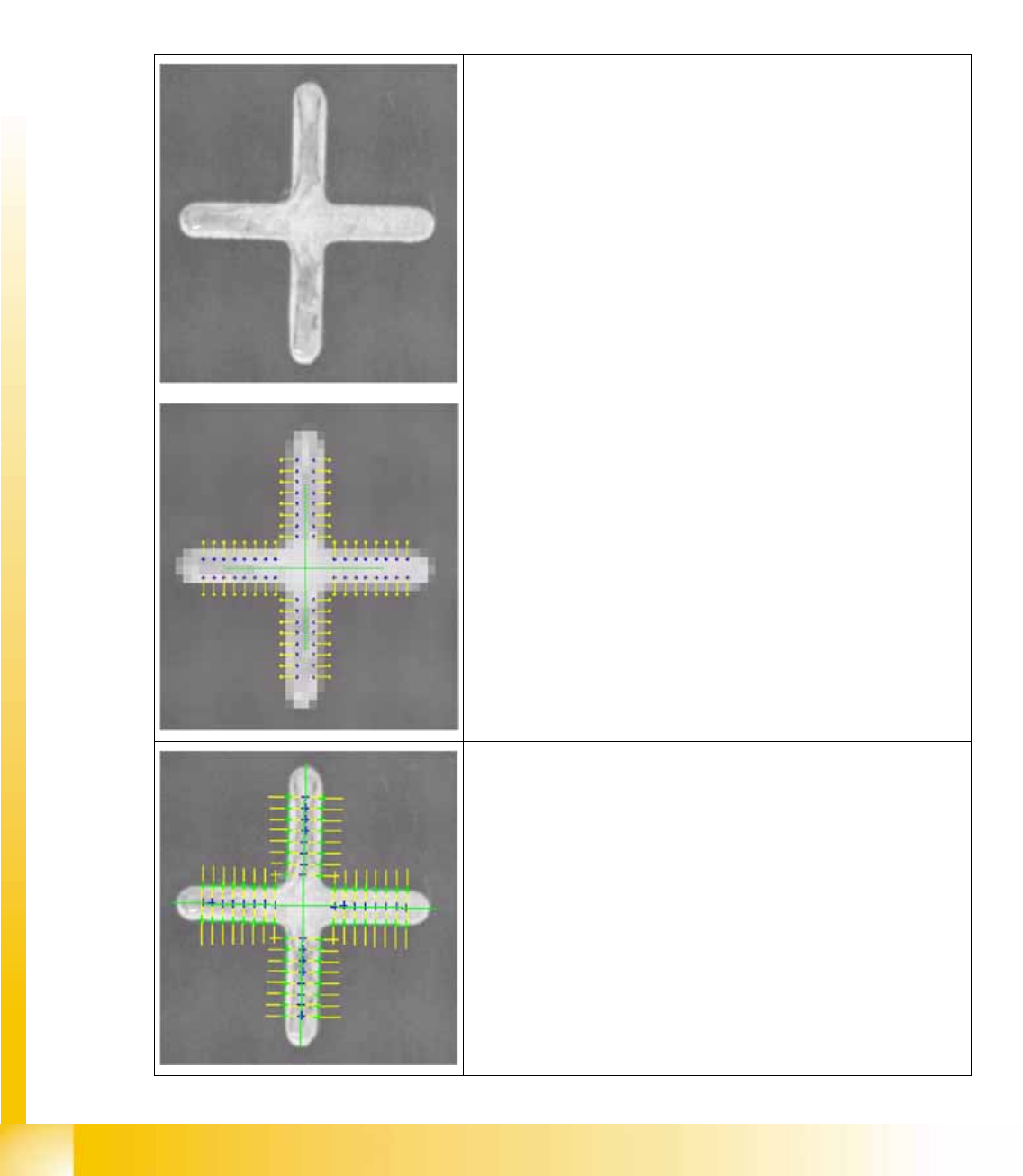
In a rough step with reduced resolution, the gray value difference between two points is determined
for multiple pairs of points. The position of these points is calculated using the geometric model. The
gray value differences are then used to determine a position.
In a fine step, the highest gray value difference in each case is measured along the scan lines.These
positions are used to calculate regression lines for determining the fiducial positions.The positions
of the scan lines are determined using the positions of the pairs of points from the rough step. Parallel
to position determination, a quality value is calculated, which indicates how well the image and model
match one another at the positions found.
Fiducial camera image
Rough search with reduced resolution:
Pairs of points are yellow/blue.
The blue point has a higher gray value than the yellow point.
Fine search:
Position of scan lines (yellow) for the pairs of points found.
Green cross: positions found for the highest gray value gradients
along the scan line.
Green lines: regression lines.
SIPLACE Vision
Fiducial Shapes For PCB Position and Placement Position Recognition Optical Fiducial Models
Student Guide Advanced Level 1 SIPLACE D-Series
EN 05/2007 SIPLACE Vision
10-5
This procedure can also be used for inkspot recognition. Bad quality is recognized if the quality value at
the point found falls below a certain threshold.
10.1.2.2 Patterns as Fiducials
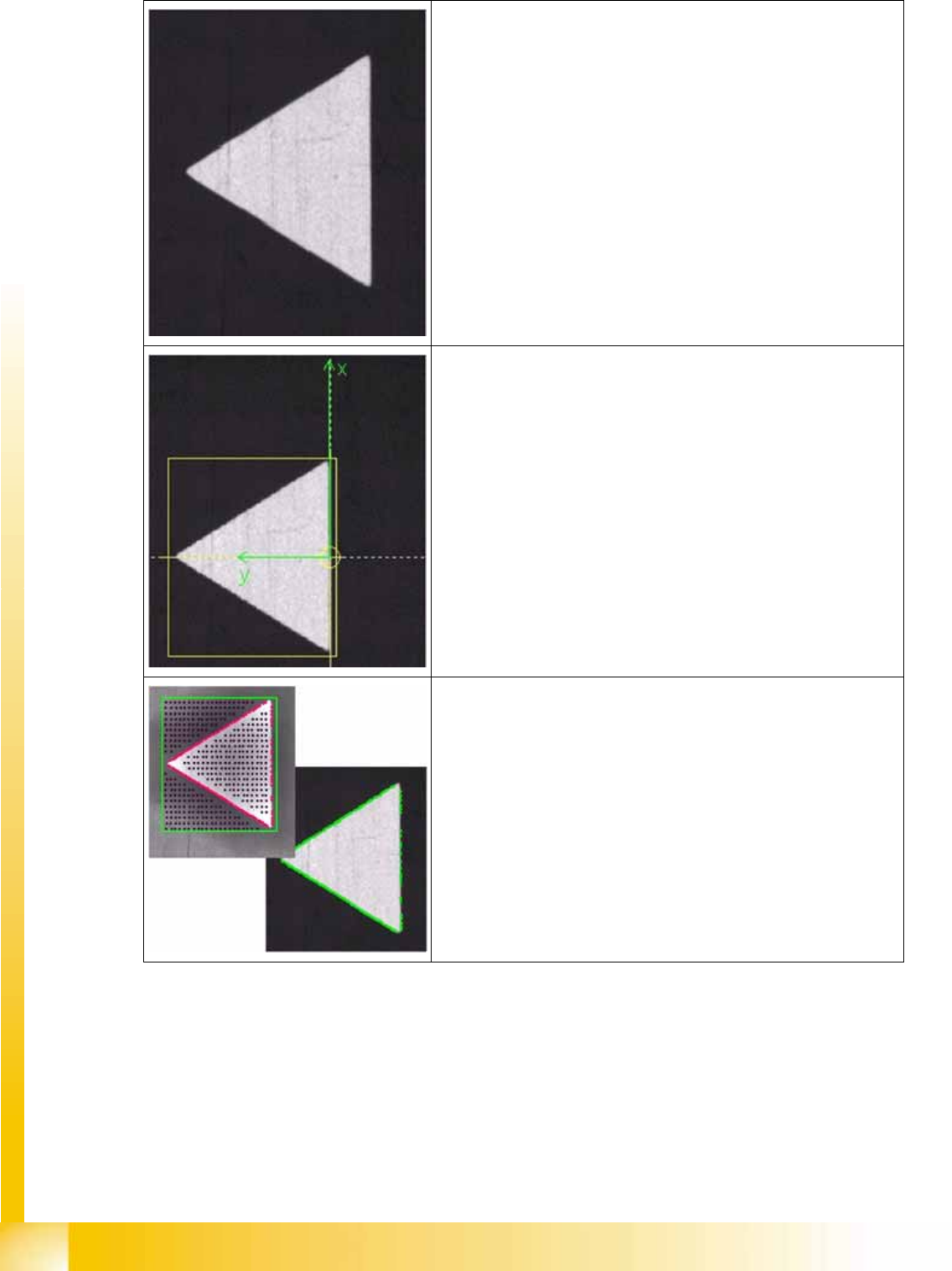
Learning fiducial shapes as patterns with the help of an automated algorithm:
You need to define the search field, the so-called Region Of Interest (ROI).
The reference point of this pattern also needs to be calculated (recommended) or manually
determined (manual definition is less exact). The reference point is the point which the placement
process will later relate to.
The pattern is calculated in order to determine the reference point.
Test the pattern with several other fiducials to establish its reliability (stability of measurement
results).
For reasons of accuracy, the reference points should be determined automatically and then checked
manually.
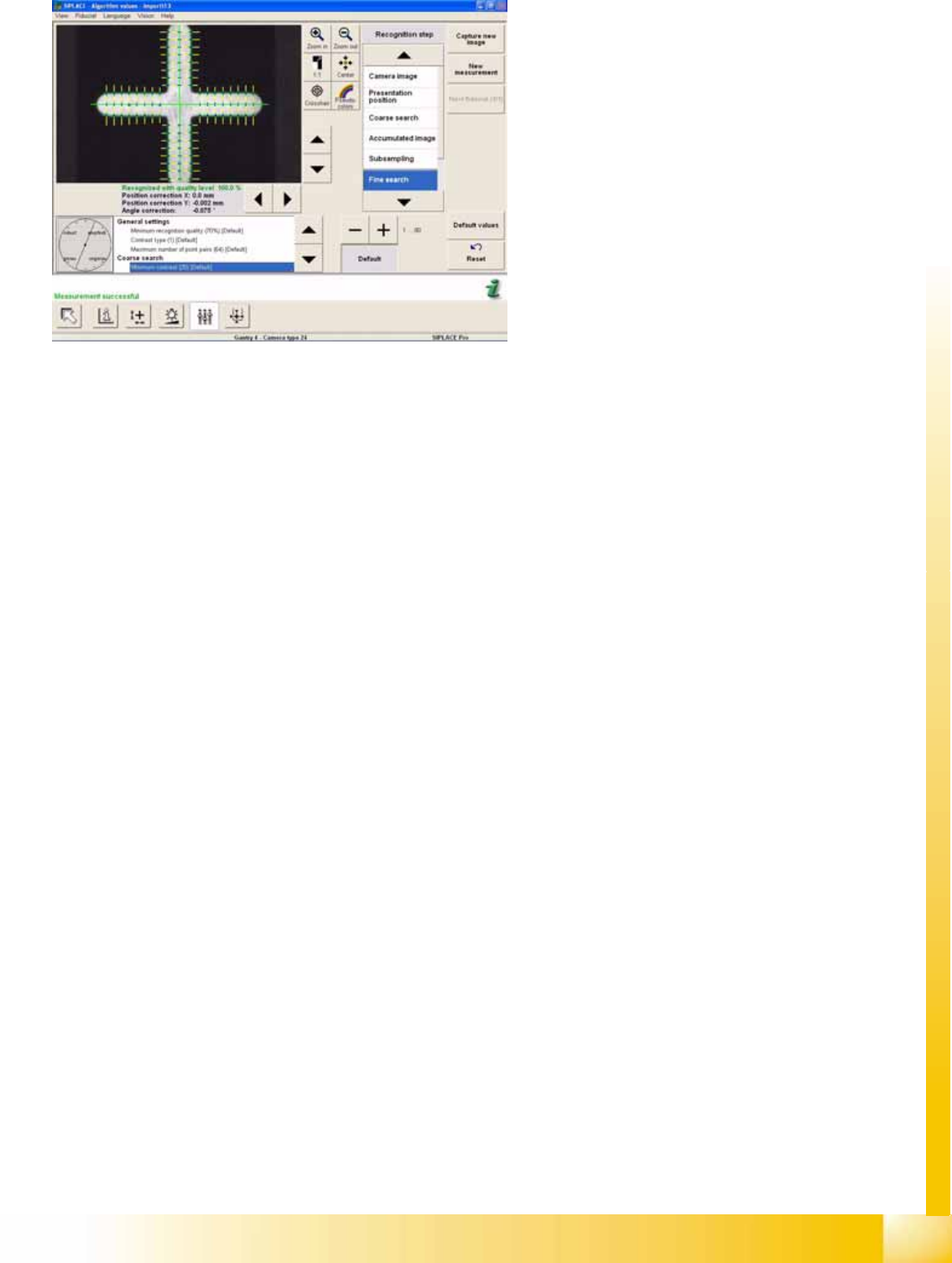
10-1: SC synthetic fiducials, edge position quality 01 0605
The edge position quality for the fine search is set
to 2 as a default.
You can adjust to 1 for very good fiducial edges
and to 4 for very bad ones.A setting of 5 means
that edge deviation checks will no longer be
performed.
For good edge quality 1, the marker is set to
Sensitive against noise or Exact edge position.
For edge quality 5, the marker points to Robust
against edge noiseinaccurate. Greater edge
position deviations are permitted (this more robust
edge position measuring procedure is used for
hot-galvanized fiducials, for example).
SIPLACE Vision
Optical Fiducial Models Fiducial Shapes For PCB Position and Placement Position Recognition
Student Guide Advanced Level 1 SIPLACE D-Series
SIPLACE Vision EN 05/2007
10-6
Camera image of triangular fiducial
Determined reference point
The reference point of a fiducial determines the placement positions.
It is therefore important to set it as exactly as possible onto the
positions based on the placement coordinates.
The automatic procedure has selected the point with the greatest
change in brightness, in this case.
Taught pattern:
Starting from the reference point, the system learns the shape of the
pattern and saves this diagram of the outline as the teach image.
(bottom right shows position measurement with taught outline)