D-serie level 1 EN.pdf - 第179页
SIPLACE Vision Inkspot Recognition Optical Fiducia l Models S tude nt Guide Advanced Level 1 SIPLACE D-Series EN 05/2007 SIPLACE V i sion 10-13 Teaching image 1: Specified by the operator as place (good case) Square fidu…

SIPLACE Vision
Optical Fiducial Models Inkspot Recognition
Student Guide Advanced Level 1 SIPLACE D-Series
SIPLACE Vision EN 05/2007
10-12
10.1.3.5 Template Method for LASER Marking
The third option for teaching inkspots is to use fiducials on a ceramic background, which can be struck
out by a laser. In order to recognize these relatively thin lines on the fiducial, a template comparison can
be programmed.
The teaching procedure for the single-sided template method (e.g. only the good case is used for
correlation - in relation to one another) is performed as follows:
A template is calculated for the class place. This template is taken as the average evaluation area,
in case the class consists of multiple teaching images.
A correlation value to this template is calculated for each teaching image.This correlation value will
be from –1 to +1 and shows how well the gray values in the image match the template (+1: images
are identical; 0: no match between the images; -1: image is inverted in relation to the template). All
the correlation values for the images which the operator has classified as place, should have a high
correlation value, near to +1. The correlation values for the bad case images should be significantly
lower.
The system determines two thresholds from these correlation values. These thresholds split the
evaluation into three areas between -1 and +1:do not place, Allocation not clear and place.
During evaluation, the system determines how well the image section correlates with the template.
Classification then compares this value with the two thresholds.
In the following recognition example, both template cases are used (good and bad):
SIPLACE Vision
Inkspot Recognition Optical Fiducial Models
Student Guide Advanced Level 1 SIPLACE D-Series
EN 05/2007 SIPLACE Vision
10-13
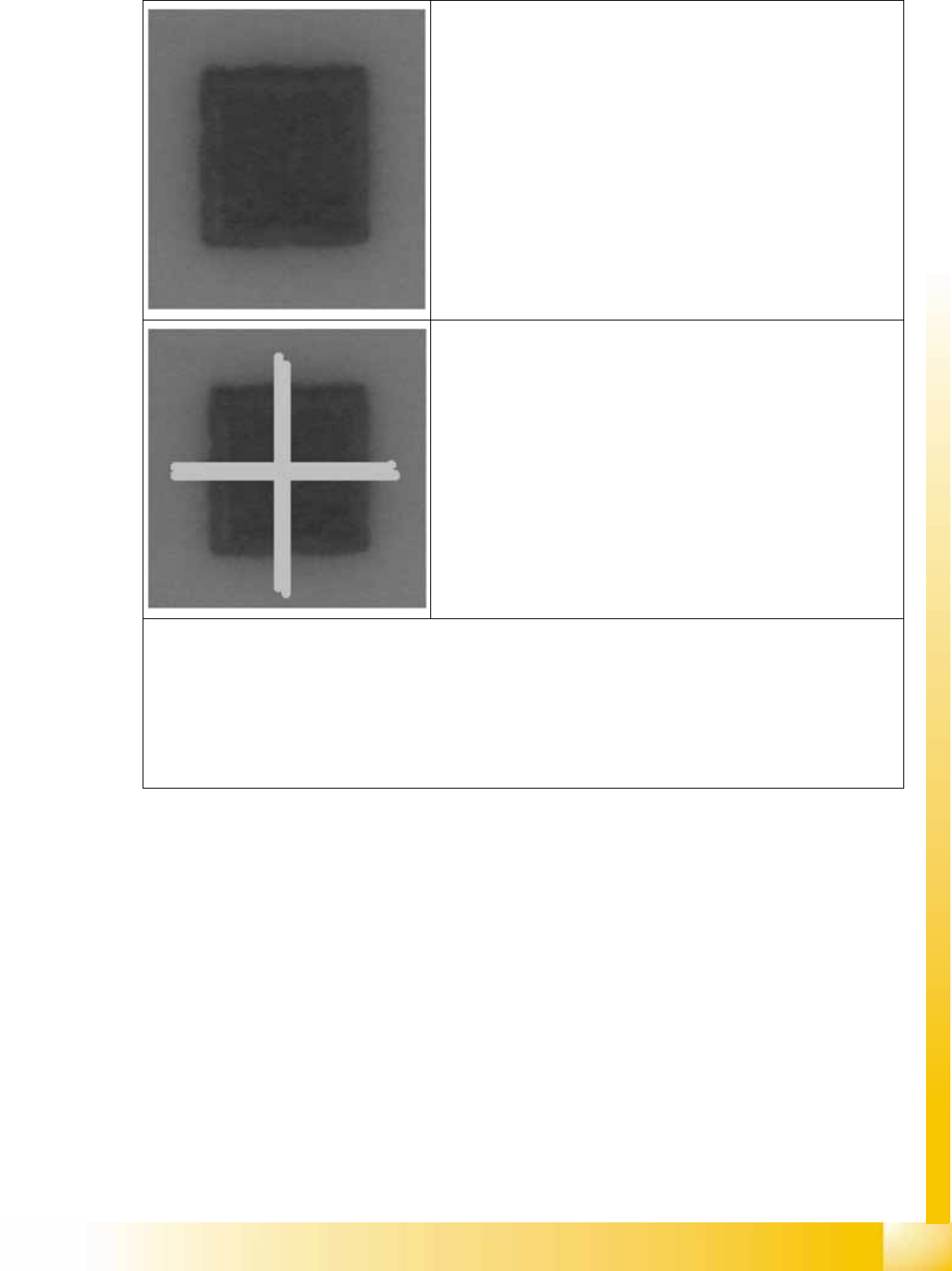
Teaching image 1:
Specified by the operator as place (good case)
Square fiducial
Teaching image 2:
Specified by the operator as do not place (bad case)
Square which has been struck out
Teaching procedure (double sided)
Determine correlation values for teaching image 1 with both templates (e.g. +0.9 with template place and +0.4 with
template do not place)
Determine correlation values for teaching image 2 with both templates (e.g. +0.3 with template place and +0.95
with template do not place)
Calculate the deviation in correlation values for each teaching image: (image 1 in this case: 0.9 – 0.4 = 0.5; image
2: 0.3 – 0.95 = -0.65).
Calculate the thresholds from the deviation values (here: lower threshold –0.27; upper threshold 0.12).
SIPLACE Vision
Optical Fiducial Models Inkspot Recognition
Student Guide Advanced Level 1 SIPLACE D-Series
SIPLACE Vision EN 05/2007
10-14
Features:
Relatively lengthy calculations.
Compared to the singular feature, this method evaluates the complete area of the pattern, not just
the outline: the latter does not need to be defined with such accuracy.
Also requires a defined shape, to which the correlation is then determined.
Conveyor tolerances cam be compensated here, if the option Position recognition before fiducial
recognition is deactivated.
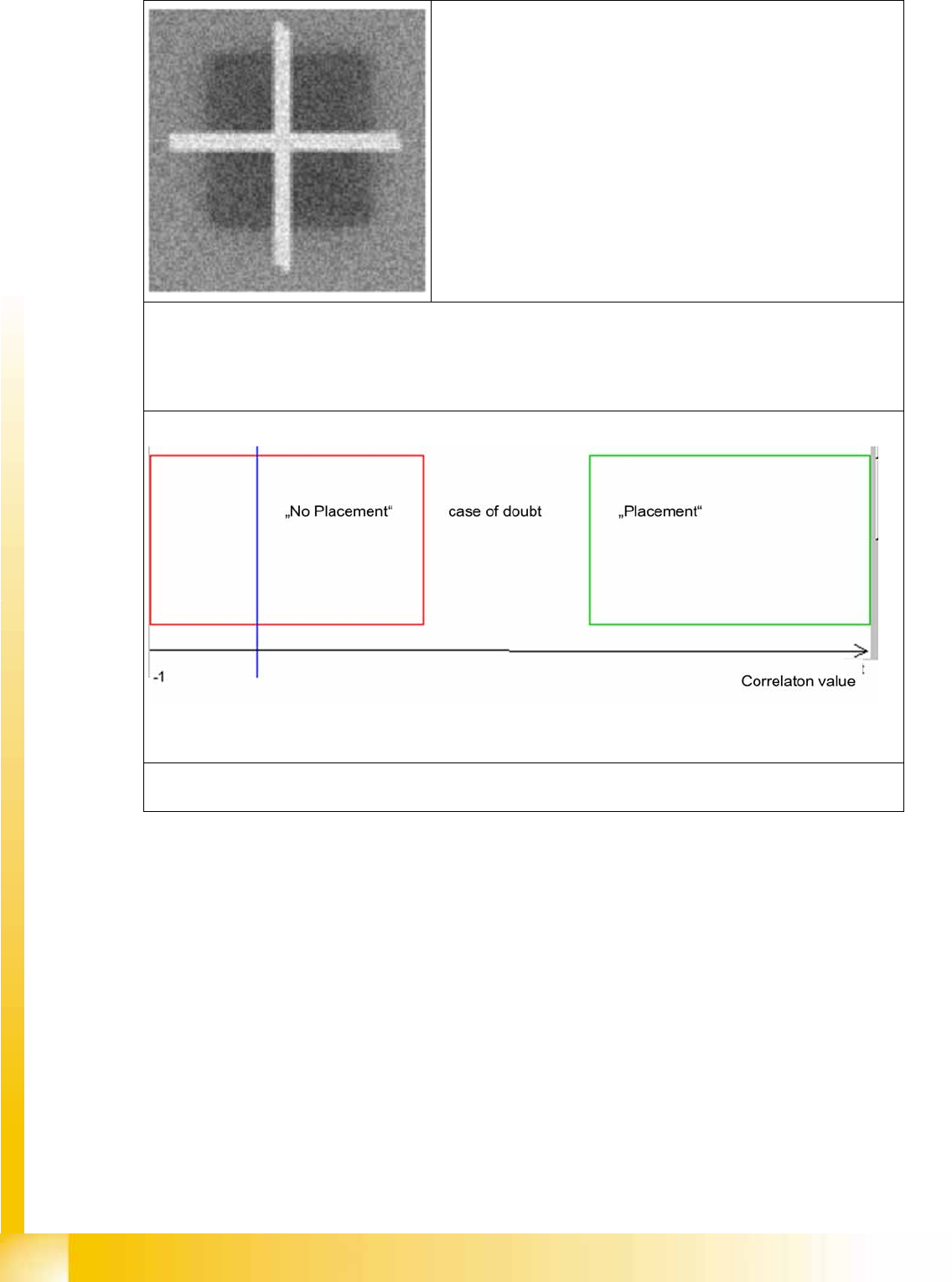
Image to be classified
Recognition:
Determine correlation to bad case template (e.g. 0.83)
Determine correlation to good case template(e.g. 0.31)
Calculate the difference:0.31 – 0.83 = -0.52
Comparison with thresholds: do not place (-0.52 < -0.27)
Overlay during classification: The blue bar indicates the correlation value deviation calculated between the values
and shows that our example has been assigned to the do not place class.