Void Reduction in Bottom Terminated Components Using Vacuum Assisted Reflow - 第8页
SMTA Southeast Asia 2015 . Ap pen dix A: Figure 12 Figure 13
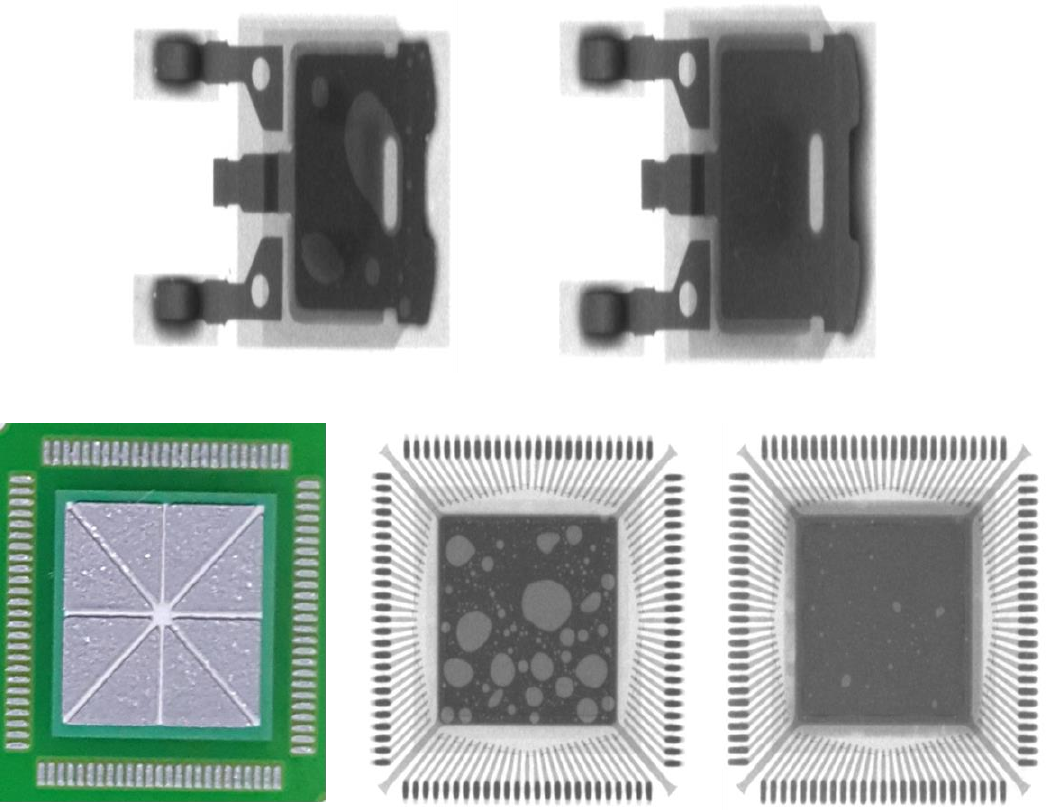
Figure 10- TO-252 Package with no vacuum (left) and 5 torr for 60 seconds vacuum (right)
Figure 11- MLF 100 Package with no vacuum (center) and 5 torr for 60 seconds vacuum (right). Note channel
pattern used (left).
Conclusions
The use of a vacuum chamber in an in-line convection reflow oven has the potential to reduce voiding significantly in large
area pads designed to draw heat away from power semiconductors. This allows for more effective heat dissipation, less heat
generation, longer battery life and more reliable assemblies.
Using 20 torr of vacuum and 30 seconds of dwell time was sufficient to cause this significant reduction in voiding. Sixty
second dwell in the vacuum showed no additional (significant) decrease in the level of voiding observed. Likewise, reducing
the atmospheric pressure from 20 torr to 5 torr did not show a measureable improvement in void reduction. Finally, the four
surface finishes used in this study all showed the same level of void reduction using the vacuum process while the solder
alloy was in the molten phase.
References
1. Herron, D, Liu, Y, and Lee, N.C., Voiding Control At QFN Assembly, SMTAI, Forth Worth, TX, 2011.
2. Nguyen J., Geiger D., Shangguan D. Assembly Challenges of Bottom Terminated Components APEX, San Diego, CA,
2012.
3. Aspandiar R., “Voids in Solder Joints”, SMTAI Conference Proceedings, 2006.
4. Holtzer M, Mok T.W., Methods of Reducing or Eliminating Voids in BGA and BTC Components, SMTA South Asia,
2016
5. IPC Solder Products Value Council, “The Effect of Voiding in Solder Interconnections Formed from Lead-free Solder
Pastes with Alloys of Tin, Silver and Copper”, White Paper, IPC.
6. Brown, S., Holtzer, M., Process Considerations in Reducing Voiding in High Reliability Lead Free Solder Joints
SMTA Southeast Asia 2015.
Appendix A:
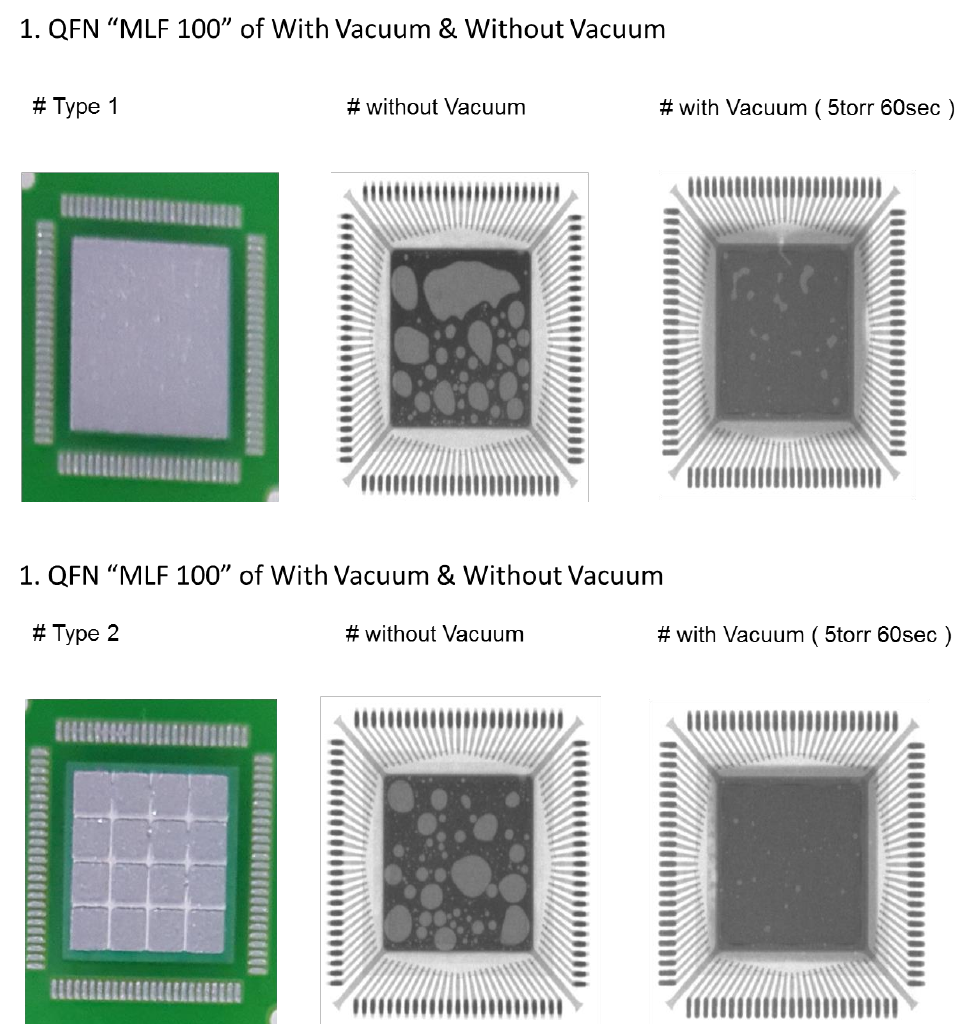
Figure 12
Figure 13
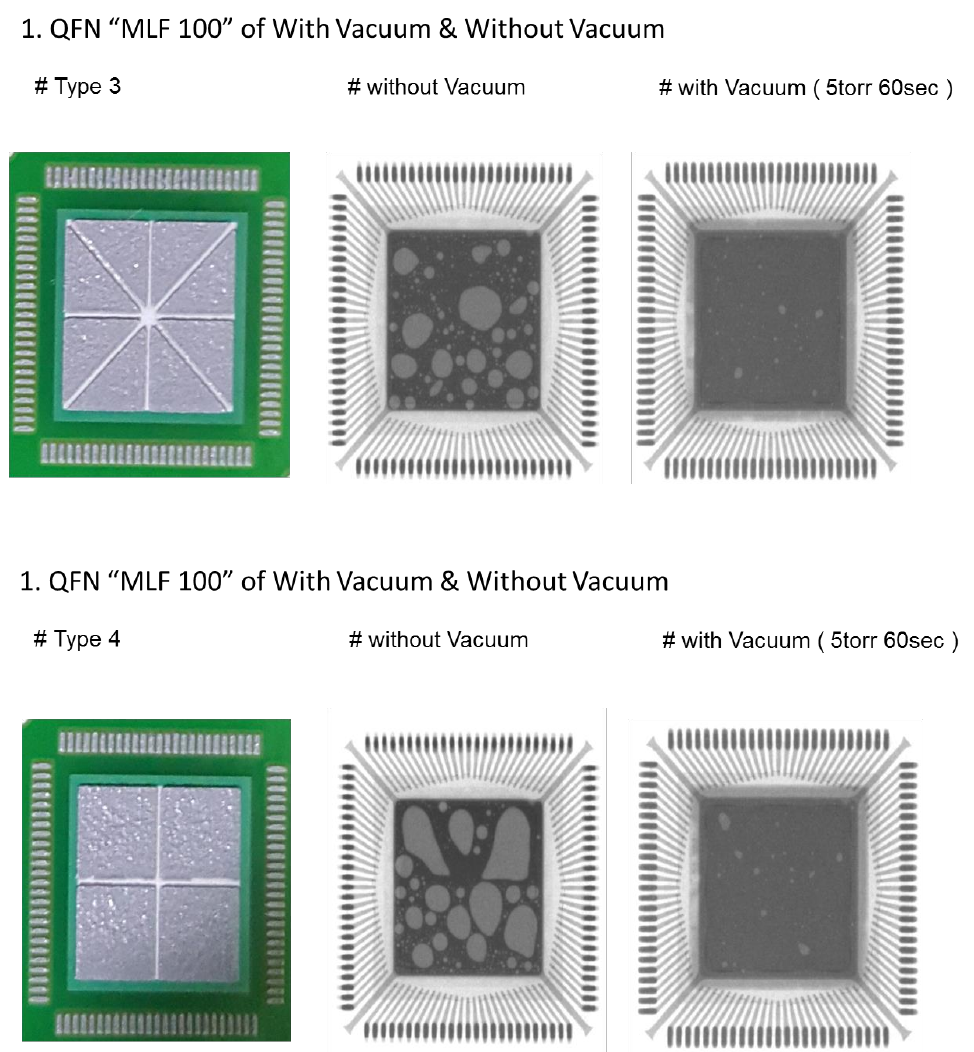
Figure 14
Figure 15