Utah-94-721002-System-Manual.pdf - 第13页
Health and Safety lñÑçêÇ=fåëíêìãÉåíë=mä~ëã~=qÉÅÜåçäçÖó= mä~ëã~ä~Ä and fçåÑ~Ä NK= eÉ~äíÜ=~åÇ=p~ÑÉíó== A l’attention des clients de langue française Le document hygiène et securité est disponible en fraçais. Vous devez vou…

QCF 89 Issue 6
Page 4 of 4
Please return the completed form to
your nearest Oxford Instruments
Support Office, detailed below:
USA & Canada DE, NE, B, SE, FI,DK Eastern Territories U.K. and all Other Territories
Oxford Instruments America Inc Oxford Instruments GmbH Oxford Instruments Pte. Ltd Oxford Instruments Plasma
Technology
Plasma Technology Support Manager Plasma Technology Raymond Wong Global Support Manager
130A Baker Avenue Extension Postfach 4509 371 Beach Road North End
Concord 65035 Wiesbaden #02-07 Keypoint Yatton, Nr Bristol
MA 01742 Germany Singapore 199597 BS49 4AP. U.K.
Tel: (800) 447 4717 Tel: +49 6122 937161 Tel: +65 6337 6848 Tel: +44 1934 837070
Fax: (978) 369 8287 Fax: +49 6122 937175 Fax: +65 6337 6286 Fax: +44 1934 837071
Email:
CSG@ma.oxinst.com Email: Plasma@oxford.de Email: Raymond.Wong@oxford-instruments.com.sg Email: Support.PT@oxinst.co.uk
=
Health and Safety lñÑçêÇ=fåëíêìãÉåíë=mä~ëã~=qÉÅÜåçäçÖó= mä~ëã~ä~Ä and fçåÑ~Ä
NK= eÉ~äíÜ=~åÇ=p~ÑÉíó==
A l’attention des clients de langue française
Le document hygiène et securité est disponible en fraçais. Vous devez
vous assurer que cette version est présente dans ce manual. Si elle est
manquante contactez votre representant Oxford Instruments Plasma
Technology.
Für deutschsprachige Kunden
besteht dieses Kapitel “Health and Safety” unter dem Titel “Sicherheit
und Unfallverhütung” auch in deutscher Fassung, die in diesem
Handbuch enthalten sein sollte. Falls diese fehlt, fordern Sie bitte ein
Exemplar bei Oxford Instruments Plasma Technology an.
`çåíÉåíë=
=
1 Health and Safety.........................................................................................................................1-1
1.1 Introduction............................................................................................................................................1-2
1.1.1 Warnings and Cautions................................................................................................................1-2
1.2 Hazard Categories..................................................................................................................................1-3
1.3 Specific Hazards......................................................................................................................................1-4
1.3.1 Electrical........................................................................................................................................1-4
1.3.2 Electromagnetic Radiation..........................................................................................................1-5
1.3.3 Light..............................................................................................................................................1-6
1.3.4 High Temperature........................................................................................................................1-7
1.3.5 Low Temperature.........................................................................................................................1-7
1.3.6 Gases .............................................................................................................................................1-8
1.3.7 Materials.....................................................................................................................................1-10
1.3.8 Process Chemicals.......................................................................................................................1-12
1.3.9 Vacuum.......................................................................................................................................1-12
1.3.10 Compressed air...........................................................................................................................1-13
1.3.11 Mechanical..................................................................................................................................1-13
1.3.12 General........................................................................................................................................1-14
1.4 Warning and advisory labels ...............................................................................................................1-16
Health and Safety
Printed:29 May 2005, 06:31 Page 1-1 of 18 Issue 11: August 2004
mä~ëã~ä~Ä and fçåÑ~Ä lñÑçêÇ=fåëíêìãÉåíë=mä~ëã~=qÉÅÜåçäçÖó= Health and Safety
NKN= fåíêçÇìÅíáçå=
This section must be read and understood before the system is approached or operated and
before any maintenance work is carried out.
It is a requirement that procedures and practices taught in Oxford Instruments Plasma
Technology training courses are followed.
If the equipment is used in a manner not specified by Oxford Instruments Plasma Technology,
the protection provided by the equipment may be impaired.
Please read this section carefully, and note that certain aspects of the system can produce
more than one hazard (e.g. process gases can be a fire hazard and a toxic hazard).
Some safety features are fitted to guard against more than one hazard. In particular, note
that some view ports must guard against UV light emission (sub-section 1.3.3, page 1-6), RF
energy emission (sub-section 1.3.2, page 1-5) and must be fitted with implosion guards.
Note that this document is standardised and may contain warnings, which are not relevant to
your particular system.
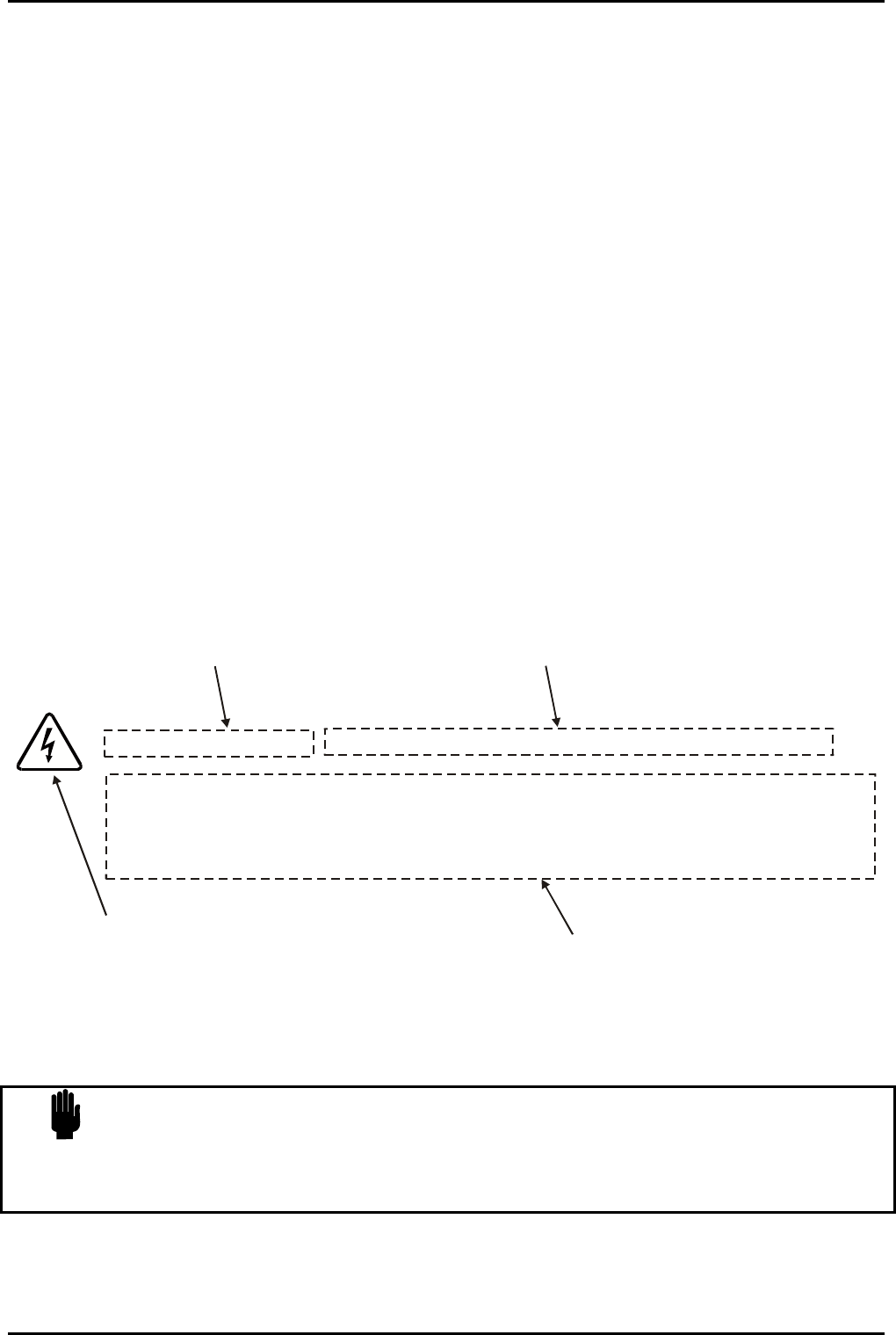
NKNKN= t~êåáåÖë=~åÇ=`~ìíáçåë=
Throughout this manual WARNINGS are inserted in the text to draw the reader’s attention
to hazards. Failure to comply with a WARNING could result in death or serious injury. A
typical warning is shown below:
PICTORIAL SHOWING THE
HAZARD CATEGORY GRAPHICALLY
HAZARD IDENTIFICATION CONSEQUENCES OF IGNORING
THE HAZARD
HOW TO AVOID
THE HAZARD
WARNING
HAZARDOUS VOLTAGE - CONTACT CAN CAUSE DEATH, SEVERE INJURY OR BURNS
Any work requiring the removal of covers or panels must only be performed by authorised
personnel who are aware of the hazards involved.
Before removing any covers or panels, power down the system then carry out the lock out /
tag out procedure detailed in Section 6.
Throughout this manual CAUTIONS are inserted in the text to draw the reader’s attention to
situations and procedures, which could cause damage to the equipment. A typical CAUTION
is shown below:
CAUTION
Upper electrodes can become contaminated from finger marks etc.
When working on the upper electrodes, ensure that powder-free cleanroom
gloves are worn.
Health and Safety
Issue 11: August 2004 Page 1-2 of 18 Printed:29 May 2005, 06:31