OperationInstruction_Vsision XP
Rehm Therma l Systems GmbH • Leinenstrasse 7 • D-89 143 Blaubeuren-Sei ssen, Germany Operating Instructions V ision XP + V AC
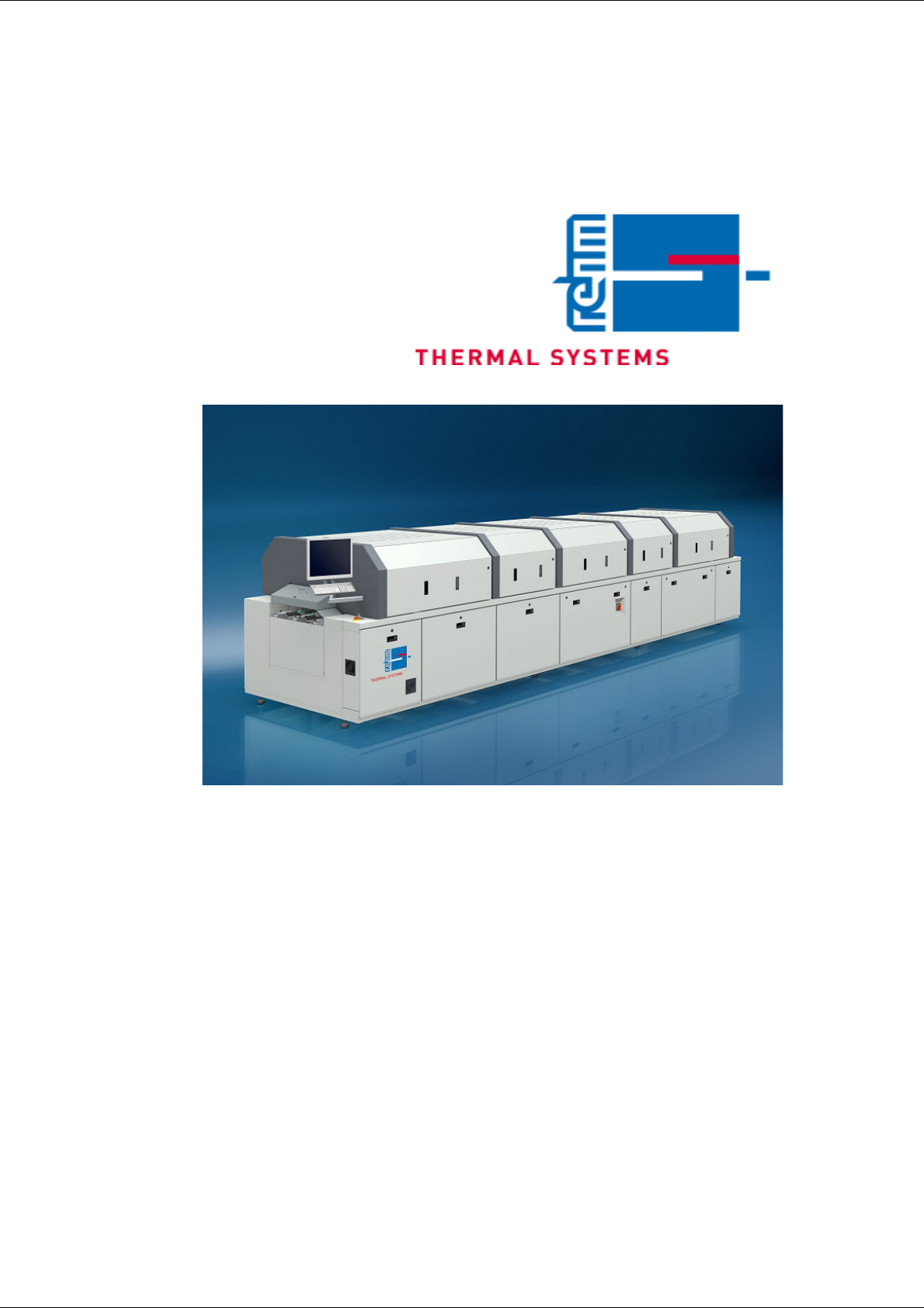
Rehm Thermal Systems GmbH • Leinenstrasse 7 • D-89143 Blaubeuren-Seissen, Germany
Operating Instructions
Vision XP + VAC

Date of creation: 10-21-2016 VISION XP+ VAC
Operating Instructions
Version 1.5
UNIX is a trade mark of AT&T.
Windows is a trade mark of Microsoft.
The contents of the manual have been checked for consistency with the
hard- and software described. Nevertheless deviations cannot be excluded
so that we do not guarantee for absolute consistency. The information in this
manual however is verified regularly and necessary corrections are included
in the subsequent editions.
Suggestions for improvement are always welcome.
These instructions were written in German, and thus German is the original
language of this documentation. All other languages are translations.
Passing-on as well as duplication of this document, commercialization and
communication of its contents are not permitted unless expressly conceded.
Non-compliance with the above results in liability for damages. All rights re-
served, in particular in case of issue of a patent or protection of patented de-
sign.
Printed in Germany
All rights reserved. – Subject to change without prior notice.
Rehm Thermal Systems GmbH
Leinenstrasse 7
D - 89143 Blaubeuren -Seissen
Tel.: +49 7344 9606-0
Fax: +49 7344 9606-525
E-Mail: info@rehm-group.com

VISION XP+ VAC Page I
Contents
Operating Instructions
Version 1.5
Contents
1 Introduction...................................................................... 3
1.1 General................................................................................................................... 3
1.2 Foreword................................................................................................................ 3
1.3 Layout of the Operating Instructions .................................................................. 5
1.4 Overview of Revision Levels................................................................................ 6
1.5 System Description............................................................................................... 6
1.5.1 Zones ...................................................................................................................... 7
2 Operating Safety.............................................................. 9
2.1 Use of Danger Symbols........................................................................................ 9
2.2 Warning Signs on the Systems ......................................................................... 10
2.3 Other hazard symbols ........................................................................................ 12
2.4 User Classification.............................................................................................. 13
2.5 Handling Flammable Materials .......................................................................... 14
2.6 Recommendations for the use of chemical cleaning agents.......................... 14
2.7 Important Note Regarding Operation Safety .................................................... 15
2.7.1 Sources of danger and hazard zones ................................................................... 17
2.7.2 Hazards posed by mechanical energy .................................................................. 17
2.7.3 Danger of high voltage .......................................................................................... 18
2.7.4 Hazards from pneumatic energy ........................................................................... 18
2.7.5 Danger due to pressurised liquids......................................................................... 19
2.7.6 Danger of high temperatures ................................................................................ 19
2.8 Intended use ........................................................................................................ 20
2.8.1 Foreseeable wrong uses....................................................................................... 21
2.8.2 Electromagnetic compatibility - EMC .................................................................... 21
2.9 Safety Devices.................................................................................................... 22
2.9.1 Overview of important safety devices ................................................................... 22
2.9.2 Safety Precautions for Closing Hoods and Process Chamber.............................. 23
2.9.3 Emergency-Stop Buttons ...................................................................................... 24
2.9.4 RCCBs .................................................................................................................. 24
2.9.5 Auto-Start-Switch .................................................................................................. 24
2.9.6 Operating Mode Selector Switch........................................................................... 24
2.10 Locking the System and Attaching Warning Signs ......................................... 25
2.10.1 Procedure.............................................................................................................. 26
2.10.2 Testing .................................................................................................................. 27
2.10.3 Responsibility and Duties...................................................................................... 27
2.10.4 Disposal ................................................................................................................ 27
2.11 Training ................................................................................................................ 28