2500_Users_Manual-.pdf - 第316页
Translation Formats Note: Data without a start or end code may be input to or output from 协 e programmer by use of alternate data translation format codes. These are ASCII-BNPF, 05; ASCII-BHLF, 06; ASCII-B10F, 07. A sing…
BPPPPPPPPF BPPPPPPPPF BPPPPPPPPF BPPPPPPPPF
BPPPPPPPPF BPPPPPPPPF BPPPPPPPPF BPPPPPPPPF
BPPPPPPPPF BPPPPPPPPF BPPPPPPPPF BPPPPPPPPF
BPPPPPPPPF BPPPPPPPPF BPPPPPPPPF BPPPPPPPPF
BPPPPPPPPF BPPPPPPPPF BPPPPPPPPF BPPPPPPPPF
BPPPPPPPPF BPPPPPPPPF BPPPPPPPPF BPPPPPPPPF
BPPPPPPPPF BPPPPPPPPF BPPPPPPPPF BPPPPPPPPF
BPPPPPPPPF BPPPPPPPPF BPPPPPPPPF BPPPPPPPPF
2
FORMAT 01 (OR 05)
BHHHHHHHHF BHHHHHHHHF BHHHHHHHHF BHHHHHHHHF
BHHHHHHHHF BHHHHHHHHF BHHHHHHHHF BHHHHHHHHF
BHHHHHHHHF BHHHHHHHHF BHHHHHHHHF BHHHHHHHHF
BHHHHHHHHF BHHHHHHHHF BHHHHHHHHF BHHHHHHHHF
BHHHHHHHHF BHHHHHHHHF BHHHHHHHHF BHHHHHHHHF
BHHHHHHHHF BHHHHHHHHF BHHHHHHHHF BHHHHHHHHF
BHHHHHHHHF BHHHHHHHHF BHHHHHHHHF BHHHHHHHHF
BHHHHHHHHF BHHHHHHHHF BHHHHHHHHF BHHHHHHHHF
2
FORMAT 02 (OR 06)
B11111111F B11111111F B11111111F B11111111F
B11111111F B11111111F B11111111F B11111111F
B11111111F B11111111F B11111111F B11111111F
B11111111F B11111111F B11111111F B11111111F
B11111111F B11111111F B11111111F B11111111F
B11111111F B11111111F B11111111F B11111111F
B11111111F B11111111F B11111111F B11111111F
B11111111F B11111111F B11111111F B11111111F
2
1
3
1
3
1
3
FORMAT 03 (OR 07)
LEGEND
Start Code - nonprintable STX - CTRL B is the optional Start Code
Characters such as spaces, carriage returns and line feeds may appear between bytes
End Code - nonprintable ETX - CTRL C
1
2
3
0074-2
Translation
Formats
ASCII
Binary
Format,
Codes
01, 02,
and
03
(or
05,
06,
and
07)
In
these
formats,
bytes
are
recorded
in
ASCII
codes
with
binary
digits
represented
by
Ns
and
Ps,
Ls
and
Hs,
or
Is
and
0s,
respectively.
See
Figure
D-l.
The
ASCII
Binary
formats
do
not
have
addresses.
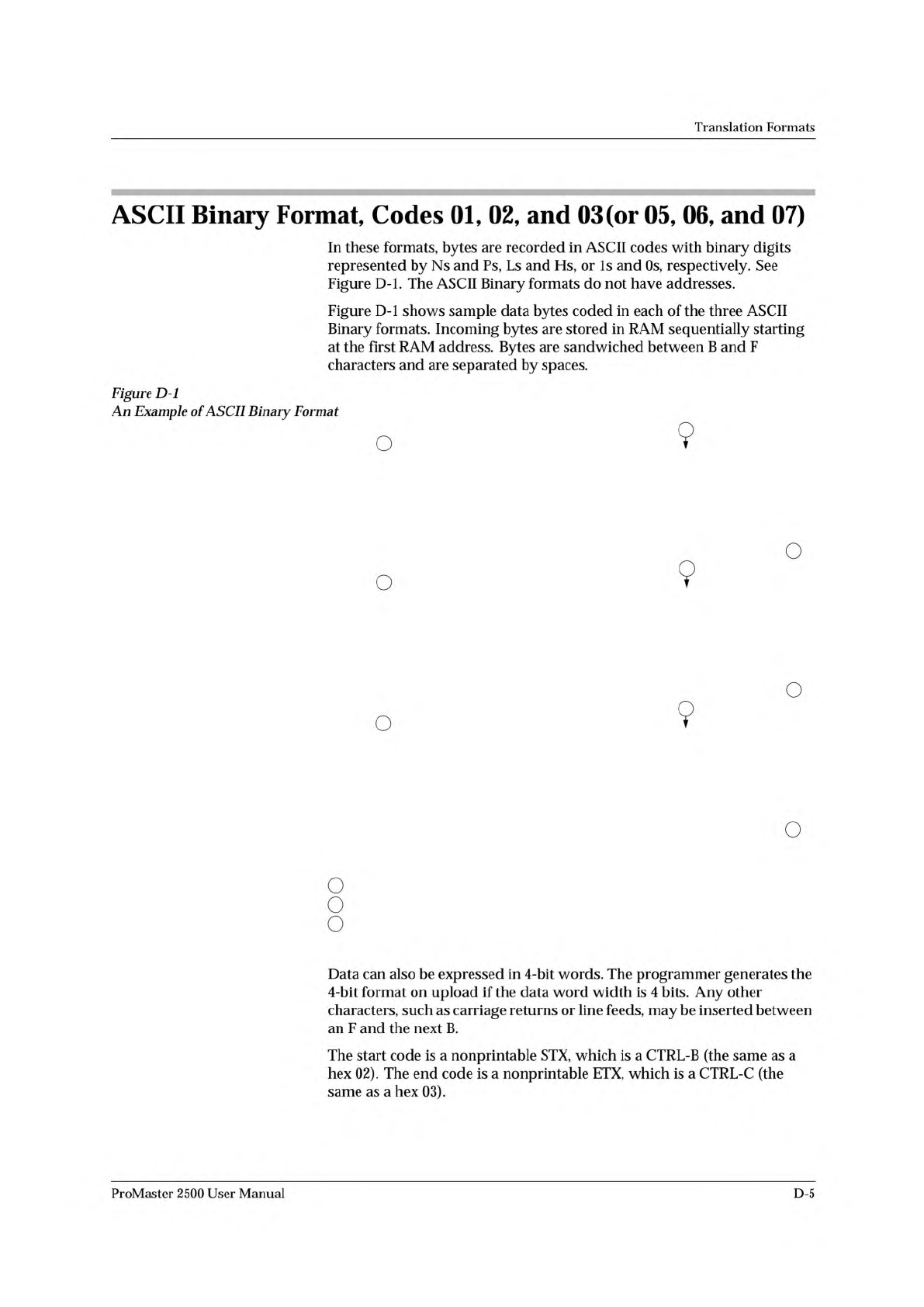
Figure
D-l
shows
sample
data
bytes
coded
in
each
of
the
three
ASCII
Binary
formats.
Incoming
bytes
are
stored
in
RAM
sequentially
starting
at
the
first
RAM
address.
Bytes
are
sandwiched
between
B
and
F
characters
and
are
separated
by
spaces.
Figure
D-l
An
Example
of
ASCII
Binary
Format
o
Data
can
also
be
expressed
in
4-bit
words.
The
programmer
generates
the
4-bit
format
on
upload
if
the
data
word
width
is
4
bits.
Any
other
characters,
such
as
carriage
returns
or
line
feeds,
may
be
inserted
between
an
F
and
the
next
B.
The
start
code
is
a
nonprintable
STX,
which
is
a
CTRL-B
(the
same
as
a
hex
02).
The
end
code
is
a
nonprintable
ETX,
which
is
a
CTRL-C
(the
same
as
a
hex
03).
ProMaster
2500
User
Manual
D-5
Translation
Formats
Note:
Data
without
a
start
or
end
code
may
be
input
to
or
output
from
协
e
programmer
by
use
of
alternate
data
translation
format
codes.
These
are
ASCII-BNPF,
05;
ASCII-BHLF,
06;
ASCII-B10F,
07.
A
single
data
byte
can
be
aborted
if
the
programmer
receives
an
E
character
between
B
and
F
characters.
Data
will
continue
to
be
stored
in
sequential
RAM
addresses.
Data
are
output
in
4
-byte
lines
with
a
space
between
bytes.
D-6
ProMaster
2500
User
Manual
00028 7FDCFF
90000BFFFFBFFFFBFFFFBFFFFBFFFFBFFFFBFFFFBFFFF7F400F
90008BFFFFBFFFFBFFFFBFFFFBFFFFBFFFFBFFFFBFFFF7F3F8F
90010BFFFFBFFFFBFFFFBFFFFBFFFFBFFFFBFFFFBFFFF7F3FFF
90018BFFFFBFFFFBFFFFBFFFFBFFFFBFFFFBFFFFBFFFF7F3F7F
90020BFFFFBFFFFBFFFFBFFFFBFFFFBFFFFBFFFFBFFFF7F3FEF
:
Tag Character
Word Count
Tag Character
Checksum
Tag Character
Filename
End-of-File Record
Load Address
Tag Characters
Data
Records
Checksum
0429-2
LEGEND
Nonprinting Carriage Return, with optional line feed and nulls
determined by null count.
Translation
Formats
Texas
Instruments
SDSMAC
Format
(320),
Code
04
Data
files
in
the
SDSMAC
(320)
format
consist
of
a
start-of-file
record,
data
records,
and
an
end-of-file
record.
See
Figure
D-2.
The
format
is
used
for
Texas
Instruments5
320
line
of
processors.
It
is
very
similar
to
format
90;
the
only
difference
is
that
the
address
fields
represent
16-bit
data
words
rather
than
bytes
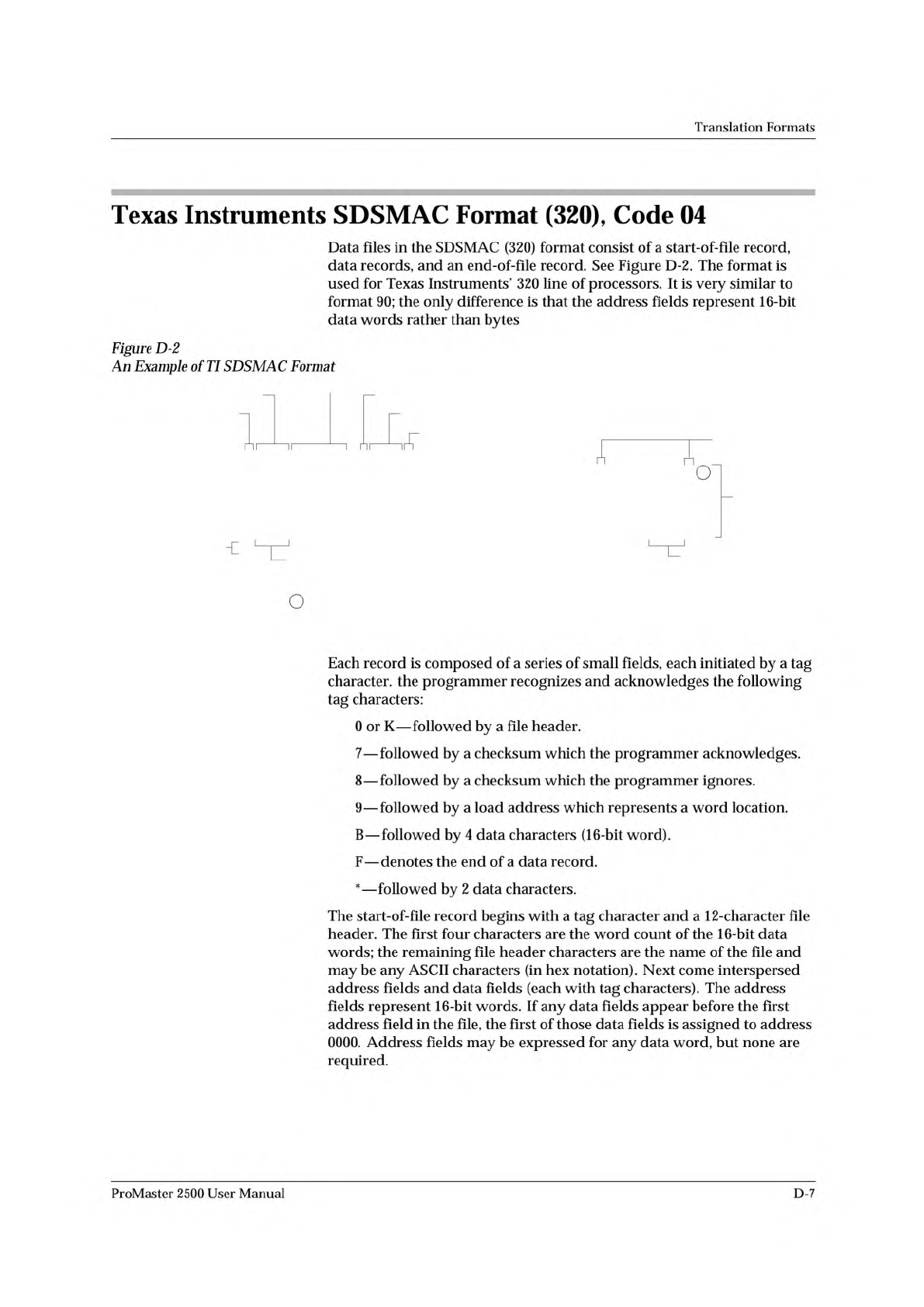
Figure
D-2
An
Example
of
TI
SDSMAC
Format
厂
nOl
o
Each
record
is
composed
of
a
series
of
small
fields,
each
initiated
by
a
tag
character,
the
programmer
recognizes
and
acknowledges
the
following
tag
characters:
0
or
K
—
followed
by
a
file
header.
7
—
followed
by
a
checksum
which
the
programmer
acknowledges.
8
—
followed
by
a
checksum
which
the
programmer
ignores.
9
—
followed
by
a
load
address
which
represents
a
word
location.
B
—
followed
by
4
data
characters
(16-bit
word).
F
—
denotes
the
end
of
a
data
record.
*
—
followed
by
2
data
characters.
The
start-of-file
record
begins
with
a
tag
character
and
a
1
2-character
file
header.
The
first
four
characters
are
the
word
count
of
the
16-bit
data
words;
the
remaining
file
header
characters
are
the
name
of
the
file
and
may
be
any
ASCII
characters
(in
hex
notation).
Next
come
interspersed
address
fields
and
data
fields
(each
with
tag
characters).
The
address
fields
represent
16-bit
words.
If
any
data
fields
appear
before
the
first
address
field
in
the
file,
the
first
of
those
data
fields
is
assigned
to
address
0000.
Address
fields
may
be
expressed
for
any
data
word,
but
none
are
required.
ProMaster
2500
User
Manual
D-7