SiplaceX4_en.pdf - 第429页
1 - 41 S tudent Guide SIPLACE X Edition 09/2005 6 Collect&Place-Head 20 41 6.3.3.4 Example for dynamic with the control signal of the V nom. output The Axis dynamic of the S tar axis is checked with S tar step contin…
1 - 40
Student Guide SIPLACE X
6 Collect&Place-Head 20 Edition 09/2005
40
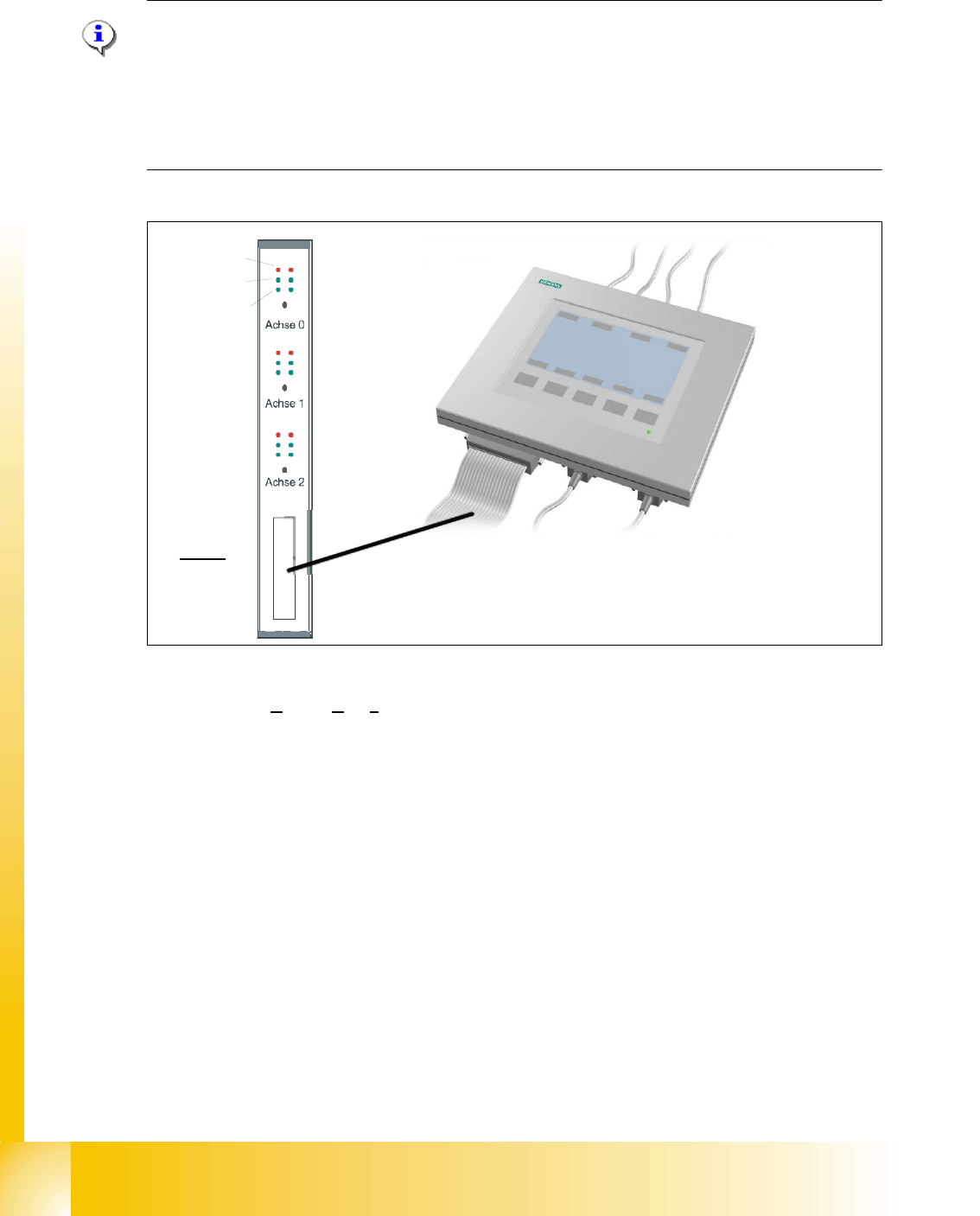
6.3.3.3 Test setup with SAT-Box
Please Note:
-> for dynamic check it may be enough to check positioning time and overshoots of the
axis with the display at SIPLACE Axis Tester and the values from adjustment tables.
-> for troubleshoting the dynamic analysis have to be done with a appropriate oscilloscope
->For further hints checking the dynamics with the aid of the SAT-Box please use the official Ad-
justment manual. 6
Fig. 6.3 - 4 Test set up SAT-Box
Legend outputs Siplace Axis Tester to oscilloscope channels
(1) Nominal speed signal (Vnom)
not connected to the scope at X (HF)
(2) uncommutated nominal current (Vreg)
connect to CH2
(3) Deviation of position connect to CH1 (4) End signal connect to CH 3
Axis unit error
Servo ON
Initialize
Counter error
Zero puls
End signal
Interface:
Test adapter,
Axis test box,
SAT-Box
2
4
1
3
1 - 41
Student Guide SIPLACE X
Edition 09/2005 6 Collect&Place-Head 20
41
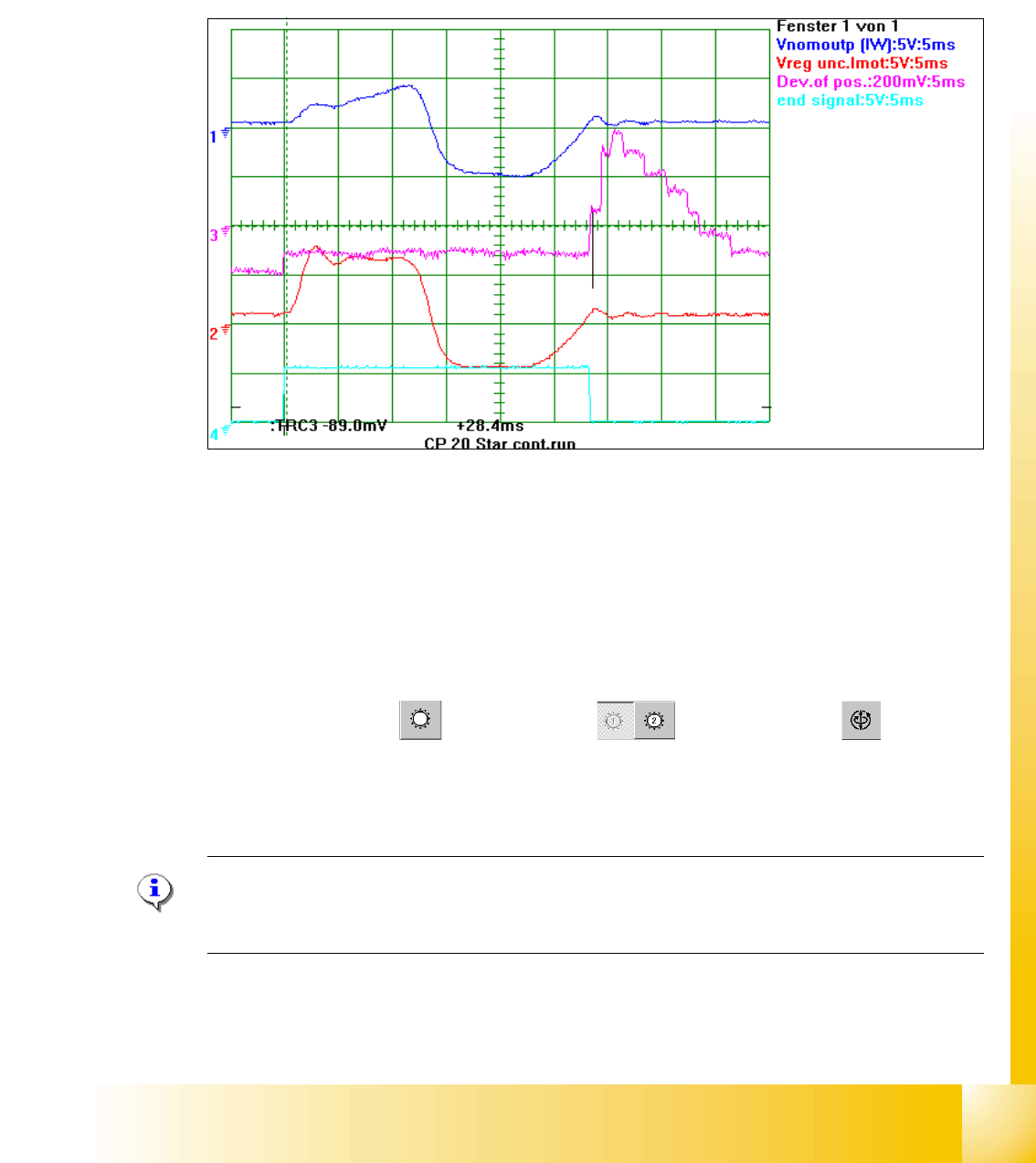
6.3.3.4 Example for dynamic with the control signal of the Vnom. output
The Axis dynamic of the Star axis is checked with Star step continuos run. At Vnominal output of
the Axis tester pass a motor current signal. (Control signal1) The uncommutated nominal current
signal (Signal 3) show the friction of the axis system, here it show NO increased friction.
The positioning time for the C&P 20 Star axis step is 28,5 +/-0,5 ms (31.01.05).
Fig. 6.3 - 5 Dynamic signals Star axis 20 segment C&P head
Legend
SITEST: 6
➠ Select "C&P heads" ==> "Select head" ==>"Axis functions" ==> "Select
Star-axis" ==> "Continuous run Star" ==> Edit: Waiting time "500 ms" ==> "Accept".
➠ If necessary, press the START button.
Please Note:
If the positioning time is to slow or the uncommutated motor current deviate clearly from the signal
above please check the star axis mechanic or electrical components in the control loop. 6
(1) Motor phase current signal on V nom.
output X (HF) machine
(2) Uncommutated Current signal Vreg
(3) Position of deviation (4) End signal
1
2
3
4
1 - 42
Student Guide SIPLACE X
6 Collect&Place-Head 20 Edition 09/2005
42
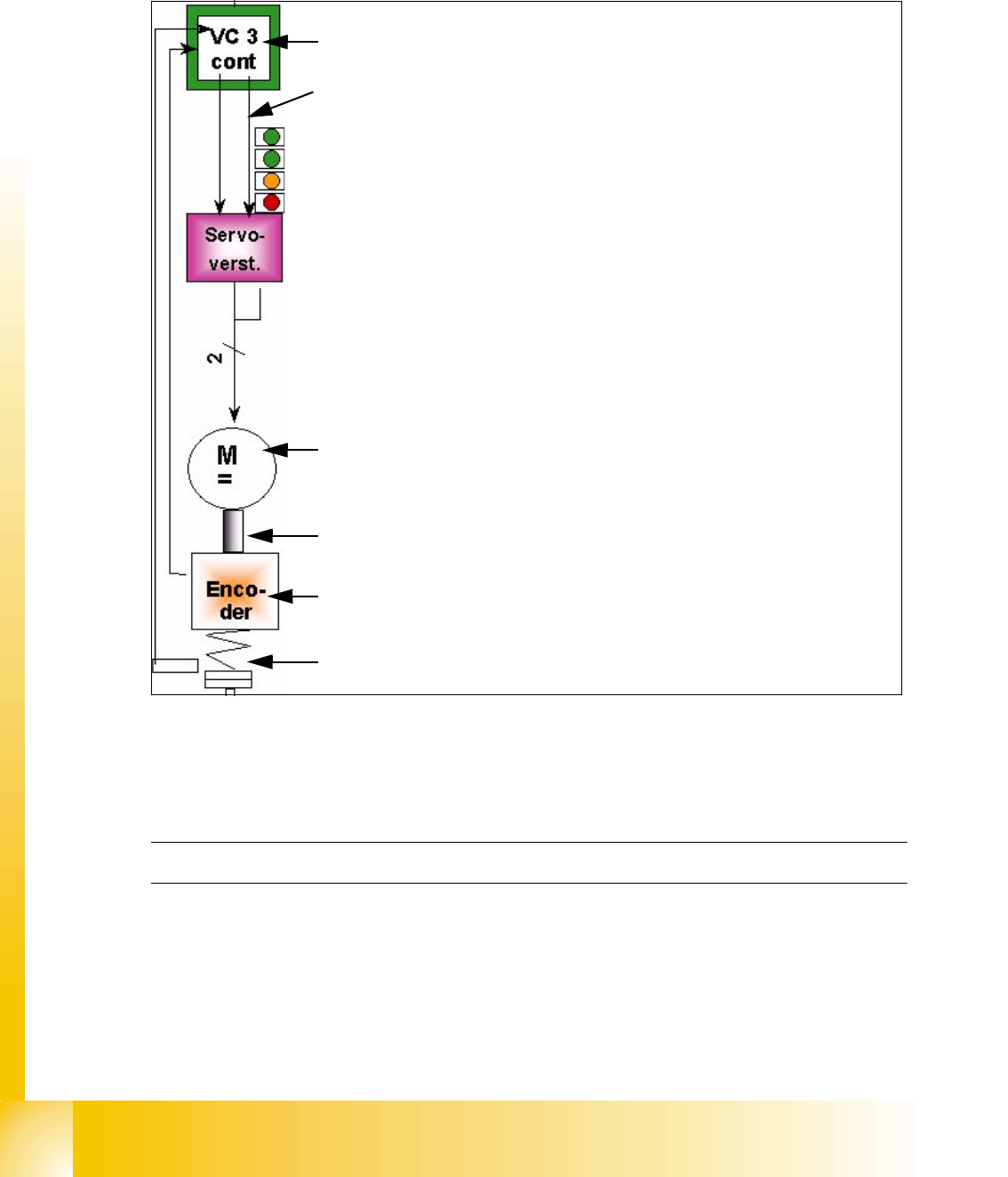
6.3.4 Axis control Z-Axis
The Z-axis is driven with a DC servo motor. The control of the axis occurred with one control si-
gnals of the VC3 controller I
nom "W" and I nom "U" = 0. The intermediate circuit voltages is
approx. 24V.
Fig. 6.3 - 6 Axis control Z-Axis
6.3.4.1 Check the dynamic Z-Axis
6.3.4.2 Test setup
Please Note:The test setup for the Z-Axis is the same as the Star-Axis
The positioning time for the Z-Axis is 30ms +/-3ms (6 segment C&P head) and 24ms, -1 ms of the
12 segment C&P head.
The positioning time C&P 20 for the same 15 mm distance is approx.
20 ms. The nom. distance should be 10mm within approx. 16ms.
– Move the gantry to the calibration tool pocket (Sitest button) and start the dynamic
check.
Axis card A363 with VC 3 Controller (VC = Velocity Commutation)
Control signal I
nom "W"
LED‘s on the Servo amplifier:
– Power supply ON
– Servo enable, if the the enable signal from the axis board available.
– Display R.M.S. current limiter shorter than 2,5 s.
– Error: Overvoltage, -current, -temperature or Nominal current-over-
stepping longer than 2,5 sec.
Servo board control directly the 3~AC (DC) motor.
3 phase (DC C&P6/12) motor.
Between the motor and the incremental encoder exist a fixed mechanical
combination.
Incremental encoder: transmit the exact position of the axis via the track
signals.
Elastic mech. Combination (Belt) and light barrier below, for the fast
recognition of the lower position.