SiplaceX4_en.pdf - 第486页
1 - 18 S tudent Guide SIPLACE X 10 Modular conveyor Edition 09/2005 18 Legend – Limit switches on the in put conveyor: There are 5 limit switches below th e conveyor rails near the input co nveyor . Th e limit swit ches …
1 - 17
Student Guide SIPLACE X
Edition 09/2005 10 Modular conveyor
17
10.2.3 Move fixed conveyor rail for ’extended conveyor’
Please Note: This mode of a flexible conveyor at HF/X is available at single or at dual conveyor.
The standard position of fixed conveyor rail(s) are defined according the settings of X4- / X3- and
X2-machines. Because of the space on pure HF-lines a single conveyor can have up to 509 mm
wide boards; a dual conveyor up to 250 mm on each track.
➠ Use SITEST (505 or higher) transport menu ’options and configuration’ and ’extend conveyor’.
➠ The fixed conveyor rail of conveyor 2 (right side fixed (track 1 left side fix)) remain at its position
➠ The ’fixed conveyor of track 1(right side fixed (track 2 left side fix)) is moved 34mm outside.
This allow the wider boards. The moveable side of track2 (track 1-left side fix) could be set now
to more than 216 mm wide boards.
10.2.4 Checking the limit switch position
➠ Check the minimum and maximum width and ensure that the conveyor rails are parallel.
Settings:
Minimum width:49.7 mm
Maximum width, single conveyor:508.5 mm
Maximum width, dual conveyor:250.5 mm (When the fixed conveyor rail is extended)
Maximum width, dual conveyor:216.5 mm (Standard)
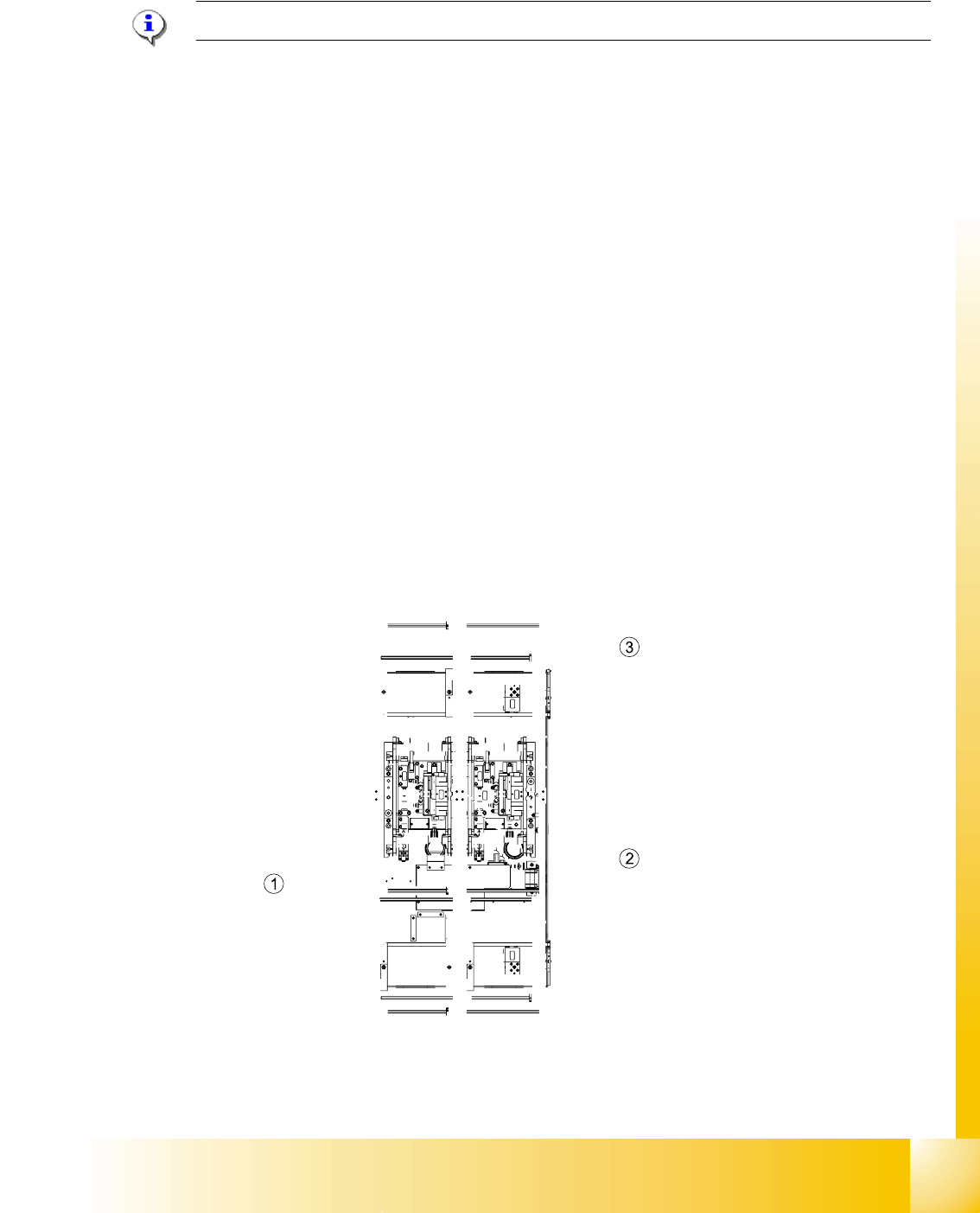
Fig. 10.2 - 7 Position of the width adjustment and conv. rail limit switches (symbolic draw)
1 - 18
Student Guide SIPLACE X
10 Modular conveyor Edition 09/2005
18
Legend
– Limit switches on the input conveyor: There are 5 limit switches below the conveyor rails near
the input conveyor. The limit switches are intended to prevent the conveyor rails moving to-
gether or against the basic conveyor frame.
– Limit switches on the output conveyor: There are 2 limit switches for the driver near the output
conveyor. They serve to protect the traveling range and initialize (right side) the driver for the
width adjustment.
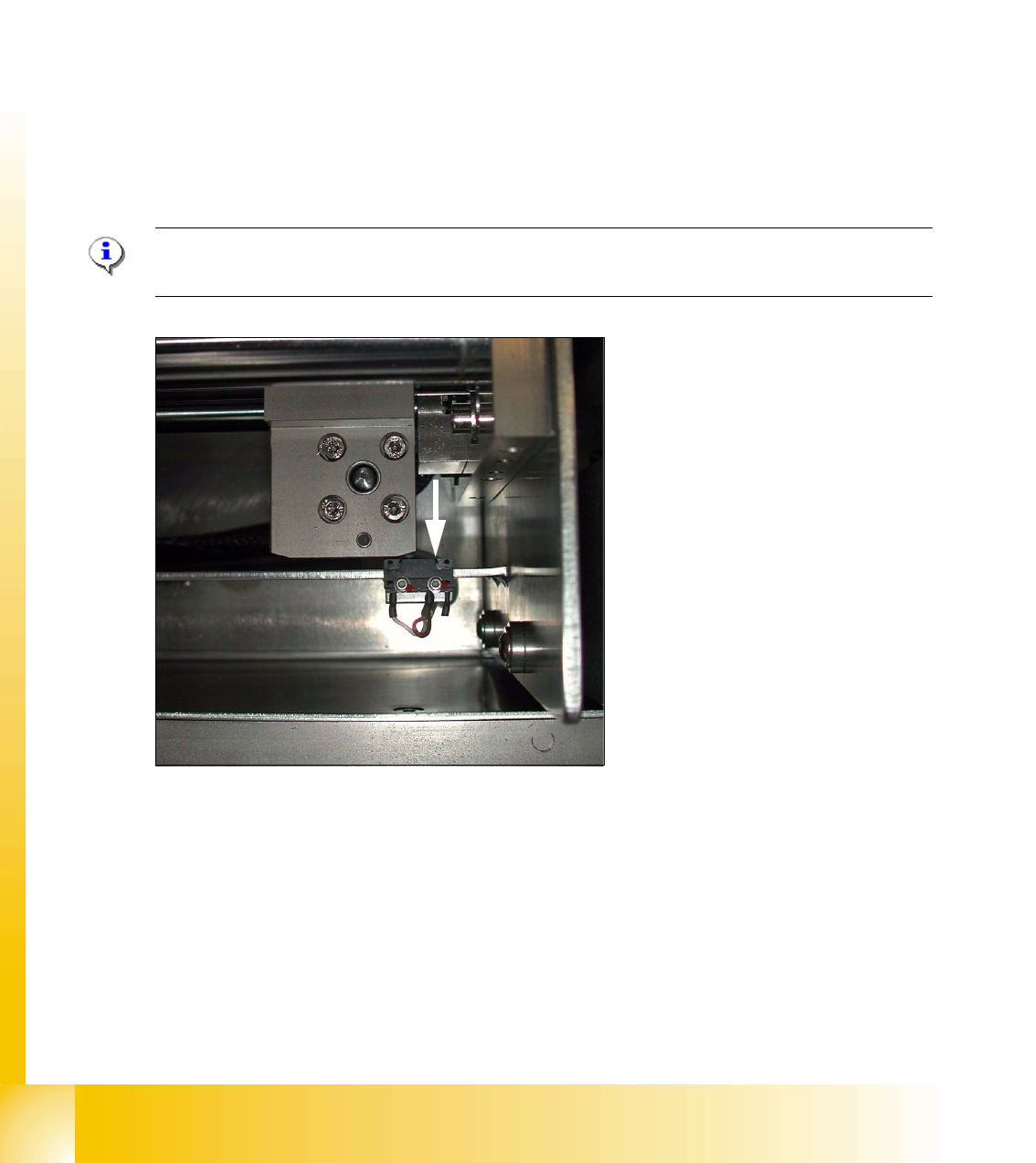
10.2.4.1 Adjusting the limit switch for initialize the driver
Please Note: This is only necessary in case of replacement of the switch or other mal functions
in width adjustment reference run.
Fig. 10.2 - 8 Limit /initialize switch
➠ Move the driver for the width adjustment by hand (via the toothed belt) to the conveyor rail.
➠ Loosen both screws of the limit switch (arrow in Fig. 10.2 - 8)
➠ Move the limit switch in the slot towards the driver and make sure, that the limit switch is safely
switched on.
➠ Check the status of the associated LED on the conveyor control (H41 ini TSP 301) .
➠ Fit the limit switch in this position.
➠ Calibrate the conveyor width via the SITEST program.
(1) Limit switch on the input conveyor - fitted
below the conveyor rail
(2) Limit switch on the input conveyor - fitted
below the conveyor rail
(3) Limit switch for the width adjustment unit
1 - 19
Student Guide SIPLACE X
Edition 09/2005 10 Modular conveyor
19
10.2.5 Width adjustment unit (Driver)
10.2.5.1 Setting the BERO on the driver
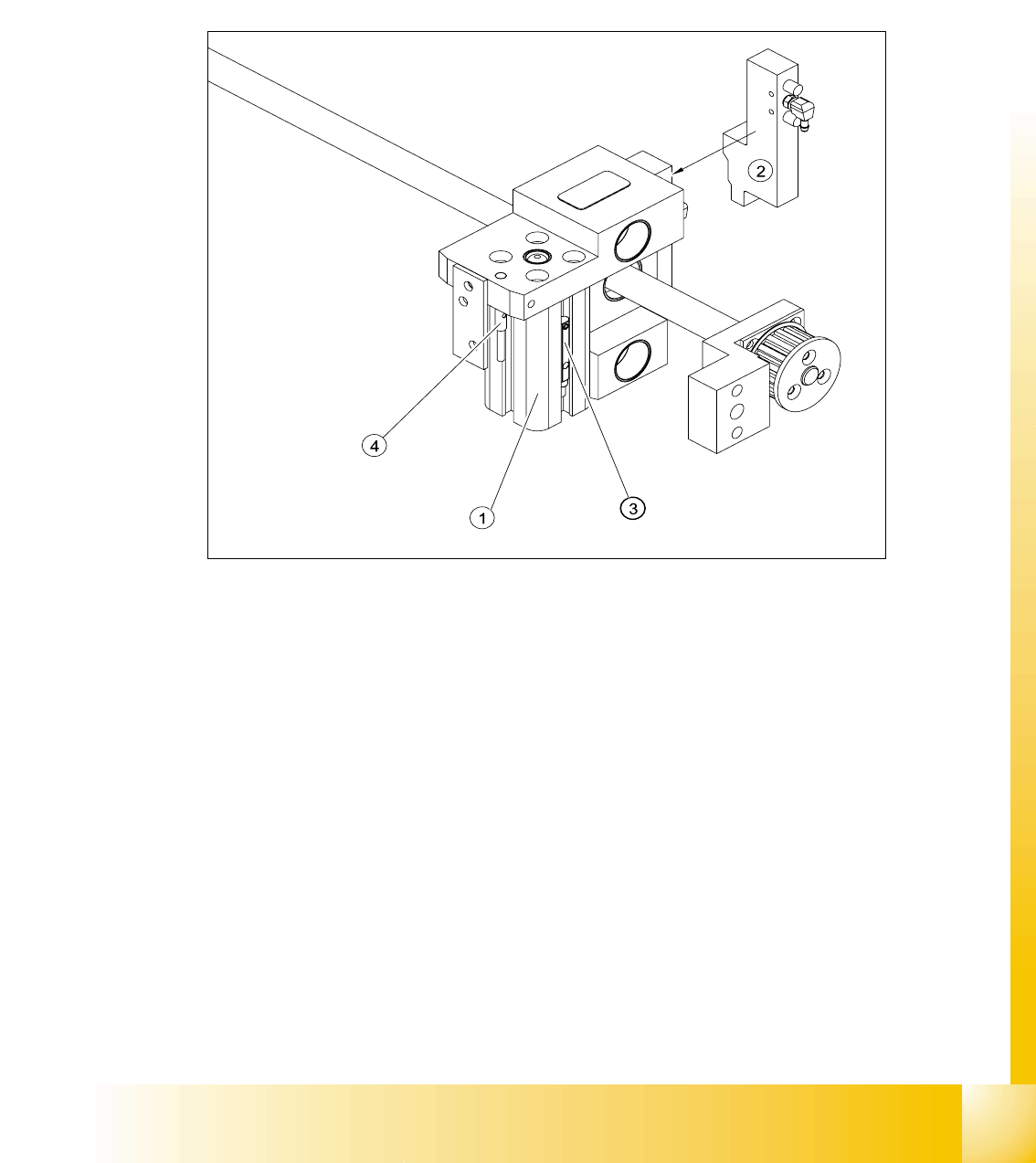
The BERO (3) (see Fig. 10.2 - 9) provides a signal for controlling the pneumatic valve of the driver.
Once the switching point ’conveyor rail reached’ is reached, the pneumatic valve engages the
conveyor rail.
Fig. 10.2 - 9 Overview of the BEROs on the driver for width adjustment
Legend to Fig. 10.2 - 9:
Setting Bero and actuator for transport rail position: 10
➠ When the BERO (4) is installed, it must not protude the driver.
➠ The switching point is set via the actuator on the conveyor rail
➠ Move the driver under the conveyor rail, then loosen the actuator using the screw.
➠ Place the driver at the final dimension of 2/10 mm, press the actuator onto the final dimension
and fix with the screw.
➠ Actuators on all conveyor rails have to be checked and maybe adjusted.
➠ Start SITEST and Calibrate transport.
(1) Short stroke cylinder (2) Solenoid valve
(3) BERO, pneumatic cylinder extended pos. (4) BERO, driver for transport rail position