sh030106u.pdf - 第128页
4. STA RTUP 4 - 3 4.1.2 Wirin g check (1) Power supply syste m wiring Before switc hing on the ma in circui t and contr ol circu it power sup plies, chec k the f ollowi ng items . (a) Power supply syste m wiring 1) The p…
4. STARTUP
4 - 2
4.1 Switching power on for the first time
When switching power on for the first time, follow this section to make a startup.
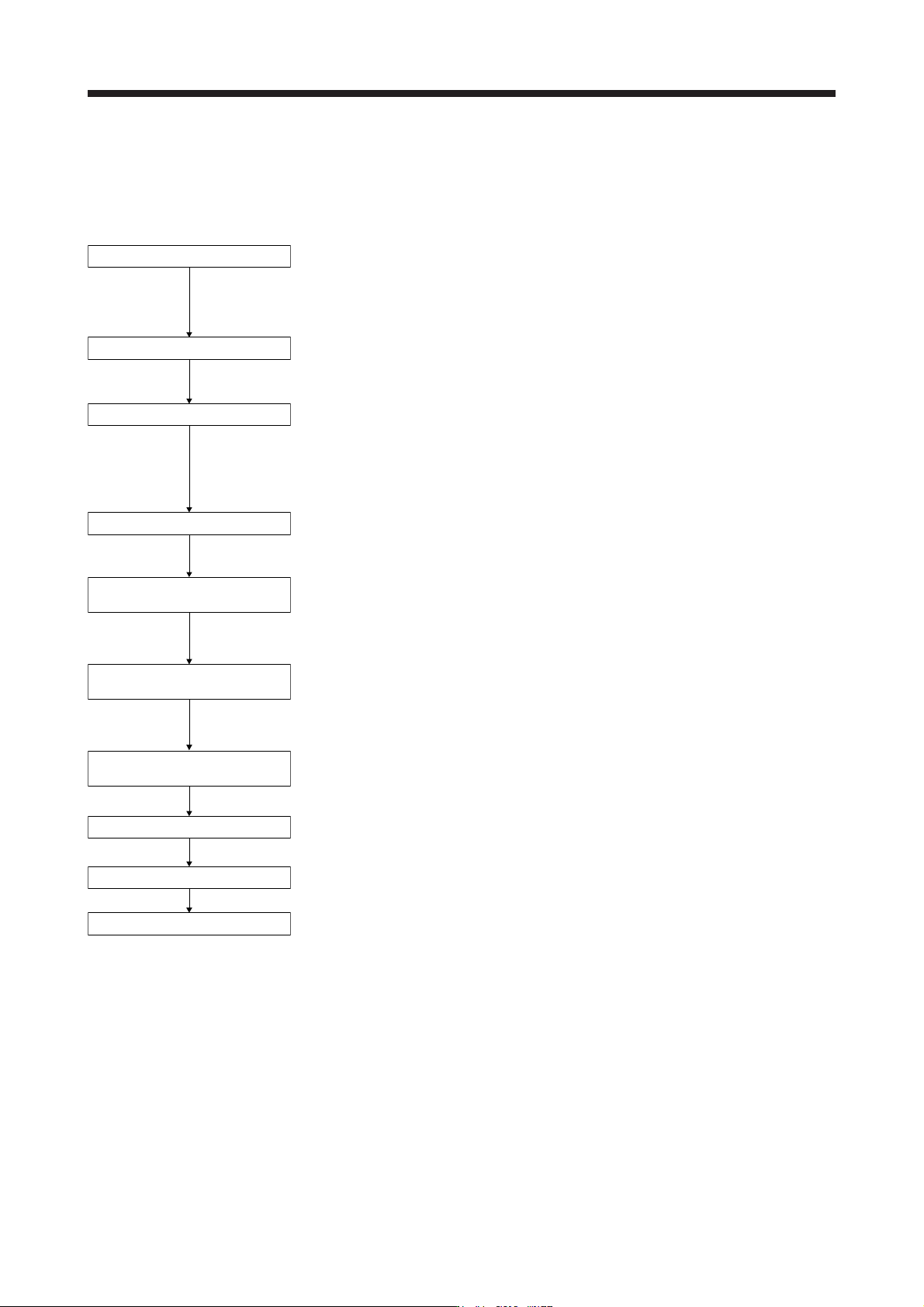
4.1.1 Startup procedure
Wiring check
Surrounding environment check
Axis No. settings
Parameter setting
Test operation of the servo motor
alone in test operation mode
Test operation of the servo
motor alone by commands
Test operation with the servo
motor and machine connected
Gain adjustment
Actual operation
Stop
Check whether the servo amplifier and servo motor are wired correctly using
visual inspection, DO forced output function (section 4.5.1), etc. (Refer to
section 4.1.2.)
Check the surrounding environment of the servo amplifier and servo motor.
(Refer to section 4.1.3.)
Confirm that the control axis No. set with the auxiliary axis number setting
switches (SW2-3 and SW2-4) and with the axis selection rotary switch
(SW1) match the control axis No. set with the servo system controller. (Refer
to section 4.3.1 (3).)
Set the parameters as necessary, such as the used operation mode and
regenerative option selection. (Refer to chapter 5.)
For the test operation, with the servo motor disconnected from the machine
and operated at the speed as low as possible, check whether the servo
motor rotates correctly. (Refer to section 4.5.)
For the test operation with the servo motor disconnected from the machine
and operated at the speed as low as possible, give commands to the servo
amplifier and check whether the servo motor rotates correctly.
After connecting the servo motor with the machine, check machine motions
with sending operation commands from the servo system controller.
Make gain adjustment to optimize the machine motions. (Refer to chapter 6.)
Stop giving commands and stop operation.
4. STARTUP
4 - 3
4.1.2 Wiring check
(1) Power supply system wiring
Before switching on the main circuit and control circuit power supplies, check the following items.
(a) Power supply system wiring
1) The power supplied to the power input terminals (L1/L2/L3/L11/L21) of the servo amplifier should
satisfy the defined specifications. (Refer to section 1.3.)
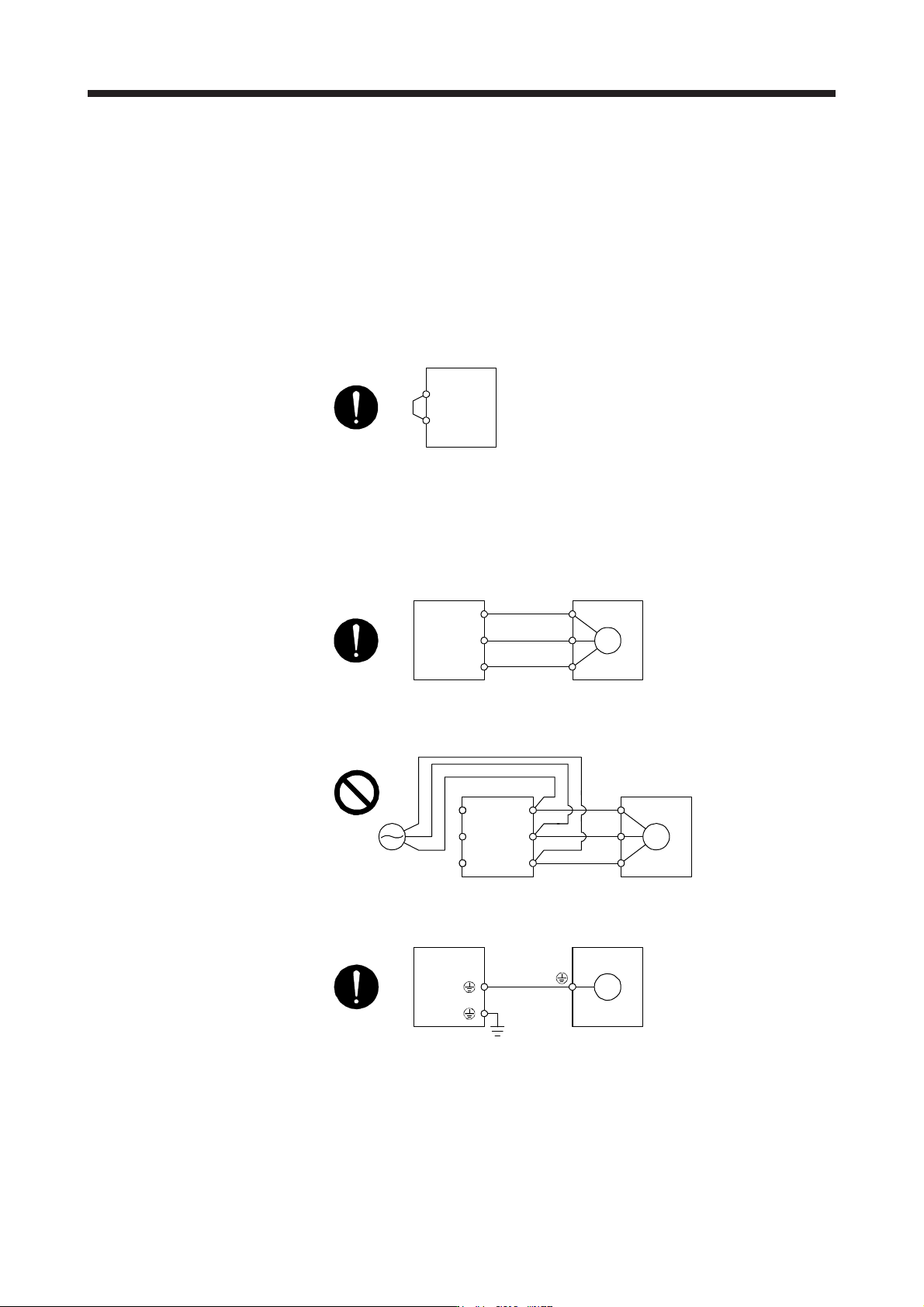
2) When the power factor improving DC reactor is not used, between P3 and P4 should be
connected.
P3
P4
Servo amplifier
(Note)
Note. The 100 V class servo amplifiers do not have P3 and P4.
(b) Connection of servo amplifier and servo motor
1) The servo amplifier power output (U/V/W) should match in phase with the servo motor power
input terminals (U/V/W).
Servo amplifier Servo motor
M
U
V
W
U
V
W
2) The power supplied to the servo amplifier should not be connected to the servo motor power
terminals (U/V/W). Otherwise, the servo amplifier and servo motor will malfunction.
Servo amplifier Servo motor
M
U
V
W
U
V
W
L1
L2
L3
3) The grounding terminal of the servo motor is connected to the PE terminal of the servo amplifier.
Servo amplifie
r
Servo moto
r
M
4) The CN2 connector of the servo amplifier should be connected to the encoder of the servo motor
securely using the encoder cable.
4. STARTUP
4 - 4
(c) When you use an option and auxiliary equipment
1) 200 V class
a) When you use a regenerative option for 5 kW or less servo amplifiers
The lead wire between P+ terminal and D terminal should not be connected.
The regenerative option wire should be connected between P+ and C terminal.
Twisted wires cable should be used. (Refer to section 11.2.4.)
b) When you use a regenerative option for 7 kW or more servo amplifiers
For 7 kW servo amplifiers, the lead wire of the built-in regenerative resistor connected to P+
terminal and C terminal should not be connected.
The regenerative option wire should be connected between P+ and C terminal.
Twisted wires cable should be used. (Refer to section 11.2.4.)
c) When you use a brake unit and power regeneration converter for 5 kW or more servo
amplifiers
For 5 kW or less servo amplifiers, the lead wire between P+ terminal and D terminal should
not be connected.
For 7 kW servo amplifiers, the lead wire of the built-in regenerative resistor connected to P+
terminal and C terminal should not be connected.
Brake unit, power regeneration converter should be connected to P+ terminal and N-
terminal. (Refer to section 11.3 and 11.4.)
Twisted wires cable should be used when wiring is over 5 m and equal to or less than 10 m
using a brake unit. (Refer to section 11.3)
d) When you use a power regeneration common converter
For 5 kW or less servo amplifiers, the lead wire between P+ terminal and D terminal should
not be connected.
For 7 kW servo amplifiers, the lead wire of built-in regenerative resistor connected to P+
terminal and C terminal should not be connected.
The wire of power regeneration common converter should be connected to P4 terminal and
N- terminal. (Refer to section 11.5.)
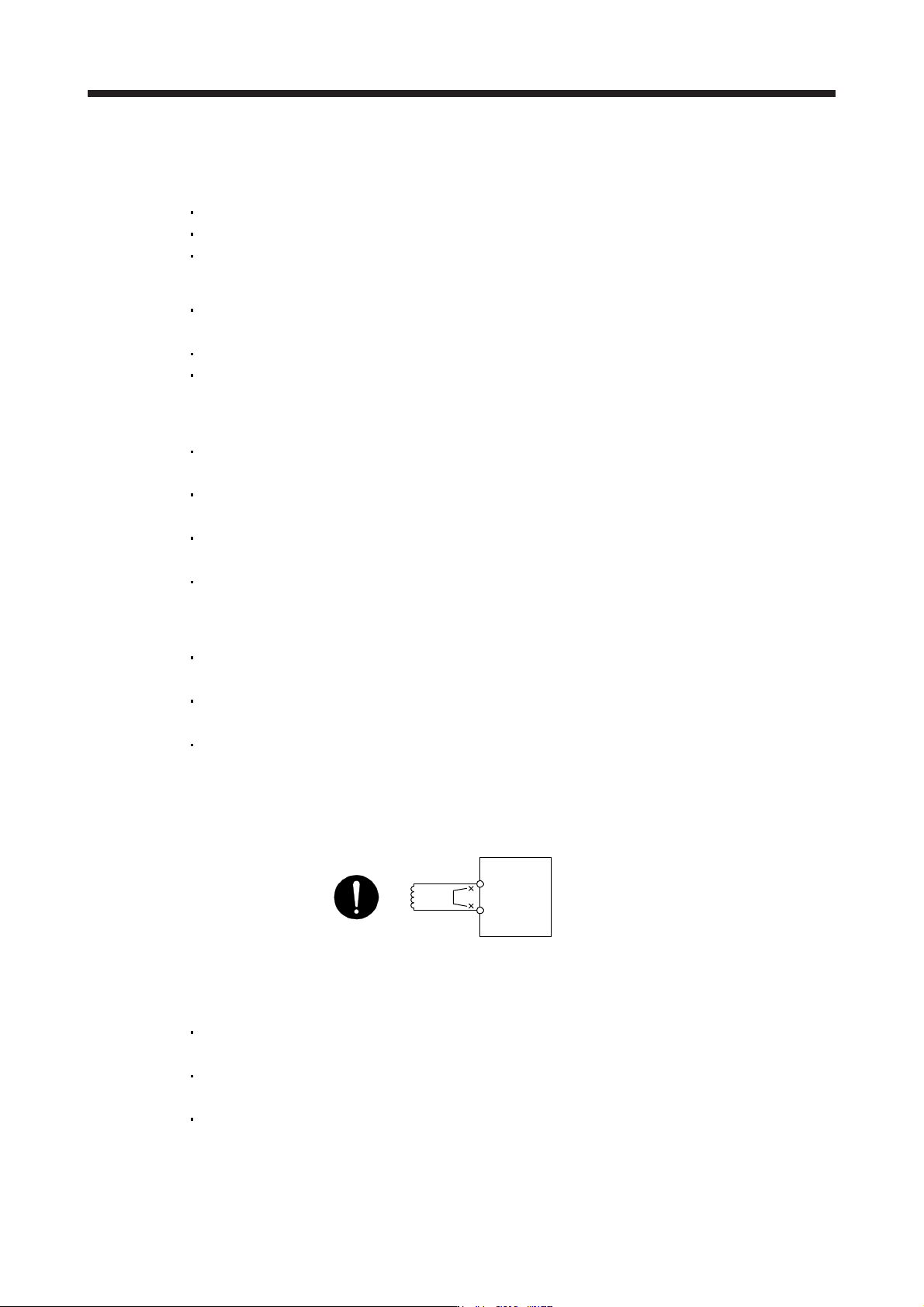
e) The power factor improving DC reactor should be connected between P3 and P4. (Refer to
section 11.11.)
(Note)
Power factor improving
DC reactor
Servo amplifier
P3
P4
Note.
A
lwa
y
s disconnect between P3 and P4 terminals.
f) When you use a multifunction regeneration converter
For 5 kW or less servo amplifiers, the lead wire between the P+ terminal and D terminal
should be connected. (factory-wired)
For 7 kW servo amplifiers, the lead wire of the built-in regenerative resistor connected to the
P+ terminal and C terminal should be connected. (factory-wired)
The wire of the multifunction regeneration converter should be connected to the P4 terminal
and N- terminal. (Refer to section 11.19.)